
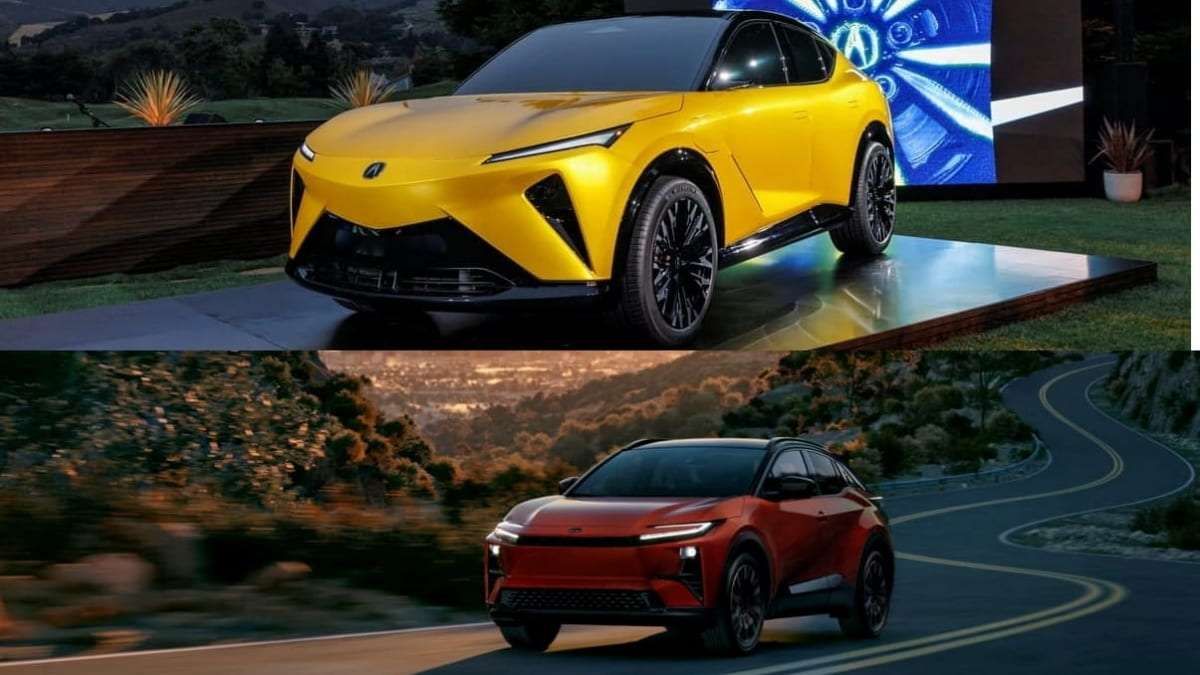

Things are exciting in Japan as more nameplates from the past are making a comeback. Toyota and Honda (and its luxury arm, Acura) have been hard at work resurrecting old names from their past. Here’s where things get tricky. Toyota is bringing back the Celica as a mid-engine model in its (so far successful) efforts to return to the enthusiasts’ radar while Honda’s Prelude might be appealing to a different demographic altogether, judging by the tech it packs.
We often draw parallels between Toyota and Honda (and their respective luxury brands), and the latest examples add two new additions to the compact electric SUV segment. Compact crossovers and SUVs are all the rave right now, with mainstream car buyers, and by all accounts, these models should be a money-printing formula for their respective manufacturers. Here’s how Toyota and Acura’s upcoming electric SUVs compare to one another, and which one could potentially offer better value for money.
One lacks the heritage, while the other “shames” its name
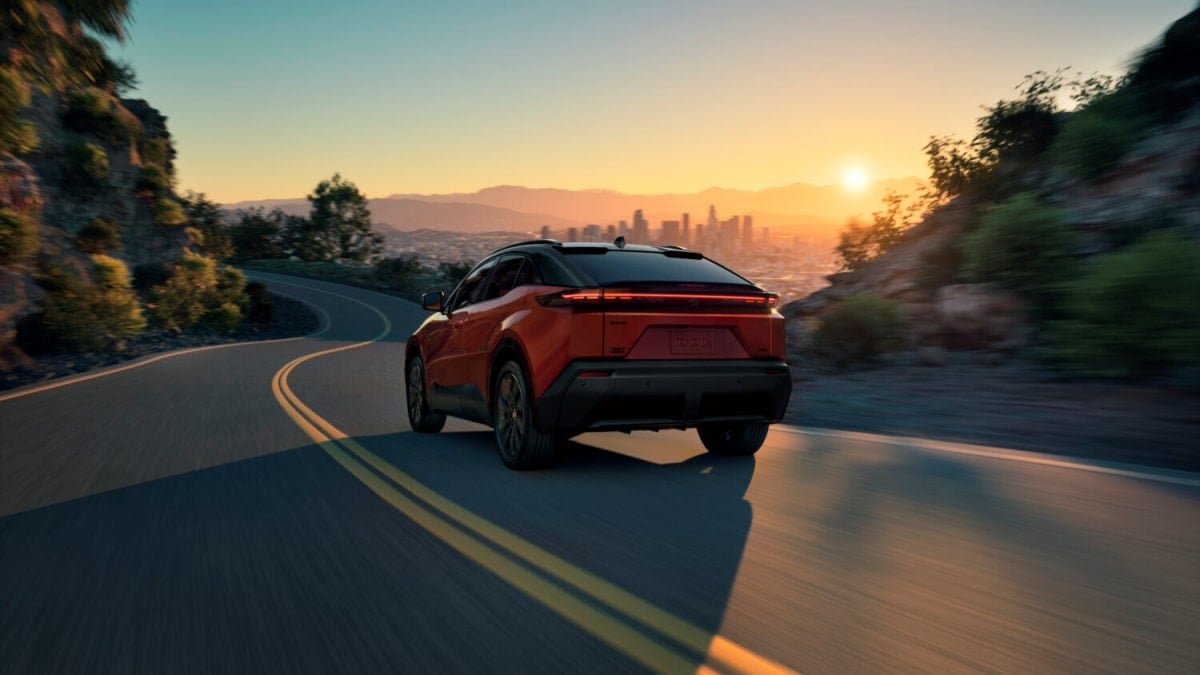
Toyota C-HR is, by far, the younger of the two names. It came out for the 2018 model year, and throughout its existence, it has always been a compact crossover, powered by not particularly peppy inline-four and hybrid powertrains. The second generation was never sold in North America, but the third generation Toyota C-HR is coming back with 338 electric horsepower and a more functional body style.
What Honda and Acura have been doing with their latest revivals has been somewhat controversial, yet somehow the companies got away with it. The Acura Integra came back as a spiced up Civic, instead of being a lightweight coupe like its predecessor while the new Prelude, despite its ingenious e-axle and S+shift strategy, is essentially, a rebodied Honda Civic e:HEV.
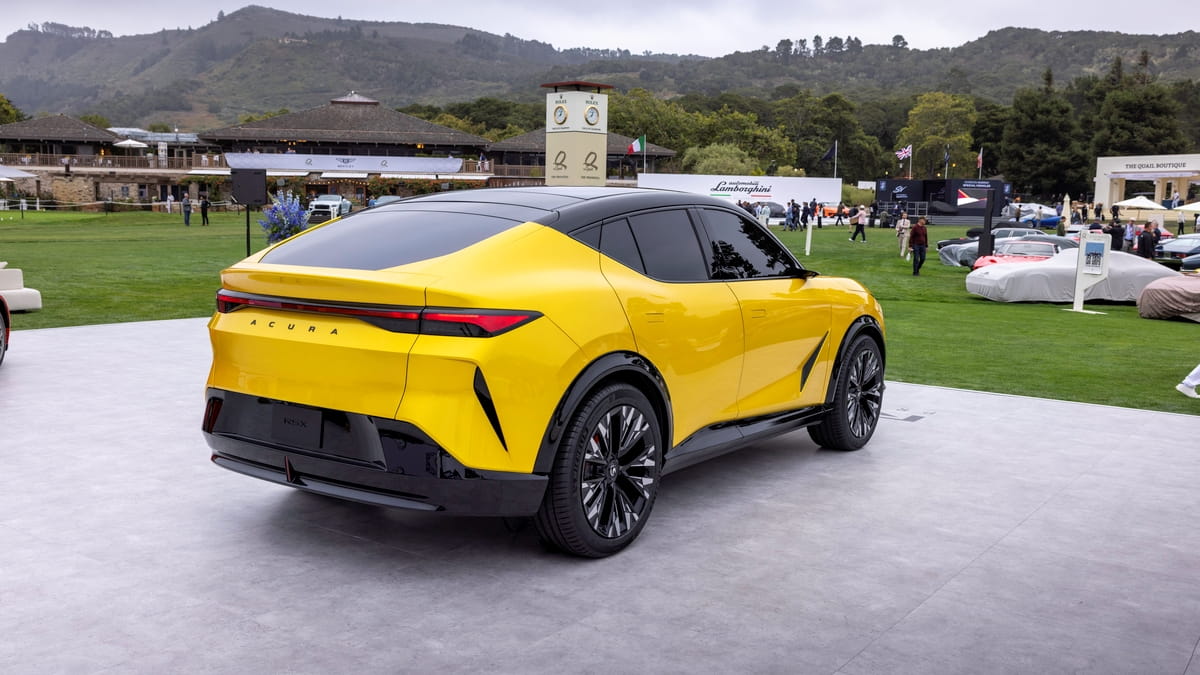
The Acura RSX makes me draw parallels with the Mitsubishi Eclipse Cross, since it is another iconic Japanese nameplate returning as something more mainstream. According to data from Tecell, 53 percent of EVs (and 82 percent of PHEVs) sold are classified as SUVs, so it really isn’t a surprise names like the RSX are returning as electric SUVs.
Premium Vs Value
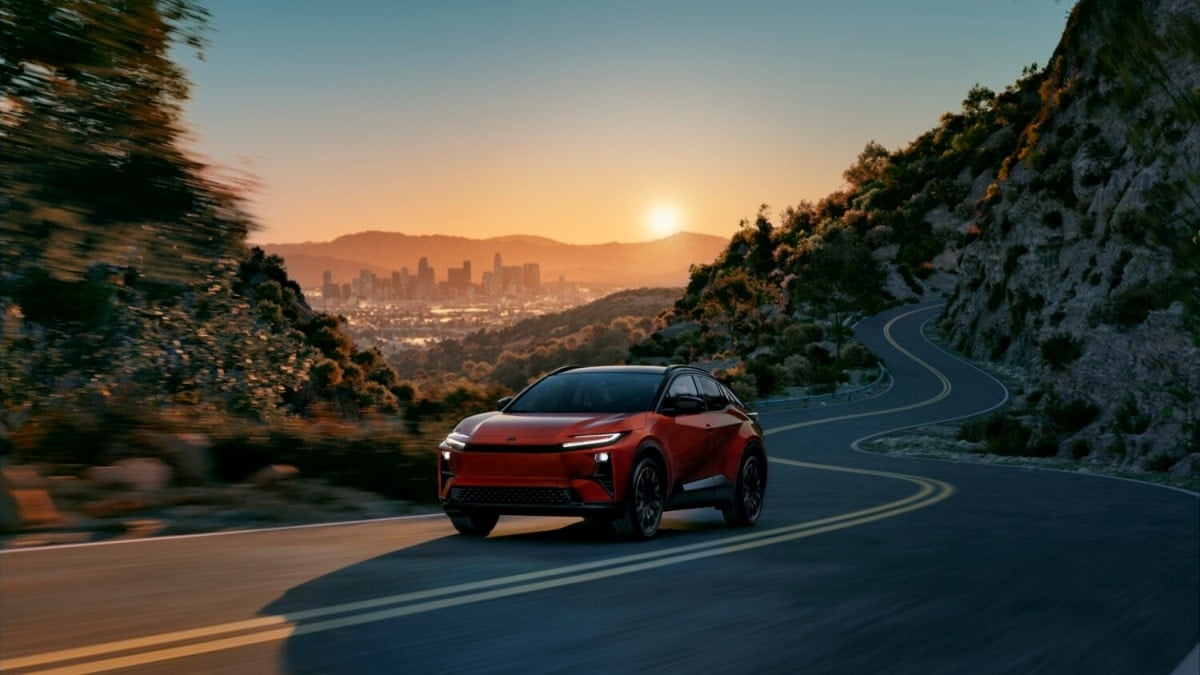
Looking at the price points for both models, it hardly seems like a fair comparison. The Acura RSX electric SUV will have an expected starting price of around $50,000, while the all-electric Toyota C-HR will start at around $35,000.
Production of the Acura EV is said to begin late 2025 at the Honda Hub in Ohio. Unlike the new RSX, the 2026 Toyota C-HR will be a global model. It will be built in Toyota’s Takaoka plant, in Toyota City, Aichi, and will go on sale in early 2026.
There are still some details about both Japanese models that are a mystery, but we expect the Toyota C-HR will be the more utilitarian, city-friendly crossover, while unsurprisingly, the RSX will be more of a luxury highway cruiser.
Tech and features
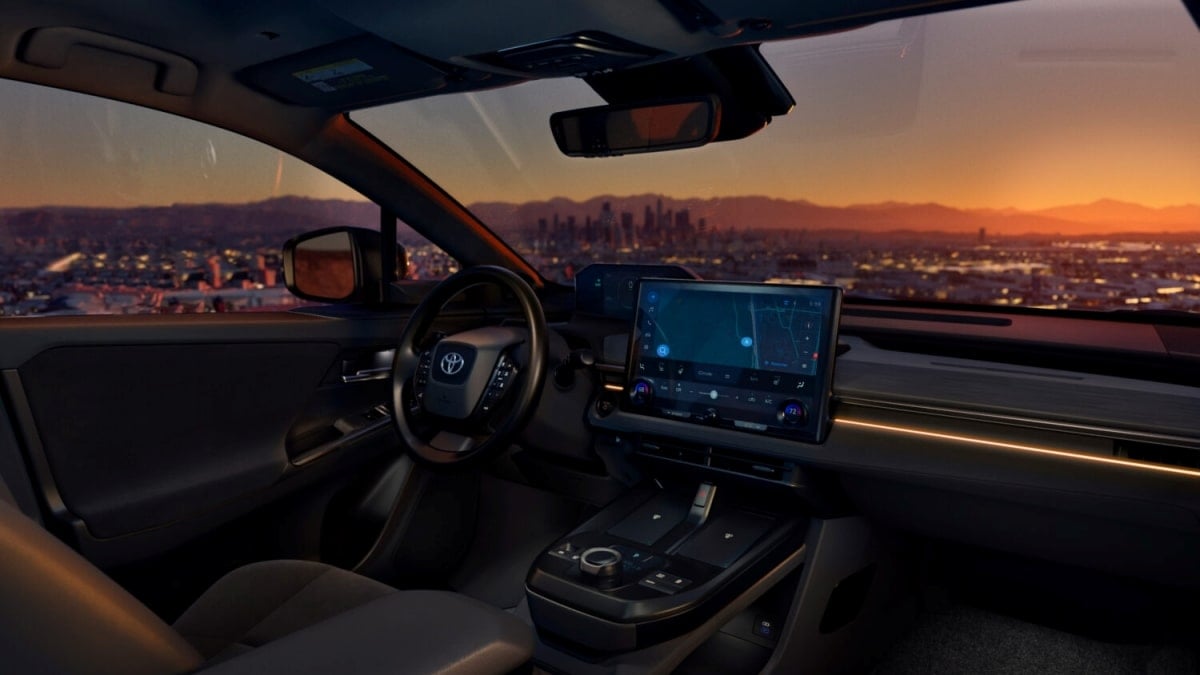
While the full list of features is still unknown for both EV models, the 2026 Toyota C-HR will feature a 14-inch touchscreen, six-speaker standard audio (optional nine-speaker JBL), wireless smartphone connectivity (Bluetooth, Apple CarPlay, Android Auto), a mobile app for preconditioning, dual-wireless chargers, and more.
Toyota is even more generous when it comes to standard safety features. Toyota Safety Sense 3.0, adaptive cruise control, lane assist, rear cross-traffic alert, forward-collision warning, blind-spot monitoring, and Proactive Driving Assist (which I hope I can turn off), only to name a few.
The RSX is, by far, the more performance-oriented of the two when it comes to the chassis. Acura’s EV SUV comes standard with Brembo brakes and a double-wishbone front suspension set-up for optimal responsiveness. The RSX also brings ASIMO operating system, AI-personalized over-the-air (OTA) updates with potential for Level 3 autonomy, a premium audio system, and lots of customization features.
In terms of safety, the 2026 Acura RSX will come standard with AcuraWatch suite, automatic emergency braking, adaptive cruise control, lane-keep assist, blind-spot monitoring, traffic-sign recognition, and rear-cross traffic alert, to name a few.
Related story: This Is How Honda Overtook Toyota As The 2025 Best Vehicle Brand, But Whether Honda Is More Reliable Isn't a Simple Question
2026 Toyota C-HR performance specifications
-
Powertrain - dual-motor (one for each axle)
-
Drivetrain - All-wheel drive (FWD-biased)
-
Power - 338 horsepower (combined), 224 (front), 120 (rear)
-
Torque - 198 pound-feet (front e-motor), 124 pound-feet (rear e-motor)
-
Battery - 77 kWh Lithium-ion
-
Range - 290 miles (estimated)
-
Consumption (EPA) - TBD
-
Charging - 400-Volt architecture, 150 kW DC fast charging, 10-80 percent in approx. 30 minutes
-
Advertising
Curb weight - 4,431 pounds
-
0-60 mph - TBD
2026 Acura RSX performance specifications
-
Powertrain - dual-motor (one for each axle)
-
Drivetrain - All-wheel drive
-
Power - 300-plus horsepower for the base variant, possible 400-plus horsepower variant
-
Torque - TBD
-
Battery - TBD
-
Range - 300 miles (estimated)
-
Consumption (EPA) - TBD
-
Charging - 400-Volt architecture, 10-80 percent in approx. 15 minutes, NACS port standard, vehicle-to-load capabilities
-
Curb weight - TBD
-
0-60 mph - approx. 5.0 seconds (for the base model)
Both of these models come from Japanese brands with great reputations for reliability, quality, and value retention. The 2026 C-HR gains electrified performance, while the new RSX now tailors to a completely different demographic than its predecessor. Let me know which one would be your pick in the comments below.
Related story: 10 Used Honda and Acura Cars I Would Buy Right Now
Image source: 2026 Toyota C-HR, 2026 Acura RSX EV press release
Dimitar Angelov's automotive interests made him an expert in a wide variety of vehicles. Japanese brands like Toyota are closest to his heart, although performance cars in general are his favorite segment, which is why he is constantly on the lookout for the best deals on the market. Dimitar Angelov's car passion and knack for the written word led him to complete a Master of Arts in Media and Communications, and classic car restoration. Dim is happy to get behind the wheel of any car and share his impressions. You can follow Dimitar on X, Linked-in, Instagram, and Facebook.
Set Torque News as Preferred Source on Google
Follow us today...






Comments
i don't know what's wrong…
Permalink
i don't know what's wrong with brain, but the integra has ALWAYS been a spiced up civic. Learn your history. The current car (type s at least) is pretty phenomenal and your "article' is just fanboy bullshit.