
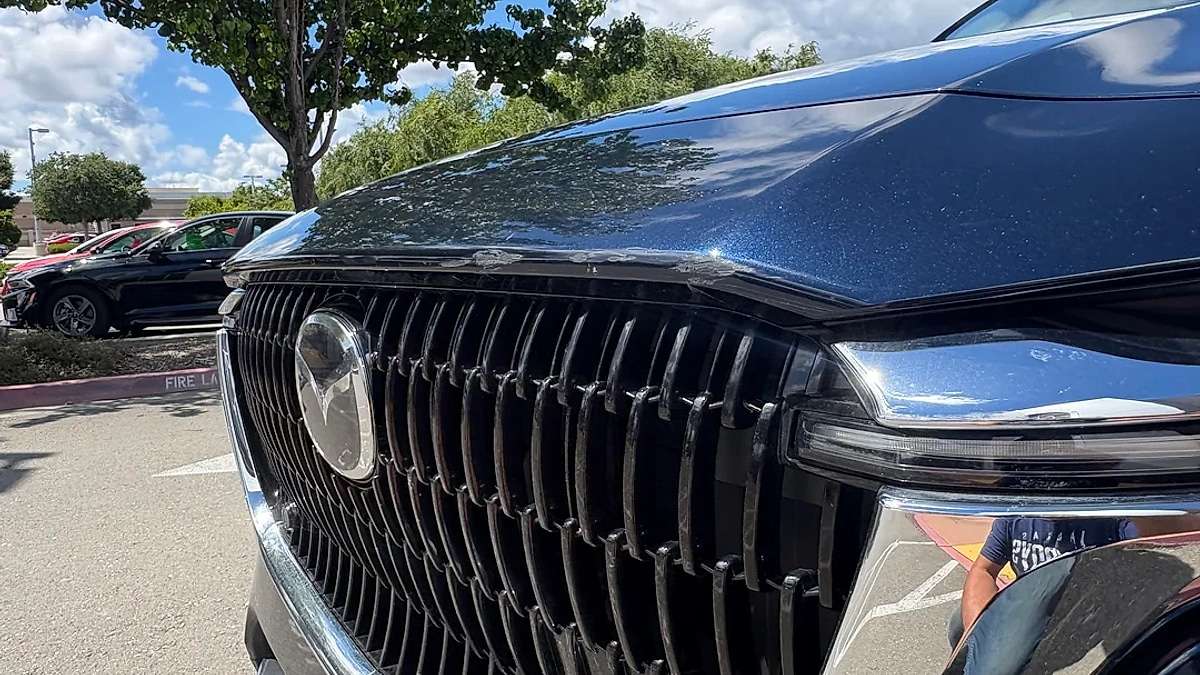

The service manager wrote "small ding" on the inspection invoice. The owner looked at the front of their two-week-old Mazda CX-90 and saw bare metal.
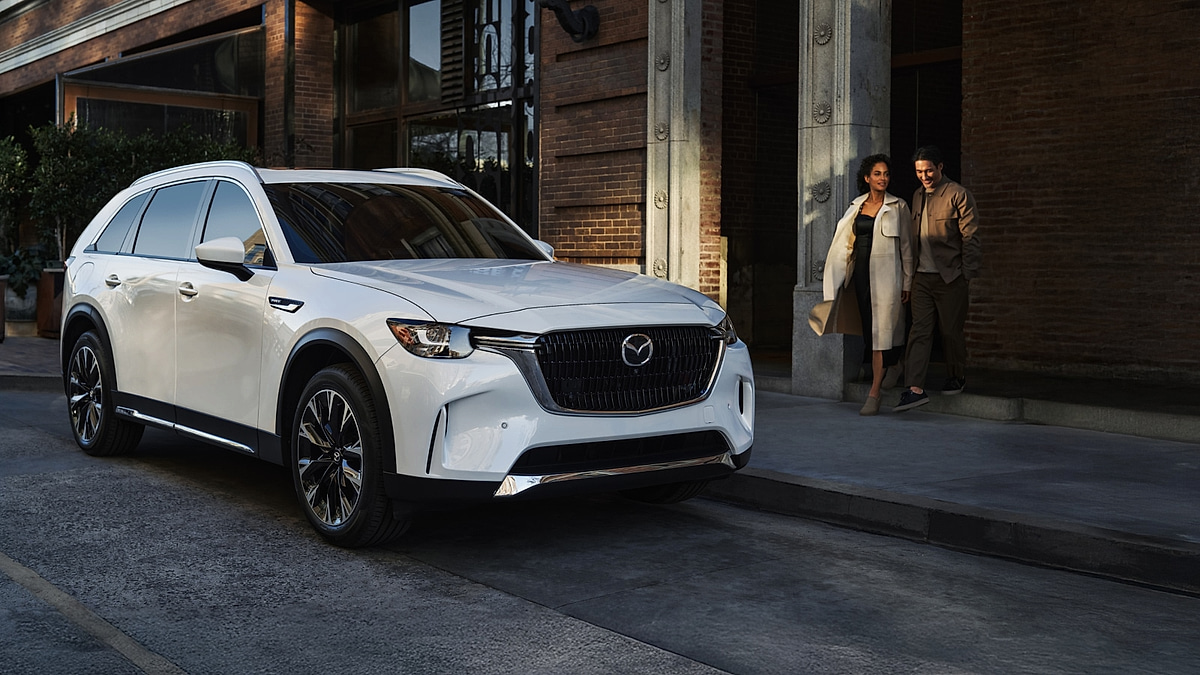
They had dropped the SUV off for a detail that morning, a routine cosmetic service, the kind of appointment you make when you've just spent sixty thousand dollars on a new vehicle, and you want the paint protected before the pollen season hits. The CX-90 Turbo S Premium Plus is not a vehicle you hand over lightly. It's Mazda's flagship, built on a rear-wheel-drive-based platform with an inline-six turbocharged engine making 340 horsepower. A CX-90 3.3 Turbo S can approach $62,000 before dealer doc fees, which pushes it past a Honda Pilot Elite or Toyota Highlander Hybrid Platinum by a margin that gets your attention. The owner had bought theirs two weeks earlier. Nappa leather. Twenty-one-inch wheels. Platinum Quartz Metallic paint.
When they came back to the dealership that afternoon to pick it up, they opened the driver's door, and the damage was right there in front of them. Not on the passenger door. On the front grille and hood, the face of the vehicle is the first thing anyone sees. A gash deep enough to expose the substrate beneath the paint. The kind of damage that doesn't buff out.
"I saw it as soon as I opened the door to get it from the service area," the owner wrote in a Reddit post. They called the service manager over immediately. According to the owner's account, the manager inspected the damage, then wrote "small ding" on the inspection field of the invoice. The owner says that the description did not match what they were looking at. A small ding is a parking lot door tap. This was bodywork down to the metal, or possibly the plastic substrate beneath it, on a panel that serves as the visual centerpiece of a sixty-thousand-dollar SUV.
The manager reportedly promised to pull video footage showing the vehicle's entire time on the dealership property. He said the footage would be available by Friday. The owner, who had bought the vehicle just fourteen days earlier, told Reddit commenters they planned to contact their insurance company and were considering legal options. They weren't being litigious. They were being smart. Service invoices are legal documents that establish a vehicle's condition at the moment it leaves a dealership's possession. When an invoice understates damage by an order of magnitude, describing substrate-level bodywork as a "small ding", it creates a paper trail that favors the dealership if the owner later disputes liability. The owner noticed the damage before driving off the lot, before starting the engine, before giving the dealership any opportunity to claim the damage happened after pickup. That timing matters.
Commenters who reviewed the owner's photos were direct. "Oh my friend, that's more than a scratch," one wrote. "They hit something. It's down to the metal, slash plastic, will be multiple thousands to fix. On a new car that new, the entire panel will need to be refinished. Wherever you take it, absolutely do not let them blend the clearcoat. Blended clearcoat will die back and fail one hundred percent of the time." Another commenter, a body shop professional by their own description, advised calling insurance immediately and then calling a lawyer if advised. "Don't wait around for the dealer to do ANYTHING because they will do everything they can to cheap out on something like that."
The commenter who called it "multiple thousands to fix" wasn't exaggerating. Platinum Quartz Metallic is a tri-coat pearl, three separate layers of paint and clearcoat, each applied with precision. That kind of repair doesn't get touched up. The damaged panel gets stripped to bare metal or plastic, primed, sprayed with the base color, then the pearl midcoat, then two full coats of clear. On a large, complex panel like the CX-90's hood and grille surround, integrated body lines, curved surfaces, and chrome accents that need masking, color matching is difficult even for experienced painters. A tri-coat respray on a panel this size typically runs into the thousands, and the blend has to be perfect. A mismatch doesn't show up in the shop. It shows up in direct sunlight, three months later, when the new clearcoat ages differently from the factory finish.
Some shops will try to save time by blending clearcoat into adjacent panels rather than respraying the entire damaged area. That shortcut fails. UV degradation attacks the blend line where old clearcoat meets new, creating a visible boundary that discolors and peels within two to three years. The proper repair requires stripping the damaged panel to bare metal or plastic, applying primer, building the color coats, laying down the pearl midcoat, and finishing with two full coats of clear. Then it needs to cure. The owner is looking at three to five days without their new vehicle. For a detail.
The owner isn't the only one. In the same Reddit thread, another CX-90 owner wrote: "Same thing happened to me when I barely got the cx90. I noticed till next day. They had the car for 2 days." That owner sent pictures to their service advisor, and the dealership fixed the damage at no cost. The outcomes vary dramatically depending on which service advisor answers the phone, which manager reviews the claim, and whether the dealership has a culture of accountability or a culture of denial.
A third commenter described a different dealership experience that followed the same pattern. A technician cracked their front bumper on a lift. Three technicians saw the damage. None of them said anything. The owner only caught it because they had a dash cam running. A fourth commenter reported that the same dealer chain, the building next door, same ownership group damaged their Acura during a routine service visit. The pattern suggests something that individual dealerships don't want to acknowledge: service bays are high-risk environments, and the culture of reporting damage when it happens is not as strong as the culture of hoping the customer doesn't notice.
Detailing is particularly risky. The vehicle is moved multiple times between the service bay, the wash tunnel, and the drying area. It's washed with high-pressure equipment and dried with towels that may carry debris from previous vehicles. It's maneuvered through tight spaces by staff who are often entry-level employees with high turnover. The combination of wet surfaces, cramped quarters, and junior staff creates conditions where accidents happen, and where accountability gets fuzzy.
One commenter who examined the owner's photos raised a separate concern. The hood paint showed micro-scratch damage consistent with an automatic car wash, the kind of brush-based tunnel system that dealerships sometimes use for efficiency. The owner had brought the vehicle in specifically for a detail, which raises questions about whether the dealership used appropriate methods for a vehicle with fresh paint. New vehicle clearcoat is softer during the first ninety days after application. The solvents in the paint are still outgassing during that period, which means the finish remains more susceptible to scratching. Ceramic coatings and paint protection film, the services that luxury vehicle buyers typically request, should be applied in controlled environments by technicians trained in surface preparation. Automatic tunnel washes use brushes that accumulate grit from hundreds of previous vehicles. On soft, new clearcoat, those brushes leave swirl marks that don't appear immediately but become visible under direct light within weeks.
The owner's insurance agent told them something that most people don't think about until it's too late. If a dealership damages your vehicle, start the claim under your own policy first. Don't negotiate with the dealer's service manager. Don't call the dealership's insurance hotline. Call your own insurer and let them subrogate against the dealership. Your insurance company has lawyers on staff. They have relationships with body shops. They have a weight that individual consumers do not. One subrogation letter from an insurance company's legal department gets more attention than a month of phone calls from an angry customer. And it protects you from retaliatory service delays, a real concern when the same dealership that damaged your car is the one scheduled to perform your warranty maintenance.
The photos the owner took at the dealership, wide shots showing the service bay in the background, the time stamp visible, the damage from multiple angles, will matter more than anything they say on the phone. But video is better. Walk around the vehicle narrating the date, the mileage, and what you're seeing. Upload it to cloud storage before you start the engine. Most people don't do this. They hand over the keys, sign the paperwork, and assume professionalism. Two weeks and sixty thousand dollars later, this owner learned what that assumption costs.
Mazda has positioned the CX-90 as a premium three-row SUV, with materials and pricing that compete with the Acura MDX. The company has built a reputation for reliability and owner satisfaction, consistently ranking above industry average in J.D. Power quality studies. But dealer service quality is franchise-dependent, not manufacturer-controlled. The dealership that handled this detail is independently owned. Mazda corporate is not responsible for what happens in an individual service bay. However, manufacturers can apply pressure through franchise agreements when pattern complaints emerge, and owner-reported vehicle experiences often reveal what showroom visits cannot.
The owner didn't photograph the car before drop-off. Most people don't. They trust the process. They trust the dealership. They trust that a business whose entire model depends on customer retention won't damage a two-week-old vehicle and then write "small ding" on the invoice. That trust is usually justified. This time, it wasn't.
The dealership manager promised video footage by Friday. If that footage shows the damage that occurred on dealership property, in the wash tunnel, in the service bay, during the detail, liability becomes difficult to dispute. If the footage is "unavailable" or "corrupted" or "we're still reviewing it," that becomes its own story.
About The Author
Noah Washington is an automotive journalist based in Atlanta, Georgia, covering sports cars, luxury vehicles, and performance culture. His reporting focuses on explaining the engineering, design philosophy, and real-world ownership experience behind modern vehicles.
Noah has been immersed in the automotive world since his early teens, attending industry events and following the enthusiast communities that shape how cars are built and driven today. His work blends industry insight with enthusiastic storytelling, helping readers understand not just what a car is, but why it matters.
Noah is also a member of the Southeast Automotive Media Association (SAMA), a professional organization for automotive journalists and industry media in the Southeast.
His coverage regularly explores sports cars, luxury vehicles, and performance-driven segments of the automotive industry, including the evolving culture surrounding Formula Drift and enthusiast builds.
Read more of Noah's work on his author profile page.
You can also follow Noah here:
Set Torque News as Preferred Source on Google
Follow us today...






