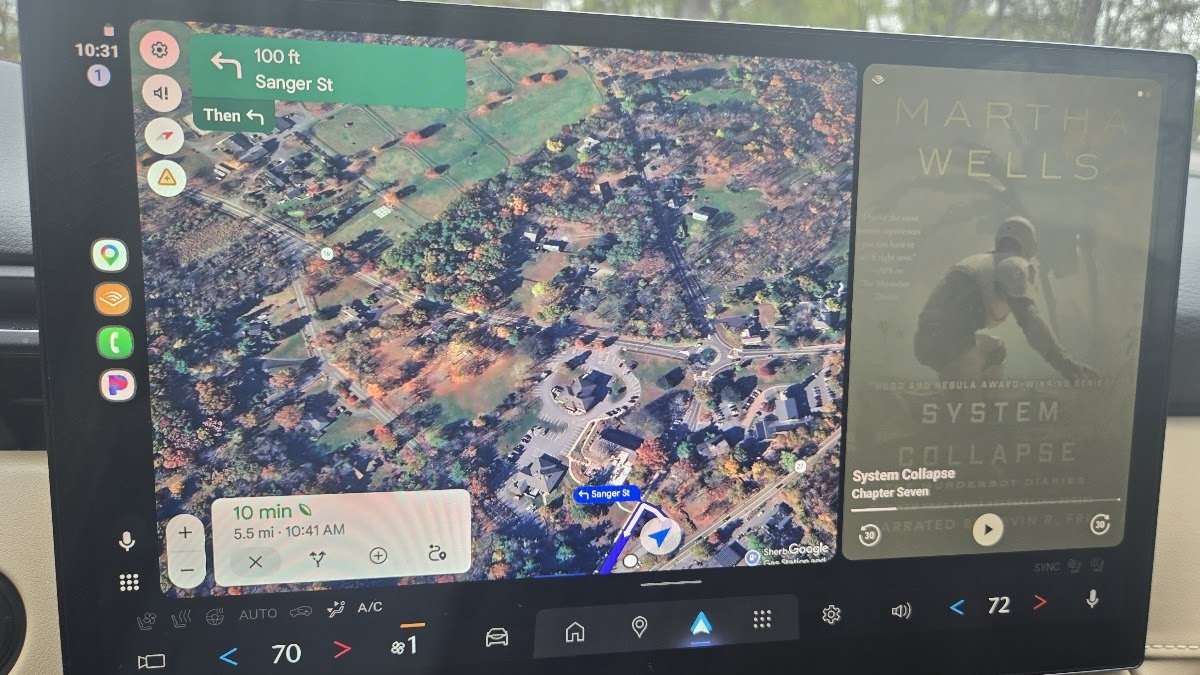

For more than a decade, Mazda made a stubborn, contrarian argument about how a car should work. While nearly every other automaker raced to embed bigger, brighter, and frankly better touchscreens into their dashboards, Mazda was unyielding in its insistence that drivers were better served by a small rotary dial called the Commander nestled between the front seats. The reasoning was simple: touchscreens pulled eyes off the road. With the “all-new” 2026 CX-5 Premium Plus, Mazda has put the Commander Knob out to pasture, removed nearly every dashboard button, and handed the vehicle’s operation over to a single, glassy display 15.6/12.9 inches mounted so the wide part is left to right. Its physical form is basically Tesla’s design from what feels like two decades back. This is a substantial departure for a brand that has spent the past several years pushing its lineup upmarket, as we documented when the 2022 CX-5 furthered Mazda's migration to the premium segment, and it lands in a moment when the broader industry is wrestling with screen-and-knob compromises
Damned if You Do, Damned If You Don’t
In the automotive press and influencer worlds, there are two schools of thought. The aging enthusiast crowd mostly wants all this techno mumbo jumbo to stop, go away, and not bother them so they can eat their soup. That ain’t gonna happen. Another group likes the clean look of a cabin with nothing but one big screen. That group almost took over the industry, but a growing middle ground has emerged: why not keep physical buttons for the stuff that makes sense to operate with muscle memory, and also have a big screen to display navigation and allow for stationary use with phone-like menus?
Mazda overshot a bit in this tester/owner/fan’s opinion. Before I begin to make the case that some of the stuff should be removed from the mono-screen, let me list off some of the many great things about Mazda’s new infotainment system. The CX-5 has been Mazda's volume seller for years, and as we noted when the CX-5 lived on after the CX-50 arrived as the brand's top seller. Right now, the CX-5 accounts a third of the brand's overall U.S. deliveries. Getting this redesign right matters more for Mazda than for almost any other model in the lineup.
First up, the screen is gorgeous. Humongous. And when you display Google Maps in satellite view, you can quickly see things at a glance that a smaller screen either would not show you or would require a longer look and perhaps some taps to zoom. This new screen is a big plus for the CX-5 Premium Plus.
You Can Make the Screen Actually Work
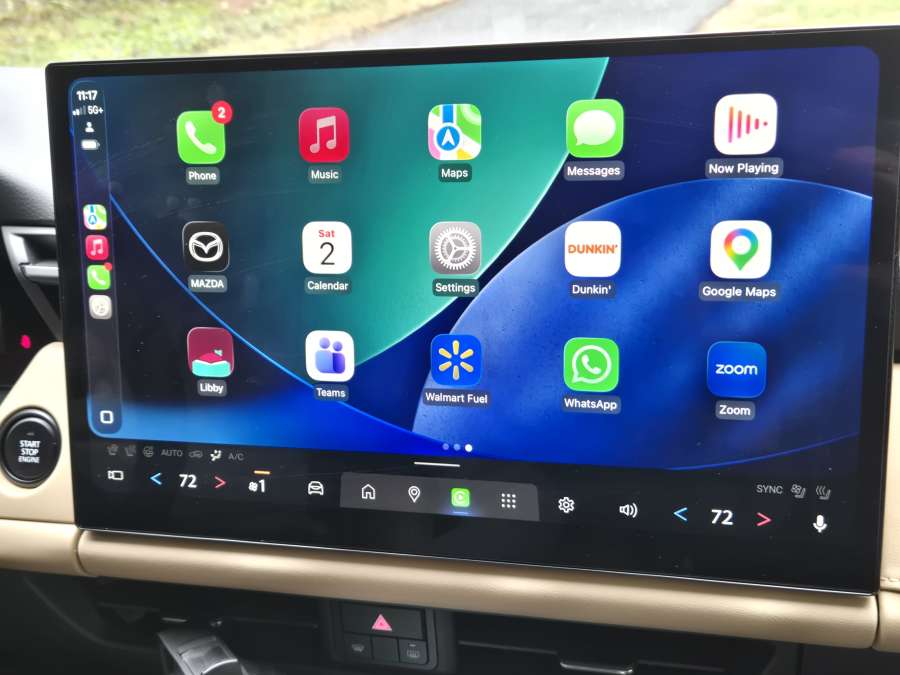
Another great new feature is that Mazda now lets you touch and operate the screen while moving. Remember, there are often two people in the front of a vehicle. Locking up things you need or want to do makes the driver want to punch the screen, or the passenger to ask, “Why did you buy this Karen-esque vehicle?” Mazda’s new screen complies if you tap it.
Best Head Up Display In the Segment
In many brands, head-up displays are hit or miss, and they tend to be different from model to model within a given brand. We have to say that Mazda was an early adopter of HUD, quickly evolved its system to best in class, and it remains the best you will find at any price. I’m including the fancy-pants luxury brands in this statement. If you like a HUD system, you should look at the CX-5. The top three of the five trims have the HUD, it's not just the single most expensive trim that offers it.
Google Built-In - Don’t Panic
Mazda has added Google Built-in, an operating system that puts Google Maps, Google Assistant, Gemini, and the Play Store directly into the dashboard, no phone required. For drivers who don't lean heavily on their phones for navigation and music, this is a genuine upgrade over Mazda's old system, with cartographic Google Maps views, voice control through Google Assistant, and over-the-air updates baked in. There's a catch worth knowing about, though, the connectivity is complimentary for one year, after which Mazda has not yet committed to keeping it free.
For the millions of American drivers who already use Android Auto every day, Google Built-In duplicates what they already have and, arguably, does it less well. Android Auto updates constantly, follows you from car to car, and now includes Gemini AI. Built-In, by contrast, lives in the vehicle and depends on Mazda pushing updates over time. The good news is that Mazda made the right call by keeping both Android Auto and Apple CarPlay, so you can simply ignore Google Built-In if you prefer your phone's interface.
Some Downsides Of the “One Screen To Rule Them All” CX-5 Design
Here comes the negatives. First up, no volume knob. Not on the lower center console where it lived in the CX-5 for over a decade, and not on the dash or screen. Instead, you get a poorly placed volume control on the left spoke of the wheel and an on-screen plus-and-minus controller that has to be tapped to wake it up before you look at it, aim, and tap, tap, tap, tap to change the volume. Other brands, like Honda, learned through negative reviews, lost sales, and angry long-time owners that a knob is preferred, and now Mazda likely will as well. Honda brought the volume knob back, a reversal we were careful to highlight in our review of the 2022 Civic. We suspect Mazda will also put it back in a few years. Does this really matter? Hande Tuncer, a fellow Torque news contributor and long-time Mazda CX-5 owner, got into the CX-5, and the first thing she said was "Where is the volume knob?" You see, she drives a vehicle in this segment now without one and has vowed never to own a vehicle without a volume knob again. So, it's easy to say this matters to people who have been shown to shop for and possibly buy Mazda CX-5s.
The HVAC controls are always shown on the screen along the bottom. This is an acknowledgment by Mazda’s screen designer that they are used frequently by drivers and passengers. Because they are someplace in the screen, you need to look away from the road, aim, tap to make the specific menu, say heated seat wake up, then aim and tap it. Compared to the toggle switch on a Subaru or the little physical buttons on a Toyota, this is a fail.

The last niggle I’ll list is that there is no finger tray to rest your hand on while you operate the screen. You just have to let your arm hang in the air. Ergonomically, bad. Fatiguing. It makes aiming harder, even if you are a passenger. As a passenger in the vehicle, I had trouble aiming for and hitting the heated seat's initial menu. It's not easy to hit the mark while underway. This small detail is often forgotten by screen designers because they are screen-centric rather than vehicle-centric. I can tell you that most Mazda owners identify as driving-centric. Zoom Zoom, and all that jazz.
Mazda’s not crazy. There are two Defrost buttons below the screen; you can press them if your windows suddenly fog up. The red triangle hazard button is also there. I think it’s a legal requirement.
We drove a top-trim CX-5, the $41,080 Premium Plus. Compared to what Acura and even Ford offer, the CX-5’s Bose system is sub-par. It’s time for Mazda to step away from Bose. The provider is not in alignment with Mazda’s premium path.
To summarize the Infotainment of the CX-5 Premium Plus:
Pros
-Wireless Android Auto and Apple CarPlay allow you to ignore Google Built-In
-Fantastic 15.6-inch wide screen in size, orientation, and clarity
-Pretty quick to come alive and start working when you turn the vehicle on
-Best-in-class head-up display
Cons
-No Volume knob
-Key menus are screen-only (Heated Seats, more)
-No finger shelf for screen operation
The 2026 CX-5 is refreshingly more modern, more connected, and more aligned with what the average shopper expects when they walk onto a dealership lot in 2026. Mazda's new infotainment system is worlds better than the outgoing rotary-controlled setup, and for buyers who came of age tapping and swiping their way through life, the transition will feel natural and overdue. The screen is gorgeous, the head-up display remains best in class, and Google Built-In sits there for drivers who want it, while Android Auto and CarPlay remain available for those who know better.
What troubles this reviewer is what Mazda gave up to get here. For more than a decade, the company argued that tactile controls and muscle-memory operation were the safer, smarter way to drive, that pulling a driver's eyes off the road to hunt for a virtual button was exactly the wrong design philosophy. Then Mazda built a cabin that asks you to do precisely that every time you want a heated seat or a small bump in volume. The irony is hard to miss. A brand that once defined itself by going against the grain has decided to merge with traffic, and in the process, it has handed over some of the things that made a Mazda feel like a Mazda. The screen is excellent. The Commander Knob is thankfully gone. Whether the trade was worth it is a question every CX-5 shopper will have to answer from the driver's seat, ideally with both hands still on the wheel and eyes straight ahead.
John Goreham is a 14-year veteran of Torque News. An accomplished writer and a long-time expert in vehicle testing, Goreham also serves as the Vice President of the New England Motor Press Association and has a growing social media presence. He’s also a 10-year staff writer and community moderator for Car Talk. Goreham holds a B.S. in Mechanical Engineering and an undergraduate Certificate in Marketing. In addition to vehicle and tire content, he offers deep dives into market trends and opinion pieces. You can follow John Goreham on X and TikTok, and connect with him on LinkedIn.
Images by John Goreham
Set Torque News as Preferred Source on Google
Follow us today...