
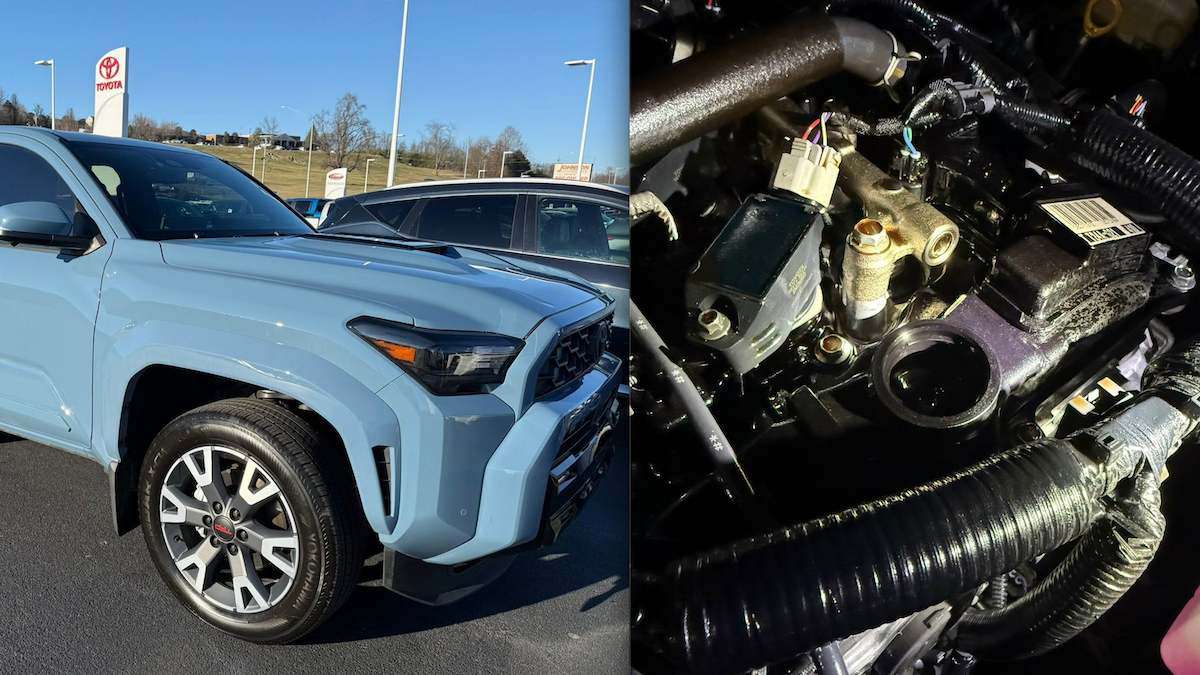

One simple mistake turned a brand-new 2025 Toyota 4Runner into a smoke-filled nightmare, and what the dealer did next is even more shocking.
Imagine picking up your brand-new 2025 4Runner from its first service only to have the cabin fill with smoke and the engine bay drenched in oil because a Toyota technician forgot a simple cap. It is a terrifying scenario in which a routine maintenance visit turns into a desperate cleanup effort by a dealership seemingly more focused on masking the smell than on fixing the mistake.
In my research on 4Runner owner experiences, I came across this unbelievable post shared in a Facebook community of 6th-Generation Toyota 4Runner enthusiasts, where Angie Meade Clark highlighted growing concerns about dealer service quality and the potential long-term damage from a routine maintenance blunder. Angie says,
“I took my 2025 4Runner to have the 5k service completed and noticed it smelled like gas when I picked it up. I drove it home (about 20 minutes), and the cabin was full of smoke, with smoke rolling out from the hood. The Toyota tech had left the oil cap off. According to the dealer, it only lost about 1/2 quart of oil. There was oil everywhere in the engine bay. They had it all day yesterday…cleaning the motor, changing the cabin filter, oil change, detailing it & running the ozone treatment in it. When I went to pick it up, they asked if they could keep it to continue to run the ozone. I’m worried about the long term effects of leaving the oil cap off & running the ozone multiple times may have. This has been a nightmare, and I’m stunned that the dealer tried to hide the damage. Has anyone else gone through this?”
In my 30 years of covering the automotive industry, I’ve often said that a vehicle's first 5,000-mile service is the most important "check-up" of its life. According to experts at The Lemon Law Experts, early reports on the 2025 model have already highlighted several concerns about the vehicle's engine performance and the newly introduced turbocharged powertrain.
I have previously documented how a simple technician error can almost ruin a Toyota engine when vital components are left disconnected or loose during service.

I know the real story isn't the mistake, it’s the damage found afterward that the dealer tried to hide. Research from Car From Japan warns that driving without an oil cap allows dust and debris to enter the engine, which can eventually cause friction and excessive heat.
I’ve seen this before, and as I detailed in my report on why people are having trouble with their 2025 4Runners so soon, owners are increasingly wary of how these new, complex systems handle early-life maintenance failures.
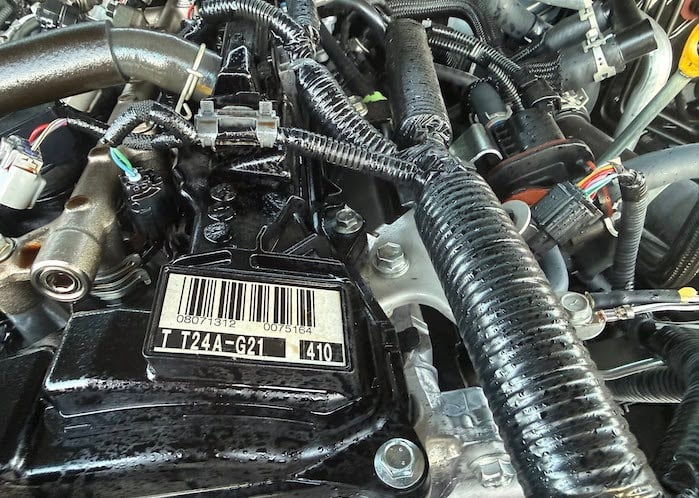
Why a "Simple" Oil Cap Mistake is a Ticking Time Bomb
In my three decades in the industry, I’ve heard service advisors dismiss a missing oil cap as a "messy but harmless" mistake. On an old naturally aspirated V6, they might have been right. But on the 2025 4Runner’s i-FORCE 2.4L Turbocharged engine, it’s a different story entirely.
1. The "Invisible" Oil Loss (Cavitation Risk): When that cap is off, the crankcase loses its sealed vacuum. At highway speeds, the engine doesn't just "leak" oil; it atomizes it. This fine mist is sucked out of the filler neck, leading to a rapid drop in oil pressure. For a high-strung turbo engine, even a 30-second drop in pressure can cause microscopic scoring on the turbine bearings—damage that won't show up until 40,000 miles down the road when the warranty is a distant memory.
2. Thermal Shock to the Turbo Housing: The white smoke I saw wasn't just "steam." It was raw oil hitting the red-hot exhaust housing of the turbocharger. The extreme temperature differential between the oil and the housing can cause manifold warping or brittle fractures in the oil return lines. If the dealer just "wiped it down," they are hiding the potential for future oil leaks or, worse, a vehicle fire.
3. PCV System Contamination: The Positive Crankcase Ventilation (PCV) system is designed to handle gases, not the turbulent air introduced by an open filler neck. Running the engine this way forces debris and unmetered air into the intake tract. For a modern Toyota engine that relies on precision sensors to manage air-fuel ratios, this "minor" mistake can foul sensors and trigger a "lean condition," leading to long-term carbon buildup on the valves.
The Technical Risks: Oil & Ozone
The Oil Mess: While losing 1/2 quart of oil won't starve the engine (most engines hold 5-8 quarts), the real danger is fire. Oil hitting a hot exhaust manifold is exactly what caused that smoke. If it didn't ignite, the engine internals are likely fine, but the exterior components (hoses, belts, and wiring) need to be completely degreased to prevent premature rubber degradation.
The Ozone Issue: Ozone (O_3) is highly effective at removing smells, but it is an oxidative gas. If the dealer runs it excessively or at too high a concentration, it can potentially dry out or "crack" interior plastics and leather over time.
Why the "Hiding" is a Red Flag
If the dealer was eager to keep it for "more ozone," they are likely trying to ensure you don't smell the oil burn-off when you drive away. If you still smell oil, it means they didn't clean the engine bay thoroughly enough. This lack of transparency is exactly what I warn about in this unbelievable story of bad dealership practices.
Key Takeaways for Toyota Owners
- Immediate Inspection: Never leave the dealership lot after a service without popping the hood and checking the oil cap and dipstick yourself.
- Vacuum Integrity: On turbocharged engines, the oil cap is part of a sealed system; leaving it off creates a vacuum leak that affects performance.
- Ozone Caution: While ozone is great for odor control, excessive use can damage cabin materials such as rubber seals and electronics.
- Documentation is King: Always ensure the service record reflects the error so you have a trail for future warranty claims.
The Verdict: If I bought a 6th-gen 4Runner and this happened, I’m not just letting it go with a free oil change coupon. I’m demanding a borescope inspection of the cylinders and a full oil analysis from the dealer.
What Would You Do? If your brand-new truck came back from its first service covered in oil and smoke, would you trust that dealer to "clean it up," or would you be heading straight to corporate? Please leave a comment and share your experience below.
Next Up: A Toyota Tacoma owner says the dealer scratched his new wheels with an impact wrench. It's a common problem. I've got a three-step strategy to protect your truck's finish and ensure they use a torque wrench. Your wheels will thank you for it!
Denis Flierl is a Senior Reporter at Torque News with over 30 years of hands-on experience in the automotive industry. Having served as a professional test driver and industry consultant for major automakers such as Chevrolet, Ford, Toyota, Honda, and Tesla, Denis provides a "boots-on-the-ground" perspective that goes beyond standard reporting. Since joining Torque News in 2012, he has specialized in cutting through market noise to deliver data-backed analysis and real-world owner stories. His work focuses on navigating the transition to EVs and the shifting automotive market.
Have a tip or question for Denis? > Engage with him directly on LinkedIn for industry analysis, or follow his latest updates on X @DenisFlierl and @WorldsCoolestRides. You can also find his latest car features on Facebook and Instagram.
Photo credit: Denis Flierl via Angie Meade Clark
Set Torque News as Preferred Source on Google
Follow us today...





Comments
The only way to properly…
Permalink
The only way to properly clean up that mess is to remove the motor, then use a pressure washer and degreaser on the entire motor and the entire power barn. That's what I would have had the dealer do. Otherwise, they keep the vehicle and continue paying for my rental.