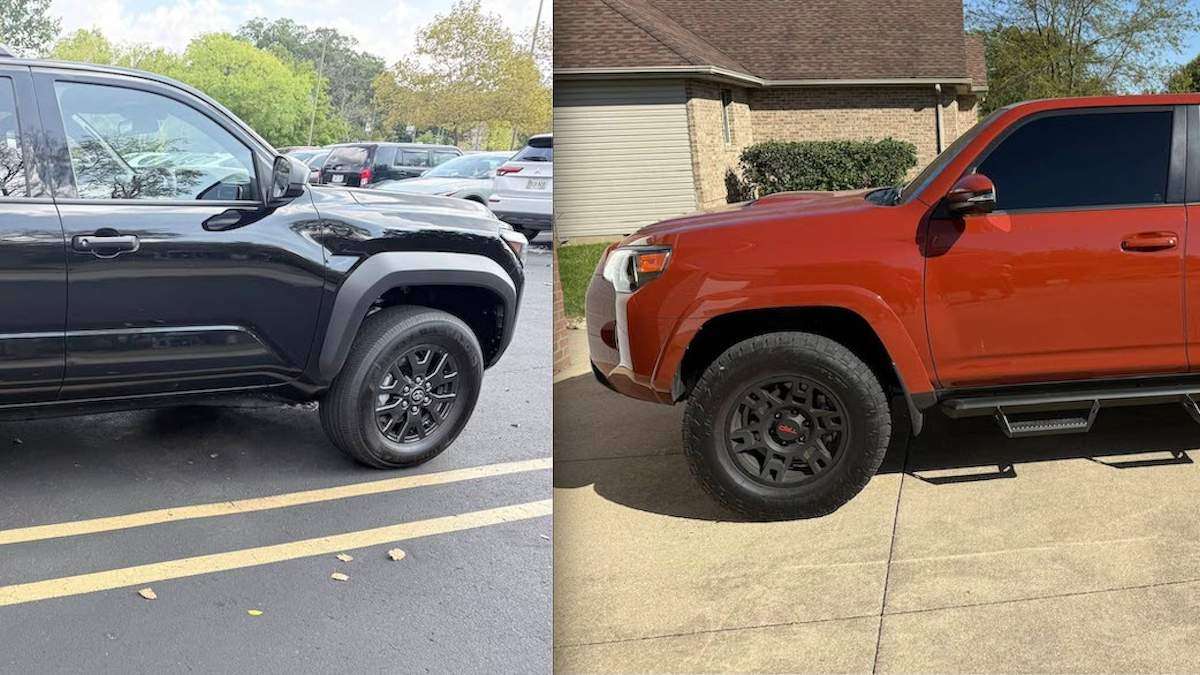

Is the All-New 6th Gen Toyota 4Runner already a disappointment?
Owners are reporting that despite improved power, the build quality is rattling apart.
Imagine this: The new 6th Gen 4Runner delivers on performance: the ride is smoother, the power is up, and the MPG finally beats your 2024 TRD Pro. But the excitement is short-lived. Almost immediately, the cheapness surfaces: a persistent rattle from the rear spoiler, a vibrating window, and an embarrassing, high-pitched squeal every time you touch the brakes.
The improved mechanics can't mask the disappointing build quality. The frustration quickly sets in, leaving you to stare at the rearview mirror and regret trading in the solid, unshakeable ruggedness of your old TRD Pro.
Zach Collett says this on the 6th Generation Toyota 4Runner Facebook page. He says:
"Is anyone else less than pleased with the build quality? Windows are rattling, the rear spoiler is rattling, and the brakes are squealing. Anything else that bugs you about the quality and or price of this vehicle? I can say the ride quality, power, and MPG are much improved over my 2024 TRD Pro. I’m not sure I would do it again if given the chance. Now I wish I had kept my TRD Pro.”
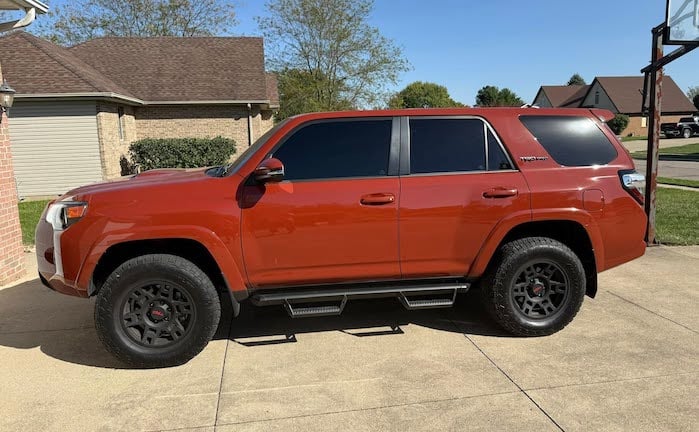
Is there a problem with the 6th Gen Toyota 4Runner Build Quality?
It’s what we see often with the first model year transition. Zach perfectly encapsulates the early-ownership paradox many enthusiasts face when buying an all-new platform: the core mechanicals are vastly superior, but the finishing details are frustratingly sloppy.
Zach talks about the improvements in ride quality, power, and MPG over his outgoing 2024 TRD Pro, which we know was hampered by the aging 4.0L V6. Yet, he is seeing significant build quality issues with the 6th-generation Toyota 4Runner, including rattles and brake squeal.
The First Model Year Kinks
This scenario is not a Toyota failure; it is, unfortunately, an industry reality known as "first-model-year kinks." When any manufacturer rolls out a vehicle built on a completely new architecture—as the 4Runner is on TNGA-F—the initial tooling and assembly line processes inevitably struggle with tolerance stacking, leading to the exact noises Zach describes.
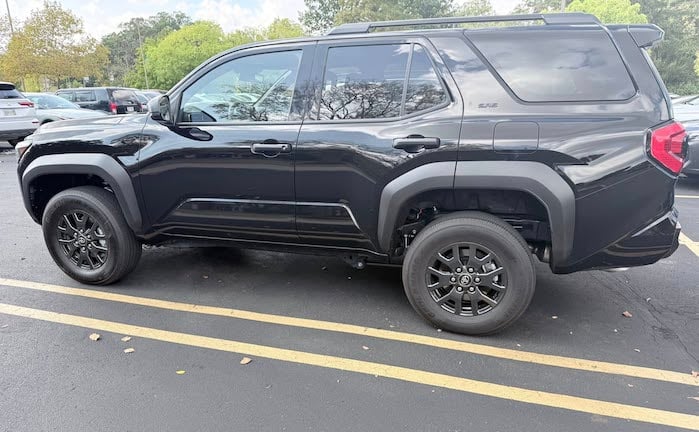
What Are the Solutions For 2025 4Runner Owners?
The difference between a disappointing new truck and a lifetime keeper often comes down to how Toyota addresses these minor issues going forward. Here is a breakdown and possible solutions for owners.
Rattling Windows and Spoiler: This is the definition of tolerance stacking. The window rattle is often caused by improperly seated window regulators or weather-stripping that is slightly too stiff or too thin. The rear spoiler rattle is usually solved by the dealership service department by installing simple felt tape or upgraded grommets where the plastic piece contacts the steel liftgate.
These are nuisance fixes, but they are generally quick and permanent. This falls squarely under common fixes for the Toyota 4Runner's new model year problems and shouldn't require major component replacement. Unfortunately, there’s not much Zach or the dealer can do.
Squealing Brakes: Given the move to a more powerful vehicle, Toyota likely used a more aggressive, semi-metallic or higher-performance ceramic brake pad compound to handle the increased weight and towing capacity (now up to 6,000 lbs). While great for stopping power, these compounds are notoriously noisy at low speeds, especially in reverse (a common complaint noted with a Technical Service Bulletin (TSB)).
The Solution: The best first step is to perform a proper "bedding" procedure on the brakes. Power Stop Brakes says, “A 'bedding' procedure for new brakes is a break-in process that involves a series of moderate to hard stops to create an even layer of friction material from the new brake pads onto the brake rotors.”
“This process is critical for achieving optimal braking performance, preventing brake noise, and avoiding issues like warped rotors. The process typically involves warming the brakes with a sequence of decelerations and then allowing them to cool down properly without coming to a complete stop during the hot phase.”
If that fails, consult with the dealer about swapping to a softer, lower-noise-compound aftermarket pad, recognizing the trade-off may be slightly more dust.
The Technology Leap: Zach’s desire to keep his old TRD Pro is emotional, but the technical leap is undeniable. The old V6 generated 270 hp and 278 lb-ft of torque, with combined MPG dipping as low as 17. The new i-FORCE MAX hybrid delivers an impressive 326 horsepower and 465 lb-ft of torque while achieving 23 combined MPG.
This power, combined with the new, more rigid frame, is the direct Toyota TNGA-F platform benefit for the 4Runner. When performing a true 6th-generation Toyota 4Runner vs 2024 TRD Pro comparison, the new model is better in every measurable metric, even if it requires a few trips back to the Toyota dealer for quality control adjustments.
What the Community is Saying
The sentiment shared by Zach is visible across forums, as many owners review the 6th Gen Toyota 4Runner's first impressions. The build quality concerns are certainly present, but the overwhelming consensus centers on the performance and technology:
One owner says, “The steering finally feels modern,” and “I never thought a 4Runner could pass on the highway so easily. The improved technology, including TSS 3.0 and the 14-inch screens, is a huge win.”
Beyond the rattles, a key frustration remains the pricing structure, especially for the high-end trims like Trailhunter and TRD Pro. Many owners lament that the new 4Runner i-FORCE MAX hybrid powertrain analysis shows a high price tag compared to the non-hybrid i-FORCE model, making the value proposition feel strained at the top end.
My Related 4Runner Coverage
For those looking for deeper context on the new platform, you can check out my previous reports, which offer a full breakdown of what Toyota achieved:
Conclusion:
These kinks are minor, addressable quality control issues. Zach is sitting in a technologically and dynamically superior vehicle. Get the issues documented and fixed under warranty now. The core platform is solid.
Ultimately, the question comes down to this: Is the new Toyota 4Runner worth the upgrade over previous generations once these small factory assembly bugs are ironed out?
Key Question for Readers:
If you could exchange your 5th Gen for a 6th Gen, knowing you might face these initial build quality issues but gaining the i-FORCE MAX power and 23 MPG, would you make the trade today? Let me know in the red "Add New Comment" link below!
I'm Denis Flierl, a Senior Torque News Reporter since 2012, bringing over 30 years of automotive expertise to every story. My career began with a consulting role for every major car brand, followed by years as a freelance journalist test-driving new vehicles—equipping me with a wealth of insider knowledge. I specialize in delivering the latest auto news, sharing compelling owner stories, and providing expert, up-to-date analysis to keep you fully informed.
Follow me on X @DenisFlierl, @WorldsCoolestRides, Facebook, and Instagram
Photo credit: Denis Flierl via Zach Collett
Set Torque News as Preferred Source on Google
Follow us today...