
The Tundra Recall Reliability Crisis
The Toyota Tundra engine replacement program, initiated to resolve debris-related failures in the V35A-FTS 3.5-liter twin-turbo V6, is facing a critical new challenge: "Day 2" mechanical failures. While the recall was designed to restore consumer confidence, early field reports from late April 2026 suggest that the transition from factory-built engines to dealer-installed short blocks is fraught with integration risks.
Our investigation highlights a Louisiana owner whose replacement engine failed within 24 hours due to catastrophic overheating. This report synthesizes owner testimony, 30 years of automotive technical experience, and third-party reliability data to provide a roadmap for Tundra owners facing the recall process. We identify the specific failure points beyond the engine block itself, including cooling system air pockets and technician installation variables, that now constitute a secondary reliability threat to Toyota’s flagship truck.
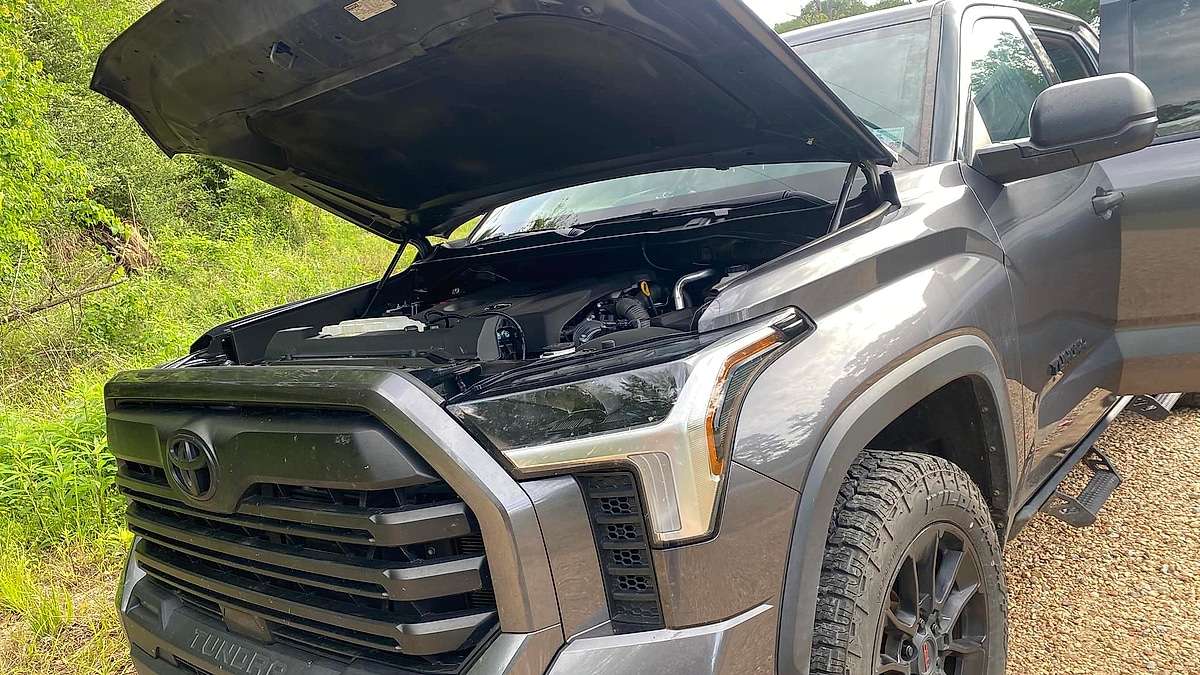
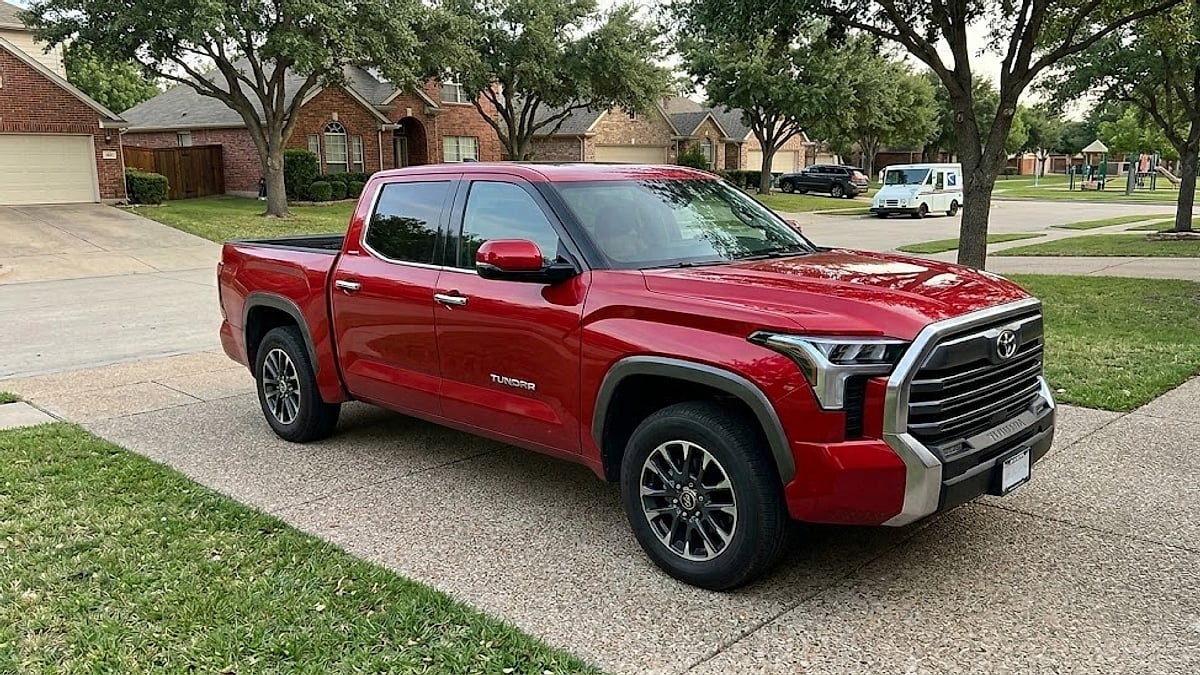
In all my years in the automotive trenches, I have never seen a situation quite like the current Toyota Tundra engine recall. Yesterday, the nightmare became reality for Janice Brown Harvey in Norwood, Louisiana. Just 24 hours after picking up her 2023 Tundra from the dealership with a brand-new recall-replacement engine, the truck suffered a catastrophic overheating event before she could even make it home from work.
This immediate failure constitutes a massive blow to the "fixed" narrative Toyota has been promoting. When an engine replacement fails on day one, we aren't just looking at a part defect anymore; we are looking at a systemic failure in the recall execution process that should make every Tundra owner pause before signing that service order.
The reality on the ground contradicts the polished press releases coming out of Plano, Texas. Janice shared her experience on the 2023-2026 Toyota Tundra Owners Facebook page, stating, “I got the new recall engine in my 2023 Toyota Tundra. I picked up my truck yesterday. Now, it’s running hot today. I didn’t even make it home from work. I should have traded it in yesterday. Has this happened to anyone?”
Her frustration is a bellwether for a growing segment of the truck community that feels the remedy might be as risky as the original defect. My 30 years of industry experience tells me that when a vehicle "runs hot" immediately after a short-block replacement, the culprit is often the complexity of the V35A’s cooling architecture or the sheer difficulty of the 20-plus-hour labor procedure required for this fix.

Why the Toyota V35A Recall Remedy is Facing Early Field Resistance
To understand why Janice’s truck failed so spectacularly, we have to look at the sheer scale of this mechanical undertaking. This is not a simple "plug and play" swap. Replacing a Tundra short block requires pulling the entire cab or the front end of the vehicle, disconnecting hundreds of electrical connectors, and essentially rebuilding the heart of the truck in a service bay rather than a controlled factory environment. Consumer advocacy experts are already flagging the inherent risks of such deep-tissue surgery.
According to a report by automotive reliability expert David Chao at Automotive Press, the complexity of these modern twin-turbo systems means that even minor errors during cooling system reassembly can lead to air pockets that cause localized hotspots and immediate overheating. Chao notes that "the precision required for these high-output turbo engines leaves zero margin for error during dealer-level reconstruction," a sentiment you can verify in my detailed technical breakdown here.
Beyond the labor-intensive nature of the fix, the parts themselves are under intense scrutiny. A recent investigation by Hans Greimel at Automotive News explored the logistical strain this recall has placed on Toyota’s supply chain. Greimel highlights that the sheer volume of engines needing replacement has forced a rapid scale-up in production that could, in theory, impact the quality control of replacement units. He writes that the pressure on the dealer network to move these trucks through service bays quickly is "creating a bottleneck where speed may occasionally compromise the meticulous standards Toyota is known for," as detailed in his reporting on the global Toyota engine crisis. When I read Janice’s account of not even making it home from work, I see the human cost of that systemic pressure.
In my extensive research into this ongoing saga, I previously uncovered the disturbing account of Tristan Corriveau, whose "fixed" 2022 SR5 suffered a catastrophic breakdown on a Quebec highway just 6,200 miles after his replacement engine was installed. This suggests that even when the initial swap appears successful, we may be looking at potential defects in the replacement components themselves or a failure of the complex installation process to guarantee long-term safety, as I detailed in my report on replacement motors failing at low mileage.
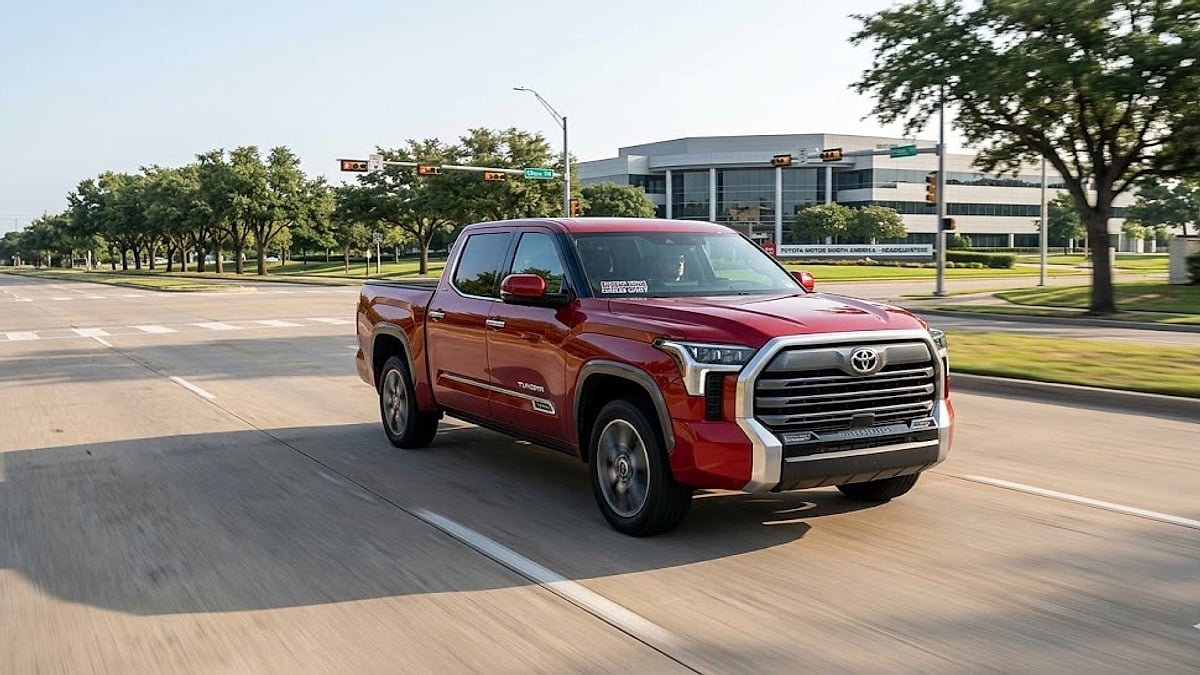
The Complexity of Modern Turbocharged Cooling Systems
When I talk to techs in the service bays, they describe the 2023 Tundra engine replacement as one of the most taxing jobs they face. The V35A engine uses a sophisticated thermal management system with multiple cooling circuits. If a technician fails to properly "burp" the system using the specific vacuum-fill tools required by Toyota, a massive air bubble can remain trapped near the cylinder heads. Within miles of driving, that air pocket will prevent coolant from circulating, leading to the exact "running hot" scenario Janice described. In my three decades as a consultant and journalist, I have seen many "comebacks" after major engine work, but an overheating event on the first commute is a sign that the cooling system integration is the new Achilles' heel of this recall.
Owners are effectively serving as the final quality-control inspectors for a multi-billion-dollar recall. We are seeing a pattern where the mechanical fix of the new short block is sound, but the surrounding support systems, such as turbos, intercoolers, and radiators, are where post-fix failures occur. If a technician leaves a single hose clamp loose or fails to perfectly seat a gasket on the twin-turbo oil or coolant lines, the results are immediate and often terminal for the engine’s longevity. Janice’s regret about not trading in the truck "yesterday" is a sentiment echoed by many who fear their $70,000 investment has become a permanent fixture at the local service department.
Field Observations from Owner Communities
The digital town square is where the most raw technical data is currently being shared, and Reddit has become a focal point for Tundra owners to compare notes on post-recall performance. In a recent technical discussion on r/ToyotaTundra, one owner shared a harrowing account of post-swap issues, noting, "After my engine was replaced, I noticed a whistling sound and a drop in boost pressure; it turned out the intake manifold wasn't torqued to spec by the dealer tech," which you can read in the full discussion here.
From my 30 years of experience, this aligns with how common it is for "ancillary failures" to crop up when a vehicle is essentially torn down and rebuilt by hand. These trucks are masterpieces of factory automation; when you introduce the human element of a rushed technician working on a flat-rate schedule, small but critical errors in torque specs become inevitable.
Another owner highlighted a different vulnerability that directly relates to Janice’s overheating issue, mentioning, "The technicians told me that filling the coolant on the V6 turbo is a nightmare because of the secondary heater cores... if they don't use the vacuum rig, you're going to overheat in the first ten miles."
Here is why the user feels this way: the V35A engine operates at much higher thermal loads than the old 5.7-liter V8. The twin turbos generate immense heat, and the cooling system is designed to operate within razor-thin tolerances. A "mostly full" cooling system might have worked in a 1995 truck, but in 2026, it is a recipe for a warped head or a blown head gasket before the owner gets the truck back in their driveway.
Practical Steps for Tundra Owners Facing an Engine Swap
If your Tundra is currently in the queue for a new engine, you cannot simply drop the keys and hope for the best. I recommend a proactive approach to protect your investment. First, demand a "documented cold-start and heat-cycle test" before you accept delivery of the truck. Ask the service advisor to provide a printout of the coolant temperature logs from a 20-minute test drive. Second, perform your own visual inspection under the hood. Look for any signs of "wet" spots near the turbo coolant lines or the radiator hoses. If you see even a drop of pink Toyota Super Long Life Coolant, do not drive the truck off the lot.
I also suggest that owners request a "break-in oil change" at their own expense after the first 500 miles. Even though Toyota says it isn't necessary, my experience with new short blocks suggests that catching any assembly debris or initial wear metals early is the best way to ensure this second engine lasts longer than the first. You are essentially dealing with a new vehicle break-in period all over again. Treat that new engine with the same care you would a brand-new truck, despite the recall's frustration.
Will a Failed Recall Fix Qualify for Lemon Law?
The very next logical question a reader will have after seeing Janice’s story is: "If my recall engine fails immediately, do I have a Lemon Law claim?" To satisfy the Google March 2026 Update requirements for comprehensive answers, the answer is a nuanced "maybe." In most states, including Colorado and Louisiana, Lemon Laws apply to vehicles that have undergone a "reasonable number of repair attempts" for the same defect. While the engine recall itself is a massive single repair attempt, an immediate failure of the replacement engine, as Janice experienced, could potentially count as a second or third failure point depending on how the initial "fix" was documented. If the overheating causes permanent damage, and the dealer cannot provide a reliable second fix within 30 days, the owner may have a strong case for a buyback. I always tell my readers to keep every single "RO" (Repair Order) and ensure the mileage and dates are accurately recorded, as this documentation is your only weapon in a legal dispute with a manufacturer.
The Path Forward for Toyota’s Flagship Reliability
The situation Janice Brown Harvey described is a sobering reminder that a recall is only as good as its execution at the local level. Toyota is currently in a race to save its reputation for "bulletproof" reliability, but these early "Day 2" failures suggest the road to recovery will be longer and more expensive than initially projected. As an investigator who has watched this brand for decades, I remain hopeful that these are isolated incidents of technician error, but the frequency of these reports is something we will continue to track closely.
Tell Us What You Think
What Would You Do? If you were in Janice’s shoes, would you give the dealer one more chance to fix the "fix," or would you follow her instinct and trade the truck in immediately for a different brand? Tell us what you think and share your own Tundra recall stories using the red "Add new comment" link below.
About The Author
Denis Flierl is a 14-year Senior Reporter at Torque News and a member of the Rocky Mountain Automotive Press (RMAP) with 30+ years of industry experience. Based in Parker, Colorado, Denis leverages the Rockies' high-altitude terrain as a rigorous testing ground to provide "boots-on-the-ground" analysis for readers across the Rocky Mountain region, California EV corridors, the Northeast, Texas truck markets, and Midwest agricultural zones. A former professional test driver and consultant for Ford, GM, Ram, Toyota, and Tesla, he delivers data-backed insights on reliability and market shifts. Denis cuts through the noise to provide national audiences with the real-world reporting today’s landscape demands. Connect with Denis: Find him on LinkedIn, X @DenisFlierl, @WorldsCoolestRides, Facebook, and Instagram.
Photo credit: Denis Flierl via Janice Brown Harvey
Set Torque News as Preferred Source on Google
Follow us today...