
You hit the gas. Your truck plays dead. You are left completely stranded in oncoming traffic.
That is the terrifying intersection reality facing thousands of third-generation Toyota Tundra owners.
Yet despite corporate headquarters releasing an official software fix to remedy this rolling-stop death lag, local dealerships are actively locking it behind service-counter red tape.
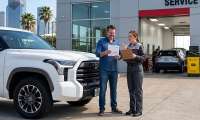
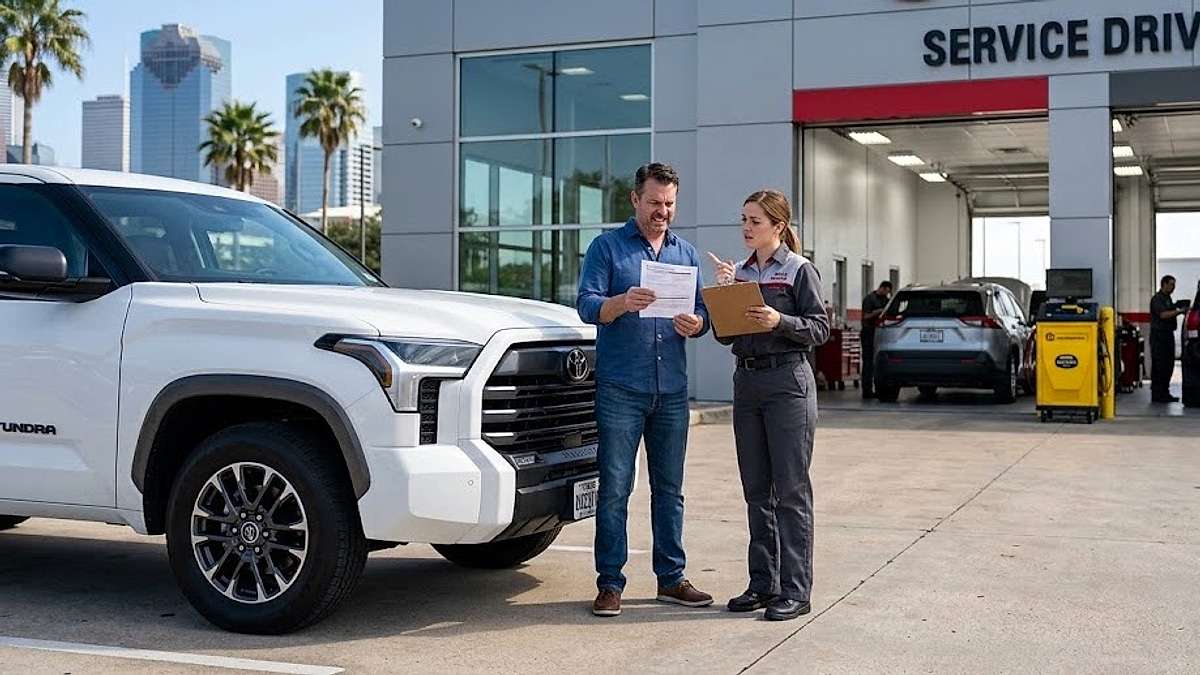
It is an infuriating administrative standoff that forces everyday owners to risk their lives while flat-rate service advisors demand that they "prove" a drivability failure that factory engineers have already publicly admitted in writing.
A widening disconnect between Toyota's corporate engineering and frontline dealership service counters is leaving third-generation Tundra owners incredibly vulnerable to dangerous lag at intersections. Despite the corporate release of Technical Service Bulletin T-SB-0032-26 to remedy low-speed rolling-stop hesitation, field reports reveal that localized service managers are actively gatekeeping the software upload.
It is a terrifying administrative breakdown that transforms a simple software patch into a high-stakes standoff for truck owners.
This hidden operational conflict leaves thousands of completely legitimate consumer complaints completely dismissed at the service counter. According to an official regulatory filing in the NHTSA Manufacturer Communications Archive, the transmission control module logic has been explicitly modified by factory engineers to address severe hesitation from a rolling stop.
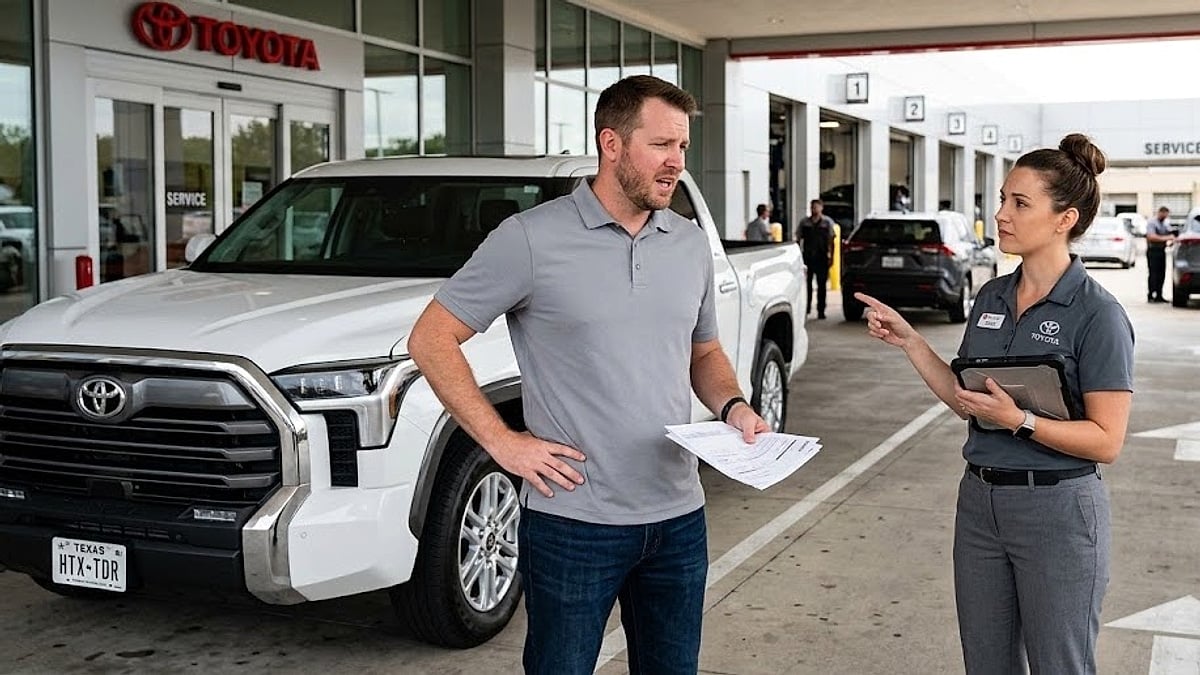
Yet service drives routinely reject the fix unless their own flat-rate technicians can reproduce the intermittent failure during a brief test drive.
The Standoff on the Texas Service Drive
The operational gridlock reached a boiling point in the Lone Star State this week when an unresolvable warranty dispute went public. A frustrated truck owner turned directly to social media to expose how regional service advisors are actively denying access to required factory calibration campaigns.
The Facebook Case Study
William Christy from Houston, Texas, posted to the 2023-2027 Toyota Tundra Owners Facebook page, “I’m in Houston trying to get T-SB-0032-26 (Hesitation from a rolling Stop) performed on my 2023 Tundra. Two dealerships told me they need to 'diagnose' my truck to verify the issue and won't perform the TSB without doing so. The first dealership has twice failed to replicate the issue and outright refused to perform the TSB.”
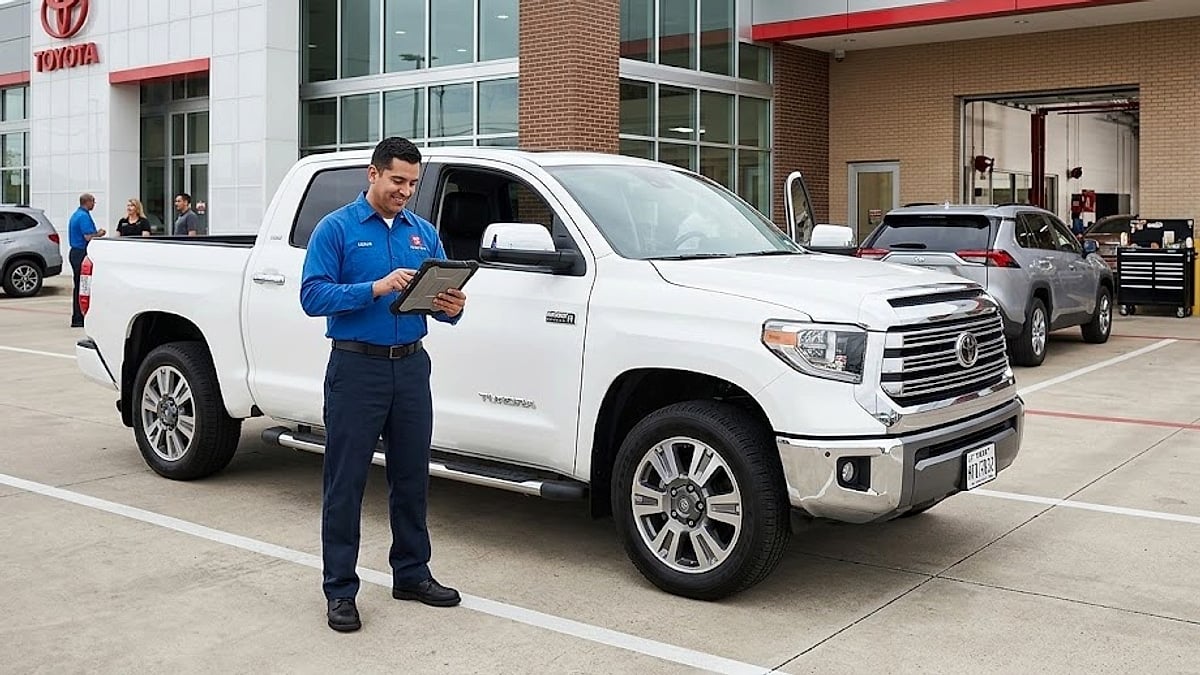
This specific administrative hurdle perfectly mirrors the systemic corporate-to-dealer bottlenecks that I have aggressively tracked for months.
As documented in my continuous investigative reporting on The Tundra Dealer Service Disconnect, frontline service writers rarely receive automated alerts about niche software updates, causing them to filter out legitimate powertrain complaints as normal operating behavior.
The Mechanical Reality Under the Hood
Based on my three decades of hands-on experience, this terrifying hesitation is not an isolated mechanical failure of the twin turbochargers. It is a highly toxic software logic loop that is triggered when the vehicle slows to speeds below 6 mph.
When approaching an intersection, the factory configuration frequently commands a complex gear-hunting routine within the massive 10-speed automatic transmission.
The programming tries to keep the torque converter locked to satisfy strict emissions targets while holding the truck in third gear.
When you suddenly hit the accelerator pedal to clear oncoming traffic, the engine management computer enters a split-second defensive loop. The software delays the throttle butterfly opening to mitigate extreme cylinder pressures, resulting in a dead-pedal response lasting up to three seconds.
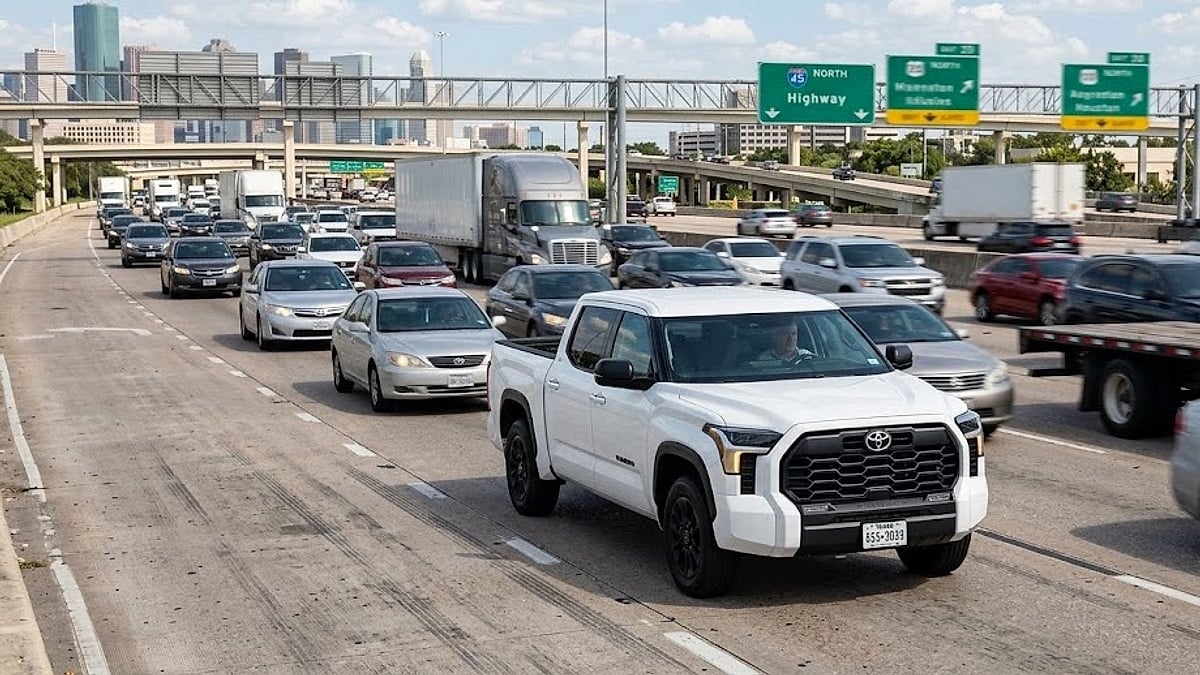
Why the Software Mismatch is a Silent Engine Killer
This prolonged hesitation does far more than just terrify drivers who are trying to merge into fast-moving traffic.
Pushing a high-output, twin-turbo V6 platform to lug heavily in an excessively high gear during sudden acceleration creates immense internal thermal stress.
This severe operational strain is closely linked to the broader structural issues currently plaguing modern downsized truck powerplants. In my independent forensic analysis of the 2026 Toyota Tundra V6 Debris Threat, I highlighted how extreme combustion pressures directly accelerate lower main bearing fatigue when oil quality or calibration boundaries are compromised.
This severe physical punishment escalates dramatically in demanding environments like the steep, high-altitude passes of the Colorado Rocky Mountains.
When a truck lacks the proper calibration parameters to downshift instantly, it can create localized microfractures in the engine bearings over thousands of miles.
Real-World Drivers Validate the Calibration Conflict
The mechanical truth becomes perfectly clear when you step away from the clean corporate press releases and look closely at real-world consumer data. Independent automotive experts conducting long-term field testing have definitively shown the massive impact of the updated software parameters.
As documented in a comprehensive real-world video review on Toyota Tundra Calibration Performance Tracking, updating the control system logic provides a massive improvement in low-speed throttle responsiveness.
The expert review noted that the new flash completely eliminates the dangerous low-speed hesitation that plagued early builds.
Yet because the defect occurs intermittently under specific torque loads and temperature thresholds, service bays continue to claim they cannot reproduce the problem. This leaves consumers trapped in a dangerous loop, forced to drive a vehicle with a known, fixable safety hazard.
How to Legally Compel Your Dealer to Flash the Update
Owners do not have to accept the standard service drive excuse that a technical bulletin cannot be applied without dealership replication.
You have a legal right to request a comprehensive digital vehicle health check via the factory Techstream interface.
Instruct the shop foreman to run a calibration ID verification check directly against your Transmission Control Module. If your current software string reads older than the updated parameters mandated in T-SB-0032-26, your truck is officially out of engineering compliance.
Remind the service manager that federal emissions and powertrain warranties fully cover calibration updates designed to fix documented drivability defects. Presenting hard technical data shifts the balance of power away from the service counter and directly back into the consumer's hands.
Next Question: Will This Software Update Hurt Fuel Economy?
Many owners naturally worry that modifying the transmission shift points to eliminate low-speed lag will cause their highway fuel mileage to plummet.
The technical data reveals that the new calibration solely modifies the low-speed downshift schedules below 15 mph to prevent gear lugging. Your highway overdrive ratios and torque converter lockup points under steady cruising remain completely unaffected by the update.
The Final Verdict on Dealership Gatekeeping
Forcing owners to repeatedly endure dangerous intersection lag because a service counter refuses to acknowledge official factory bulletins is completely unacceptable. Dealership networks must immediately update their internal communications to ensure safety-critical software patches are deployed without friction.
What Would You Do? Have you experienced a dangerous dead-pedal lag when trying to accelerate out of a rolling stop in your late-model truck? Tell us what you think and share your dealership service stories by leaving a comment at the red "Add new comment" link below.
Wait, There’s More Coming… Also check out my Torque News Home Page for more of my informative Toyota Tundra news articles.
About The Author
Denis Flierl is a 14-year Senior Reporter at Torque News and a member of the Rocky Mountain Automotive Press (RMAP) with 30+ years of industry experience. Explore his full investigative reporting archives and technical guides at DenisFlierl.com.
Based in Parker, Colorado, Denis leverages the Rockies' high-altitude terrain as a rigorous testing ground to provide "boots-on-the-ground" analysis for readers across the Rocky Mountain region, California EV corridors, the Northeast, Texas truck markets, and Midwest agricultural zones.
A former professional test driver and consultant for Ford, GM, Ram, Toyota, and Tesla, he delivers data-backed insights on reliability and market shifts. Denis cuts through the noise to provide national audiences with the real-world reporting today’s landscape demands.
Connect with Denis: Find him on LinkedIn, X @DenisFlierl, @WorldsCoolestRides, Facebook, and Instagram.
Photo credit: Denis Flierl
Set Torque News as Preferred Source on Google
Follow us today...