
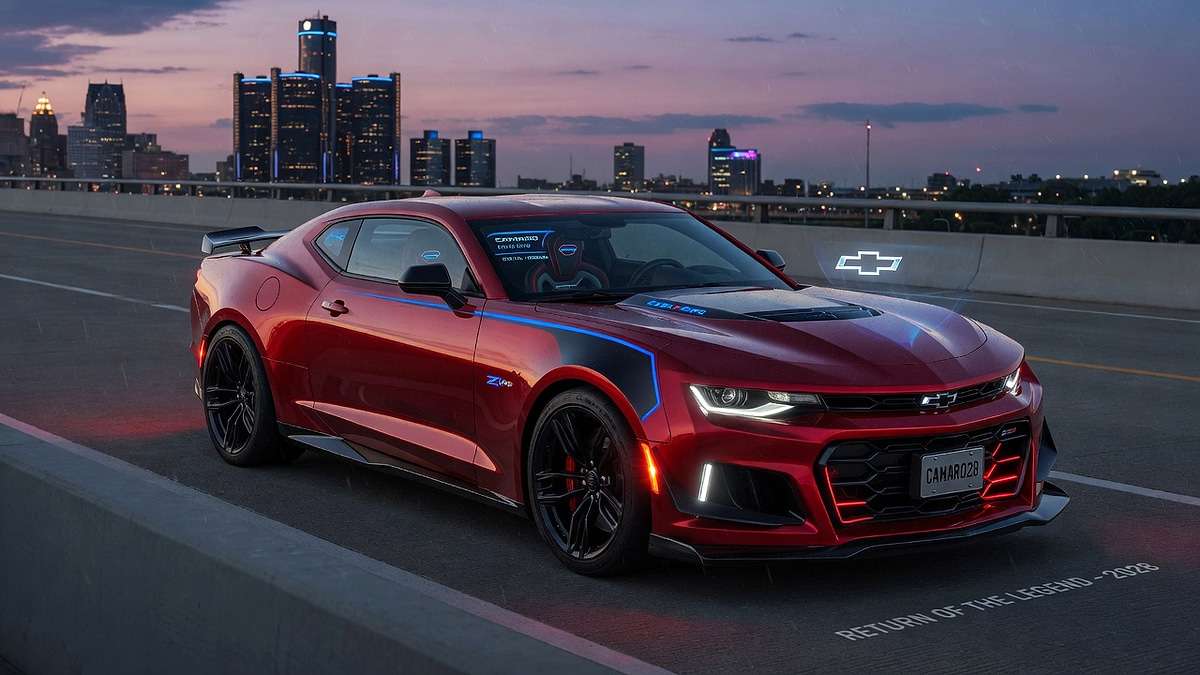

3 Key Points:
- GM greenlights the 2028 Camaro with a V8 and manual transmission, but enthusiasts warn that chasing horsepower records cost the sixth generation its sales.
- Real Camaro owners demand a beautiful, drivable design over a half second quarter mile gain that most drivers will never use.
- Torque News examines why Chevrolet must prioritize design and interior quality over displacement bragging rights to win back the buyers it lost.
The Chevrolet Camaro is coming back. GM greenlit the 2028 model just weeks ago. Production starts in late 2027 at the Lansing Grand River plant. That news sent enthusiasts buzzing across relevant forums, Reddit, and Facebook groups. But here is the conversation nobody in the mainstream press is having. Is Chevrolet building the right Camaro, or just the fastest one?
I have watched automakers chase quarter mile bragging rights at the expense of everything else. I haven't liked them, and in this case the community response to a recent AutoCulture PH post in the 1970 to 81 Chevrolet Camaro Group on Facebook stopped me cold.
AutoCulture PH wrote: "According to growing reports and enthusiast discussions, Chevrolet's next generation Camaro could reportedly arrive with either a proven 6.2 liter V8 or an even more extreme 6.7 liter 'LS6' style engine designed to bring back old school American muscle aggression in a modern package. If true, the move would signal that Chevrolet still understands what many muscle car fans truly want: loud V8 power, rear wheel drive performance, and a machine capable of taking the fight directly to rivals like the Ford Mustang and Dodge Charger. The possibility of a massive displacement Camaro is already generating major excitement online, especially as performance brands continue balancing electrification with enthusiast demand for traditional combustion engines. Many fans see the rumored Camaro comeback as Chevrolet's opportunity to prove the muscle car era is far from over. While official details remain unconfirmed, one thing is certain: if a 6.7L V8 Camaro actually becomes reality, the horsepower war could become louder and more intense than ever before."
Fair points. But then came the comments that changed the conversation entirely.
Design First: What Real Camaro Fans Are Actually Saying
Richard Wells cut straight to the chase. He wrote:
"Hope Chevrolet understands design is more important than 0.5 sec faster in the 1/4 mile."
And Earnie Holifield added:
"I would like a nice Camaro that had a reliable, drivable drivetrain. The 5.7 (as a 383) would be more than enough to start. Most people cannot drive what they have, we really don't need that much HP."
Read those again. These are real Camaro fans. Not armchair theorists. Not YouTube commenters looking for fights. These are people who grew up with Camaros, who owned Camaros, who love Camaros. And they are not asking for a 6.7 liter rocket ship. They are asking for something beautiful they can actually drive.
This echoes what we covered in our comprehensive look at the 2028 Camaro's four door rumor and what GM greenlit for production at Lansing. The enthusiast community is already fractured. Half the crowd loves the manual transmission news. The other half sees four doors as an identity crisis. Nobody is fighting over whether the car needs 700 horsepower.
The Camaro Problem Chevrolet Has Never Solved
Here is the pressing problem nobody wants to name directly. Chevrolet killed the Camaro in early 2024 partly because of poor sales. Not because people stopped loving the idea of a Camaro. They stopped buying the reality of it.
Why? The sixth generation had plenty of power. ZL1 models pushed 650 horsepower. The 1LE handled like a sports car. On paper, it destroyed the competition. Yet dealers sat on inventory. Conquest buyers went to Ford or simply bought trucks. The car looked intimidating but polarizing. The interior felt dated. The rear visibility was famously terrible. The hood blocked the forward view at intersections.
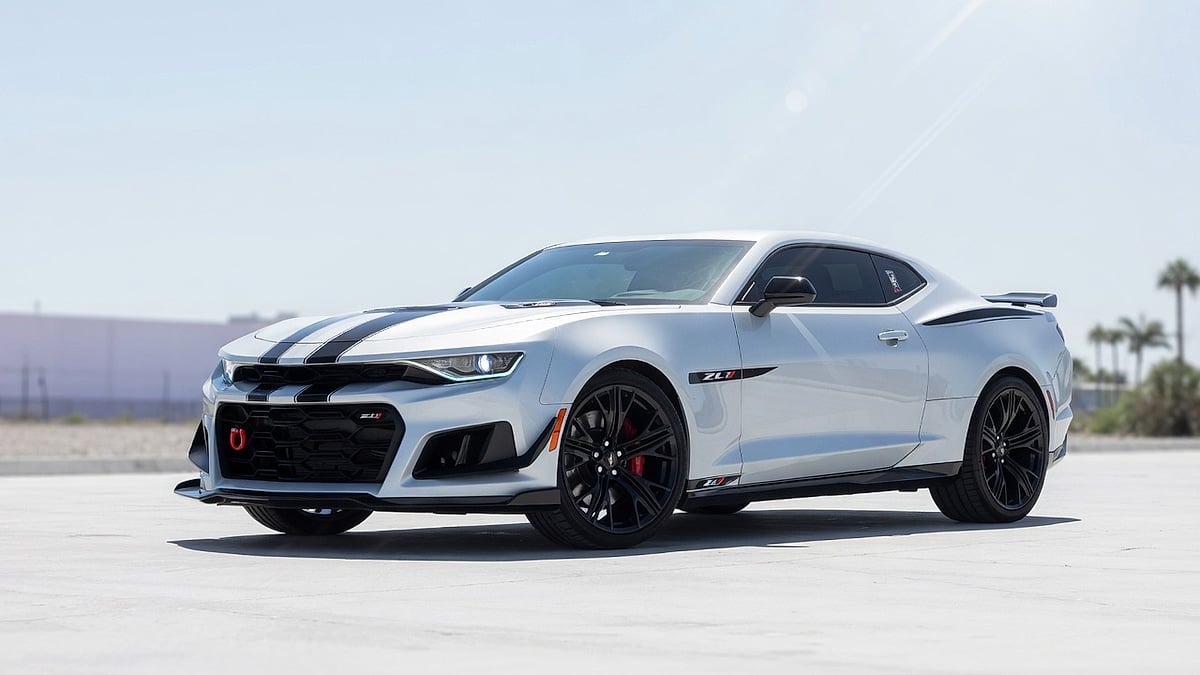
Power was never the problem. Design and usability were the problem.
Our piece on the Camaro's last ride and what Chevrolet got wrong with the sixth generation going off the market in January 2024 captures this tension perfectly. A car that was fast enough but not loved enough to sustain a business case. That is a design failure, not an engineering failure.
What the Mustang Gets Right That Chevy Must Learn From
Look at the Ford Mustang. Torque News has covered why the Ford Mustang is actually a pony car with its own identity separate from pure muscle car status, and that distinction matters here. Ford built a car that looks undeniably like a Mustang from any angle. You recognize it at a glance. You know what it stands for before you hear the engine.
Ford Mustang sales climbed 50 percent through the first quarter of 2026, according to The Truth About Cars. That momentum did not happen because the Mustang added horsepower. The Dark Horse offers 500 horsepower, solid but not earth shattering. It happened because Ford maintained a consistent, recognizable, emotionally compelling design language across decades.
The Camaro has never achieved that level of visual identity consistency. The first generation looked iconic. The second generation, the 1970 to 1981 era that gave birth to the Facebook group where these comments appeared, is still considered the most beautiful Camaro ever made. Then came the fox body era, the gap years, the fifth generation retro revival, and a sixth generation that looked more like a concept car than something you feel an emotional bond with.
Carbuzz reports that the returning Camaro will share the Alpha 2 platform with the Cadillac CT5 and an upcoming Buick sedan. As our own analysis of the Buick sedan platform sharing with Camaro and why it may be the most interesting part of this comeback story explains, platform sharing cuts costs but it also creates real design constraints. Chevy must resist the temptation to make the Camaro look like a Cadillac with a bowtie badge.
The Horsepower War Nobody Asked For
Let me say this plainly after 15 years of covering this industry. The horsepower war is largely a marketing war, not a driver satisfaction war.
Ask yourself this question honestly. How many people who buy a Camaro SS regularly use its full capability? How many track days does the average Camaro ZL1 owner log per year? The answer, according to industry research cited repeatedly in enthusiast forums, is almost none. Most performance cars live their lives commuting on highways, parked at car shows, and occasionally blipping the throttle at a stoplight.
Earnie Holifield is right. Most people cannot drive what they have. A well balanced 383 style 5.7 liter V8 with around 400 horsepower, a refined chassis, honest steering, and a cabin that makes you feel like you are sitting inside something special would outsell a 600 horsepower car with a cramped cockpit. Every time.
For those curious about how different V8 engine options would translate to real world performance differences for the average buyer, consider this benchmark: the quarter mile difference between a 400 horsepower Camaro SS and a 600 horsepower ZL1 is roughly 1.2 to 1.5 seconds. In daily driving, that gap means nothing. In monthly payments, it means thousands of dollars. This is the kind of value calculation that should inform how Chevy pitches its powertrain lineup, and something buyers can factor into their own decisions using any standard horsepower to quarter mile performance calculator online.
Our reporting on why the Chevrolet Camaro and Corvette transmissions diverged and what that tells us about GM's engineering hierarchy shows that GM has historically used powertrain decisions to clearly separate models. The Camaro should not try to be a Corvette. It should be something different, something more accessible, something with character that does not require a trust fund to maintain.
What a Design Led Camaro Could Actually Look Like
Chevrolet has the tools to do this right. The Alpha 2 platform gives engineers real flexibility. The 2027 Corvette's new 6.7 liter V8 is available, but so is a detuned version producing 450 to 500 horsepower that would serve most buyers perfectly. A six speed manual, confirmed by GM Authority, is expected. That is a promising sign.
But the design leadership matters more than any powertrain decision. The Camaro needs to look like it belongs in 2028 while honoring what made the second generation 1970 to 1981 body so loved. Wide hips. A long hood. A fastback roofline you can actually see out of. A greenhouse that does not feel like a gun slit. Those proportions made the original Camaro a work of art. They had nothing to do with horsepower.
Our reporting on whether the Chevy Camaro will return as an EV and why it must not fall into the crossover trap to protect its pony car soul argued this same point about visual identity. A Camaro that looks like a swoopy electric SUV betrays the nameplate. A Camaro that looks like a beautiful rear wheel drive coupe with real proportions wins hearts regardless of what is under the hood.
The Solution Chevrolet Needs to Hear
The solution here is not complicated. Chevrolet should prioritize three things in this order.
First, get the design right. Hire the best exterior designers in the building. Spend the money. Study the 1970 to 1973 Camaro. Study what makes a car emotionally magnetic, not just fast. A beautiful car sells itself in showrooms even before customers know the specs.
Second, make the base powertrain genuinely satisfying. A naturally aspirated V8 around 450 horsepower with a six speed manual is more than enough for 90 percent of buyers. Save the extreme variants for ZL1 and Z28 trims where enthusiasts who truly want that capability can pay for it.
Third, fix the interior. The Cadillac CT5 shares this platform. Use that leverage to raise the interior materials, screens, and ergonomics to a standard that makes buyers feel rewarded every day they sit inside it.
For reference, Autoblog notes that the returning Camaro may use a version of the Corvette Z06's naturally aspirated platform. That is a good starting point, but the key decision makers at GM need to hear what their actual customers are saying in Facebook groups, not just what the marketing department wants to hear about horsepower records.
The Moral of This Story
Here is a lesson that goes beyond Camaros. In almost every area of life, we chase metrics that sound impressive but miss what actually matters. More horsepower. More speed. More numbers to put in an ad. And we lose the thing people were actually falling in love with.
A car, like any meaningful thing, connects to people through emotion first. Through what it looks like. How it makes you feel when you see it in your driveway. Whether strangers stop to look at it in a parking lot. That emotional connection is built through design, proportion, and intention. Not through a half second improvement in the quarter mile.
Be the person who asks what actually matters. In cars, in work, in life. The loudest number in the room is rarely the most important one.
We have covered the entire debate around whether the Chevy Camaro EV three motor concept could redefine American muscle on a new platform as well as what the return of the Camaro means for the Buick sedan lineup sharing the same Lansing production facility. The Camaro's return is bigger than one car. It is a statement about what GM believes performance buyers actually want.
Whether GM listens to the Richard Wellses and Earnie Holifields of the world, or to the horsepower maximalists, will determine whether this comeback becomes a legend or a cautionary tale.
Now I want to hear from you.
Do you agree that the returning Camaro's design matters more than its power output, and what design elements would make you walk into a dealership on day one? Also, if Chevrolet offered you a choice between a beautifully styled 450 horsepower Camaro at a reasonable price versus a raw 650 horsepower machine at a significant premium, which one would actually end up in your driveway, and why? Tell us in the comments section below.
Armen Hareyan is the founder and Editor-in-Chief of Torque News and an automotive journalist with over 15 years of experience writing car reviews and industry news. Now based in the Charlotte region (Indian Land, SC, he founded Torque News in 2010, which since then has been publishing expert news and analysis about the automotive industry. He can be reached at Torque News on X, Linkedin, Facebook, and Youtube. Armen holds three Masters Degrees, including an MBA, and has become one of the known voices in the industry, specializing in the landscape of electric vehicles and real-world stories of actual car owners. Armen focuses on providing readers with transparent, data-backed analysis bridging the gap of complex engineering and car buyer practicality. Armen frequently participates in automotive events throughout the United States, national and local car reveals and personally test-drives new vehicles every week. Armen has also been published as an automotive expert in publications like the Transit Tomorrow, discussing how will autonomous vehicles reshape the supply chain, and emerging technologies in vehicle maintenance.
Set Torque News as Preferred Source on Google
Follow us today...







Comments
I agree 110%. Style matters…
Permalink
I agree 110%. Style matters with muscle cars/sports cars. As does ffordability.
How many times is GM going…
Permalink
How many times is GM going to fail with the Camaro? It's just never going to catch the Mustang sales success.
Maybe they'll catch up to…
Permalink
Maybe they'll catch up to Mustang sales...but probably not.
I agree completely. I have…
Permalink
I agree completely. I have had camaros all my life. Make the car have a V8 like an older 350 cu-in. This is a good base and make it so it runs on unleaded regular fuel.