
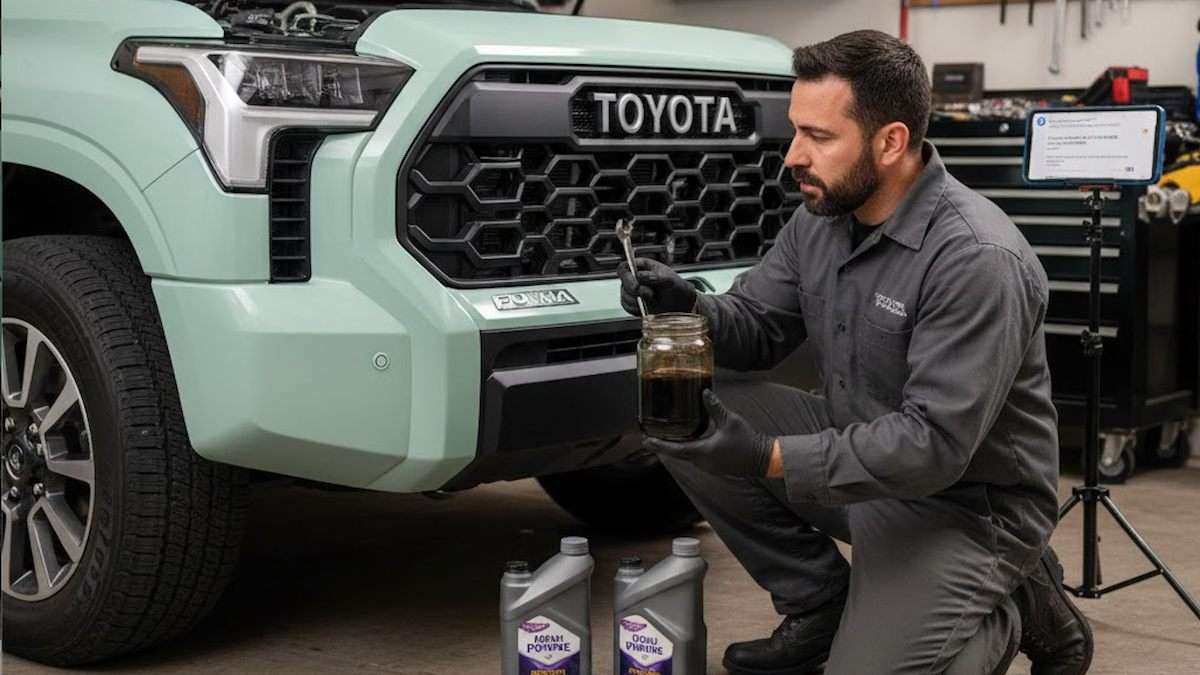

When 2026 Tundra owners start dumping their oil at 500 miles just to survive the break-in period, you know the twin-turbo reliability stakes have reached a breaking point.
In my recent deep dive into the latest Toyota reliability trends, I uncovered a post shared in a Facebook community of Tundra enthusiasts where Josh Beard, who lives in Texas, highlighted mounting anxiety about the 2026 model's engine longevity and the exorbitant prices shops are charging for basic preventive care.
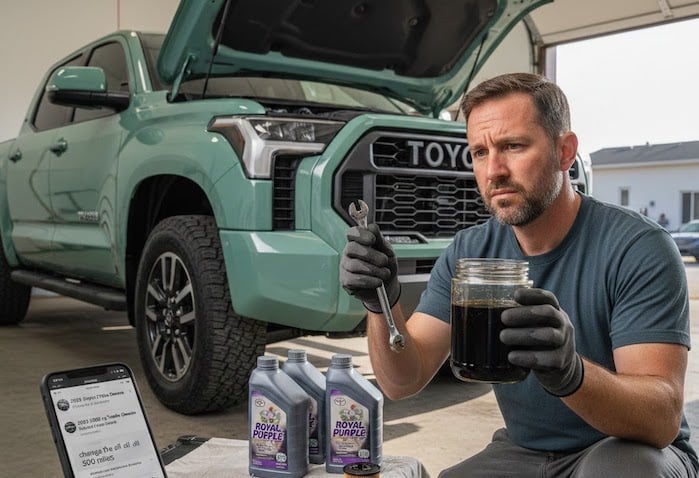
Josh says, “So I’m getting close to 1,000 miles on my 2026 Toyota Tundra. I was going to change the oil at 500 miles, but decided, since Toyota says the break-in period is 500-1,200 miles, I’m going to wait until 1,000-1,200 miles to do the first oil change. I called an oil change shop around here, and they said they would only put Royal Purple in it, and it would cost $210. So, I'll do that myself, but which oil should I use? Oil from the dealer, or should I pick up some castor oil and rock it out?”
Who, How, and Why?
In my 30 years of automotive reporting, I have seen every kind of manufacturing hiccup, but the situation with the V35A 3.4L twin-turbo V6 is unique. Who is affected? It isn't just the early 2022 owners anymore; the anxiety has trickled down to the 2026 owners who are terrified their "ticking time bomb" might go off on the highway. How is this happening? Owners like Josh are taking matters into their own hands, performing "break-in" oil changes at 500 miles to flush out potential contaminants. Why? Because the ghost of "machining debris", the culprit behind the massive 100,000+ unit recall, still haunts the Alabama and Tahara production lines.
From My View
I’ve spent three decades under hoods and behind keyboards, and I can tell you that automotive news is currently dominated by one word: Trust. Or rather, the lack of it. Toyota built a legendary reputation on the 5.7L V8, a motor that would easily go 300,000 miles with nothing but standard care. Now, we are looking at a highly stressed, twin-turbocharged power plant that relies on ultra-thin 0W-20 oil.
Recently, I looked into the Toyota Tundra V6 engine recall expansion for 2026 and I realized that many owners feel the factory's 10,000-mile interval is a recipe for disaster. This is especially true when you consider that Toyota admitted the Tundra engine issues go beyond a simple cleaning mistake, with some experts suggesting the main bearing design itself might be the Achilles' heel. One verified source, Automotive Engineer David Chao, recently explained that tighter tolerances in modern engines leave zero room for error, stating that "the pressure on the main bearings due to the engine configuration is such that any debris adhering to the bearings can lead to catastrophic failure."
My Take
- The 500-Mile Flush: I actually support the 500-to-1,000-mile first oil change. It’s cheap insurance to remove assembly lubricants and any "infant mortality" metal shavings from the system.
- The $210 Rip-Off: Do not pay $210 for a Royal Purple change unless you’re racing the truck. Stick to a high-quality, full-synthetic oil that meets Toyota’s API specifications.
- Filter is King: In my experience, the filter is more important than the oil brand. Use the OEM Toyota filter or a high-end synthetic media filter to ensure the bypass valve works exactly as the engineers intended.
The "Debris" Narrative
Toyota has been adamant that "machining debris" is the issue, but as I noted in my report on why 2026 Tundra owners are skeptical of the official fix, the skepticism is earned. If it were just a cleaning issue, why are we seeing failures in 2025 and 2026 models produced after the "improved" cleaning processes were implemented?
According to a teardown by I Do Cars, the evidence is startling: it might not be debris but an oiling or design flaw, where the host noted that "rod bearings stayed clean while main bearings failed," suggesting the issue is localized to specific pressure points in the block. This supports the "Industry Secret" vibe that the V35A engine might simply be too "thirsty" for oil at low RPMs, leading to bearing wear that no amount of early oil changes can truly "fix."
Community Technical Feedback
The community currently includes both "Toyota Loyalists" and "Lemon Law Ready" owners. One user on Reddit noted the severity of the situation for the 2026 model year, stating, "the 2026 trucks are still running the mid-year 2024 spec changes to the bearings, which still fail," suggesting the "real" fix isn't coming until late 2027. Another owner highlighted the vulnerability of the current strategy, saying, "Machining debris is a lie; this engine has had problems since 2017 when they first put it out in a Lexus," which underscores the deep-seated mistrust in the current news cycle.
My Recommendations
If you are sitting in a 2026 Tundra today, here is what I would do if I were in your shoes:
1. Do the Early Change: Ignore the 10,000-mile manual. Change the oil at 1,000 miles. It won't void your warranty and provides peace of mind. I discussed this in my guide on proper 2026 Tundra break-in procedures.
2. Document Everything: If you DIY like Josh, keep every receipt for the oil and the filter. Take a photo of the odometer and the date.
3. Watch the Cold Starts: Listen for any rhythmic "knocking" or "chirping" when the engine is cold. As I reported in Tundra engine failure warning signs, catching a spun bearing early could be the difference between a warranty swap and a dangerous highway stall.
Key Takeaways
- Owner Anxiety: 2026 owners are performing "preventative" maintenance way ahead of schedule due to past recall trauma.
- The Cost Factor: Independent shops charge premium prices (up to $210) for "boutique" oils, but DIY remains a viable, smarter option for many.
- Reliability Reputation: Toyota is fighting an uphill battle to regain its "Reliability King" status, even as the V35A engine remains under a cloud of suspicion.
Toyota Tundra Is Under the Microscope
The 2026 Toyota Tundra is a powerhouse of a truck, but its heart, the twin-turbo V6, is currently under a microscope unlike any previous Toyota engine has ever faced. While the 500-mile oil change might seem extreme to some, in the current climate of "debris" fears and design debates, it is a small price to pay for the "peace of mind" that used to come standard with every Toyota key fob.
What Would You Do?
I’ve found that the best insights often come from the people who actually put miles on these trucks. If you just picked up a 2026 Tundra, are you sticking to the factory-recommended 10,000-mile interval, or are you joining the "500-mile club" for peace of mind? Does the $210 shop price for premium oil seem like a fair investment for engine longevity, or is the DIY path the only way to go? Share your thoughts and experiences in the comments by clicking the red “Add new comment” link below: I read every single one of them!
About The Author
Denis Flierl is a 14-year Senior Reporter at Torque News and a member of the Rocky Mountain Automotive Press (RMAP) with 30+ years of industry experience. Based in Parker, Colorado, Denis leverages the Rockies' high-altitude terrain as a rigorous testing ground to provide "boots-on-the-ground" analysis for readers across the Rocky Mountain region, California EV corridors, the Northeast, Texas truck markets, and Midwest agricultural zones.
A former professional test driver and consultant for Ford, GM, Ram, Toyota, and Tesla, he delivers data-backed insights on reliability and market shifts. Denis cuts through the noise to provide national audiences with the real-world reporting today’s landscape demands.
Connect with Denis: Find him on LinkedIn, X @DenisFlierl, @WorldsCoolestRides, Facebook, and Instagram
Photo credit: Denis Flierl via Josh Beard
Set Torque News as Preferred Source on Google
Follow us today...





Comments
I truly hope Toyota can…
Permalink
I truly hope Toyota can correct this problem. I have wanted a Tundra but am hesitant because of the engine. I don't need a new truck that I need to worry about leaving me on the side of the road.
The worst part is it has…
Permalink
The worst part is it has nothing to do with debris. It’s failing parts. Even some of the Tundras in the actual Toyota fleet that have had their engines replaced have failed a second time. There’s an issue beyond ‘debris’. Redesign coming.