
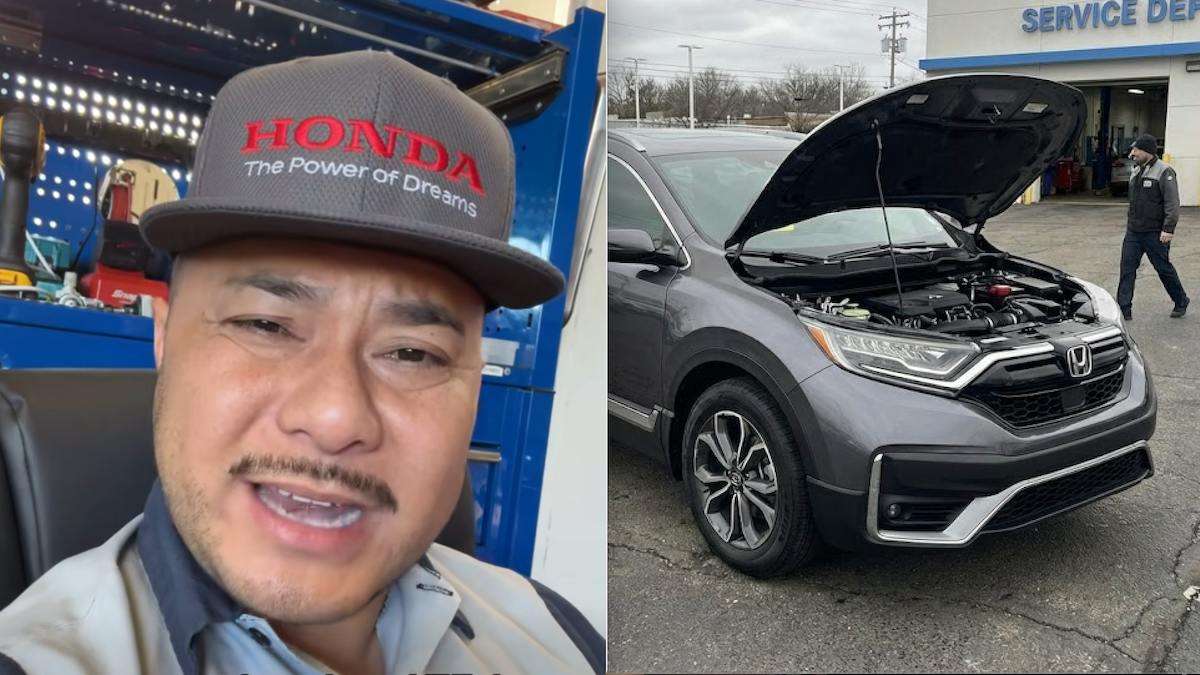

If you have a Honda CR-V, Civic, or Accord with the 1.5L engine, here is a warning from a certified Honda tech.
In my extensive research into the recurring failures of the 2017-2022 Honda CR-V 1.5L turbo engine, I uncovered a critical warning from mechanic Johnny Pham regarding the durability of stock components. Pham asserts that Honda's factory head gaskets cannot handle the engine's boost pressure, advising owners to upgrade to ARP head studs and stronger pushrods to avoid catastrophic failure.
As a Senior Reporter for Torque News who has documented these specific powertrain issues for years, this Honda tech's blunt assessment highlights a necessary aftermarket solution that Honda's factory specifications fail to provide.
In my 30 years of covering the automotive industry, I've seen few engines go from "beloved engineering marvel" to "reliability headache" as quickly as Honda's 1.5L turbo. While the CR-V remains a best-seller, seasoned mechanics are beginning to pull back the curtain on why these specific engines are failing prematurely. One mechanic, Johnny Pham, recently issued a blunt warning that every owner needs to hear: The factory parts aren't strong enough.
The "Garbage" Engine Verdict
If you have followed my coverage of the Honda Civic, CR-V Oil Dilution Problem, What You Should Do Now, you know that issues have plagued the 1.5L turbo since its debut. Johnny Pham, posting to the Honda CR-V Owners Facebook page, didn't mince words about the root cause of the current wave of failures. He says, "Now Honda designed a garbage 1.5L engine that is notorious for having head gasket problems."
It is a harsh assessment, but one that aligns with the flood of emails I receive from owners facing repair bills that rival the value of their vehicles.
Why The Stock Head Gasket Fails
The core issue isn't just about age; it is about pressure. Turbocharged engines generate immense internal stress, and according to Pham, Honda's factory specs don't account for it in the long run.
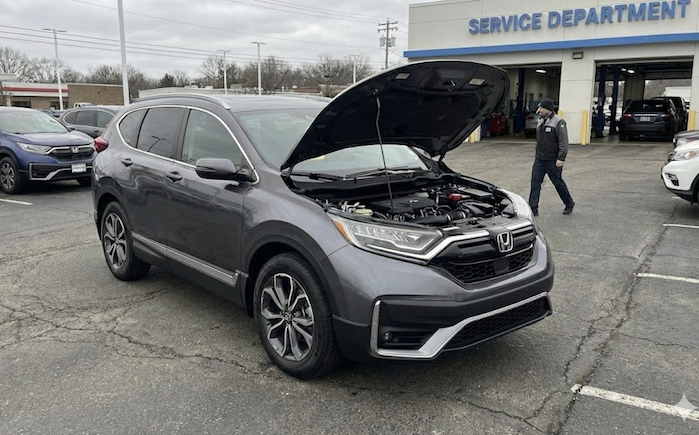
I recently reported on a similar case in which an owner succumbed to a head gasket issue in a 2020 Honda Accord and other models. It serves as a stark reminder that this defect crosses multiple models using the same powertrain. As Pham explains, "They put in more boost and the head gaskets can't keep up with the high pressures."
When you push a small engine to generate 190 horsepower using a turbocharger, the cylinder pressures skyrocket. If the clamping force of the head bolts and the gasket material aren't up to the task, the gasket will eventually breach, leading to coolant leaks and overheating.
The Honda Tech's Recommended Fix: ARP Head Sets
So, if the factory parts are the problem, what is the solution? You cannot just install another OEM Honda gasket and expect a different result. Pham is adamant about this. He advises, "Honda CR-V with the 1.5L engine, you'd better use ARP head studs. There are two versions, one with the spacer and one without."
ARP (Automotive Racing Products) is legendary in the racing world for making high-tensile fasteners that don't stretch under load. By using these instead of the standard Honda head bolts, you ensure the cylinder head stays clamped tight against the block, even under high boost.
Don't Forget The Push Rods
The weak points don't stop at the gasket. Pham points out another critical component that is often overlooked during these rebuilds. "Also. Get the right push rods, the ones that are thick and not like that toothpick that Honda uses."
In my analysis of the Least Reliable Cars and the Ones To Avoid, flimsy internal components are a recurring theme. The "toothpick" visual Pham uses perfectly illustrates the cost-cutting measures that can lead to catastrophic failure.
Corporate procedures bind dealers. They replace failed factory parts with new factory parts. However, some Honda techs like Pham speak out, and he's focused on preventing the car from coming back. He warns, "So, you better use ARP Head studs, (Inline PRO) because the stock Honda parts won't hold up, and you'll have another head gasket problem and you'll be right back seeing me again."
For many of you driving a 2017-2022 CR-V, you are likely out of warranty or rapidly approaching the end of it. If you are facing this repair, insisting on upgraded aftermarket parts like ARP studs could be the difference between a permanent fix and a recurring nightmare. As Pham concludes, "I'm not going to follow Honda's part specs."
Is It Time To Sell?
For some owners, the anxiety of a potential engine failure is too much to bear financially. I wrote about one owner who decided, "I'm Selling My Unreliable Honda CR-V and Buying A Toyota" because they couldn't trust the vehicle in the long term. If you aren't ready to swap cars, upgrading the engine hardware is your best defense.
Key Takeaways
- The Source of Failure: The 1.5L turbo engine's high boost pressure can overwhelm stock head gaskets.
- The Upgrade: Use ARP head studs (Inline PRO) instead of factory Honda bolts to prevent gasket lift.
- The Weak Link: Stock pushrods are described as " toothpicks; upgrade to thicker, more durable versions.
- The Risk: Using OEM parts for this repair may result in a repeat failure down the road.
What Honda CR-V Owners Are Saying
I searched forums and social media to see whether Pham's warning aligns with real-world experiences. The consensus is alarming.
Reddit user JDmyDD shares: "2018 CR-V Touring (1.5L turbo) just blew at around 128k. Quoted about $6,300 from the dealership, still no guarantee because they didn't check to see if the turbo was also damaged."
YouTube viewer Kyle notes the confusion: "Kyle wants to know why a head gasket replacement is cheaper at a mechanic versus the dealership... specifically how long you want it to last."
A frantic owner on Reddit posted: "Mechanic charged me $5k, then said my whole engine is bad. Now wants $4.3k more... they said coolant was leaking through the gasket into the engine and damaging the pistons."
In The End
Mechanic Johnny Pham's warning serves as a crucial reality check for Honda owners. While the 1.5L turbo offers excellent fuel economy, its internal hardware struggles to withstand boost pressures over time. If you find yourself facing a head gasket repair, do not settle for stock parts. Insist on ARP head studs and robust pushrods to "bulletproof" your engine and ensure you don't end up back in the shop with the same problem.
How About You?
Are you driving a 2017-2022 Honda CR-V with a 1.5L engine? Have you experienced coolant leaks or overheating, and would you consider using aftermarket performance parts to fix your daily driver? Let us know in the comments below.
I'm Denis Flierl, a Senior Torque News Reporter since 2012, bringing over 30 years of automotive expertise to every story. My career began with a consulting role with every major car brand, followed by years as a freelance journalist, test-driving new vehicles, which equipped me with a wealth of insider knowledge. I specialize in delivering the latest auto news, sharing compelling owner stories, and providing expert, up-to-date analysis to keep you fully informed.
Follow me on X @DenisFlierl, @WorldsCoolestRides, Facebook, Instagram and LinkedIn
Photo credit: Denis Flierl via Johnny Pham
Set Torque News as Preferred Source on Google
Follow us today...







Comments
So are later year CRV models…
Permalink
So are later year CRV models in the clear?
Can you tell me what push…
Permalink
Can you tell me what push rods an OHC Honda uses?
And the aftermarket part #?
My thought immediately also…
Permalink
In reply to Can you tell me what push… by James (not verified)
My thought immediately also. Pushrods?
2017 Crv 1.5 turbo. 169874…
Permalink
2017 Crv 1.5 turbo. 169874 miles zero trouble. To be fair I do not try to drive it like its a sports car, smooth acceleration, no racing off the stop light etc. Driving habits can be a huge difference in how a car holds up.
Had a CRV for 17 years,…
Permalink
In reply to 2017 Crv 1.5 turbo. 169874… by R Lanier (not verified)
Had a CRV for 17 years, never left me on the road, had to fix nothing. Replaced battery a few times and kept up with oil change. Loved that car. It was in perfect condition when I hit a speed bump and the airbag exploded. They totaled the car because of that.
Looks like you didn't read…
Permalink
In reply to Had a CRV for 17 years,… by Debra S Stoltz (not verified)
Looks like you didn't read the article. Please read before making half asset comments. 2017 thru 2022 models with Turbo, Kapish?
I have a 2021 crv that uses…
Permalink
In reply to 2017 Crv 1.5 turbo. 169874… by R Lanier (not verified)
I have a 2021 crv that uses the 1.5 L engine. Actually, these engine were known for oil dilution from the 2017 to 2020 CRV models. Even with the updated firmware, there are still some that have the same issues. The best solution is to change the oil every 5000 miles or 6 months, whichever comes first. CHANGE YOUR MOTOR OIL Folks. Don't go too long on the motor oil or else you are going to have problems, especially with these 1.5L turbo engines.
When did overhead cam…
Permalink
When did overhead cam engines start using pushrods?. Not sure this guys knows what he's talking about about
Interesting article,as a…
Permalink
Interesting article,as a long time mechanic (over 40 years)I have yet to see a Honda engine (including the 1.5t) with push rods,it is a overhead cam engine that doesn't require push rods,so what are you referring to when you say to use heavier duty (thicker) push rods
Probably meant connecting…
Permalink
In reply to Interesting article,as a… by David Hartshorne (not verified)
Probably meant connecting rods
For someone who claims to…
Permalink
For someone who claims to have 30 years experience in the auto industry, how you would not know that every Honda automobile engine produced in the past 30 years has been overcam, thus no pushrods in the valve train? Doesn’t anyone proofread this garbage?
I have been retired for a…
Permalink
I have been retired for a year from working on Hondas and in my 40 years as a mechanic I can say that Hondas do not have pushrods so this "mechanic" in this article really has no business being asked about anything IMO. When I was working these engines were not having problems. With that being said. I am not a fan of turbo engines unless you are racing in which they have to be torn down every so many races which is normal. I knew when Honda went to turbo engines they were going to have issues like this, assuming there is a real issue as the article states.
It would seem to make sense…
Permalink
It would seem to make sense to ask : What's the cost of replacing the stock head bolts /studs BEFORE the head gasket fails? aka " An ounce of prevention is worth a pound of cure"
Did Honda improve on the…
Permalink
Did Honda improve on the materials used for the subsequent years of the CRV 1.5 lt turbo 2023 forward.?
Pushrods??? Where are they…
Permalink
Pushrods??? Where are they on this engine??
what about 23-24-25 1.5's
Permalink
what about 23-24-25 1.5's