

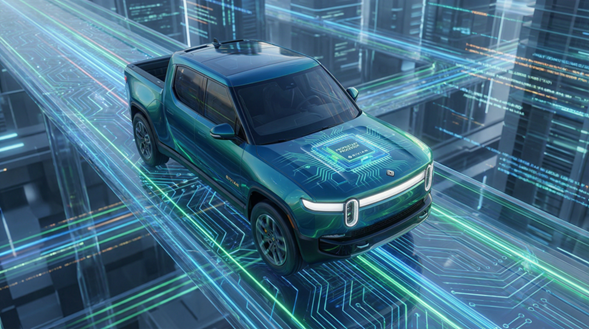
Rivian Automotive (NASDAQ: RIVN) recently gave investors a jolt of high-voltage excitement during its inaugural "Autonomy & AI Day," sending shares surging to new 52-week highs. The headline-grabbing news wasn't just a new vehicle model, but something hidden deep within the chassis: the unveiling of the proprietary "Rivian Autonomy Processor" (RAP1).
By announcing its move to design its own silicon for future self-driving features, Rivian is taking a page directly out of the playbooks of tech giants like Apple and, most pertinently, its chief rival, Tesla. This strategic pivot is designed to reduce reliance on third-party titans like Nvidia and gain tighter control over its destiny.
This isn't just a technical specs update; it is a declaration of independence in an increasingly cutthroat EV landscape. The move raises critical questions about the future of automotive supply chains, the fortunes of incumbent chipmakers, and whether Rivian can execute a strategy notoriously difficult to pull off.
Why Investors Are Excited About This Move
The immediate, positive market reaction—with shares jumping over 12% following the event—signals that investors view this as a maturation milestone for the Irvine-based automaker. For years, the prevailing wisdom in auto manufacturing was to outsource complex components to specialists. However, in the software-defined vehicle era, outsourcing the "brain" of the car is increasingly seen as a vulnerability.
Investors are cheering for three primary reasons: cost control, supply chain security, and performance differentiation.
During the pandemic, the semiconductor shortage crippled automotive production lines globally. By bringing chip design in-house, Rivian gains more control over its supply destiny, theoretically insulating itself from future shocks that affect generic suppliers. Furthermore, while the upfront R&D costs of developing silicon are astronomical, the long-term economics—eliminating the margin paid to a middleman like Nvidia for every single vehicle sold—can significantly improve vehicle gross margins over time. Analysts at Needham even raised their price target specifically citing confidence in this new software-defined strategy.
The Strategic Advantages of Custom Silicon
Why go through the immense headache of designing your own chip when Nvidia already makes excellent products? The answer lies in the difference between a general-purpose suit and one tailored on Savile Row.
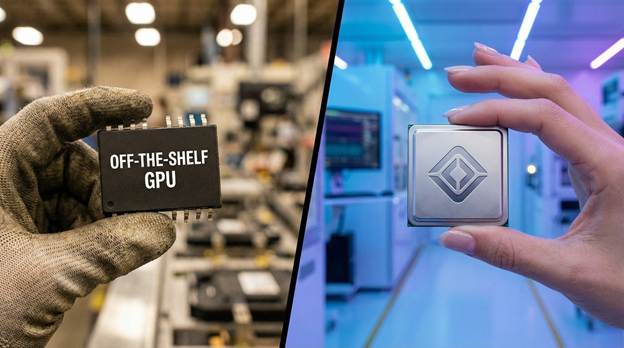
Off-the-shelf chips from suppliers like Nvidia are designed to serve a broad range of customers, from varying automakers to robotics firms. They are incredibly powerful, but they often contain features a specific automaker doesn't need, or they lack specialized optimization for that automaker's unique software stack.
By developing the RAP1, Rivian creates an Application-Specific Integrated Circuit (ASIC). This chip is hyper-optimized solely for Rivian’s sensor suite, its specific neural networks, and its power constraints. Rivian claims this new architecture allows for greater processing speed for safety-critical AI decisions while being more energy-efficient than off-the-shelf alternatives. For an electric vehicle, where every watt counts, better efficiency directly translates to improved range—a key selling point for consumers.
What This Trend Means for NVIDIA and Big Chip Makers
Rivian’s announcement is another data point in a concerning trend for semiconductor giants like Nvidia and Qualcomm in the automotive sector. The "big two" pure-play EV makers—Tesla and now Rivian—have decided that ADAS (Advanced Driver Assistance Systems) compute is too critical to outsource.
Does this spell doom for Nvidia? Absolutely not. Nvidia remains the undisputed king of AI training in the data center, a market far larger than automotive inference chips currently. Motley Fool analysis suggests Nvidia will be fine given its massive data center revenue, but notes that this "build-versus-buy" logic is a risk to watch.
However, the trend puts a ceiling on the total addressable market for merchant silicon suppliers in the auto space. If the highest-volume, most technologically advanced EV manufacturers insist on building their own brains, chipmakers will be fighting over the tier-2 players, squeezing margins. It forces companies like Nvidia to constantly innovate to prove that their off-the-shelf solutions are so superior that in-housing isn't worth the hassle.
The Impact on Rivian Shares: Short-Term Pop vs. Long-Term Risk
The short-term surge in Rivian shares reflects optimism about the company's ambition and its trajectory toward higher margins. The market loves a "Tesla-like" move.
However, the long-term impact on the stock carries significant risk. Designing silicon is notoriously expensive, complex, and unforgiving. A delayed chip rollout or a flaw in the silicon architecture can set a company back years and burn billions in cash. With Rivian still reporting significant net losses as it ramps production, adding a complex semiconductor supply chain to its plate is a high-wire act.
If Rivian executes, this will create a formidable "moat" around its business, justifying a much higher valuation. If they stumble in development, it could become a massive financial anchor. The current share price suggests investors are betting on the former, trusting CEO RJ Scaringe’s technical leadership.
Wrapping Up
Rivian’s unveiling of its proprietary autonomy chip is a watershed moment for the company. It signals a move away from being just an assembler of parts toward becoming a deeply integrated technology company. While it places pressure on traditional chip suppliers and introduces significant execution risk for Rivian itself, the potential rewards—higher margins, better vehicle performance, and control over their own destiny—make it a gamble investors seem eager to back. The race for EV dominance is no longer just about battery range; it’s about who controls the silicon brain.
Set Torque News as Preferred Source on Google
Follow us today...