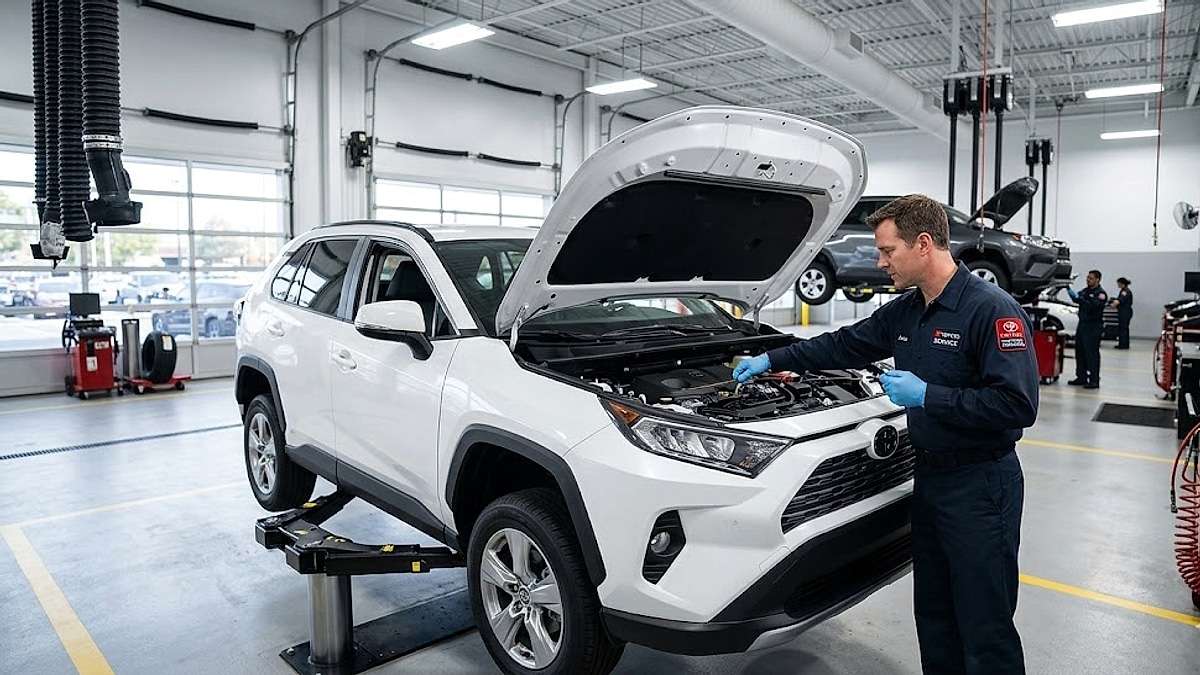

In our continuous coverage of Toyota reliability, Torque News Senior Reporter Denis Flierl, leveraging 30 years of mechanical industry data, has uncovered an unresolved dispute regarding the optimal operational lifespan of fifth-generation crossovers versus the hidden, early vulnerabilities engineered into their sub-components.
For owners weighing whether to retain their current vehicle, this analysis provides a technical action plan to accompany our primary investigation, "Why Trading a Paid-Off 2021 Toyota RAV4 For The Redesigned 2026 Hybrid Only Makes Sense If You Owe Under $5,000."
While that economic analysis proves the fiscal math of keeping a paid-off platform, this operational roadmap provides the exact physical solution: by bypassing generic $2,000 dealership multi-point fluid flushes and investing less than $300 in three targeted, DIY-friendly mechanical interventions, owners can permanently neutralize the platform’s primary failure points and run their 2.5L Dynamic Force powerplants deep into six-figure mileage.
According to ongoing Torque News by Denis Flierl tracking of manufacturing defects and dealership transparency, a major disconnect exists between official factory service schedules and real-world component degradation. Dealership service drives routinely push highly profitable chemical flushes at 30,000 miles while ignoring foundational mechanical weak points that trigger catastrophic failures later.
By analyzing field data from vehicle teardowns, aftermarket component revisions, and real-world owner registries, Torque News has identified the three specific hardware and fluid interventions required to safely cross the 150,000-mile threshold.
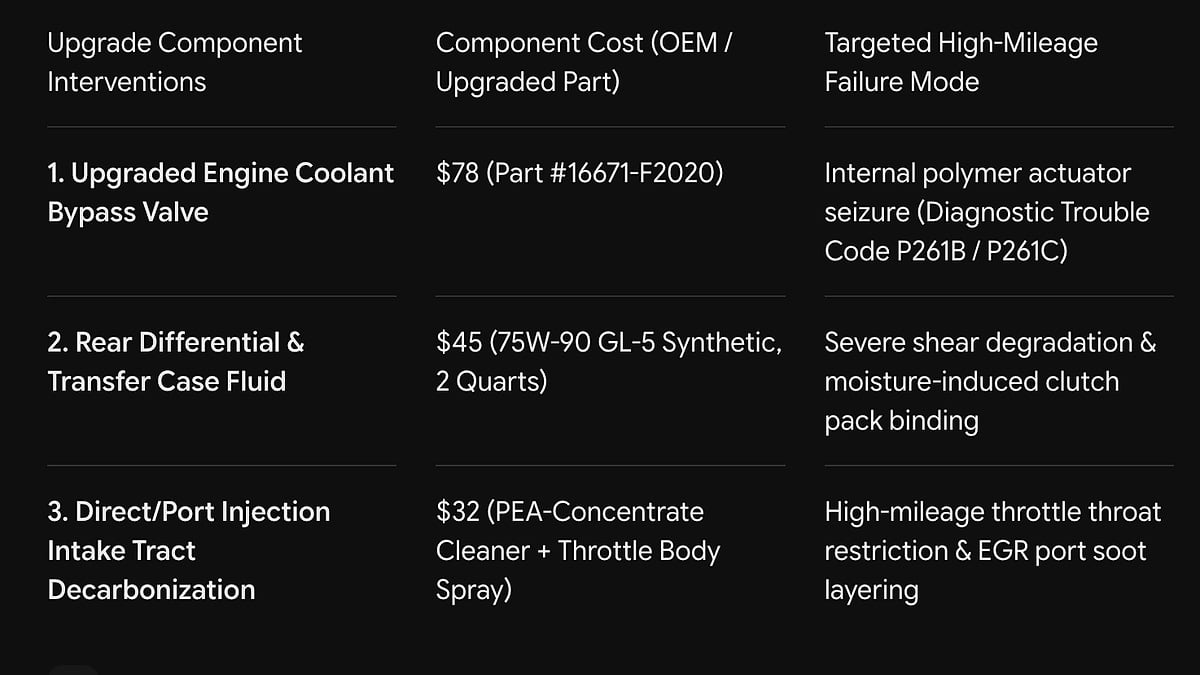
1. The Primary Threat: Upgraded Coolant Bypass Valve Intervention ($78)
Torque News technical analysis by Denis Flierl identifies a critical gap between factory maintenance schedules and real-world component longevity, none more evident than within the 2.5L engine’s thermal management loop.
The primary high-mileage risk for conventional and hybrid 2021 RAV4 models is the internal mechanical failure of the electronically controlled plastic coolant bypass valve. This component manages engine thermal stratification by routing coolant through the heater core and engine blocks to optimize warming cycles.
Over time, the internal polymer valve seals degrade under constant thermal cycling, allowing coolant to weep into the micro-actuator housing. This instantly short-circuits the small internal motor, triggering a persistent “Maintenance Required” or “Check Engine” light on the dashboard and typically storing fault codes P261B or P261C.
Left unaddressed, the valve can seize completely closed, causing rapid thermal spikes, potential cylinder head gasket distortion, or an emergency highway shutdown. While dealerships routinely charge between $600 and $1,200 to replace this assembly out of warranty, the revised OEM part (Part #16671-F2020) is available online for roughly $78.
Replacing this component preventatively around the 90,000-to-100,000-mile mark requires basic hand tools, draining approximately one gallon of engine coolant, and disconnecting three hose clamps behind the intake manifold. Proactively replacing this valve removes the largest single mechanical wildcard on the fifth-generation platform.
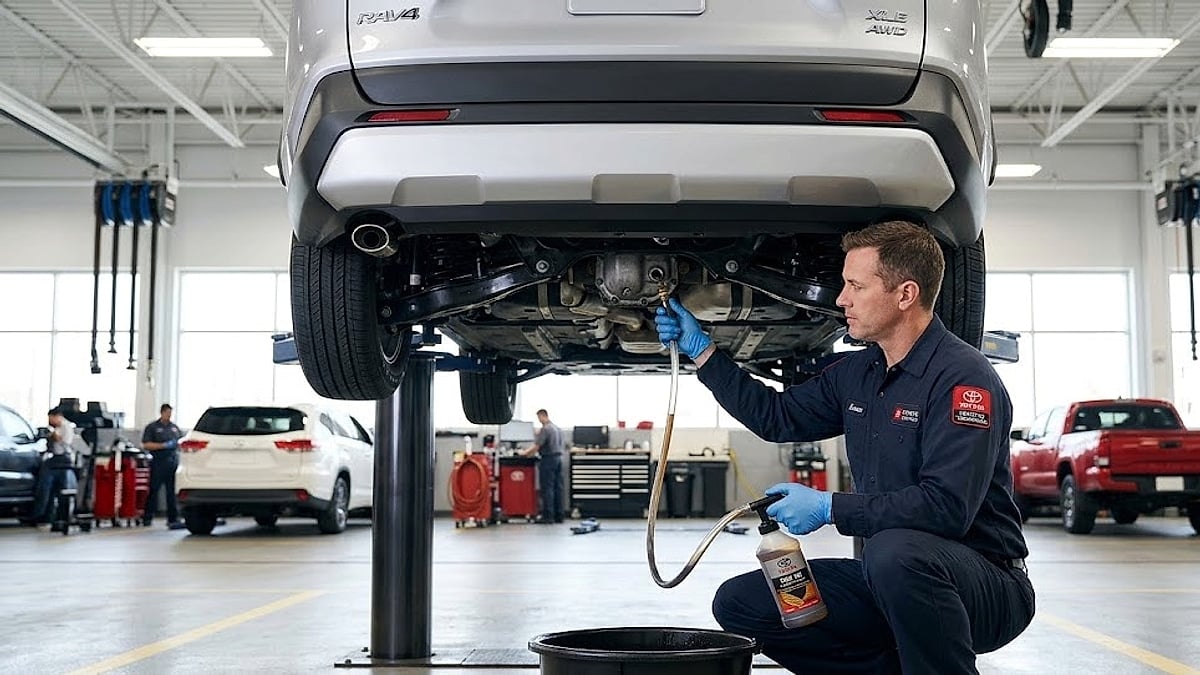
2. Drivetrain Fluid Auditing: Draining the Rear Differential and Transfer Case ($45)
The second critical upgrade targets the all-wheel-drive (AWD) mechanical systems. Toyota's factory manual classifies gear oil replacement as "inspection only" for normal driving conditions, recommending replacement at 60,000 miles only under severe usage, such as continuous towing. However, physical evidence from high-mileage fluid analysis demonstrates that the small fluid capacities of the RAV4’s rear differential housing (approximately 0.5 to 1.1 quarts depending on the specific AWD layout) suffer from severe mechanical shear and thermal breakdown far earlier than expected.
Moisture ingress through the housing breathers, combined with regular clutch-pack friction, introduces metallic particulates into the oil, leading to high-mileage rear-end chattering or total carrier bearing failure. Purchasing two quarts of high-quality, fully synthetic 75W-90 GL-5 gear oil costs under $45. Performing a straightforward drain-and-fill operation every 50,000 miles removes accumulated friction contaminants, insulates the internal ring-and-pinion gears, and ensures the mechanical longevity of the rear drivetrain assembly without dealership pricing.
3. High-Mileage Intake Tract Decarbonization ($32)
While Toyota’s D-4S dual-injection system utilizes port fuel injectors alongside direct fuel injectors to help wash down and clean the intake valve stems, high-mileage fifth-generation variants still remain susceptible to heavy soot and carbon accumulation within the primary throttle body throat and the Exhaust Gas Recirculation (EGR) gas ports. This restriction gradually chokes off clean airflow, resulting in rough idling, a lazy throttle response, and reduced fuel efficiency, which owners often mistake for systemic engine wear.
Investing roughly $32 in a dedicated, high-quality Polyetheramine (PEA) concentrated fuel system additive, along with a can of specialized throttle body cleaner, provides the necessary corrective measure. Manually wiping away the sticky carbon ring that forms around the electronic throttle butterfly valve every 40,000 miles restores the factory-calibrated idle air volume, while the PEA additive cleans internal fuel injector tips to preserve an optimal spray pattern.
The 30-Year Mechanical Formula: Avoid falling for unneeded $2,000 dealership fluid menu packages early on and target your maintenance spending toward real, high-mileage hardware vulnerabilities.
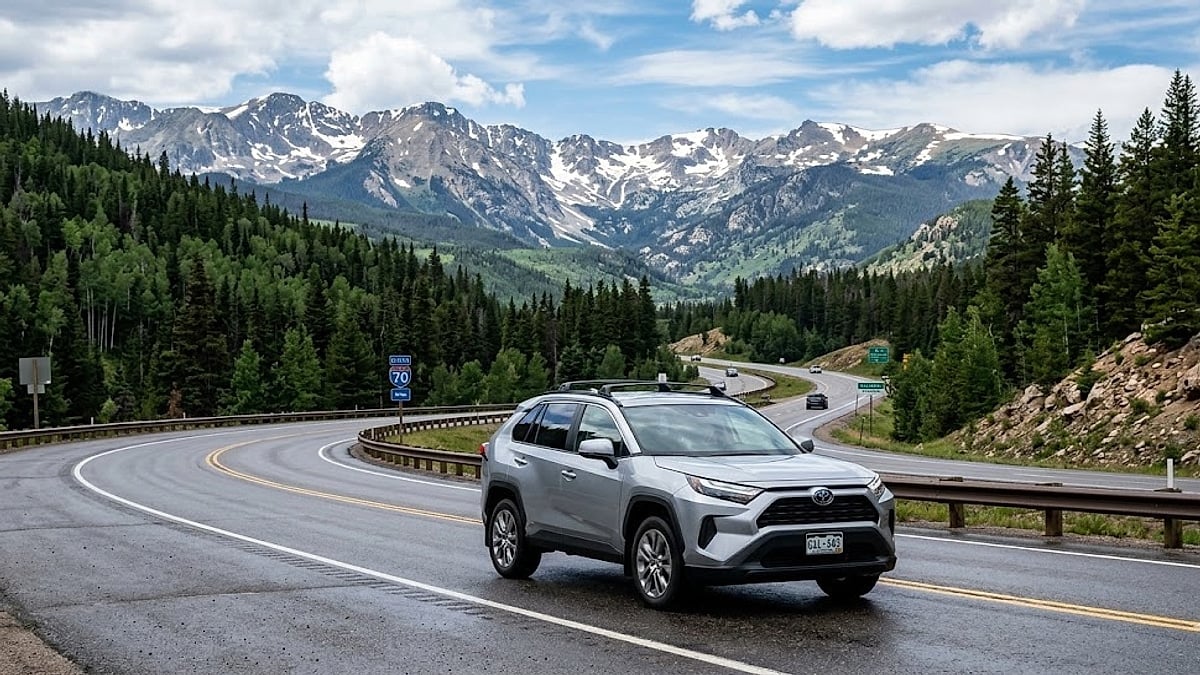
High-Altitude Stress Testing: The Colorado Performance Realities
Vehicle mechanical components undergo unique environmental stress testing along the grueling high-altitude mountain corridors of Colorado. Continuous, heavy elevation climbs up regional passes like the Eisenhower Tunnel or Vail Pass generate intense thermal cycles within the 2.5L engine block, significantly accelerating the structural degradation of plastic coolant housings compared to vehicles operating at sea level.
Furthermore, cold mountain winters combined with steep downhill descents cause rapid, severe drops in cooling system temperature. This extreme thermal swing imposes immense mechanical strain on electronic actuators such as the coolant bypass valve, making proactive hardware upgrades necessary for high-altitude regional owners aiming for 150,000 trouble-free miles.
What About the Hybrid High-Voltage Cable Concern?
For owners operating the 2021 RAV4 Hybrid or Prime models, a natural next question arises: Does proactive cooling and drivetrain maintenance protect the high-voltage electrical components from systemic failures?
The short answer is no; mechanical fluid care will not prevent electrical corrosion. Hybrid models face a distinct high-mileage vulnerability, affectionately dubbed "Cablegate," within owner networks, where the rear electric motor-generator (MGR) high-voltage wiring harness connection is exposed to severe road debris and galvanic corrosion beneath the chassis.
To protect this specific area past 150,000 miles, owners must conduct a secondary physical intervention: regularly cleaning the orange high-voltage connector casing under the rear cargo area and verifying that the revised, open-sided debris shield is installed to prevent moisture from pooling against the wiring harness terminal connections.
Bypassing Dealership Capital Traps
Investing less than $300 into these specific cooling, drivetrain, and intake upgrades allows fifth-generation RAV4 owners to effectively insulate their vehicles from major high-mileage failure points. Executing these targeted maintenance steps creates a reliable barrier against unexpected breakdowns, allowing owners to confidently reject expensive new-car financing or costly dealership service packages while keeping their paid-off crossover running perfectly for years to come.
Tell Us What You Think
Have you encountered a coolant bypass valve warning message or addressed drivetrain fluid degradation on your fifth-generation crossover, and did you choose to perform the work yourself or utilize an independent repair facility? Leave a comment in the red "Add new comment" link below and share your real-world mileage milestones with the community.
About The Author
Denis Flierl is a 14-year Senior Reporter at Torque News and a member of the Rocky Mountain Automotive Press (RMAP) with 30+ years of industry experience. Explore his full investigative reporting archives and technical guides at DenisFlierl.com. Based in Parker, Colorado, Denis leverages the Rockies' high-altitude terrain as a rigorous testing ground to provide "boots-on-the-ground" analysis for readers across the Rocky Mountain region, California EV corridors, the Northeast, Texas truck markets, and Midwest agricultural zones. A former professional test driver and consultant for Ford, GM, Ram, Toyota, and Tesla, he delivers data-backed insights on reliability and market shifts. Denis cuts through the noise to provide national audiences with the real-world reporting today’s landscape demands. Connect with Denis: Find him on LinkedIn, X @DenisFlierl, @WorldsCoolestRides, Facebook, and Instagram.
Photo credit: Denis Flierl
Set Torque News as Preferred Source on Google
Follow us today...