


If you have been watching the technology sector as long as I have, you recognize the distinct difference between a flashy tech demo and a genuine market inflection point. We see countless prototypes that promise to revolutionize our lives but quietly fade into the ether when the realities of physics, economics, or consumer psychology set in. However, the recent moves by Joby Aviation represent something significantly more substantial. By executing piloted demonstration flights of their electric vertical takeoff and landing (eVTOL) aircraft between John F. Kennedy International Airport and the Downtown Manhattan Heliport, Joby is pulling the "flying car" out of science fiction and dropping it squarely into the most complex airspace in the United States.
This isn't just about showing off a cool battery-powered rotorcraft. It is a calculated, highly visible stress test of a transportation model that intends to upend how we traverse our cities. But as we pivot from the theoretical to the practical, the road—or rather, the flight path—ahead is fraught with monumental challenges that go far beyond mere aeronautics.
The Promise and Perils of the Flying Car Dream
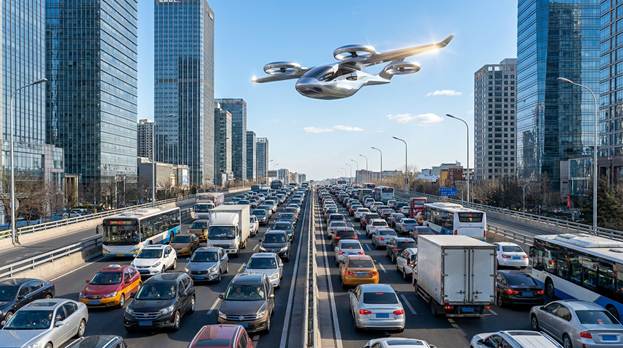
The inherent promise of the eVTOL is intoxicating, and it addresses a very real, very expensive problem: urban gridlock. Traditional ground transportation in major metropolitan areas is reaching a breaking point. The ability to decouple physical distance from travel time without relying on massive, carbon-spewing helicopters is a generational leap. Joby’s aircraft promises to turn an hour-long, soul-crushing cab ride through New York traffic into a quiet, zero-emissions, seven-minute aerial hop. It promises enhanced productivity, reduced ground congestion, and a much-needed modernization of our transit corridors.
However, the perils are equally significant and deeply complex. First, there is the fundamental issue of energy density. While batteries are sufficient for short urban hops today, the weight-to-power ratio of current lithium-ion technology severely limits range and payload. Second, there is the noise factor. While eVTOLs are demonstrably quieter than traditional helicopters, a sky filled with hundreds of them creates a new acoustic footprint that city dwellers may fiercely reject. Finally, we face the peril of catastrophic failure. Unlike a self-driving car that can simply pull over if its software crashes, a flying vehicle operating over densely populated areas must adhere to aerospace-grade fault tolerance. Gravity is exceptionally unforgiving, and the margin for error is precisely zero.
Earning Trust Through the Crucible of Public Testing
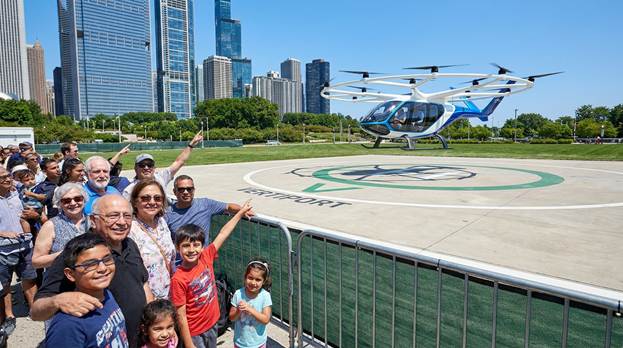
In the technology industry, we often talk about the "adoption curve," but for passenger-carrying aviation tech, the only metric that truly matters is consumer trust. You cannot beta-test a flying car with a patch update sent over the air. If you want the general public to step into an autonomous or even piloted experimental aircraft, you must overcome a deeply ingrained, evolutionary fear of falling out of the sky.
This is precisely why lengthy, highly public testing like Joby’s Manhattan flights is the most critical component of their business strategy. Trust is not granted by a slick marketing presentation; it is earned through relentless, boring, predictable repetition. The public needs to see these vehicles taking off and landing safely every single day, in all weather conditions, integrated seamlessly into the background noise of the city.
We saw a parallel struggle with the rollout of autonomous ground vehicles like Cruise and Waymo. The moment an autonomous car caused a highly publicized traffic issue or safety incident, public sentiment violently turned against the technology. For flying cars, the stakes are exponentially higher. A single, highly visible accident involving a passenger eVTOL in a major city would set the entire industry back by a decade. Therefore, these public demonstrations act as psychological conditioning for the consumer base. By operating visibly and flawlessly in a high-profile environment like New York City, Joby is systematically dismantling the public's perception of risk, proving that this technology is not a dangerous novelty, but a reliable utility.
Long-Term Implications of Viable Personal Flying Cars
Assuming the industry can clear the hurdles of trust and technology, the long-term implications of viable personal flying cars—and widespread eVTOL taxi services—are staggering. We will see a fundamental rewriting of real estate economics and urban sprawl.
Historically, the value of real estate is directly tied to its commute time to economic hubs. If an eVTOL can transport a person 60 miles in 20 minutes, the definition of a "suburb" radically expands. We could see the rise of "exurban" luxury living, where wealthy individuals live in rural, environmentally pristine areas but commute daily to city centers via their personal or subscribed air transit service.
Conversely, this also threatens to exacerbate socioeconomic divides. In the early to mid-term phases of this technology, flight will remain a premium service. The sky could literally become a fast lane for the wealthy, leaving the working class to navigate the crumbling, congested ground infrastructure below. Policymakers will have to grapple with the democratization of the sky, ensuring that this leap in mobility serves the broader public rather than just the elite.
Forecasting the Flight Path to Critical Mass
When will flying cars hit critical mass? If we define "critical mass" as the point where taking an air taxi is as common and accessible as ordering an Uber today, my forecast puts us squarely in the 2035 to 2040 window.
The path to that critical mass requires navigating a labyrinth of interim steps, most notably on the regulatory front. The Federal Aviation Administration (FAA) is actively working on regulations, but the pace of government often lags behind the pace of Silicon Valley. As detailed in a comprehensive legal analysis, navigating the legal and regulatory frameworks for eVTOLs involves unprecedented coordination regarding type certification, airspace integration, and operational rules. The FAA must essentially invent a new class of aviation regulations that allow for high-frequency, low-altitude flights over populated areas.
Technologically, we need two massive interim breakthroughs. The first is solid-state battery technology, which will provide the necessary energy density to increase payload and range while drastically reducing the risk of thermal runaway (battery fires). The second, and perhaps most crucial for economic viability, is the transition to fully autonomous flight. Hiring highly trained, commercially licensed pilots for small, four-passenger vehicles is an economic bottleneck that prevents mass scaling. The industry must prove that an automated flight control system - a highly advanced Unmanned Aircraft System Traffic Management (UTM) network - can safely route thousands of vehicles simultaneously without human intervention.
Urban Planning for the Third Dimension
As this class of vehicle approaches critical mass, urban planning will undergo its most significant paradigm shift since the invention of the interstate highway system. We will have to start zoning for the third dimension.
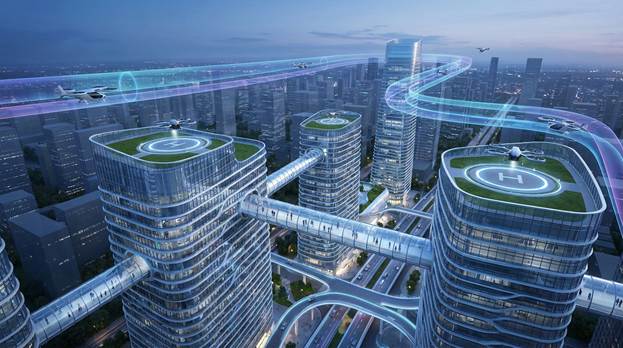
The most immediate requirement will be the construction of "vertiports." These cannot simply be flat concrete pads on top of existing buildings. They require immense electrical infrastructure to support megawatt-level rapid charging systems, advanced fire suppression capabilities, and passenger security screening areas. City planners will need to mandate that new commercial high-rises are designed with structural load capacities to support these active transit hubs.
Furthermore, cities will have to establish strict digital flight corridors—essentially invisible highways in the sky - to manage noise pollution and ensure privacy. You cannot have flying cars buzzing past 40th-floor apartment windows at all hours of the night. Zoning laws will need to dictate where these vehicles can fly, how fast they can travel over residential neighborhoods, and where they are permitted to loiter. Ground transit hubs, like train stations and subway terminals, will need to be physically integrated with aerial vertiports to create seamless, multi-modal transportation networks.
Wrapping Up
The sight of a Joby Aviation eVTOL gracefully navigating the airspace between JFK and Manhattan is an undeniable milestone in the history of transportation. It proves that the hardware is capable and that the ambition is real. However, as any seasoned tech analyst knows, building a revolutionary product is only 10 percent of the battle. The remaining 90 percent is building the ecosystem, securing the regulatory frameworks, and, most importantly, earning the unwavering trust of a skeptical public.
The long-term promise of the flying car is a redefined urban landscape, where the friction of distance is vastly reduced. But to get there, the industry must commit to years of rigorous, transparent, and sometimes tedious public testing. They must solve the battery density puzzle, conquer the economics of autonomous flight, and work hand-in-hand with city planners to build the high-voltage infrastructure of tomorrow. We are standing on the precipice of a new era in mobility, but unlocking the sky for the masses will require an unprecedented level of execution on the ground.
Disclosure: Images rendered by Artlist.io
Rob Enderle is a technology analyst at Torque News who covers automotive technology and battery developments. You can learn more about Rob on Wikipedia and follow his articles on TechNewsWord, TGDaily, and TechSpective.
Set Torque News as Preferred Source on Google
Follow us today...







Comments
By far the UTM is the…
Permalink
By far the UTM is the biggest hurdle on my opinion. Look at the problems the FAA has, and that's nothing compared to the traffic management these will present. I hope I'm wrong about this. However this article glosses over this issue.