
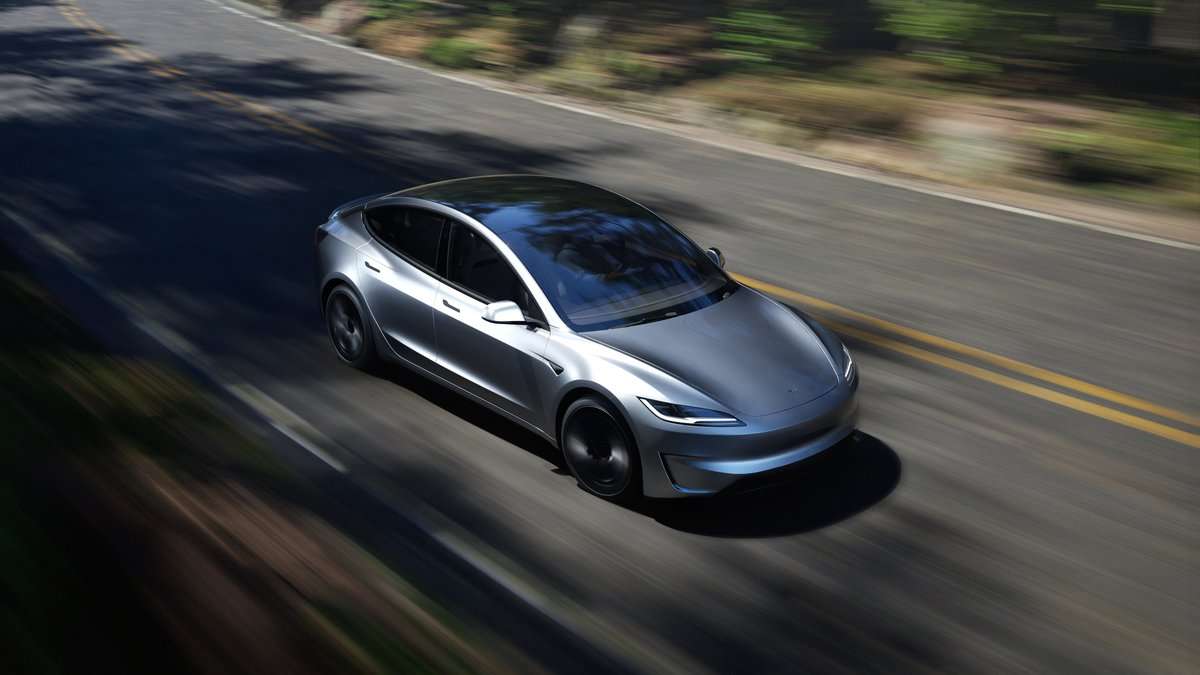

Are EVs truly a cost-saving revolution? Or are they just fancy gadgets with a hidden price tag?
One Reddit user, armed with spreadsheets, has taken it upon himself to track the cost per mile of his Tesla Model 3 and Chevy Bolt against his trusty, old-school Toyota Corolla.
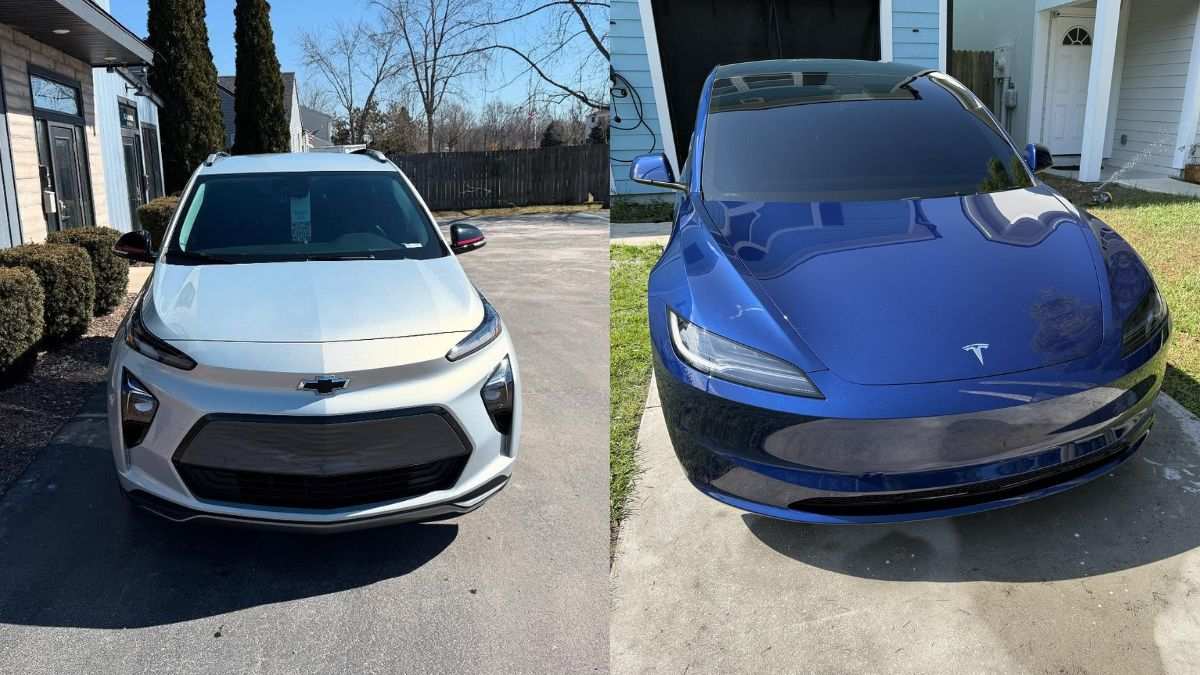
The results are surprisingly counterintuitive, shattering some common EV myths and revealing a few hard truths about the cost of owning an electric car.
50,000-Mile Cost Breakdown of Tesla Model 3 vs. Chevy Bolt vs. Toyota Corolla
Erv, shared some insights and data on r/electricvehicles after driving 50,000 miles across a Tesla Model 3 and Chevy Bolt EUV. The kicker? His old Toyota Corolla still beats them both in one crucial metric.
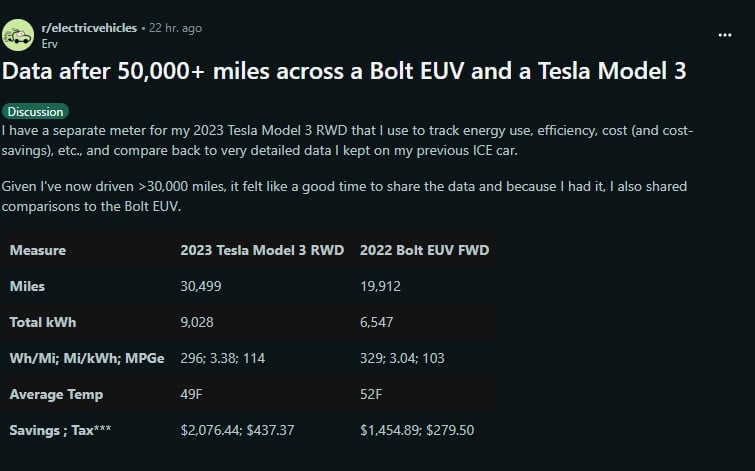
"I have a separate meter for my 2023 Tesla Model 3 RWD that I use to track energy use, efficiency, cost (and cost-savings), etc., and compare back to very detailed data I kept on my previous ICE car.
Given I've now driven >30,000 miles, it felt like a good time to share the data, and because I had it, I also shared comparisons to the Bolt EUV.
*I benchmarked the fuel costs against my prior car, a Toyota Corolla, which got 33.17 mpg over the 100,000+ miles I tracked it, and I also benchmarked against current gas prices, which in my area have been roughly $3/gallon, but I am using nuanced monthly averages for my state. I also bake in a $30 oil change per 5,000 miles as "fuel".
**I also calculated the portion of my savings that is due to taxes I'm not paying at the pump (0.285+0.184 per gallon) - which is relevant politically given we can expect a $250/year EV surcharge to attempt to "close that loophole", which for me, looks to be "fair" if it were state + federal, but just being federal and combined with my state's surcharge ($75), it is not.
I have insurance, tabs, depreciation, maintenance, as well but wanted to focus on "fuel". Those costs are all higher than the Corolla due to the Tesla (and Bolt) being much newer cars (and fully insured instead of minimally insured), and the heightened costs do offset the fuel savings for now. I'll be curious to see over 100,000+ miles how the total cost to own tightens up and I expect the Tesla to win out.
Advertising
Currently, depreciation/any cost of the vehicle, the Tesla is already winning at 15c/mile vs. the Corolla's 16c/mile due to the cheaper maintenance and fuel despite the higher insurance and tabs. But taking into account depreciation changes, that comparison to $0.34 vs. $0.20 in favor of the Corolla, for now. Which is a price I'm comfortable paying for enhanced safety, comfort, etc.
EFFICIENCY
Because it's always interesting to discuss - this is my "efficiency" based on the electricity I am actually paying for, so it includes losses (and I am adding in charging away from home, but that's been extremely minimal). The Tesla itself reports a different number: 239 Mi/kWh (vs 296), which is partially due to losses and partially due to the car not reporting preconditioning. Similarly, the Tesla app says 8,771 kWh charged vs. I have logged 9,028 (a 3% variance), which tells me the 20% variance on Mi/kWh is primarily preconditioning and not charging losses, which is surprising given I do not precondition very frequently and I do not use Sentry. I charge L2."
Tesla Model 3 vs. Chevy Bolt EUV: Performance, Range, and Space Comparison
- The Tesla Model 3 offers a dual-motor all-wheel-drive system producing 460 horsepower, achieving 0–60 mph in 2.9 seconds, with an EPA-estimated range of up to 342 miles. In contrast, the Chevrolet Bolt EUV features a single front-mounted motor delivering 200 horsepower, reaching 0–60 mph in approximately 7 seconds, and provides an EPA-estimated range of 247 miles.
- The Model 3, a compact sedan, offers 97 cubic feet of passenger volume and 24 cubic feet of cargo space. The Bolt EUV, a subcompact crossover, provides similar passenger volume at 97 cubic feet but offers slightly less cargo space at 16.3 cubic feet.
- Tesla's Model 3 includes a minimalist interior with a 15-inch touchscreen interface, advanced driver-assistance features, and access to Tesla's Supercharger network. The Bolt EUV comes equipped with Chevrolet's infotainment system, supports Apple CarPlay and Android Auto, and offers GM's Super Cruise hands-free driving technology on compatible roads.
- The 2025 Tesla Model 3 starts at approximately $42,490, positioning it in the premium EV segment. The Chevrolet Bolt EUV offered a more affordable entry point, with prices starting around $27,800, making it one of the most budget-friendly electric vehicles available at the time of its release.
Erv, in the kind of methodical tone that could make an actuary swoon, detailed everything: kilowatt-hours, miles per gallon equivalent (MPGe), oil changes priced to the penny, and even the political nuances of gas taxes and EV surcharges.
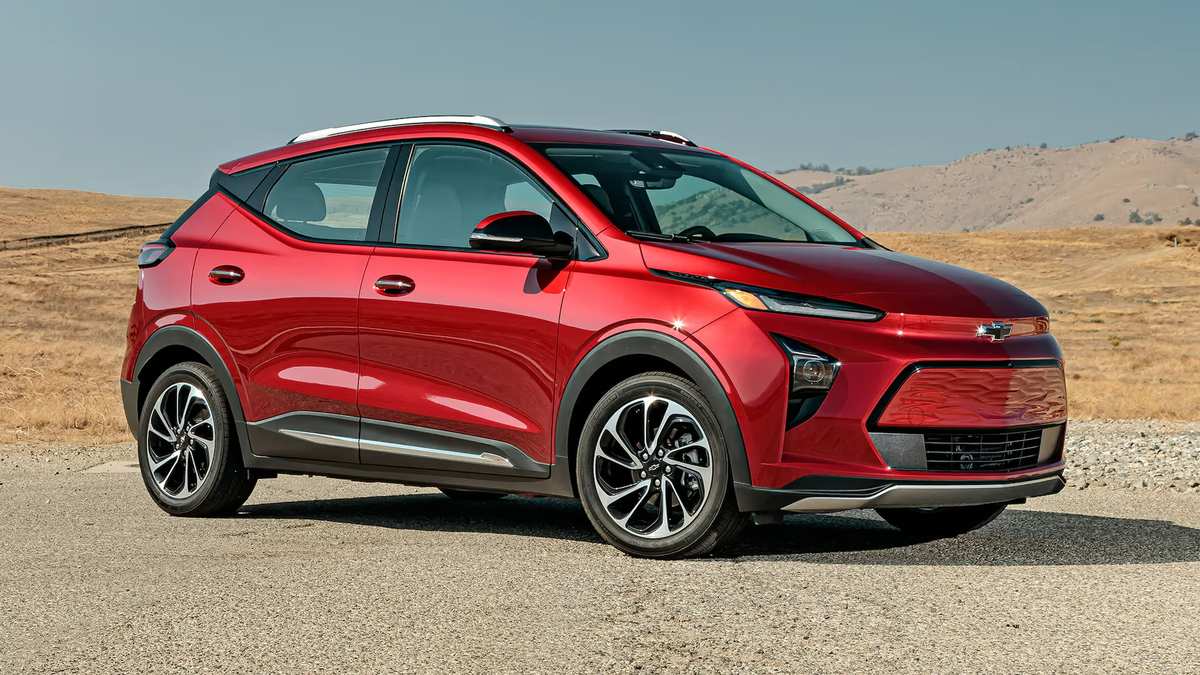
According to his logs, the Model 3 RWD clocked in at 15 cents per mile in fuel and maintenance. The Bolt? Slightly worse. But even those figures paled next to his dearly departed Corolla, which, once depreciation was factored in, ran just 20 cents per mile overall. The Tesla ballooned to 34 cents. That’s not a minor difference.
Depreciation and Maintenance, How Reddit Users React to True EV Ownership Costs
The Reddit horde, predictably, pounced. One commenter, Hsaphoto, praised the inclusion of depreciation: the forgotten financial bogeyman. Another, neutralpoliticsbot, scoffed at the $30 oil change estimate with a sarcastic “$30 oil change where?”, the internet equivalent of flipping a table.
Erv held the line, citing years of discount coupons and standard oil. Welcome to Reddit, where every car becomes a case study and every assumption gets litigated like a class-action suit.
Beyond the Spreadsheet, User-Reported Efficiency and Cost Highlights from Bolt and Hybrid Owners
One Bolt owner, Low_Thanks_1540, bragged about getting 5.1 mi/kWh in Detroit, averaging just 3 cents per mile. Another user brought their Ford Maverick hybrid into the ring, reporting a paltry $0.129 per mile in operating costs. Suddenly, the Model 3's efficiency crown didn’t feel quite so regal.
The Tesla still wins where it matters to many, comfort, safety, and long-term efficiency. It delivered 114 MPGe versus the Bolt’s 103, despite colder temps and nearly 11,000 more miles logged. And with LFP batteries under the floorboards and a 239 mi/kWh efficiency reported by the car itself (after adjusting for preconditioning losses), the Model 3 proved not only cost-effective but technologically superior. As one user noted, “It’s well documented that the Tesla Model 3 RWD is more efficient than a Bolt with all things being equal.” The key phrase is that all things being equal, which in the real world, they rarely are.
MPGe Demystified, How EPA’s Miles-Per-Gallon-Equivalent Rating Works for EV Buyers
- MPGe is determined by equating the energy content of electricity to that of gasoline. Specifically, 33.7 kilowatt-hours (kWh) of electricity is considered equivalent to one gallon of gasoline. To calculate MPGe, the distance an electric vehicle can travel on 33.7 kWh is measured, allowing for a comparison with traditional miles-per-gallon (MPG) ratings of gasoline vehicles.
- MPGe was introduced to provide consumers with a familiar metric to compare the energy efficiency of electric vehicles (EVs) to that of internal combustion engine vehicles. By translating electric energy consumption into a gasoline-equivalent format, it aims to simplify the decision-making process for potential EV buyers.
- While MPGe offers a standardized measure, it doesn't account for various real-world factors such as driving habits, terrain, climate conditions, and accessory usage (like air conditioning), all of which can significantly impact an EV's actual efficiency. Consequently, two vehicles with similar MPGe ratings might perform differently under everyday driving conditions.
- MPGe focuses solely on the energy consumed by the vehicle during operation, neglecting the efficiency and environmental impact of electricity generation and transmission. For instance, electricity produced from renewable sources has a different environmental footprint compared to that generated from fossil fuels, but MPGe does not differentiate between them.
Still, the most revealing part of this Reddit saga was the emotional math. Erv knows his Tesla costs more. He admits it. But he’s comfortable paying that premium for the intangible upgrades, refined ride, cleaner footprint, and the sense that he’s driving the future. That, right there, is the fine print most car reviews miss. We’re not always chasing the cheapest ride. Sometimes, we’re chasing the one that feels right. Even if it costs 14 cents more per mile.
Shifts in Car Ownership
So what does this all mean? It means the automotive world is no longer defined solely by horsepower and leather trim. It’s defined by kilowatt-hours, tax credits, and Reddit threads that dissect your every mile like a neurosurgeon studying a brain scan.
The EV revolution forces you to confront what you value, numbers or nuance, cost or conscience. And if you’re still wondering whether to switch, don’t just take it from the marketing brochures. Sit down with the math geniuses in the back booth of Reddit and let them show you what owning an EV actually costs.
Because in the end, the Tesla might feel like the future, the Bolt might get you there frugally, and the Corolla? That humble little gas-sipper might still be the most honest ride of all.
Have you done your own cost breakdown on EV ownership versus your previous ICE vehicles? What unexpected costs or savings did you encounter? Share your experiences with us in the comments!
Image Sources: Tesla Media Center, Chevy Newsroom, KBCustoms Facebook Page, Joseph L Young Sr. Facebook Page
Noah Washington is an automotive journalist based in Atlanta, Georgia. He enjoys covering the latest news in the automotive industry and conducting reviews on the latest cars. He has been in the automotive industry since 15 years old and has been featured in prominent automotive news sites. You can reach him on X and LinkedIn for tips and to follow his automotive coverage.
Set Torque News as Preferred Source on Google
Follow us today...






Comments
Good point! The tire costs…
Permalink
In reply to I work as an Automotive… by James (not verified)
Good point! The tire costs on EVs can be brutal especially the performance models.
Rapid tire wear has been…
Permalink
In reply to I work as an Automotive… by James (not verified)
Rapid tire wear has been reported in some Rivians also, which kind of makes sense due to the 7000 pound weight. But it turned out that people were driving them in 'sport' mode or 'off road' mode when they were driving on normal roads (causing the tire angles to be off just a bit).
My RIT's OEM tires have 30,000 miles and are about 1/2 worn out.
Who would pick a Corolla…
Permalink
In reply to Rapid tire wear has been… by Mike in Chicago (not verified)
Who would pick a Corolla over any EV? It's an absurdly boring & bland vehicle inside, outside, driving or parked.
Add carbon footprint over a decade or more and the EV's beat the pants off ICE cars.
Neither has a soul so there's that as well.
Idk what model Tesla you…
Permalink
In reply to I work as an Automotive… by James (not verified)
Idk what model Tesla you speak of sir but my model 3 awd long range does not have staggered tires they absolutely can be rotated and I can get a full set of good tires that do not have to be run flats for $800 that last way longer than 15,000 miles and I drive my car 7 days a week 8-10 hrs a day.
"Lucky to get 15k from a set…
Permalink
In reply to I work as an Automotive… by James (not verified)
"Lucky to get 15k from a set of tires"? That's simply not true. I've has 2 Tesla's over the last 6 years. I experienced uneven tire wear on the latest one, a Model Y, and had to change the tires early at 43k miles. I found the wheel alignment was way off so hopefully that improves the wear on the new set.
I'm at 30,000 miles on my…
Permalink
In reply to I work as an Automotive… by James (not verified)
I'm at 30,000 miles on my first set of tires
Yeah tire costs for EVs are…
Permalink
In reply to I work as an Automotive… by James (not verified)
Yeah tire costs for EVs are definitely something to consider, especially with Teslas weight and tire specs.
If you drive like a maniac ……
Permalink
In reply to I work as an Automotive… by James (not verified)
If you drive like a maniac … yes , I get almost 40 k from my Tesla tires . Stop lying !
What is more, he includes a…
Permalink
In reply to What he's not mentioning is… by Cody Williams (not verified)
What is more, he includes a price for the Bolt that is beyond ridiculous. It is nearly twice the price I paid. When you click on the links, it is about how he spent more on windshield washer fluid than on maintenance. His 15¢ a mile is so absurd to be laughable. The used car value is nearly the cost I paid for mine. Electricity is cheap where I live, generally 3-8¢/kW/h. I average 4 miles per kW though all seasons (more in summer, less in winter).
Fair take! Prices and rates…
Permalink
In reply to What is more, he includes a… by Dane (not verified)
Fair take! Prices and rates vary a lot by region.
Funny lowest residential…
Permalink
In reply to What is more, he includes a… by Dane (not verified)
Funny lowest residential rate in US is like 10c/kwh.....
The calculations on the…
Permalink
In reply to What he's not mentioning is… by Cody Williams (not verified)
The calculations on the Corolla were for the first 100,000 miles. It says that in the article.
Exactly! The Corolla numbers…
Permalink
In reply to The calculations on the… by kjmc (not verified)
Exactly! The Corolla numbers were for the first 100k miles to keep things consistent. Thanks for pointing that out!
Depreciation is absolutely…
Permalink
In reply to What he's not mentioning is… by Cody Williams (not verified)
Depreciation is absolutely part of the equation, Tesla won't last 10 years per vehicle. ICEs can last 100s of years with proper maintenance and oil changes.
This EV argument is so dumb, if you want to buy an electric vehicle and then pretend that you're helping the environment, go for it. But that's all you're doing. PRETENDING. Where does electricity come from? Ask yourself that. Then ask if it's selfish to use everyone's electrical grid to charge YOUR car. You're stealing electricity from an already underwhelming system. Good job, you just made the electricity company more money from burning coal and natural gas. *Slow clap*
Sorry, cars do not last 100…
Permalink
In reply to Depreciation is absolutely… by Hugh Jorgen (not verified)
Sorry, cars do not last 100 years. Your limiting factor here is the availability of spare parts.
Exactly! usually it's the…
Permalink
In reply to Sorry, cars do not last 100… by Darrell (not verified)
Exactly! usually it's the weird parts breaking or tech getting outdated that kills cars, not the engine itself. There's way more to keeping a car going than just oil changes.
The inadequate grid and…
Permalink
In reply to Depreciation is absolutely… by Hugh Jorgen (not verified)
The inadequate grid and infrastructure isn't our fault. That is our wonderful government taking bribes to suppress "other forms of energy" Since Nic Tesla's technology has been suppressed by greedy corporations and paid off officials we have been stunted for over 100 years. We have had the plans for zero point energy and wireless dispersement all along. I've worked in that field and saw it.
Sounds great! I’ve heard…
Permalink
In reply to The inadequate grid and… by DNAMAN (not verified)
Sounds great! I’ve heard similar ideas and it’s definitely a topic that sparks deep conversations. I always appreciate hearing from folks who’ve worked in the field.
Yeah because any vehicle has…
Permalink
In reply to Depreciation is absolutely… by Hugh Jorgen (not verified)
Yeah because any vehicle has been around for HUNDREDS of years.
There's 2014 Teslas still for sale, and that's the worst years for them with the most problems.
You also mention EV owners pretending but then you pretend to care about those things you mentioned. Like the grid.
Get off your soap box.
Absolutely! people feel…
Permalink
In reply to Yeah because any vehicle has… by Chris Foster (not verified)
Absolutely! people feel strongly either way and it's good we can discuss this stuff. Those 2014 Teslas still driving around really highlight how far we've come in just a decade.
Yeah; that's the thing…
Permalink
In reply to Depreciation is absolutely… by Hugh Jorgen (not verified)
Yeah; that's the thing current electric vehicles are nothing but a different status symbol because at least 2/3rds if not 3/4 of our electricity at best comes from coal or natural gas so your electric vehicle is not saving the environment in any way really.
If we had hydrogen electric vehicles which make there electricity from hydrogen and emit water vapor as exhaust but have really been blocked largely by the petroleum and electricity industry primarily because they don't need chargers or gas. The problem being hydrogen being available in numerous locations which one of those 2 industries control in every instance if not both to a degree.
I agree! the grid still…
Permalink
In reply to Yeah; that's the thing… by Robert (not verified)
I agree! the grid still needs work. Hydrogen's promising and more options across the board can only help.
Yeah; that is the thing…
Permalink
In reply to Depreciation is absolutely… by Hugh Jorgen (not verified)
Yeah; that is the thing current electric vehicles are nothing but a different status symbol because at least 2/3rds if not 3/4 of our electricity at best comes from coal or natural gas so your electric vehicle is not saving the environment in any way really.
If we had hydrogen electric vehicles which make there electricity from hydrogen and emit water vapor as exhaust but have really been blocked largely by the petroleum and electricity industry primarily because they don't need chargers or gas. The problem being hydrogen being available in numerous locations which one of those 2 industries control in every instance if not both to a degree.
it's not as black-and-white…
Permalink
In reply to Depreciation is absolutely… by Hugh Jorgen (not verified)
it's not as black-and-white as 'EVs are worse because the grid isn’t perfect.' Even when powered by today's energy mix (which still includes coal and gas), EVs are generally more energy-efficient and produce fewer overall emissions than gas-powered cars.
Plus, the grid is getting cleaner every year—solar, wind, and other renewables are growing fast. Driving an EV now is a step toward supporting that transition. You're not 'stealing' electricity any more than someone using an air conditioner or a dishwasher is. You're just using a different fuel—one that's more efficient and gets cleaner over time.
No one’s pretending EVs are perfect, but they are a meaningful improvement in many ways—especially in cities where air quality and noise pollution matter. If we want to have a real conversation, let's talk about solutions, not just blame
This ☝🏼
Permalink
In reply to it's not as black-and-white… by Mr BBQ (not verified)
This ☝🏼
Thanks! Yeah, they're…
Permalink
In reply to it's not as black-and-white… by Mr BBQ (not verified)
Thanks! Yeah, they're definitely moving us forward, even if there's still room to improve. Appreciate that dude!
Selfish? Stealing? I pay…
Permalink
In reply to Depreciation is absolutely… by Hugh Jorgen (not verified)
Selfish? Stealing? I pay for my electricity, it isn’t stolen. EV batteries last more than 10 years. Battery tech is getting cheaper and lighter and one recent study has the potential to rejuvenate used batteries to like new without disassembly. Where does the electricity come from you ask? March of 2025 was the first ever reported time the US got more electricity from clean sources than dirty. 51% of energy came from green energy!! Plus coal factory’s are more efficient than ICE. Some day we’ll all have little power plants in our neighborhood or homes that are far more efficient. Get with the times.
Totally! The progress has…
Permalink
In reply to Selfish? Stealing? I pay… by Kev (not verified)
Totally! The progress has been wild to watch, and it feels like we're hitting a real tipping point. The next few years should be fascinating.
Thanks for sharing your…
Permalink
In reply to Depreciation is absolutely… by Hugh Jorgen (not verified)
Thanks for sharing your thoughts. yeah it's complicated stuff. EVs aren't perfect but they're part of the mix. Everyone's got different situations so good to talk it through.
yeah. Weird that he would…
Permalink
In reply to What he's not mentioning is… by Cody Williams (not verified)
yeah. Weird that he would try to make all things equal by adding in depreciation... but when comparing a new car to a 25 year old car. Thats absolutely misleading.
I know that no mater how one presents one's own findings there will be people who say "yeah, but.." because gas costs different amounts in different areas, electricity costs vary wildly from utility to utility, depreciation is only relevant over the period of time YOU plan to own the car (first 3 years in an EV will be terrible, but after 10 youre probably back on par with ICE). So there is no perfect way to display this data in a way that works for everyone, except to provide the spreadsheet so everyone can change the values to fit their actual personal use case. but the masses want a headline, not a spreadsheet. So I guess this is what you get.
I will say, for someone like me who keeps cars for a decade or more and has solar panels on my roof, there is absolutely zero cost comparison. EVs win hands down. YMMV.