
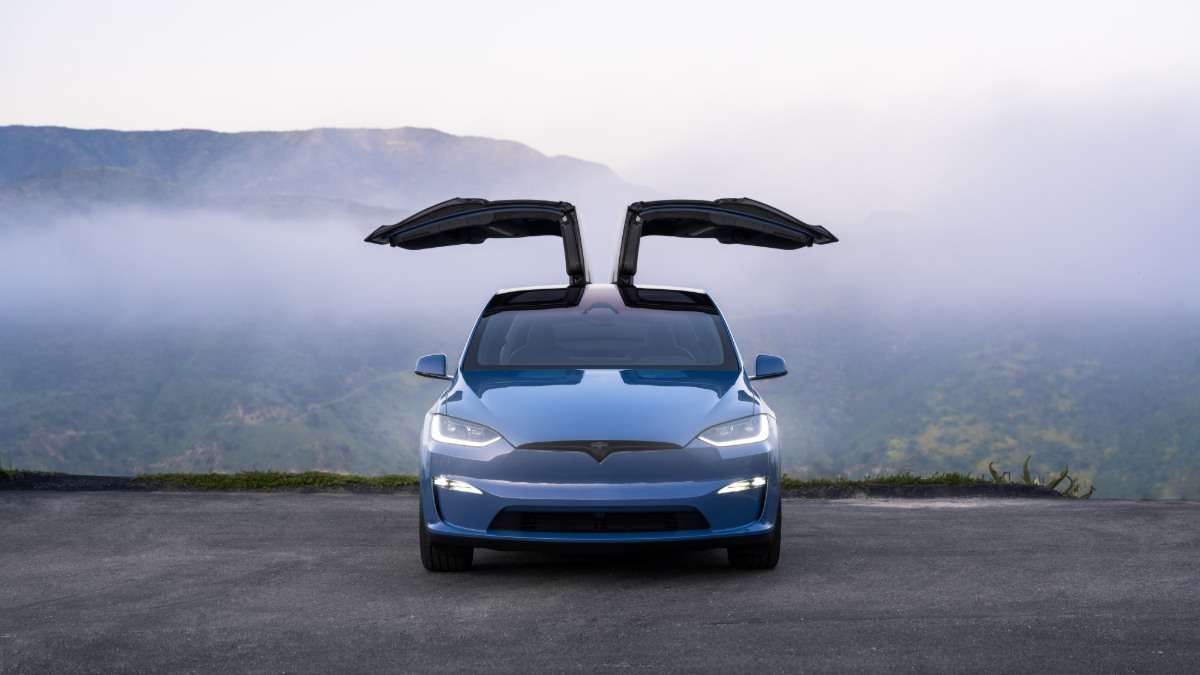

Matt Behunek's recent 700-mile haul with his Tesla Model X proves that the age of the Electric Nomad is upon us, and it requires a brand new playbook. This isn't just hooking up a trailer; it's a complete recalibration of the travel experience, turning a simple drive into a highly strategic game of range management and charging logistics.
Behunek’s report is a gift to the growing community of electric towers. It’s a candid look at what happens when the romance of the open road meets the unforgiving math of battery capacity.
“After a 700 miles long trip towing with my Tesla, I picked up a few lessons worth sharing: *also be prepared for the drive - FSD and cruise control does not work in Trailer mode*
1. Drive at night. Parking and charging are much easier with little to no demand. You can take up multiple stalls without worrying about blocking anyone.
2. Stay between 55 and 65 mph. Range stays strong in that window. Once you go over 65, efficiency drops quickly.
3. Use your cameras. They make it easy to monitor both sides of your car and trailer and help reduce fatigue on long drives.
4. Keep wheel chocks with you. They’re useful if you ever need to detach the trailer.
5. Plan ahead at every Supercharger. Before you get there, check the next station on Google Maps and look through the photos to see how the layout looks for trailers. I looked ahead at the next stop while I was charging. The Tesla app will show a little trailer symbol at the very bottom of it is trailer friendly.
Expect your range to reduce by 50-60%. Navigation will compensate for this in Trailer mode but stay on the 55-65 mph range so the distance estimates are accurate. Going just a few mile per hours over can cause a 7-10% reduction in range and you might not make your charger.”
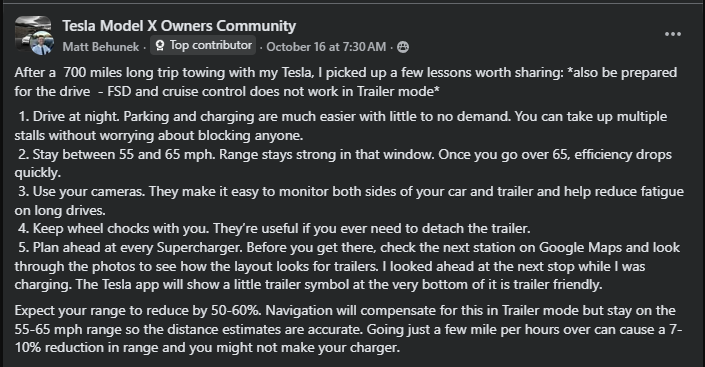
The opening line tells you everything you need to know about the new rules of the road. After a 700 miles long trip towing with my Tesla, I picked up a few lessons worth sharing: also be prepared for the drive - FSD and cruise control does not work in Trailer mode. Think about that for a second. The most advanced driver-assistance features on the road, the very things you paid a premium for, check out the moment you hook up a trailer. You're suddenly back in the driver's seat, completely in charge, which is both terrifying and wonderfully old-school.
His first piece of advice is pure genius: Drive at night. Parking and charging are much easier with little to no demand. You can take up multiple stalls without worrying about blocking anyone. This is the kind of counter-intuitive wisdom that only comes from experience. The sun-drenched highway of the old days is now a charging-station nightmare. The night, quiet and low on demand, becomes your best friend. It’s a complete flip of the script, where the best time to travel is when everyone else is sleeping.
Then there's the gospel of speed: Stay between 55 and 65 mph. Range stays strong in that window. Once you go over 65, efficiency drops quickly. This isn't a suggestion; it's a commandment. In the electric world, the difference between 60 and 70 mph isn't just a few minutes of travel time; it's the difference between making it to the next charger and calling a tow truck. That narrow 10 mph band is the sweet spot, the perfect blend of physics and practicality, and it demands a level of driving discipline that most modern drivers have forgotten.
The Electric Towing Playbook
- Traveling when charging stations are empty to avoid logistical nightmares and social anxiety.
- Maintaining the narrow 55-65 mph window where aerodynamic drag is manageable and range is maximized.
- Using the vehicle's advanced camera systems to turn a blind spot problem into a 360-degree solution.
- Treating every charging stop as a military operation that requires advance scouting of the next location's layout.
Behunek’s advice on using the cameras is a great reminder of how technology can solve the problems it creates: Use your cameras. They make it easy to monitor both sides of your car and trailer and help reduce fatigue on long drives. The same cameras designed to help you parallel park now become your eyes on the long haul, turning the Model X into a sophisticated, multi-lensed beast of burden.
And the wheel chocks? Keep wheel chocks with you. They're useful if you ever need to detach the trailer. It’s a simple, low-tech solution to a high-tech problem. It reminds you that no matter how many gigawatts you're hauling, you still need to respect the basics of gravity and friction.
The need for meticulous planning is the recurring theme. Plan ahead at every Supercharger. Before you get there, check the next station on Google Maps and look through the photos to see how the layout looks for trailers. This isn't the casual, "I'll stop when the light comes on" driving of the past. This is strategic, almost military-level logistics. You're not just driving; you're managing a complex energy supply chain.
The range penalty is the elephant in the room: Expect your range to reduce by 50-60%. That's the brutal truth of electric towing. It’s a massive hit, and it’s why the 55-65 mph rule is so critical.
Harvey Payne's response, full of shared experience, is the perfect echo. I have done the drive at night thing and you're right. Another plus is if you have to go through a suck high traffic area like Los Angeles you rarely have issues at night. This is the community confirming the new gospel. But Payne also adds a layer of complexity for the true nomad: managing the solar-charged batteries in the trailer itself. It's a reminder that electric towing is a system of systems, all demanding attention.
Payne’s tip about the navigation system is invaluable: Note it seems to take 20 miles to learn that the trailer is back there every time you hook up. This is the kind of glitch that can ruin a trip, turning a smooth start into a nerve-wracking gamble. It requires the driver to be smarter than the software, to do the math manually until the computer catches up.
And the profile switching trick? Set up a second profile in your car with just cruise control set under "autopilot." I call my profile "tow Harv." This is the true spirit of the enthusiast: finding a clever workaround, hacking the system to make it work for your specific needs. It's a brilliant piece of ingenuity that gets you the cruise control you need without the unwanted, range-killing acceleration.
The final, simple genius of the orange cone tip: Bonus tip - carry some orange cones. Sometimes you can get plugged in without dropping, but your trailer sticks out in the lane. It’s a low-cost, high-impact solution to a common infrastructure problem, a polite way of saying, "I know I'm sticking out, but I'm charging, and here's a visual warning."
The Tesla towing capabilities are clearly evolving, and the lessons from pioneers like Behunek and Payne are paving the way for everyone else. The infrastructure development for electric vehicle towing has a long way to go, but the community is already solving the problems faster than the engineers.
This is the new reality of the road. It’s more complicated, more demanding, and requires a higher level of engagement from the driver. But the fact that a 700-mile haul is now a feasible, if strategic, adventure is a testament to how far we've come. The future of electric vehicle towing is being written not in a lab, but on the open road, one carefully planned charge at a time. The Model S cars ever built and drove it 600 miles is another great example of the electric adventure.
What's your best "electric nomad" tip for long-distance EV travel? How do you manage range anxiety when towing, and what infrastructure changes are you hoping to see next? Share your thoughts on the new rules of the electric road in the comments below.
Image Sources: Tesla Media Center
Noah Washington is an automotive journalist based in Atlanta, Georgia. He enjoys covering the latest news in the automotive industry and conducting reviews on the latest cars. He has been in the automotive industry since 15 years old and has been featured in prominent automotive news sites. You can reach him on X and LinkedIn for tips and to follow his automotive coverage.
Set Torque News as Preferred Source on Google
Follow us today...


Comments
Taking roads with lower…
Permalink
Taking roads with lower speed limits 45 mph etc is going to be ideal if towing an enclosed trailor or trailor with a lot of wind resistance. Even 55 or 60 mph may not be great due to the pushing air scenario.same with gas and diesel just quicker to refuel but expense because of fuel consumption makes it smart to go slower!