


For owners of early electric trucks, long-term value is increasingly defined not just by hardware, but by software. That reality is now prompting at least some Hummer EV owners to look elsewhere.
One 2023 Hummer EV Edition 1 owner says he is seriously considering trading his truck for a Tesla Cybertruck, citing stalled over-the-air updates from General Motors and a growing gap in driver assistance and vehicle functionality.
The owner describes his Hummer EV as visually striking and deeply enjoyable in certain ways, particularly its removable roof panels that enable open-air driving in the summer. That feature alone gives him pause, as the Cybertruck does not offer a removable roof or a rear window that rolls down. He describes the roof off experience as one of the Hummer’s most compelling traits and the hardest thing to give up.
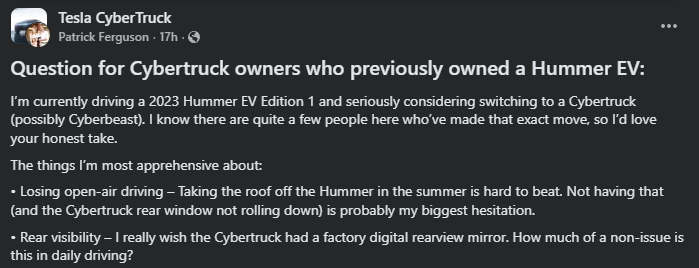
“I’m currently driving a 2023 Hummer EV Edition 1 and seriously considering switching to a Cybertruck (possibly Cyberbeast). I know there are quite a few people here who’ve made that exact move, so I’d love your honest take.
The things I’m most apprehensive about:
Losing open-air driving – Taking the roof off the Hummer in the summer is hard to beat. Not having that (and the Cybertruck rear window not rolling down) is probably my biggest hesitation.
Rear visibility – I really wish the Cybertruck had a factory digital rearview mirror. How much of a non-issue is this in daily driving?
Winter range – With the Hummer’s massive battery, I can do ~200 miles round-trip to the mountains in winter without charging. My wife’s Model Y loses range pretty noticeably in the cold, so I’m curious how the Cybertruck compares in real winter use.
Performance comparison – When the Hummer isn’t in Watts to Freedom, the Cybertruck AWD feels quicker to me. But in WTF mode, the Hummer still seems faster, and I don’t really want to downgrade performance overall.
Pricing timing – I’m also watching to see whether Cyberbeast pricing or lease incentives soften a bit, given sales.
Additional things I’m thinking hard about:
Power sharing / V2L, My 2023 Hummer cannot do power sharing because of charger + software limitations, and GM seems to have largely stopped meaningful OTA updates for 22–23 Hummers. No new functionality has come at all. The Cybertruck’s ability to actually power things is a big deal to me.
Advertising
Towing & travel trailer use – I tow a travel trailer today. The Hummer’s built-in camera system is excellent for towing, but the real-world range is about ~150 miles max. With Cybertruck, the idea of both towing and potentially powering the trailer directly is really appealing, something I simply can’t do with the Hummer.
The things pulling me toward the Cybertruck:
Living with a Tesla already, I love the phone-as-key / get-in-and-go experience, fast UI, Apple Music & podcasts built in, and zero lag.
FSD is on another level for me. Super Cruise hasn’t come close in my experience.
Tesla’s HVAC responsiveness, software updates, and overall tech ecosystem are hard to give up once you’re used to them.
Honestly… I just think the Cybertruck looks cool, especially with beefier tires and a wrap.
Things I wish it had:
Digital rearview mirror
The rear window that rolls down
Built-in Starlink (I know some of this can be retrofitted)
The Hummer still looks absolutely great, especially roof off, so this isn’t an easy decision. I’m trying to figure out if the Cybertruck is the better long-term daily + tech + towing platform, especially given GM’s lack of continued updates.
Advertising
If you’ve owned both, I’d really value your perspective: what do you miss, what do you not miss, and would you do it again?”
Still, frustration has been building. According to the owner, GM has delivered essentially no meaningful new functionality to the 2022 and 2023 Hummer EVs through software updates. Power sharing is a major example. Despite having a massive battery, his Hummer cannot provide vehicle-to-load power due to a combination of hardware and software limitations. That has become increasingly hard to accept as newer electric trucks advertise whole-home backup and campsite power as core features.
Tesla Cybertruck: Steer-By-Wire & Motorized Tonneau Cover
- Stainless steel body panels eliminate conventional paint and reshaping methods, reducing some cosmetic concerns while making dents and surface damage harder to correct than on steel or aluminum trucks.
- Its steer-by-wire system and rear-wheel steering make the large footprint easier to manage in parking lots, though steering feedback feels unlike traditional pickups.
- The interior places most controls within the central display, streamlining the cabin but increasing dependence on software responsiveness for routine tasks.
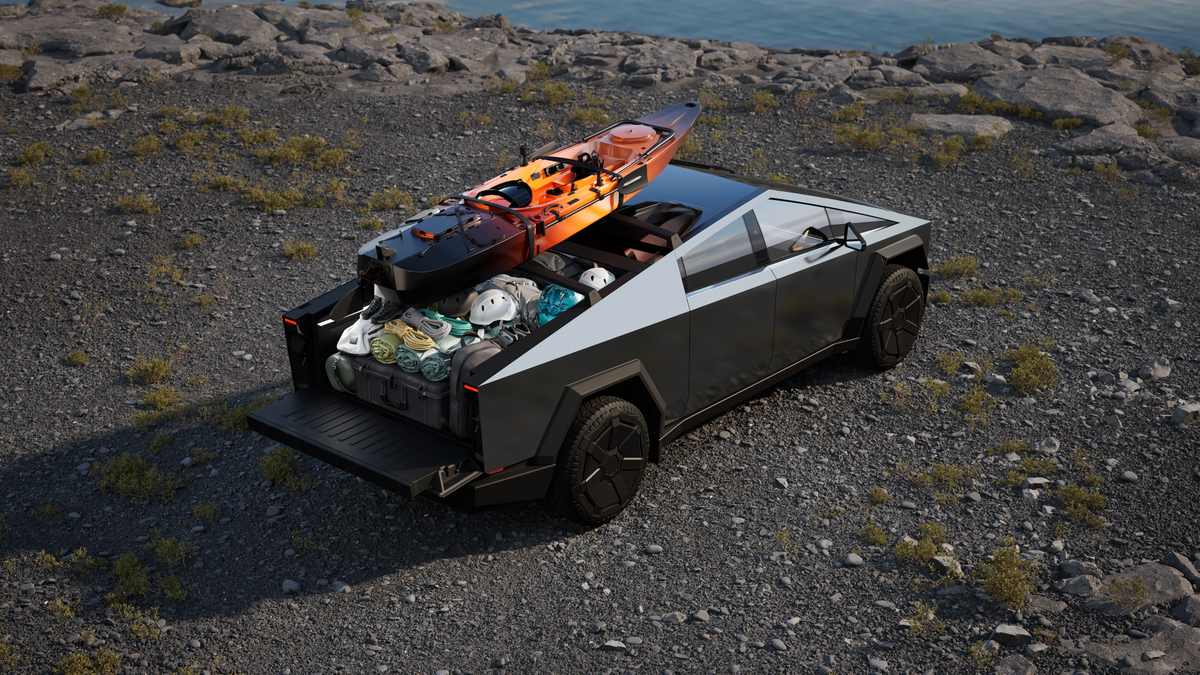
- The motorized tonneau cover improves cargo security and weather resistance, but adds weight and reduces the adaptability of the bed compared with simpler pickup solutions.
By contrast, the Cybertruck’s power-sharing capabilities are a major draw. The owner sees real value in being able to power tools, appliances, or even a travel trailer directly from the vehicle. He already tows regularly, and while he praises the Hummer’s excellent factory camera system for trailering, the real-world towing range is limited to around 150 miles. The idea of towing with the Cybertruck while also powering the trailer itself is something the Hummer simply cannot match.
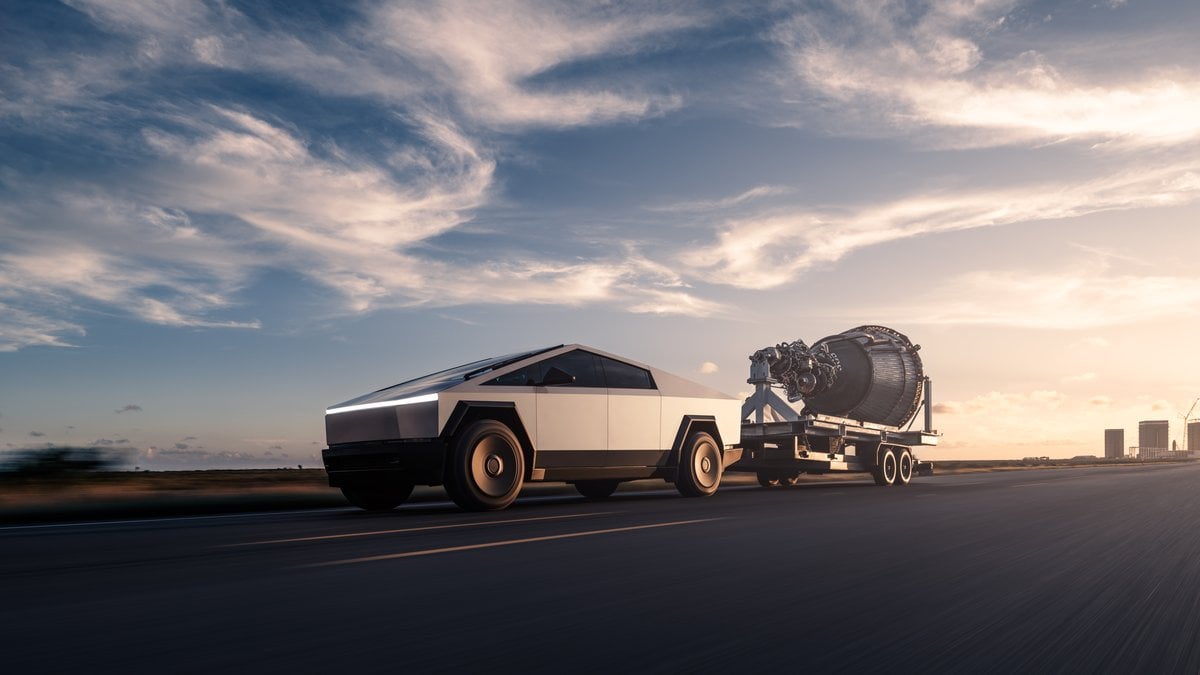
Software is where the gap feels widest. The owner already lives with a Tesla in the household and says the experience has spoiled him. Phone as key, a fast and responsive user interface, built-in Apple Music and podcasts, and near-zero lag have become expectations rather than luxuries. More importantly, he says Tesla’s Full Self Driving system is on another level compared to GM’s Super Cruise. In his experience, Super Cruise has not come close in capability or confidence.
Winter range is another concern. With the Hummer’s enormous battery pack, he can complete a roughly 200-mile round trip to the mountains in winter without charging. His wife’s Model Y, however, loses noticeable range in cold weather, raising questions about how the Cybertruck would perform in similar conditions. He worries about giving up the Hummer’s brute force energy capacity, even if the Cybertruck is more efficient overall.
Performance comparisons further complicate the decision. Outside of the Hummer’s Watts to Freedom launch mode, the owner says the Cybertruck AWD actually feels quicker in everyday driving. When Watts to Freedom is engaged, however, the Hummer still feels faster, and he does not want to downgrade performance in the process of switching vehicles. Pricing also looms large, with the owner watching closely to see whether Cyberbeast pricing or lease incentives soften as sales mature.
Cybertruck owners responding to his questions highlighted differences that do not show up on spec sheets. Several pointed to how the Cybertruck drives, describing it as far more car-like and agile than the Hummer. Steer-by-wire was repeatedly mentioned as transformative, with owners saying it makes conventional steering systems feel outdated. One Cyberbeast owner said the truck is faster than every V8 performance vehicle he previously owned and credited FSD with reducing fatigue and catching hazards he himself missed.
Rear visibility, one of the owner’s concerns, also generated discussion. While the Cybertruck does not have a traditional digital rearview mirror mounted in the usual position, owners noted that the rear camera feed can be displayed full-time on the center screen with adjustable zoom levels. Some have even removed the physical mirror entirely, choosing to rely on the camera view instead.
The decision is not about which truck is more extreme. Both are. It is about which platform feels alive and improving over time. For this Hummer EV owner, the fear is not losing removable roof panels or brute force battery size. It is being locked into a vehicle that no longer evolves. As he weighs his options, the Cybertruck represents not just a different truck, but a different philosophy, one where software progress is part of ownership rather than something that quietly stops after delivery.
Image Sources: Tesla Media Center
Noah Washington is an automotive journalist based in Atlanta, Georgia. He enjoys covering the latest news in the automotive industry and conducting reviews on the latest cars. He has been in the automotive industry since 15 years old and has been featured in prominent automotive news sites. You can reach him on X and LinkedIn for tips and to follow his automotive coverage.
Set Torque News as Preferred Source on Google
Follow us today...



Comments
Who buys a vehicle that…
Permalink
Who buys a vehicle that depreciates 50% in 18 months? What's the upside, right?