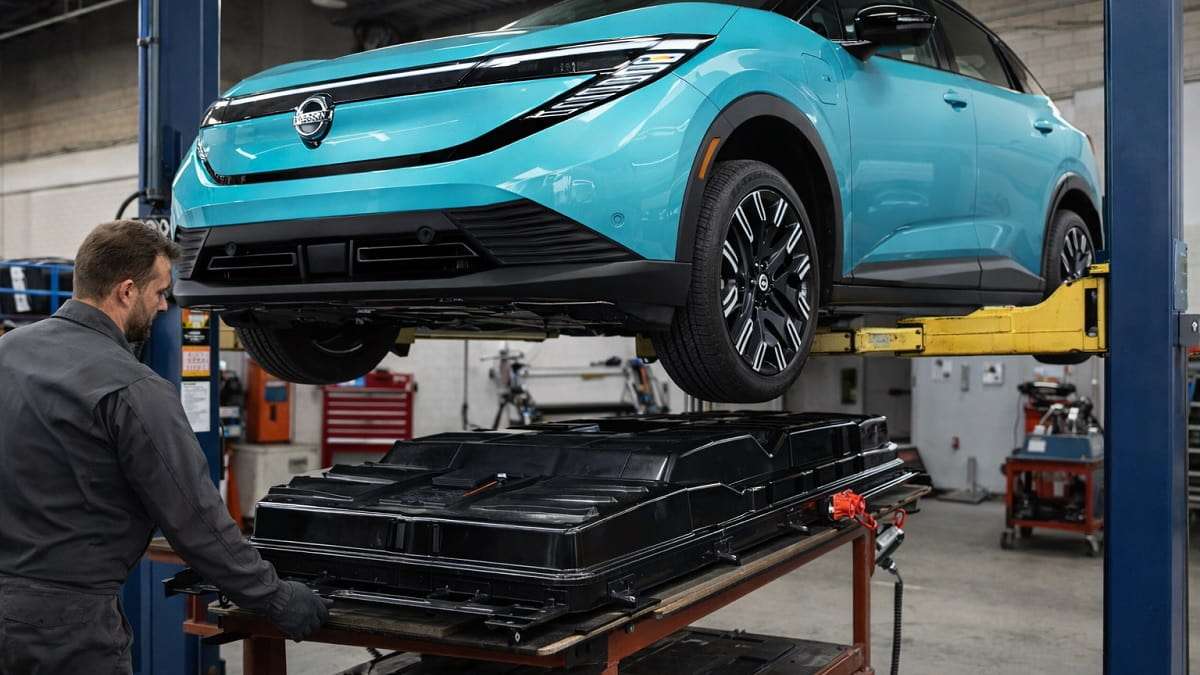

This headline may seem sensational until you look at the stunning rate of EV progress. Take for example the fact that lithium-ion EV battery pack costs dropped over 90% from 2008 to 2023, and they continue to drop. When measured in dollars per kilowatt-hour, they dropped from over $1,400 to about $139 in just 15 years. The EV realists on social media understand this. Here’s a good post on the r/electricvehicles subreddit where CiggyAshtray posted:
“A study suggests that replacing the battery in an electric car will soon be cheaper than repairing an engine.”
Nissan LEAF owner mastrdestruktun made a post about his peace of mind:
“I'll keep that in mind for when my battery wears out in 30 years.”
the_last_carfighter commented on one of the main reasons why EVs outlast gas vehicles:
“An entire electric drivetrain has something like 35 to 40 moving parts, whereas an ICE transmission has 500, never mind the rest of the drivetrain.”
EV Battery Replacement Shouldn’t be a Concern
A 2024 report from U.S. data firm Recurrent says electric vehicle battery replacement may soon cost less than many major engine repairs in gas cars. For years, the battery has been the most expensive and emotionally charged part of an EV. When early batteries failed, replacement often made no financial sense, pushing owners toward scrapping otherwise usable cars. Gas vehicles had an edge here because engines could often be repaired rather than replaced.
According to forecasts from Goldman Sachs, battery costs are projected to fall by as much as 50% by 2030. Battery failures themselves remain rare, but when replacements are needed, the cost curve is moving fast. Goldman Sachs estimates that a large 100 kWh battery could eventually cost about $4,500 to $5,000, while a 75-kWh battery could land near $3,400. Those numbers are dramatically lower than historical expectations.
Major engine repairs in gas vehicles often run $4,400 to $5,500, depending on brand and damage, with some cases climbing much higher. By comparison, a large EV battery pack is projected to cost roughly $3,500 to $5,300 by 2030, before installation. That puts battery replacement in the same range as, or below, many common internal combustion engine repairs.
Right now, battery replacement can still be expensive. Automotive engineers have noted that in extreme cases, a battery replacement may reach as much as 60% of a vehicle’s value. Batteries also degrade over time through normal charging cycles, like smartphones, which keeps the replacement conversation alive even as durability improves.
These projections focus on battery pack prices alone and do not include labor, which varies widely by region, brand, and vehicle design. Actual costs will also depend on climate, usage patterns, warranties, driving style, and regulatory conditions. Market acceptance and supply chain stability will play important roles in determining how quickly these forecasts become reality.
BloombergNEF reports lithium ion battery pack prices fell 20% in 2023, the steepest single year drop since 2017. Analysts often point to $100 per kilowatt hour as the point where EVs reach price parity with gas vehicles. BloombergNEF estimates current costs around $115 per kilowatt hour. One more year of declines at a similar pace could push prices below that threshold, potentially as soon as 2026.
Battery manufacturing capacity has expanded aggressively, particularly in China, which is expected to produce enough cells to cover about 92% of global demand for EVs and stationary storage in 2024. That scale creates global downward price pressure. At the same time, U.S. policy discourages reliance on Chinese sourced materials through purchase incentives tied to supply chain rules. Domestic manufacturing credits have helped lower costs so far, though their future depends on political decisions and congressional support.
Bottom Line
The long-standing fear of catastrophic EV battery replacement costs is beginning to lose its footing. As battery prices fall and approach engine repair territory, electric vehicles are shifting from being cheaper to operate to potentially cheaper to repair. If current trends hold, battery replacement may soon be viewed as routine maintenance rather than a financial deal breaker, reshaping long term ownership expectations by the end of the decade.
The Nissan LEAF
The Nissan LEAF is one of the original modern electric cars, first launched in 2010, and it helped prove that a fully electric daily driver could work for real people. What makes it good is its simplicity, smooth quiet driving, low ownership costs, and practical hatchback layout that is easy to live with in cities or suburbs. The LEAF set itself apart from many newer EVs by focusing on affordability and efficiency rather than extreme range or performance, which appealed to first time EV buyers. Pricing typically starts around $28,000 and can climb into the mid $30,000 range depending on trim and battery size. The Nissan LEAF is sold exclusively as a five-door compact hatchback, which gives it a surprising amount of interior and cargo space for its size.
What Do You Think?
Have you ever had a major engine repair on a gas car, and how did that cost compare to what you expected?
Do falling battery costs make older EVs more attractive, or do you still worry about aging technology?
Chris Johnston is the author of SAE’s comprehensive book on electric vehicles, "The Arrival of The Electric Car." His coverage on Torque News focuses on electric vehicles. Chris has decades of product management experience in telematics, mobile computing, and wireless communications. Chris has a B.S. in electrical engineering from Purdue University and an MBA. He lives in Seattle. When not working, Chris enjoys restoring classic wooden boats, open water swimming, cycling and flying (as a private pilot). You can connect with Chris on LinkedIn and follow his work on X at ChrisJohnstonEV.
Photo credit: Provided by author
Set Torque News as Preferred Source on Google
Follow us today...