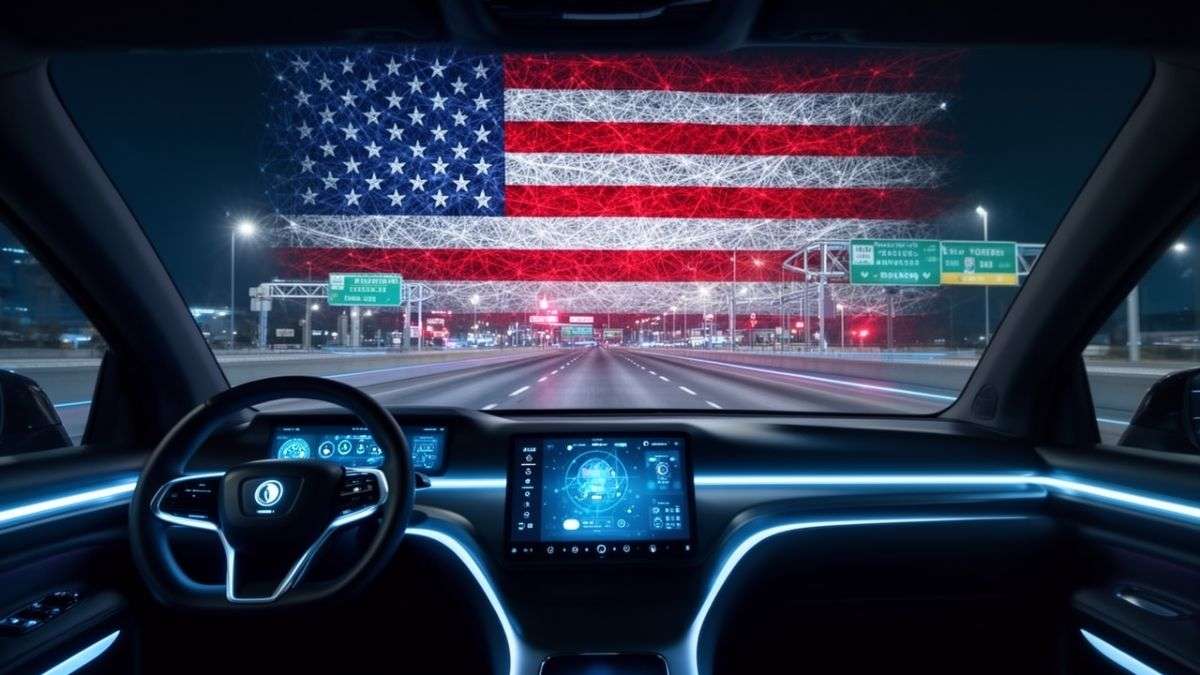

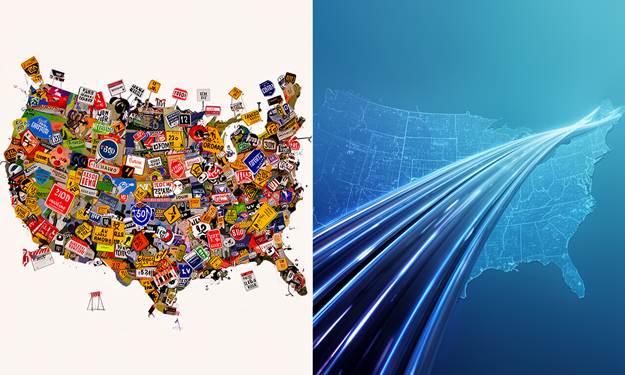
For years, I’ve watched the autonomous vehicle (AV) industry resemble a high-stakes game of "The Oregon Trail," where every time a developer crosses a state line, they risk "dying of dysentery"—or, more accurately, dying under the weight of conflicting state regulations. This week, however, the U.S. House of Representatives finally decided to hand the industry a map and a compass. By officially reviving the SELF DRIVE Act (Safely Ensuring Lives Future Deployment and Research in Vehicle Evolution), lawmakers are signaling that the era of the regulatory "patchwork" is nearing its end.
If we get this right, we might actually save the American automotive industry. If we don't, we’re essentially handing the keys of the future to China.
What the SELF DRIVE Act Actually Does
At its core, the SELF DRIVE Act is about federal preemption. Currently, if you want to test a robotaxi in California, you deal with the DMV and CPUC. Cross into Arizona, and the rules change. Head to Texas, and they change again. It is a logistical nightmare that prevents companies from scaling.
The Act intends to:
- Establish a National Framework: It clarifies that the federal government—specifically the NHTSA—is responsible for the design, construction, and performance of highly automated vehicles, while states retain control over traffic laws, registration, and insurance.
- Expand Exemptions: It allows manufacturers to deploy thousands of vehicles that don't meet traditional Federal Motor Vehicle Safety Standards (like needing a steering wheel or brake pedal) provided they prove they are as safe as, or safer than, human-driven cars.
- Create a Safety Data Repository: It mandates a "National Automated Vehicle Safety Data Repository" to ensure that when things go wrong, the data is shared to prevent the same mistake from happening twice.
The Existential Threat: The China Gap
Why the sudden urgency in 2026? Look East. While we’ve been arguing over whether a Waymo can safely double-park in San Francisco, China has been treating AV technology like a national infrastructure project.
Companies like Baidu Apollo Go are already operating fully driverless fleets in over 15 Chinese cities, including Wuhan and Beijing. In contrast, the U.S. has only a handful of cities—Phoenix, San Francisco, Los Angeles, and Austin—with true driverless operations. China isn't just ahead in deployments; they are ahead in the cost of the technology. Their "grand steering" model allows for massive state subsidies and a lack of the litigation-heavy environment that slows us down.
If the U.S. doesn't move to a national standard now, we will find ourselves importing Chinese AV software and hardware in a decade, much like we do with consumer electronics today. The SELF DRIVE Act is less about "innovation" and more about "national security."
The Long Walk from Level 2+ to Level 5
We are currently stuck in the "Trough of Disillusionment" regarding timelines. Most of us are driving Level 2+ cars—think Tesla's "Full Self-Driving (Supervised)" or GM’s Super Cruise. These are driver-assist systems, not driver-replacement systems.
Here is my forecasted timeline for the transition:
- Level 3 (Conditional Automation): We are seeing this now in high-end Mercedes and BMW models. You can take your eyes off the road on specific highways, but you must be ready to take over. By 2027, this will be a standard luxury feature.
- Level 4 (High Automation): This is the "Robotaxi" level. No driver required within a specific area (an ODD). With the SELF DRIVE Act, I expect Level 4 to scale to 50+ U.S. cities by 2028-2029.
- Level 5 (Full Automation): This is the Holy Grail—anywhere, anytime, any weather. Industry experts don't expect this before 2030, and realistically, we may not see it widely available until the mid-2030s due to the sheer complexity of "corner cases" like heavy snow or unmapped rural roads.
The Great Disruption: Ownership, Urban Design, and Trucking
The passage of this Act won't just change how we drive; it will change how we live.
1. The End of Car Ownership? For the average urbanite, owning a car is a liability. It sits idle 95% of the time and costs a fortune in insurance and parking. Autonomous ride-sharing will flip the script. When a car can pick you up for a fraction of the cost of an Uber (because you’ve cut the driver’s salary out of the equation), the "need" to own a $50,000 depreciating asset vanishes.
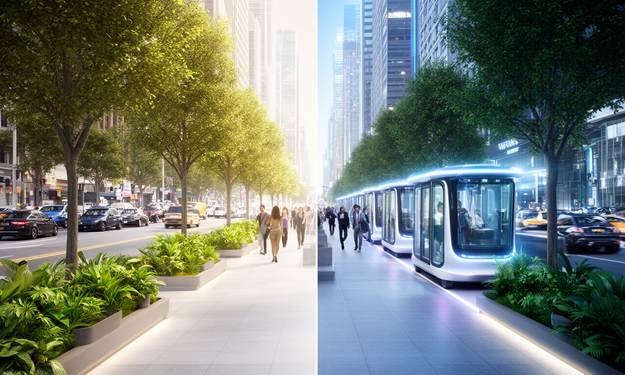
2. Urban Design: Reclaiming the Curb Our cities are designed around parking. Imagine a city where 90% of parking garages are converted into affordable housing or green spaces. AVs don't need to park; they just go to the next passenger. The Brookings Institution notes that we could see a radical "pedestrianization" of city centers.
3. Long-Haul Trucking: The First Domino This is where the economic impact hits hardest. There is a massive driver shortage in the US. Autonomous trucks don't need sleep, don't get distracted, and can "platoon" to save fuel. We will likely see "hub-to-hub" autonomous trucking—where the AV handles the boring 500-mile highway stretch and a human takes over for the complex "last mile"—become the industry standard by 2028.
Wrapping Up
The revival of the SELF DRIVE Act is the most significant piece of transportation legislation in a generation. By moving away from a fragmented state-by-state approach, the U.S. finally has a chance to provide the regulatory certainty that investors and engineers crave.
However, the clock is ticking. China’s "top-down" approach is yielding results at a pace we aren't currently matching. If we continue to let fear and litigation drive our policy, we will lose the most lucrative market in the history of transportation. The SELF DRIVE Act isn't just about making cars drive themselves; it's about making sure the future of mobility is "Made in America."
Set Torque News as Preferred Source on Google
Follow us today...