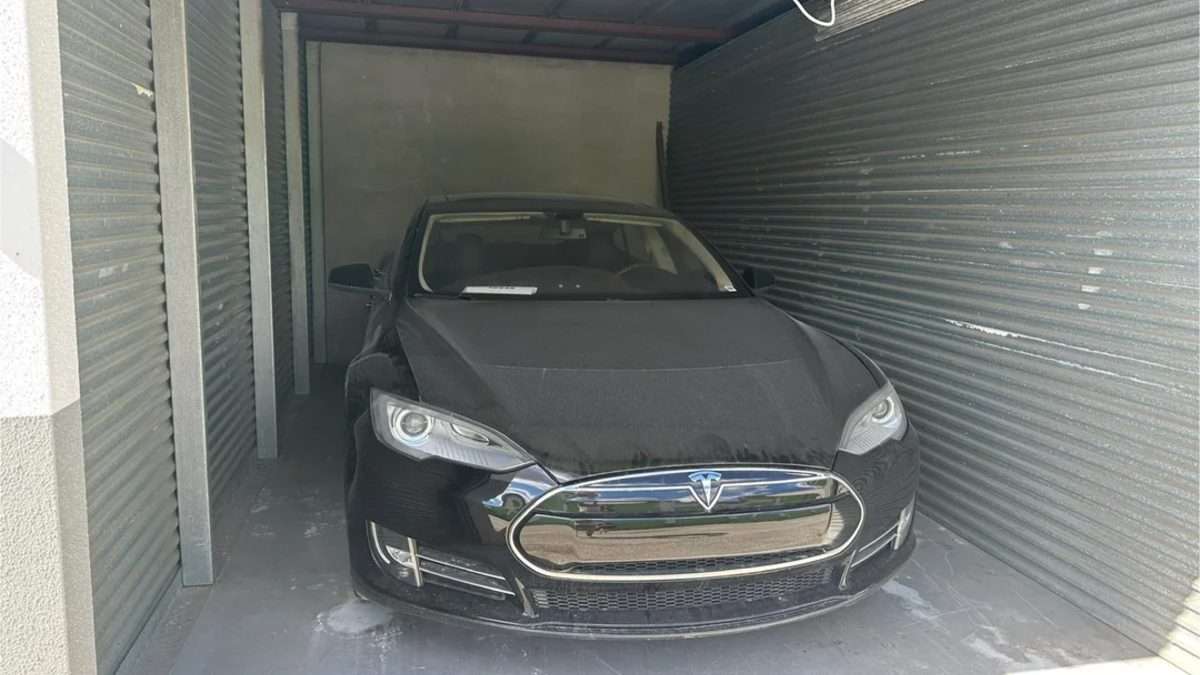

Few vehicles carry the weight of genuine revolution, but Important_Sector_547's ownership of one of the first nine Tesla Model S vehicles places him in possession of something rarer than any Ferrari prototype or Shelby Cobra: a functioning artifact from the moment when the automotive world pivoted toward an electric future. This isn't mere transportation; it's automotive archaeology in motion, a rolling museum piece that represents Elon Musk's audacious gamble that luxury and electricity could coexist in ways that would fundamentally reshape an industry built on controlled explosions and fossil fuel combustion.
The decision to restore this historic machine required the kind of financial irrationality that separates true enthusiasts from mere consumers.
“Hey y’all. I know it’s been a minute, but I thought I’d pop back in and let folks know about the fate of this car.
Cliff’s Notes is: I decided to bite the bullet, fully surrendered to sunk cost fallacy, liquidated the rest of my position in $TSLA, and forked over $17k for a refurbed 90kWh HV pack and an MCU2 upgrade. (19-inch takeoffs acquired via Facebook Marketplace, lol)
Had it in storage the past couple of weeks, but decided to take it on a road trip down to the Rio Grande Valley to catch Starship Flight 11. Left Austin around 4 a.m. Monday, and made it to Starbase just in time to snap some pics with Booster 15/S38 before launch.
Pleased to report that for the most part, everything is working surprisingly great for a car that was offline for several years prior to being put back into service. Long-term plans are to document/show/share what it’s like to live with one of these earlier cars as they continue to age.
Saving up for when door handles and window regulators inevitably fail, need to do a coolant delete on the RDU, and would like to have the sunroof/seals serviced (though l know that might prove difficult, being a ‘Gen 1’ pano roof). There will certainly be more things to address as time goes on, but those are the primary items on my radar for the time being.
Looking forward to sharing even more with the community, and showcasing that regardless of whether or not it can drive itself, this ol’ girl still has plenty of life left in her!! :)”
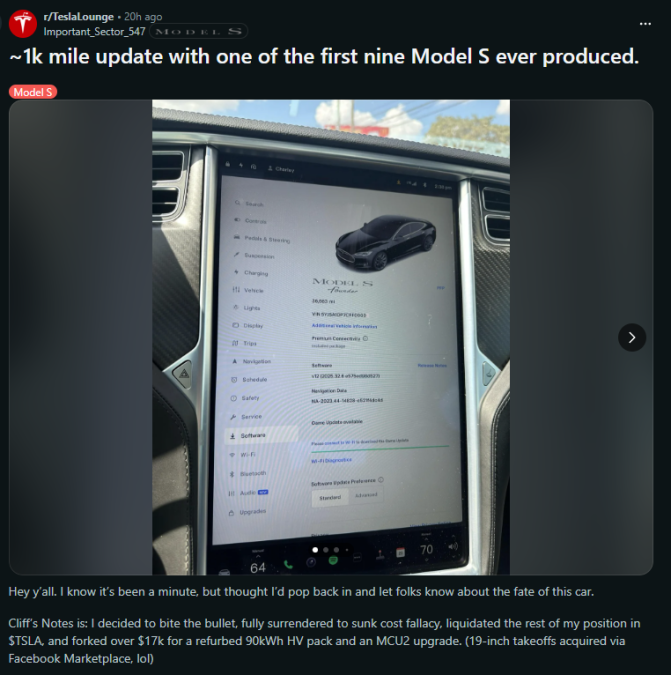
The candid admission of surrendering to sunk cost fallacy reveals something beautiful about automotive passion: the moment when rational economic thinking yields to emotional and historical imperatives that transcend mere transportation logic.
There's delicious irony in liquidating Tesla stock to fund Tesla vehicle restoration, converting faith in the company's future into investment in its past. This financial alchemy transforms speculative paper wealth into tangible mechanical reality, trading the abstract promise of corporate growth for the concrete satisfaction of keeping automotive history alive. The $17,000 restoration cost represents more than component replacement; it's a down payment on preserving a piece of the electric vehicle revolution for future generations who will marvel at these primitive pioneers the way we now regard Model T Fords.
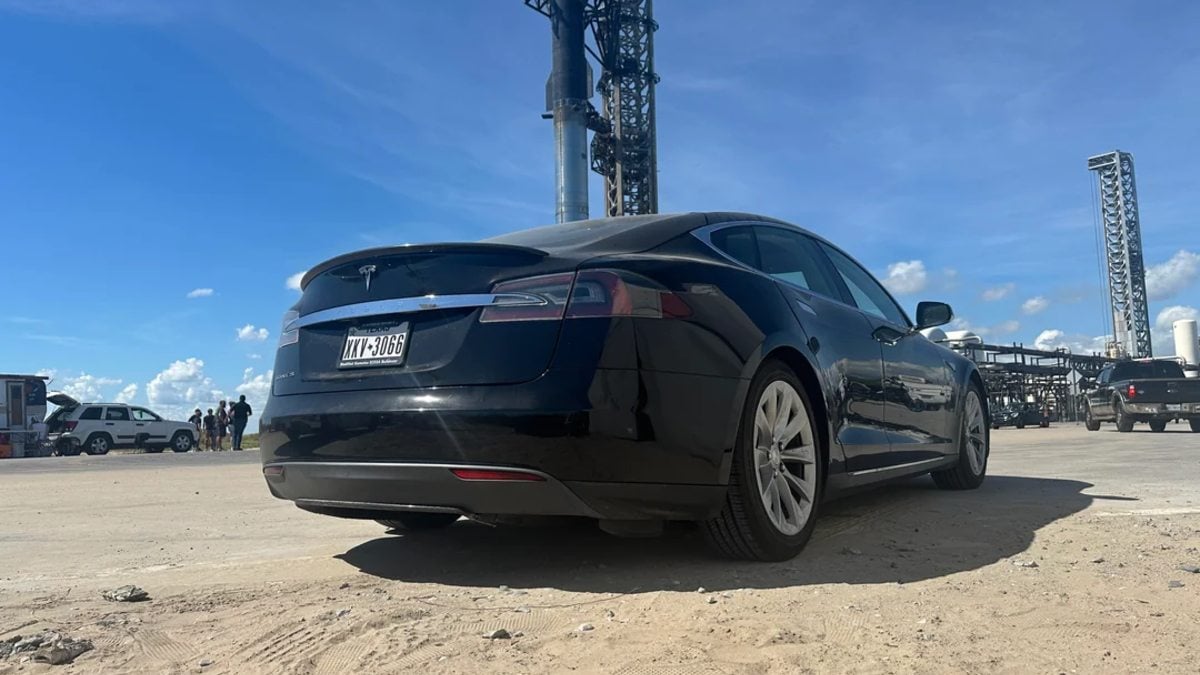
The pilgrimage to Starbase creates perfect symmetry between Tesla's automotive achievement and SpaceX's aerospace ambitions, where past and future converge in the Texas desert under the watchful gaze of Starship boosters. Had it in storage the past couple of weeks, but decided to take it on a road trip down to the Rio Grande Valley to catch Starship Flight 11. Left Austin around 4 a.m. Monday, and made it to Starbase just in time to snap some pics with Booster 15/S38 before launch. The timing suggests careful orchestration, recognizing that this vintage electric sedan deserved to witness the next chapter in Musk's technological narrative.
The successful completion of this journey validates the restoration investment while demonstrating the fundamental durability advantages of electric powertrains. Pleased to report that for the most part, everything is working surprisingly great for a car that was offline for several years prior to being put back into service. The phrase "surprisingly great" captures the uncertainty that accompanies any vintage vehicle operation, where the gap between restoration and real-world reliability testing can reveal issues that weren't apparent during static evaluation.
The response from fellow Tesla owners reveals the brotherhood of early adopters, united by shared experiences of component failures and expensive repairs that create bonds stronger than any manufacturer loyalty program. terezy's litany of maintenance woes reads like a medical chart for aging electric vehicles:
I own a 2016 model S and you should definitely save up for those door handles and window regulators. Had 2 of my handles replaced and 2 regulators replaced already. My driver side window regulator is starting to crunch lately. And my auto pilot stopped working after a car wash…
This catalog of failures reveals the peculiar challenges of early electric vehicle ownership, where traditional mechanical problems coexist with electronic vulnerabilities that have no precedent in automotive history. Door handles that retract electronically become failure points that would never occur to designers of conventional vehicles, while autopilot systems prove vulnerable to the most basic automotive maintenance ritual. It's a hybrid maintenance nightmare that combines old-school mechanical problems with new-age electronic complications.
Specialist_Operation's experience provides the sobering reality check that every early electric vehicle owner dreads: My battery died at 120k miles on a 2016 MS. Save up for that too. The crying emoji barely contains what must have been genuine anguish, where the cost of battery replacement can easily exceed the vehicle's remaining value. This represents the electric vehicle equivalent of engine failure in a conventional car, except the replacement cost makes engine rebuilds look like oil changes by comparison.
The mention of drive unit replacement alongside battery failure illustrates how multiple expensive components can conspire to create perfect storms of maintenance costs that challenge even the most dedicated enthusiast's resolve. I also had one DU replacement in that 120k mile window. This pattern of cascading failures reflects the reality that complex systems age according to their own mysterious logic, where components that should theoretically last decades can fail within months of each other.
But then Malacasts introduces the concept that explains why electric vehicle reliability discussions often seem disconnected from reality: I met an original owner pushing 250k on her original battery. She said the motor don't last though. This anecdote perfectly illustrates the survivorship bias that skews our understanding of electric vehicle longevity, where exceptional examples of durability receive disproportionate attention while failures disappear from the visible population.
Specialist_Operation's response cuts to the heart of this statistical illusion with devastating clarity: That's the problem with survivorship bias. You can't meet anyone whose battery already died because they're not driving battery-less cars. This insight reveals how success stories naturally dominate public perception while failures remain invisible, creating misleading impressions about reliability that can trap unwary buyers into unrealistic expectations. It's the automotive equivalent of only hearing war stories from survivors while the casualties remain silent.
The Economics of Electric Vehicle Archaeology
- Successful preservation requires abandoning rational economic analysis in favor of historical and emotional considerations that transcend mere transportation utility.
- Multiple expensive systems often fail within similar timeframes, creating concentrated periods of high maintenance costs that can exceed vehicle market value.
- Visible examples of exceptional longevity create misleading impressions about typical reliability patterns, making failure rates appear lower than actual experience.
- Maintaining early electric vehicles requires technical expertise that exists primarily within enthusiast communities rather than traditional automotive service channels.
The owner's commitment to documenting this preservation journey reflects something deeper than mere hobbyist enthusiasm; it represents active participation in automotive history preservation at a moment when the significance of these early vehicles is still being established. Long term plans are to document/show/share what it's like to live with one of these earlier cars as they continue to age. This dedication to knowledge sharing transforms individual ownership into collective education, where personal experience becomes community resource.
The proactive approach to maintenance planning demonstrates the comprehensive strategy required for long-term preservation of significant vehicles: Saving up for when door handles and window regulators inevitably fail, need to do a coolant delete on the RDU, and would like to have the sunroof/seals serviced, (though l know that might prove difficult, being a 'Gen 1' pano roof). The word "inevitably" carries particular weight, suggesting acceptance of failure as natural law rather than unfortunate possibility.
This realistic assessment of ongoing maintenance needs reflects hard-won wisdom about vintage vehicle ownership, where initial restoration represents only the beginning of a continuous investment in preservation. There will certainly be more things to address as time goes on, but those are the primary items on my radar for the time being. The phrase "time being" acknowledges that vintage vehicle ownership operates on geological timescales, where problems emerge and evolve according to their own mysterious schedules.
The technical complexity of procedures like coolant delete for rear drive units illustrates how electric vehicle maintenance requires specialized knowledge that exists primarily within enthusiast communities rather than traditional service networks. These procedures represent the kind of institutional knowledge that develops organically among dedicated owners who refuse to accept component failure as vehicle death sentences.
The Philosophy of Technological Preservation
- Early electric vehicles represent pivotal moments in automotive evolution that deserve preservation as functional artifacts rather than static museum pieces.
- Shared experiences from preservation efforts contribute to a collective understanding of electric vehicle aging patterns and maintenance requirements.
- Documentation and knowledge sharing help preserve technical expertise that may become crucial for future restoration efforts.
- Preserving significant vehicles maintains tangible connections to important technological transitions that shaped modern transportation.
The affectionate reference to this historic vehicle as "this ol' girl" reveals the emotional dimension of preservation that often proves more important than financial considerations in determining long-term commitment. Looking forward to sharing even more with the community, and showcasing that regardless of whether or not it can drive itself, this ol' girl still has plenty of life left in her!! :) This enthusiasm transcends mere ownership to embrace stewardship of automotive heritage.
The reference to autonomous driving capabilities highlights how rapidly electric vehicle technology has evolved since these early vehicles were produced, making them increasingly significant as representatives of specific moments in automotive development. The absence of self-driving features that are now considered standard equipment illustrates the pace of technological advancement while providing a perspective on how much the industry has changed in relatively few years.
The commitment to continued operation despite ongoing costs and challenges reflects the understanding that preservation requires active engagement rather than passive storage. This philosophy recognizes that vehicles achieve their full historical significance only when they remain functional participants in the transportation ecosystem rather than static artifacts isolated from their intended purpose.
The community interest in following this preservation journey reflects a broader fascination with electric vehicle history and the recognition that these early vehicles represent important technological milestones. The documentation and sharing of this experience contribute to electric vehicle heritage preservation while providing practical guidance for other owners of similar vehicles facing comparable maintenance decisions.
The success of this restoration demonstrates that with sufficient commitment and resources, early electric vehicles can continue to serve their intended purpose while providing valuable insights into the evolution of electric vehicle technology. This achievement represents more than individual accomplishment; it's a contribution to automotive heritage that will benefit future generations of enthusiasts and researchers interested in understanding the origins of the electric vehicle revolution.
What drives your passion for preserving automotive history, and how do you balance the costs and challenges of maintaining significant vehicles with their historical and cultural value? Do you believe that keeping early electric vehicles operational provides more value than static preservation, and what role should enthusiast communities play in documenting and sharing the evolution of automotive technology? Share your thoughts on the importance of automotive heritage preservation and the lessons we can learn from the pioneers of electric vehicle development in the comments below.
Image Sources: Tesla Media Center
Noah Washington is an automotive journalist based in Atlanta, Georgia. He enjoys covering the latest news in the automotive industry and conducting reviews on the latest cars. He has been in the automotive industry since 15 years old and has been featured in prominent automotive news sites. You can reach him on X and LinkedIn for tips and to follow his automotive coverage.
Set Torque News as Preferred Source on Google
Follow us today...