
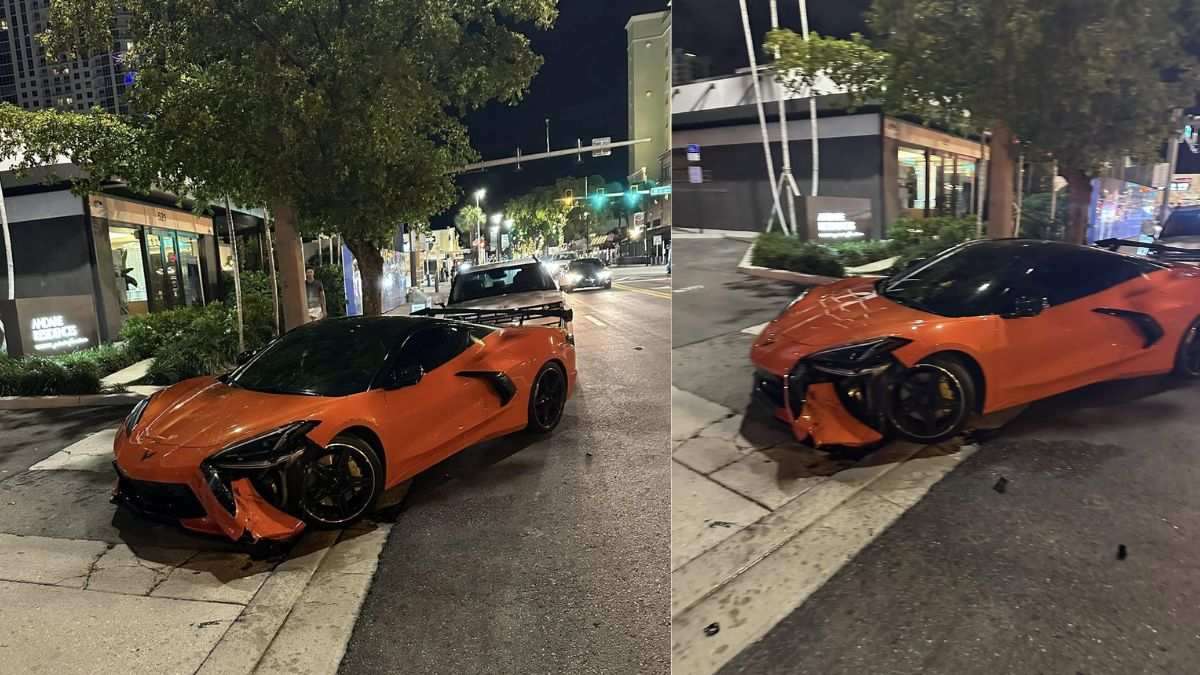

There are few rites of passage in modern American life more bittersweet than buying your first dream car. It’s not just a purchase, it’s a declaration of arrival, a rolling embodiment of years spent clawing your way through the grind. So when Zah Naderi bought a C8 Corvette in full, no lease, no finance, just keys and cash, it was a milestone.
When Your Brand-New C8 Corvette Is Ruined Overnight
Five days later, that dream lay twisted and broken thanks to a hit-and-run, parked on a street that might as well have been a battlefield. But the greater wound came not from the impact, but from what followed: a lesson in how auto insurance companies work, not with compassion or logic, but with spreadsheets and soulless algorithms.
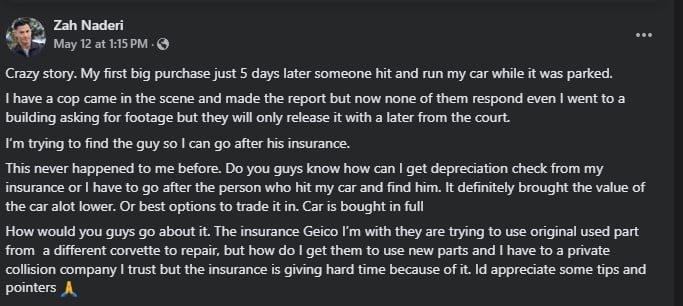
“Crazy story. My first big purchase, just 5 days later, someone hit and ran my car while it was parked.
I have a cop who came to the scene and made the report, but now none of them responded, even though I went to a building asking for footage, but they will only release it with a letter from the court.
I’m trying to find the guy so I can go after his insurance.
This never happened to me before. Do you guys know how I can get a depreciation check from my insurance, or do I have to go after the person who hit my car and find him? It definitely brought the value of the car a lot lower. Or the best options to trade it in. The car is bought in full.
How would you guys go about it? The insurance I’m with they are trying to use an original used part from a different Corvette to repair, but how do I get them to use new parts? I have to use a private collision company I trust, but the insurance is having difficulty because of it. I'd appreciate some tips and pointers 🙏”
The Facebook group C8 Corvette Owners (And Friends) quickly rallied to Naderi’s side, and in doing so, peeled back the curtain on an industry few fully understand until it’s too late. Zah wasn’t just dealing with the loss of an unsullied sports car, he was fighting a faceless economic machine programmed to calculate risk, minimize payout, and move on.
How Insurers Profit: Premiums, Investments & the Quest to Minimize Claims Costs
- Insurers collect premiums from policyholders, aiming to set rates that exceed the expected cost of claims and operating expenses. Effective underwriting, assessing, and pricing risk accurately is crucial to ensure that the premiums collected lead to profitability.
- The premiums collected are invested in various financial instruments, such as bonds and stocks. The returns from these investments, known as investment income, provide a significant source of profit for insurance companies, supplementing their underwriting income.
- Insurance companies strive to minimize their expenses by efficiently managing operational costs and carefully handling claims. This includes efforts to reduce fraudulent claims and negotiate settlements effectively, which helps in maintaining profitability.
Insurance companies today operate on actuarial science and profit-driven algorithms, not human sympathy. Your car’s condition, value, and uniqueness don’t mean a thing to the code running the claim.
As several commenters pointed out, “pre-crash condition” is one of the great lies told by the modern insurer. Gregory Khanjian, a fellow enthusiast, summed it up,
“Most insurance companies claim to ‘repair your car to pre-crash condition.’ Tell them the pre-crash condition did not involve used or aftermarket parts.”
But as Luke Short quickly replied, there’s a catch,
“GEICO doesn’t offer an endorsement for new OEM parts… OP agreed to use aftermarket parts when he bought the policy.”
Why OEM Parts Matter for Your C8 Corvette
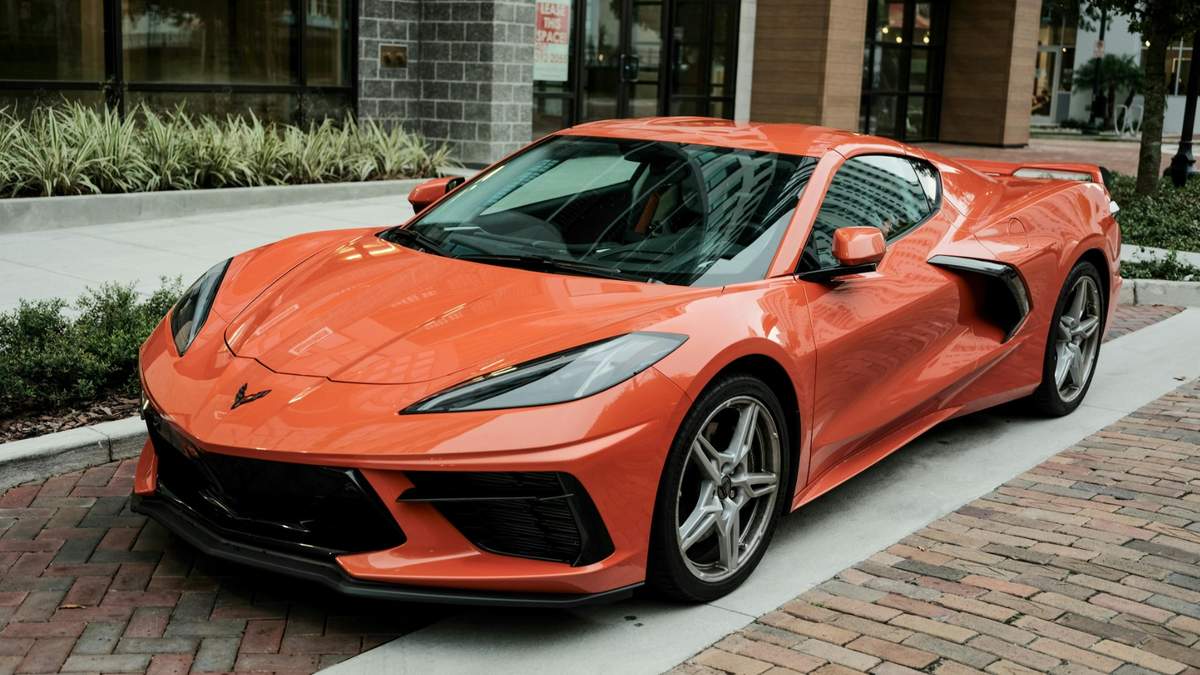
The true absurdity is that the C8 Corvette isn’t a Honda Civic or a base Malibu; it’s a bespoke, performance-focused American supercar. Every panel, sensor, and structural component is part of a carefully tuned system, and even minor deviations can compromise its performance or safety.
“Most parts will only be OEM, even the headlight.”
Noted, Mike Meglino, in the comments, and he’s right. Yet Geico’s solution was to slap in salvaged bits from another totaled C8, as if your car's soul could be reassembled like a Lego kit on clearance.
This kind of treatment also undermines long-term value. Diminished value, the real, lasting financial hit your car takes even after repairs, isn’t just a nuisance; it’s the central concern in enthusiast ownership. Zah was right to ask about it.
Protecting Your C8’s Resale After an Accident
A C8 with an accident history is permanently marked, and unless you force your insurer’s hand, you’ll eat that loss at trade-in. Many companies will fight these claims with the vigor of a courtroom drama, hoping you don’t know what you’re entitled to. As Insurance Journal noted in a 2022 report,
“Less than 10% of insured drivers pursue diminished value claims.”
Mostly due to ignorance or fear of confrontation.

Adding insult to literal injury, some users even questioned Zah’s integrity. Alex Edwards commented,
“I don’t think this was parked,”
Implying that insurance companies were investigating for fraud. Zah’s reply:
“The car was parked and pushed forward and above the curb. The insurance company has tools that show the car was in motion, and it wasn’t. lol.”
That’s the reality. Not only are you fighting for repairs, you’re fighting for your credibility in a system built to distrust you by default.
From Clay Models to Fighter-Jet-Inspired Aerodynamics
- The shift from a front-engine to a mid-engine configuration was a significant departure from previous Corvette designs. This change aimed to enhance performance by improving weight distribution and handling dynamics, aligning the Corvette with other high-performance sports cars.
- The design team employed a combination of traditional sketching, clay modeling, and advanced digital tools to develop the C8's aesthetics. Multiple full-scale clay models were created, each exploring different styling directions, allowing designers to refine the vehicle's appearance meticulously.
- Drawing inspiration from modern fighter jets, the C8's design features sharp lines, large air intakes, and a low, aggressive stance. These elements not only contribute to the car's striking appearance but also serve functional purposes, such as improved aerodynamics and cooling efficiency.
There’s also the galling reality that while Zah was scrambling for courthouse letters to get security footage, his insurer, who technically has more legal standing and resources, refused to help. Glenn Murphy rightly noted,
“Your insurance company should be able to obtain any surveillance video… Demand new OEM parts.”
But unless it saves them money, most won’t lift a finger. These companies aren't in the business of finding justice. They're in the business of risk management, at your expense.
The lesson here isn’t just for C8 owners, it’s for anyone who still believes that buying a dream car means you’ve crossed some invisible finish line.
The modern insurance landscape doesn’t care whether you’re driving a Bugatti or a beat-up Buick. If it costs more to fix than an algorithm finds palatable, you’re just a number waiting to be reconciled.
Until the industry adapts to recognize the unique status of enthusiast vehicles, where function, form, and emotion are inseparable, owners like Zah will continue to face a world where passion is irrelevant, and a junkyard part is considered "good enough."
Image Sources: Chevrolet Media Center
Noah Washington is an automotive journalist based in Atlanta, Georgia. He enjoys covering the latest news in the automotive industry and conducting reviews on the latest cars. He has been in the automotive industry since 15 years old and has been featured in prominent automotive news sites. You can reach him on X and LinkedIn for tips and to follow his automotive coverage.
Set Torque News as Preferred Source on Google
Follow us today...






Comments
You’re absolutely right! a…
Permalink
In reply to With such a huge investment,… by Ilene (not verified)
You’re absolutely right! a dash cam is on my list now. I've learned my lesson. lol
I had progressive and my…
Permalink
I had progressive and my Porsche panamera 4 was stolen and progressive ended up denying my claim cause I didn’t have a bill of sale. They didn’t ask for a bill of sale when they took my $$ to insure the vehicle.
That’s awful! I'm so sorry…
Permalink
In reply to I had progressive and my… by Max puente (not verified)
That’s awful! I'm so sorry you had to go through that. Insurance should step up when it matters most.
If you have a good body shop…
Permalink
If you have a good body shop they will fight for you to get OEM parts. We had a similar issue but our body shop refused to accept estimates using after market or junk yard parts and eventually the insurance company caved.
All cars run on "Used" parts…
Permalink
All cars run on "Used" parts. Using used parts is the right of the insurance company. And is agreed to when you purchase the policy..
First, it's a ~$85,000 car…
Permalink
First, it's a ~$85,000 car...it's not like it's all that special. There are SUVs and plenty of other daily drivers that run way more than that. Not knocking on the C8, but it's a just a non-utilitarian car.
Second, it's not a GEICO thing, this is an insurance thing. I've had GEICO for years and have never had an issue with receiving the coverage that is clearly stated in the policy.
Third, many insurance companies, including GEICO offer OEM endorsements, to ensure that you get all OEM parts. If you actually read your policy and what options are available, you would know this.
Fourth, even if you don't have OEM coverage, you can pay the difference between the OEM and aftermarket/salvage/remanufactured parts...this may or may not be a more economical way to go, depending on how important OEM parts are to you. Personally, the majority of parts I don't care about...so for me this is the way I go, then I only pay the difference on the parts I care about (and often, especially if you have a relationship with the repair shop, they will get a special discount from the distributor for you and pass it along to you).
Fifth, if it is the other person's insurance covering the repairs, you can usually force them to use OEM parts (and if they resist, you threaten legal actions against them and the policy holder, it's usually enough to get OEM parts).
Looks like you parked in a…
Permalink
Looks like you parked in a driveway.