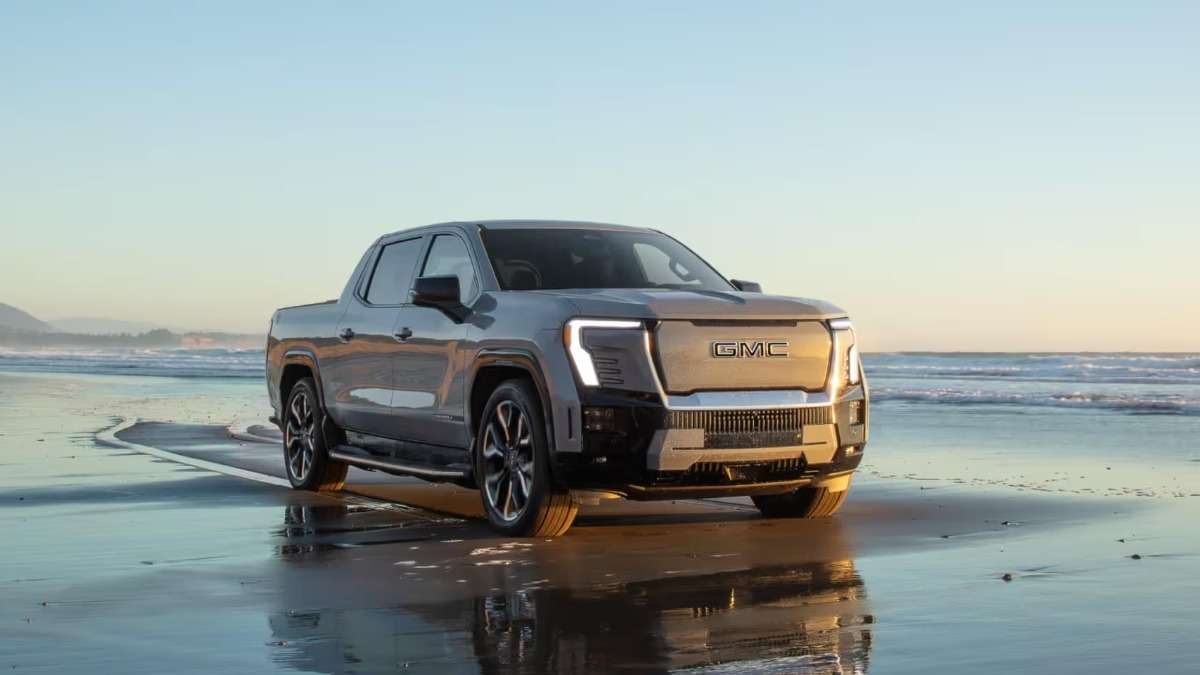

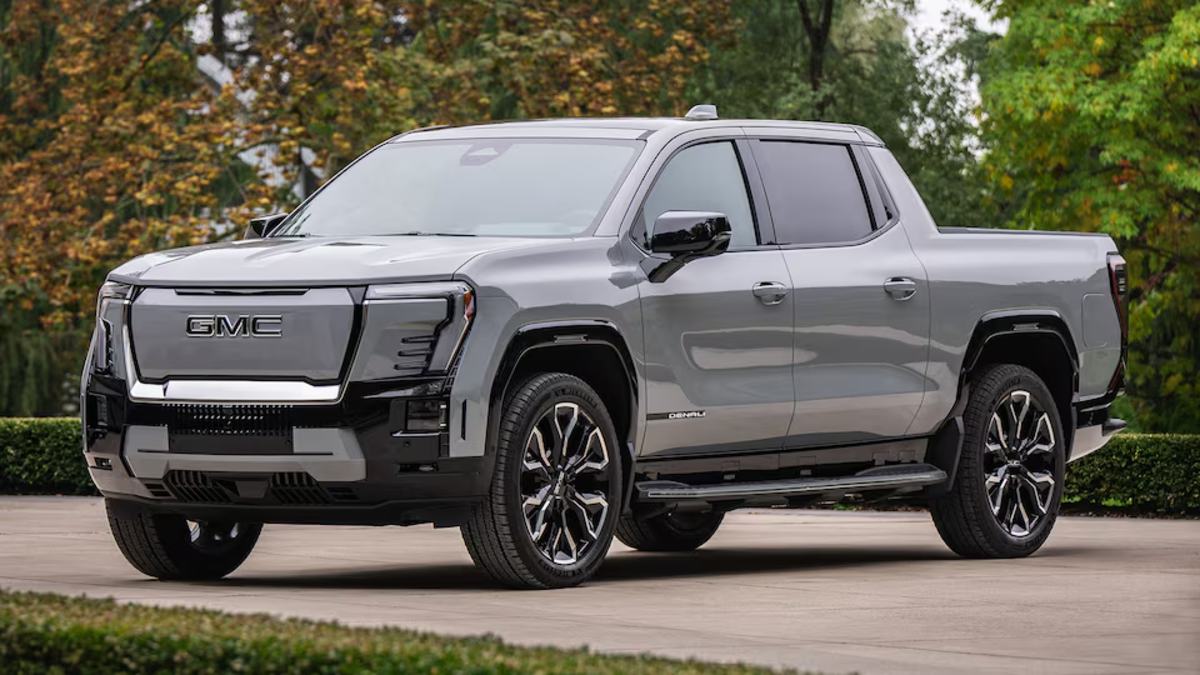
In the modern, electrified Wild West, software patches have become the new carburettor rebuilds, and torque arrives with the instant authority of a sledgehammer from Mount Olympus. In that landscape, the GMC Sierra EV is one of the rare trucks that can convert a lifelong German-car loyalist into an American-truck evangelist. It is big, quiet, violently quick, and dressed inside like a luxury lounge instead of a worksite canteen.
Yet even the most sophisticated machinery can be brought to its knees by a small piece of hardware, and that is where the old stereotypes about American attention to detail quietly slip back into the story.
“I wanted to contribute to this group by sharing my experience with the Sierra EV, the dealership, and the strangest reason I have ever had to take a vehicle in for repair after putting 6,000 miles on it. It is a long read, but I think it will be useful, and I will include the solution I discovered in case you ever end up in the same situation.
For context, I have been driving BMW for the last 15 years and Mercedes for the last 4. During that time, I have had countless BMW loaners: X1, X2, X3, X5, 3-series, 5-series, and various Mercedes models. I have also owned a BMW X7 with the Individual package. I needed a large vehicle, and one thing I absolutely required was space for three people in the back: two car seats and one adult.
After test-driving the Sierra Denali 6.2 and then stepping into the Sierra EV, it felt like going from the Stone Age to the future. I stopped being a BMW fan instantly. BMW quality has gone downhill fast, and the X7 is a poor value for the money, nowhere close to the Sierra EV in any category. Even the air suspension does not compare. I honestly think the Sierra EV is remarkable in today’s auto market. It is years ahead of the competition. No vehicle is perfect, but this one comes close. The interior gives me Range Rover and Rolls-Royce vibes: classic, clean, and elegant. The exterior is next level, almost Mandalorian. I get compliments almost daily.
Sorry for the long intro. Here is what happened.
I went into the garage and opened my eTrunk, probably for only the tenth time since I got the truck seven months ago. I pressed the button to close it. The hood started lowering, and then I heard a loud hit. The loop struck the latch while it was locked.
I checked the latch. It was definitely locked. I tried all three unlock buttons (front, interior, and key fob). I pulled the emergency cord. I even did a reset by holding the interior close button for 30 seconds. Nothing worked. So I started inspecting the latch more carefully.
There is a black plastic pin that moves up and down, and right next to it, closer to the front grille, is the latch. I tried pushing the pin down with a plastic detailing brush handle and moving the latch out of the locked position. The spring behind the pin is extremely stiff, so the tool kept slipping. After 40 minutes of trying at 3 a.m., I gave up and decided I had to take it to the dealership on Veterans Day. But how do I drive with the hood open?
I had a small rope that I knew was strong enough, so I looped it inside the eTrunk and secured the hood as low as possible, leaving about a half-inch gap. I avoided the highway and took slower streets. After 10 minutes on a four-lane road, the hood suddenly opened all the way upward. I completely lost visibility and hit the brakes.
What I did not think about was the motorized lift system. The wind did not open it. Wind got under the hood, slightly lifted it, and the sensor triggered the motor to fully open it. The force tore the rope but ironically prevented the hood from flying off. I lowered it again, drove slowly to a safe spot, and realised the truck still thought the latch was locked but did not recognise that the hood was open.
Out of options, I called OnStar. The instructions they gave me made no sense. Whoever wrote them had clearly never seen the latch in person. But while talking through it, I learned one important detail I had not realised earlier, which led to the fix. The concierge even updated her instructions based on my explanation.
Advertising
How to unlock the latch manually:
Push the pin down as far as you can (it is very stiff; my finger barely managed it).
Press the unlock button on the key fob.
While still holding the pin down, pull the latch to the left with your index finger, then release the pin.
After fixing it in the parking lot, I decided to head home since I was finally able to close the hood. But once I started the truck again, the system showed the latch as unlocked and the hood as open, so it limited my speed to 25 mph. I had to drive 25 mph on a 55 mph road for 25 minutes. That was enjoyable.
I dropped the truck off at the dealership. All their loaners, six Envistas, were gone. They sent me to their Hertz partner, which GMC covers up to $44 per day. I ended up with an Encore GX, which is basically the same thing but with less leg room. I felt like a fish in a tin can. It had a bit more cargo space, just enough for a stroller and nothing else.
A few days later, I called GMC to ask if anything else was available. The loaner coordinator told me they only had Envistas and one Terrain. I said the Terrain would be better, and she replied, “They are the same size.” That was when I realised she had no idea what she was talking about. I drove to the dealership with my kids to swap vehicles, only to find out they did not even have a Terrain in their loaner fleet.
I went back to Hertz and luckily got a Chevy Equinox. I will add a note about that in the comments.
Now the difficult part.
I am making payments on a $100,000 truck, which I bought because it fits our family of five comfortably. Now I am stuck driving a small car that only fits four people. A relative is visiting from abroad for a few months, and we cannot even travel together. The strangest part is that I cannot drive my 100,000-dollar truck because of a hood latch issue, even though the hood is fully closed.
They should at least allow owners or dealers to override this safety lockout, but they cannot. The latch assembly has to be replaced. Easy fix, right? Except it is not in stock. It is on backorder.
Advertising
Estimated arrival time? A few months, or longer.”
Strip away the modern hardware, and the scene is as old as car culture itself. A tired owner in a dark garage at three in the morning, poking at a stubborn mechanism with improvised tools and hope. The difference is that this time the vehicle is a six-figure electric truck, the hood is powered, and the consequences of a misbehaving latch are enforced not by common sense but by a control module that refuses to believe the hood is truly secure. Once the system flags the latch as suspect, the Sierra EV drops into a kind of electronic limp-home mode, restricting speed to neighbourhood pace. The truck that can match sports cars in a sprint is suddenly reduced to 25 miles per hour on a 55-mile-per-hour road because a small switch in the chain is not satisfied.
The saga does not end with the improvised rope and the surprise of the hood rising into the driver’s view on a four-lane road. It continues at the dealership, where a family of five who bought this big, quiet electric palace precisely for its space is handed the keys to an Encore GX and told to make it work. He describes feeling like a fish in a tin can, and it is not hard to see why. The truck that allowed three across in the second row, two car seats plus an adult, is temporarily replaced by a compact crossover that cannot support the same mission. When the owner presses for something larger, the confusion around vehicle sizes and the phantom Terrain that does not actually exist in the loaner fleet only heightens the sense that the truck is ahead of the support system built to serve it.
Other Sierra EV owners weigh in from the same Facebook group, and their stories rhyme. Tom Hammond reports a similar hood latch and sensor dance, complete with an early attempt at manual override with a screwdriver and a promise to himself to never open the frunk again. His dealer managed to source the replacement latch in a matter of days, first blaming a sensor, then circling back to the mechanical assembly after the problem persisted. Johnny Savanh lists early panel clip and trim issues on his truck, but also describes a far better loaner experience, largely because he had a strong relationship with his sales manager. His service visits came with a Sierra EV or even a Hummer EV as a stand-in when his own truck was in the shop. Then there is Greg Neuenschwander, who offers a low-tech fix for certain software oddities on his Yukon Denali by simply leaving the driver door open for a few minutes to force a partial reset. Together, they sketch a picture that feels familiar: the hardware is impressive, the software is powerful, and the human infrastructure is still learning how to treat these vehicles.
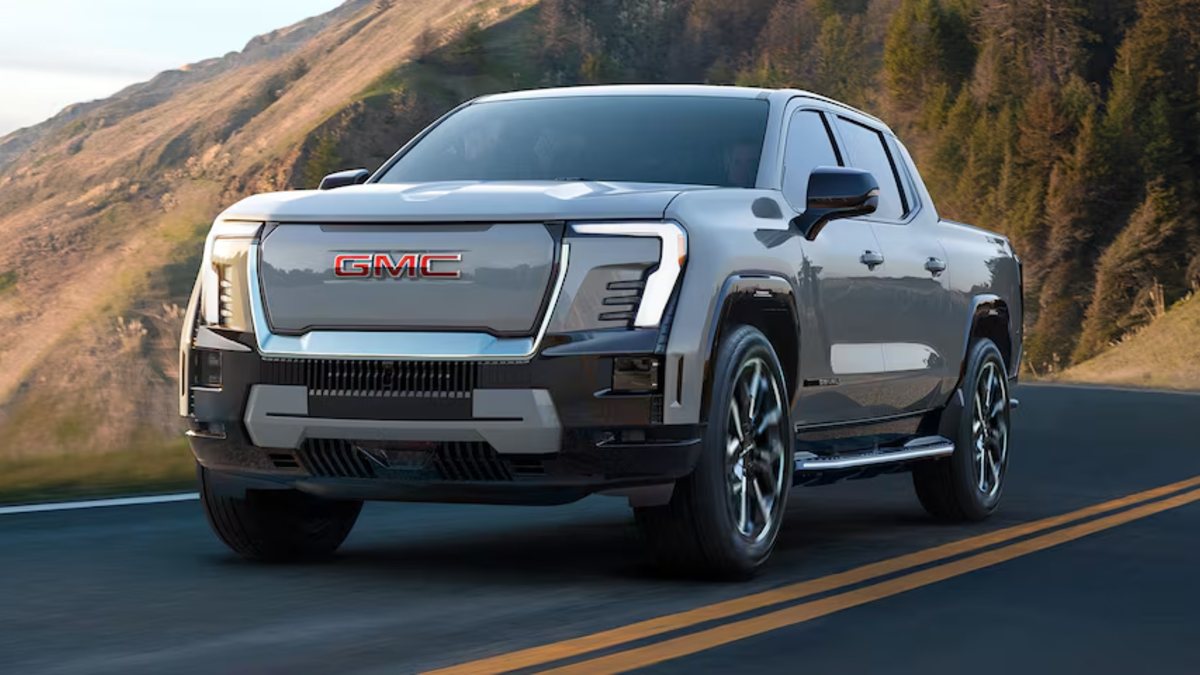
What makes this particular case so striking is that the owner is not a disillusioned early adopter looking to vent. He is a veteran of BMW and Mercedes products, a customer who has sampled X1S, X5S, and X7S with Individual packages and found them wanting next to this truck. He calls the BMW X7 garbage for the money and praises the Sierra EV as a miracle in today’s market. He compares the interior to that of a Range Rover and Rolls-Royce, lauds the suspension, and describes the styling as something out of a Mandalorian set. According to GMC and outlets such as Car and Driver, the Sierra EV pairs that luxury feel with serious performance and range from its Ultium battery system. In other words, this is not someone straining to justify a bad purchase. He is making the opposite argument. The truck is so good that it makes the failure over a humble latch feel even more absurd.
There is an old saying in the car business that stereotypes exist because they contain just enough truth to endure. German cars are wizardly but electrically fussy. Italian exotics have temperaments. French cars bend the rules of logic in charming and occasionally maddening ways. American vehicles, in that folklore, deliver brawn and value while sometimes stumbling on the smallest of details. The Sierra EV itself largely refutes that caricature. It is refined, technically sophisticated, and capable of matching or exceeding European luxury hardware in comfort and pace. Yet one unavailable latch assembly on backorder for months, combined with a safety protocol that has no dealer override, provides a narrow but vivid example of the stereotype flickering back to life.
This is not really an EV story, and it is not a morality play about brands. It is a story about complexity. A hood latch used to be a piece of stamped metal, a cable, and a secondary catch for safety. On a modern electric truck, that latch talks to sensors, which talk to a control unit, which dictates how fast the vehicle is allowed to travel if anything appears unsecured. In exchange for a higher level of safety, we accept that one small part can temporarily immobilise a machine that costs more than many houses in this country. The problem is not that the Sierra EV is fragile. The problem is that its support network of parts inventory, documentation, and dealership processes has to be as modern and integrated as the truck itself, and right now that alignment is still a work in progress.
Yet when the hood finally latches properly again and the replacement assembly is installed, the core truth will not change. This owner will return to a truck that accelerates like a performance car, rides like a luxury sedan, swallows a family of five and their luggage, and turns heads in parking lots. Other owners will keep enjoying quiet commutes, instant torque, and the sort of cabin ambience that used to be the sole province of European flagships. The stereotype will still be there in the background, a reminder that small parts matter, but it will be competing with a larger reality. The reality is that the GMC Sierra EV is one of the most compelling full-size vehicles on sale today. It deserves a parts pipeline and a service culture as advanced as the truck itself.
Image Sources: GMC Media Center
Noah Washington is an automotive journalist based in Atlanta, Georgia. He enjoys covering the latest news in the automotive industry and conducting reviews on the latest cars. He has been in the automotive industry since 15 years old and has been featured in prominent automotive news sites. You can reach him on X and LinkedIn for tips and to follow his automotive coverage.
Set Torque News as Preferred Source on Google
Follow us today...