
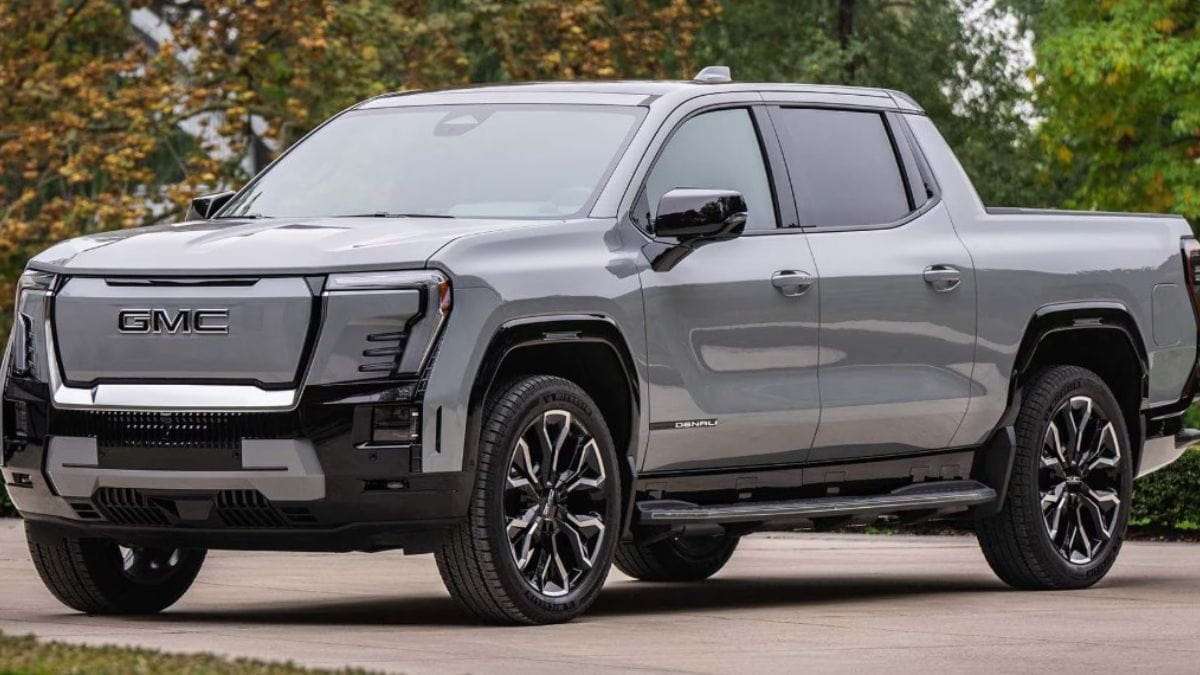

There is a certain expectation that comes with buying an electric flagship truck. Reliability, confidence, and strong manufacturer support are supposed to be part of the package, especially when the vehicle represents the future of a brand. That expectation collapses quickly though when a truck does not even make it home from the dealership. For one GMC Sierra EV owner, that collapse turned into a 13-week ordeal that raises uncomfortable questions about buybacks, financing, and what happens when internal communication breaks down. Spencer Terry shared his experience in the GMC Sierra EV Group on Facebook after weeks of frustration and stalled progress. His story begins with a moment no new car buyer expects to experience.
"I’m curious what the group thinks about this situation. My Sierra EV broke down on the DRIVE HOME from the dealership 13 weeks ago…
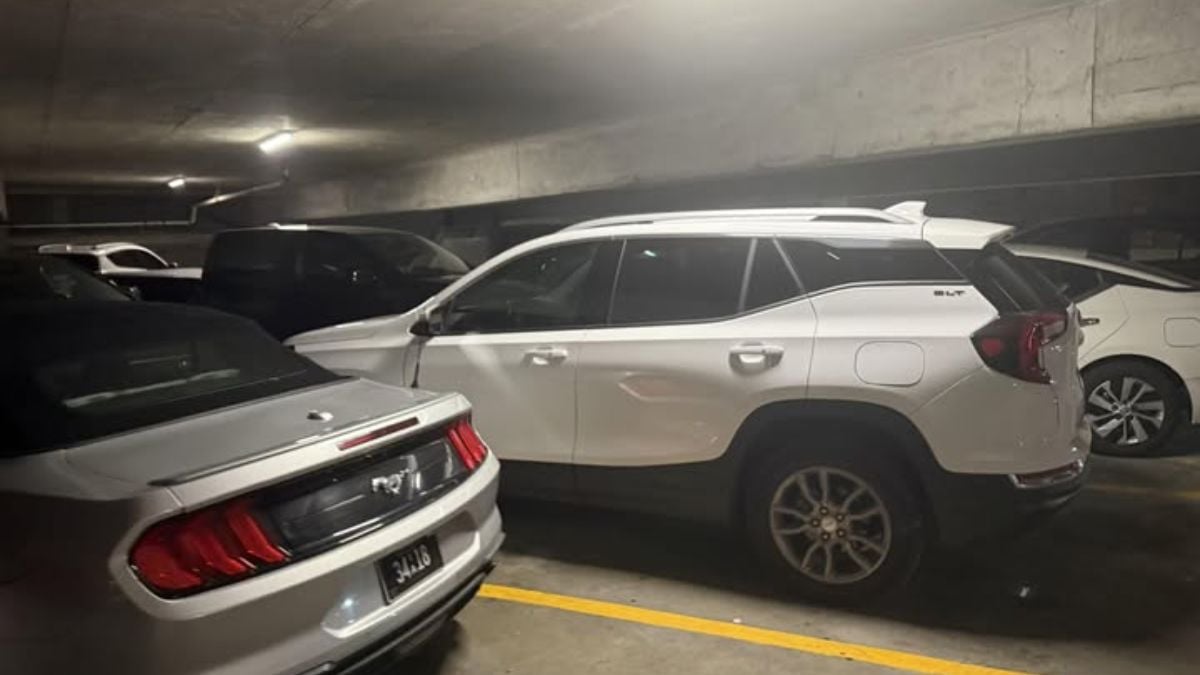
I’ve been driving a tiny 4-cylinder GMC Terrain that smells like reefer… My GMC Sierra has since been scrapped as they couldn’t fix it and to this day, I still have no truck. GM just informed me that my 3rd payment is due. Has anyone else run into this and have to keep making payments?
Am I the only one who thinks this is insane? I’m paying for a vehicle that essentially no longer exists… The way the EV concierge and GM financial communicate is baffling to me (there is no communication). Each side blames the other. This process has been incredibly eye-opening regarding GM and how they treat their customers.
Ironically, I had a very different experience when my Ford Expedition needed a transmission (far better). BBB complaint and lemon law already filed."
Paying for a Vehicle That No Longer Exists
What resonates most with readers is not just that the Sierra EV failed, but that the financial obligation continues. GM Financial has informed Spencer that his third payment is due despite the truck being scrapped and unavailable.
From the owner’s perspective, the situation feels surreal. GM has acknowledged that the vehicle cannot be repaired, yet the loan remains active. Payments must continue to avoid credit damage, even though there is no truck in his driveway. This disconnect highlights how financing systems often operate independently of service and warranty decisions.
One of the most frustrating elements of Spencer’s experience is the lack of coordination between departments. According to him, the EV Concierge and GM Financial each point to the other as the source of delay. There is no clear owner of the problem and no unified timeline for resolution. This matters because time is not neutral in these cases. Each passing month means another payment, more time in a rental, and more uncertainty. When internal communication stalls, the burden shifts entirely to the customer.
Complaints Become Necessary
While waiting for a resolution, Spencer has been placed in a rental GMC Terrain. On paper, it keeps him mobile. In reality, it feels like a constant reminder of what went wrong. The Terrain does not replace the utility, comfort, or capability of a full-size electric pickup, especially one purchased with specific expectations around performance and technology. Long-term rentals are often presented as a solution, but they can quietly enable delays. As long as transportation is technically provided, urgency fades.
After weeks without meaningful progress, Spencer escalated the situation by filing both a Better Business Bureau complaint and a lemon law claim. These are not impulsive steps. They are typically taken when trust has eroded and informal channels no longer work. Lemon law processes vary by state, but they are designed for situations exactly like this. A manufacturer that cannot repair a vehicle within a reasonable timeframe must offer a buyback or replacement. Even so, the process can move slowly when multiple departments are involved.
One of the most telling lines in Spencer’s post is his comparison to a past experience with a Ford Expedition. When that vehicle needed a transmission, the process was smoother and far less stressful. This comparison reframes the story because mechanical failures happen across all brands. What separates a tolerable experience from a damaging one is communication, transparency, and speed. In Spencer’s case, that difference was impossible to ignore.
Sierra EV Owners Describe Different Experiences
As Spencer’s post gained traction, other owners chimed in with their own experiences. Some echoed frustration, while others offered a very different perspective.
Jim Hahn commented, "I have had GM vehicles, but never again. Their customer service has to be near the bottom. They are a miserable company." His reaction reflects how a single unresolved issue can permanently change brand perception.
At the same time, other owners stressed that Spencer’s experience is not universal, pointing to long-term satisfaction stories such as one owner who said the GMC Sierra EV Denali was by far the best vehicle purchase decision they had made. Robert Michael shared his own perspective: "I have 12k miles on mine and not one issue. As data comes in for warranty issues and repairs, many critics are now saying the 2025 Sierra EV Denali Max Range is the best vehicle GM has ever made. Not the best EV, not the best truck, but the best vehicle ever. I would agree."
Stories like Robert’s align with broader owner reports highlighting how the Sierra EV has performed reliably in demanding conditions, including detailed accounts of how the truck had no issues during winter storms and confidently handled 8 to 10 inches of snow. These experiences show that the underlying product can be excellent when things go right.
Towing, Capability, and Why Buyers Chose the Sierra EV
Many Sierra EV buyers chose the truck after cross-shopping gas pickups. Instant torque, smooth power delivery, and advanced driver assistance features make a strong case. Some owners who were initially hesitant to move away from trucks like Ram ultimately found that the Sierra EV’s instant torque, towing capability, and Super Cruise delivered a better daily experience.
Others worried specifically about towing, especially boat owners who rely on consistent low-end power, a concern echoed by drivers who shared how they were impressed after towing a boat with the 2026 GMC Sierra EV.
The Reality of Financing During Buybacks
Kristyl Addison, another commenter, offered an important reminder grounded in experience.
"Yep. Gotta keep paying those payments until the paperwork ending your financial obligation is signed. I did a buyback on my Hummer EV last year and made 3 payments but was reimbursed. Don’t screw up your credit."
Her comment underscores a harsh reality. Continuing payments often protects the buyer’s credit even when the situation feels unfair. Reimbursement may come later, but missed payments can leave lasting damage.
What stands out most to me in Spencer’s story is not the failure of the truck itself, but the failure of systems around it. EVs represent a major shift in technology and ownership expectations. Buyers are being asked to trust manufacturers not just with new drivetrains, but with new service models and support structures.
When those structures fail to communicate internally, the customer pays the price. Not just financially but emotionally. Trust erodes quickly when accountability disappears, and that's why this story is a reminder that innovation must be matched with equally strong customer support.
Key Takeaways for Readers
- Mechanical failures can happen to any vehicle, but resolution speed and communication define the ownership experience.
- Financing obligations often continue until buyback paperwork is finalized, even if a vehicle is scrapped.
- Internal coordination matters, especially when service, warranty, and financing intersect.
- Owner experiences vary widely, making it important to evaluate both vehicle performance and manufacturer support before buying.
What About You?
Have you ever been caught in a situation where you were still making payments on a vehicle that was declared unfixable or bought back?
And if you were considering an electric truck, how much weight would you place on customer support and buyback policies after reading a story like this?
Don't hesitate to let me know what you think in the comments below.
Aram Krajekian is a young automotive journalist bringing a fresh perspective to his coverage of the evolving automotive landscape. Follow Aram on X and LinkedIn for daily news coverage about cars.
Image Sources: The “GMC Sierra EV Group” public Facebook group and GMC’s gallery, respectively.
Set Torque News as Preferred Source on Google
Follow us today...


Comments
I have a Silverado EV which…
Permalink
I have a Silverado EV which is pretty much the same truck. 13k miles and it's been flawless. So obviously something was wrong right of the get go. Likely a mistake made during assembly would be my guess.
I had an issue a long time ago with a brand new VW GTI. Within 24 hours the check engine light came on. It then had a long list of issues before it even got to 3k miles. The dealership had the car more than I got to drive it. I tried to have them do a buyback, get it claimed as a lemon and so on. They absolutely refused to do that and made all the issues out to be normal. I haven't purchased a VW brands (VW, Audi, Porsche, and so on) ever since. In fact I have avoided all European brand vehicles because I always hear bad things about them from other owners. Like BMWs, Minis, and Mercedes.
It's interesting how a lack of treating the customer right can tarnish the brand for a person. That was almost 25 years ago and here I am having never purchased a VW brand vehicle and I do whatever I can to talk others out of it. I basically tell them to get a Toyota or Honda...lol
Dont understand.Why he didn…
Permalink
In reply to I have a Silverado EV which… by Shad Holland (not verified)
Dont understand.Why he didn't just do a three-way call with them.Both the e v people and g m financial. You can. Just listen to them , talk to each other. Gonna be hard to blame each other when you're talking to them.
These “cars that turn into…
Permalink
In reply to I have a Silverado EV which… by Shad Holland (not verified)
These “cars that turn into lemons” stories have NOTHING on my experiences with GM.
I have purchased 6 brand new Corvettes since 2002 & 2 of them were lemons. A 2007 & the one that forced me to NEVER purchase a GM again because this one hurt…my 2013 427 Collector's Edition! Both times GM forced me to hire an attorney. GM will NOT lift a finger to make things right until an attorney gets involved. Although GM paid for a new replacement Vette in 2008, I couldn’t get the 427 replaced since it was only made for one year. The games GM plays to STALL any talks of settlement are infamous. GM even has a “RePurchase dept…something I had never heard of. Once I obtained an attorney, the painful process took about 8 months AFTER the 8 months of dealing with the GM infrastructure of confuse, delay & delete.
I will never buy a new GM product again which pretty much guarantees I will never purchase a new vehicle again since I despise the other carmakers.
I have worked for GM, Ford,…
Permalink
In reply to I have a Silverado EV which… by Shad Holland (not verified)
I have worked for GM, Ford, FCA and a few import manufacturers and have handled several buybacks over the years. Most buybacks I dealt with with GM and Ford went smoothly and payoff was handled within 30 days depending on lender. One important thing to remember is that GM financial is not owned by GM and doesn't fall under GM corporate management protocol. The problems encountered were usually when the customer was upside down or owed more money than the subject vehicle was worth or subprime lending where the credit score was too low and had to be underwritten by a third party lender with much higher fees and interest. I usually tried to get the customer to agree to a replacement vehicle of equal value. This way a collateral swap is much less complicated and is a quicker option more satisfying for both sides in most cases. Unfortunately with the rush to get ev units on the road all manufacturers are seeing greater than normal complex failure numbers. I'm concerned the EV problems are just getting started unfortunately.
Not only did you fall for…
Permalink
Not only did you fall for the EV crap you bought a GM version of it 😆😆😆😆😆😆
The dealership plays a…
Permalink
The dealership plays a critical role anytime you have a service interaction. The EV concierge mentioned here probably has multiple roles, and didn't get this title until after the full size EV pickups were on the lot. Their service department may have hsd some training, but there can't be a high level of experience. ALL of these variables; concierge, tech, paper flow, training for all the above is controlled by the dealership. The same problems are handled in very different ways across a broad spectrum of dealers.
If he signed a consumer…
Permalink
If he signed a consumer credit contract with GM financial, they are as liable as the dealer is for selling the defective truck. They should be made defendant in the lawsuit he have filed. That would put a different spin on things.