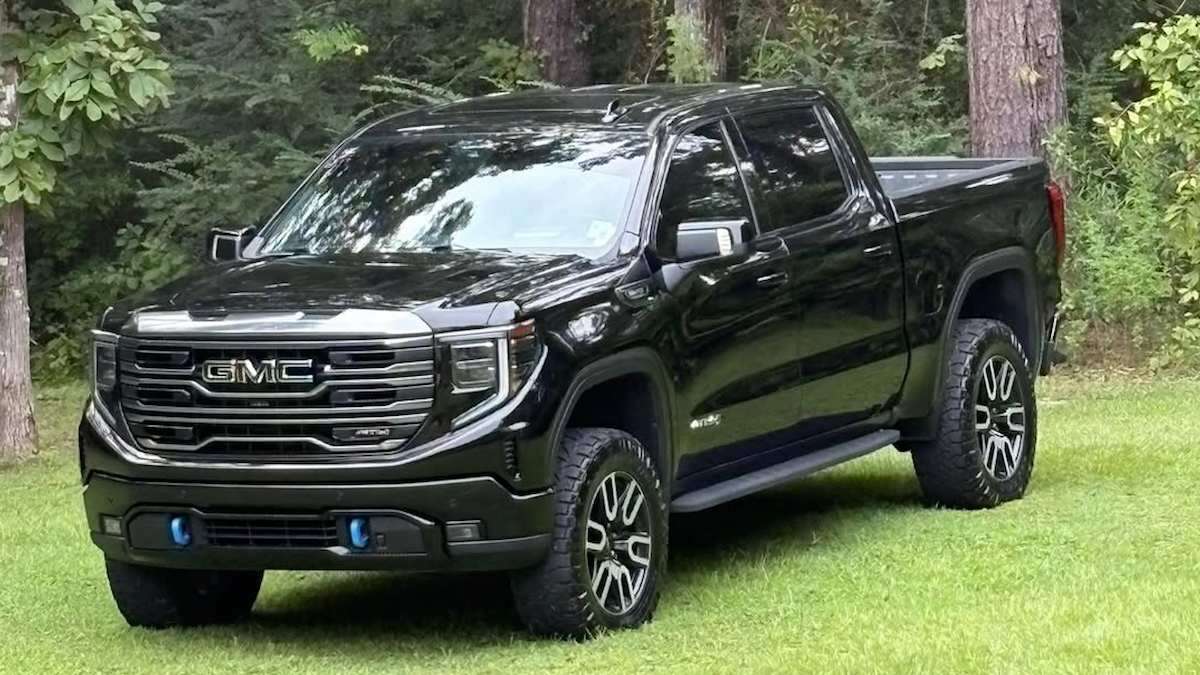

While the fuel economy of the baby GMC Sierra Duramax is hard to beat, one owner explains why he’s happily trading 22 MPG for the "Old Reliable" Ford Coyote V8 to escape the relentless cycle of shop visits and sensor failures.
The light-duty diesel market was supposed to be the "holy grail" for high-mileage truck owners. Promising the torque of a heavy-duty rig with the fuel economy of a sedan, the GMC Sierra 1500 with the 3.0L Duramax (both the LM2 and the newer LZ0 versions) won over thousands of loyalists. But for some owners, the honeymoon phase is officially over, replaced by a recurring nightmare of check engine lights and "Service Emission System" warnings.
One such owner, Michael Walsworth, recently took to the Ford F-150 Owners Facebook community to announce he’s throwing in the towel. After 57,000 miles in his 2022 GMC Sierra AT4, Walsworth is ready to jump ship to a 2025 Ford F-150 Lariat powered by the legendary 5.0L Coyote V8.
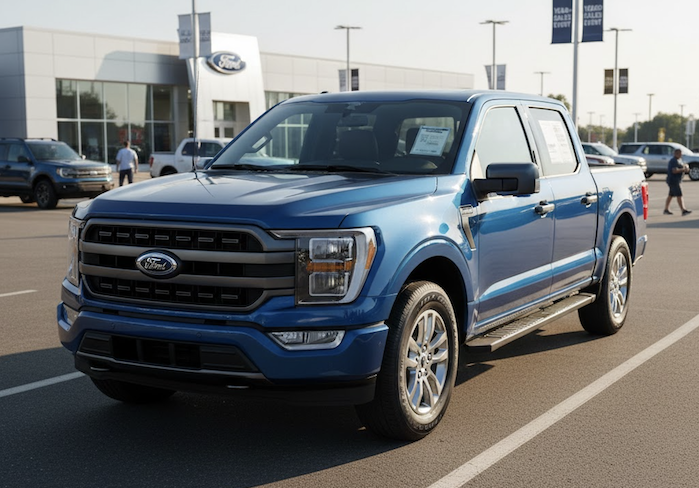
His reasoning? A combination of what he calls "3.0L Drama," subpar interior comfort, and a lack of faith in GM’s ability to keep his truck on the road.
The "Coolant Valve" Issue
The tipping point for Walsworth wasn't just one issue, but a "check engine light" that won't stay off.
"I just had the coolant control valve replaced last week, and now the check engine light is on again," Walsworth shared. "I’m not one to deal with that very long."
Walsworth’s frustration isn't an isolated incident.
General Motors recently released Special Coverage Bulletin N252508340 (and related bulletin N252508341), which specifically addresses failures of the Engine Coolant Flow Control Valve on certain Duramax models. The failure often triggers Diagnostic Trouble Code (DTC) P1098, causing cooling fans to run at high speed even after the truck is turned off, a classic symptom of the "3.0L Drama" Walsworth is experiencing.
While GM has extended coverage for this part to 15 years or 150,000 miles for some owners, the "fix" often involves long wait times for backordered parts. For a driver like Walsworth, who "drives too much to lease," a truck in the shop isn't making money.
"The Seats Absolutely Suck"
Reliability isn't the only factor driving this GMC owner toward the F-150. Despite the Sierra AT4’s rugged exterior and premium branding, Walsworth is scathing regarding the cabin experience.
Seat Comfort: "The GMC seats absolutely suck," he noted bluntly. This is a common refrain among long-haulers who find the GM seats too firm and "flat" compared to Ford's multi-contour offerings.
Cab Space: Despite the Sierra's massive footprint, Walsworth finds the cab "small."
When looking at the numbers, there's not much difference. While the GMC Crew Cab offers a respectable 43.4 inches of rear legroom, the Ford F-150 SuperCrew only stretches that to 43.6 inches. It’s a marginal difference on paper, but in terms of "openness" and seat ergonomics, Ford's Lariat trim often feels more cavernous.
The 5.0L Coyote: Fuel Savings Vs Peace of Mind
Walsworth is trading his 22 MPG "Baby Duramax" for the Ford 5.0L V8, a move that signals a shift in priorities from fuel savings to peace of mind.
"I’m not overly concerned with mileage," he says, "as long as it’s not in the single digits while towing my boat."
The 2025 Ford F-150 Lariat 5.0L Coyote delivers approximately 400 horsepower and 410 lb-ft of torque. While it lacks the low-end "grunt" of the Duramax (which boasts 460-495 lb-ft), the 10-speed automatic transmission in the Ford is well-tuned to keep the V8 in its power band while towing.
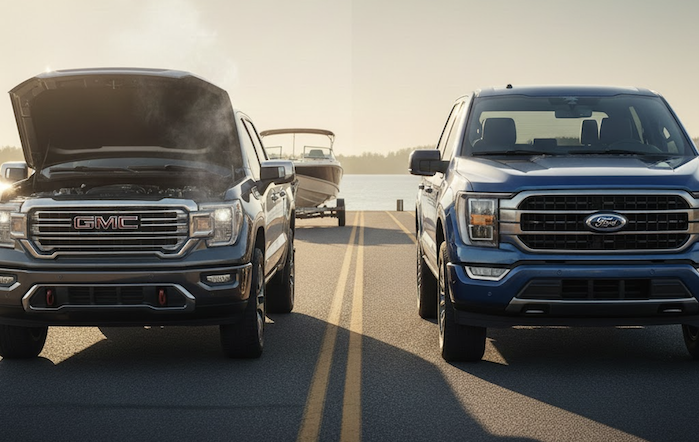
GMC Sierra AT4 Vs Ford F-150 Lariat
Pros: What Michael Will Gain
"Set It and Forget It" Reliability: By moving to the 5.0L Coyote V8, Michael leaves behind the complex diesel emissions sensors, DEF systems, and the "3.0L Drama" of the GM coolant control valve failures.
Superior Seat Comfort: Ford’s Lariat trim is widely praised for its "Multi-Contour" seating ergonomics. Unlike the "flat and firm" seats he dislikes in the GMC, the Ford offers better lumbar support and cushioning for high-mileage drivers.
Class-Leading Rear Legroom: He will gain nearly an inch of usable rear legroom. The F-150 SuperCrew offers 43.6 inches of rear legroom, creating a more "open" feel than the GMC’s 43.4-inch cab.
Pro Power Onboard: If he opts for it, the F-150 can serve as a mobile generator (up to 2.4kW on the gas model), a game-changer for boat owners or campers.
Better Resale for High Mileage: Because Michael "buys, not leases," the 5.0L V8 is often easier to sell on the secondary market once it hits 150k+ miles, as many used buyers fear the repair costs of out-of-warranty modern diesels.
Cons: What Michael Might Miss
The Diesel "Sip": He will definitely feel the sting at the pump. While he gets 22 MPG now, the 5.0L V8 usually averages between 17–19 MPG in mixed driving.
Low-End Towing Torque: The Duramax delivers its peak torque of 495 lb-ft almost instantly. The 5.0L Coyote is a high-revving engine; it will downshift more often and "scream" a bit more when pulling his boat up a steep grade.
The MultiPro Tailgate: Unless the Ford is equipped with the new Pro Access Tailgate, he may miss the versatility of GM’s multi-step system.
Ride Quality: The GMC AT4 features a specific off-road tuned suspension that many find "plusher" on the highway than the standard F-150 Lariat setup, which can feel a bit "bouncy" when the bed is empty.
The Verdict
This story highlights a growing trend in the 2025 truck market: "Complexity Exhaustion." Modern diesel emissions systems (DEF, DPF, and complex EGR setups) are pushing owners back toward naturally aspirated V8s.
For Michael Walsworth, the 2025 Ford F-150 Lariat represents a "safe harbor." By opting for the 5.0L, he’s trading the high-tech, high-efficiency "Drama" of the Duramax for a proven powertrain that he can drive into the triple digits on the odometer without fearing the next "Check Engine" light.
What would you do? Is the GMC 3.0L Duramax worth the potential "Drama" for the fuel savings, or is the Ford 5.0L Coyote the smarter long-term buy? Let us know in the comments below.
Next Up: A GMC owner exposes a 3.0L Duramax nightmare; engine seizing at 6k miles, no loaners, and a denied buyback. If you own a 2023-2025 Sierra Diesel, you need to read this warning about TSB 25-NA-307. "I Paid Cash For Two GMC Sierra Trucks, Both Failed": Owner Exposes GM’s 3.0L Duramax Disaster.
With over 30 years of industry experience, Denis Flierl brings an insider’s perspective to Torque News, where he has been a Senior Reporter since 2012. Before picking up the pen, Denis consulted for the automotive industry's biggest brands and honed his skills as a test driver. He cuts through the noise to deliver the latest auto news, compelling owner stories, and the expert analysis necessary to navigate today's changing automotive market.
Have a tip or question? Follow me on X @DenisFlierl and @WorldsCoolestRides, or connect with me on Facebook, Instagram, and LinkedIn.
Photo credit: Denis Flierl via Michael Walsworth
Set Torque News as Preferred Source on Google
Follow us today...