
An 8,000-pound travel trailer will test any light-duty pickup.
Pulling a massive box through 100 miles of severe rain and crosswinds exposes every hidden handling flaw.
Yet one 2025 Ford F-150 PowerBoost owner just proved you do not always need to shell out $80,000 for a heavy-duty F-250 Super Duty.
I have spent over three decades evaluating trucks across the steep, air-thin passes of the Colorado Rockies. When half-ton owners talk about pulling heavy travel trailers, online forums quickly devolve into chaos. The internet instantly demands an F-250 or a diesel dually.
Real-world experience tells a far more nuanced story.
The true root cause of towing success is not just engine size. It comes down to aerodynamic drag, suspension management, and strict payload math.
The Real-World Towing Setup
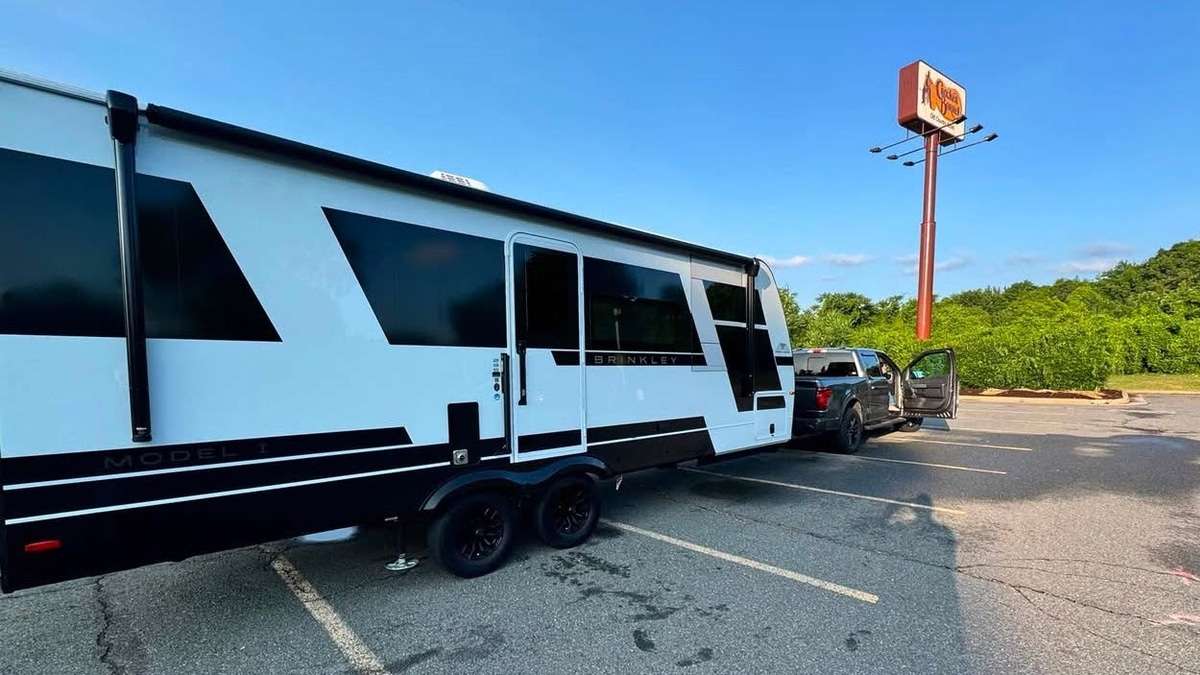
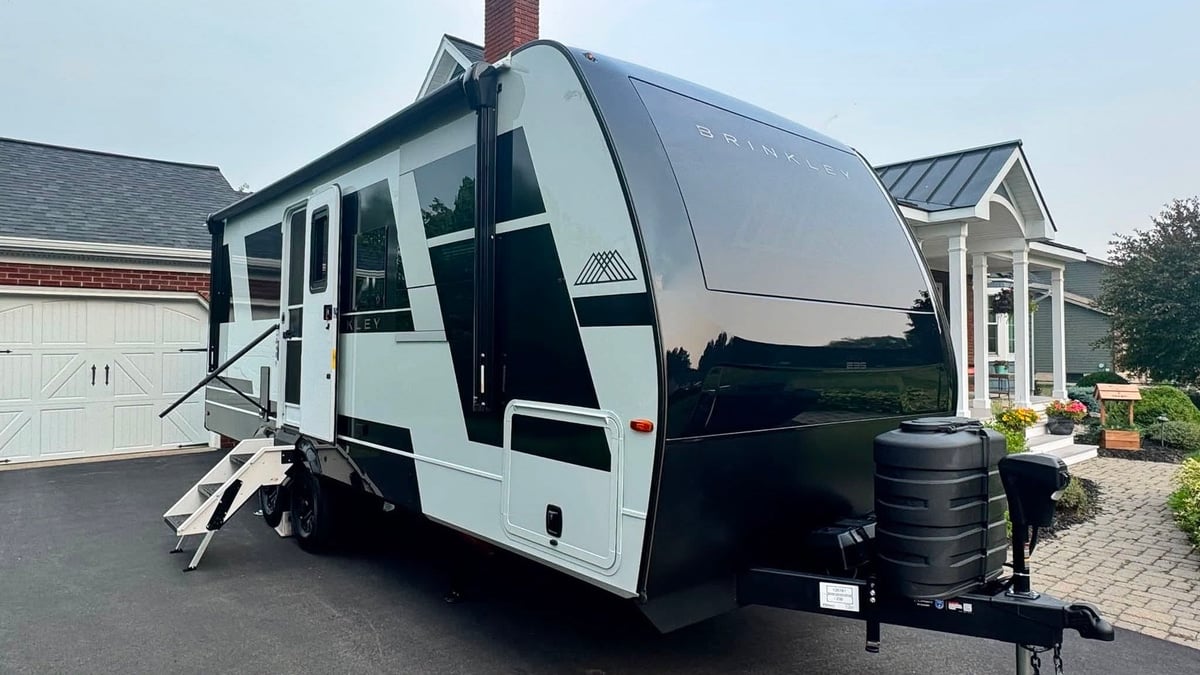
Richard Tutunjian shared his honest towing experience on the Ford F-150 Owners Facebook group after taking his first 400-mile round trip with a new 2027 Brinkley I235 travel trailer.
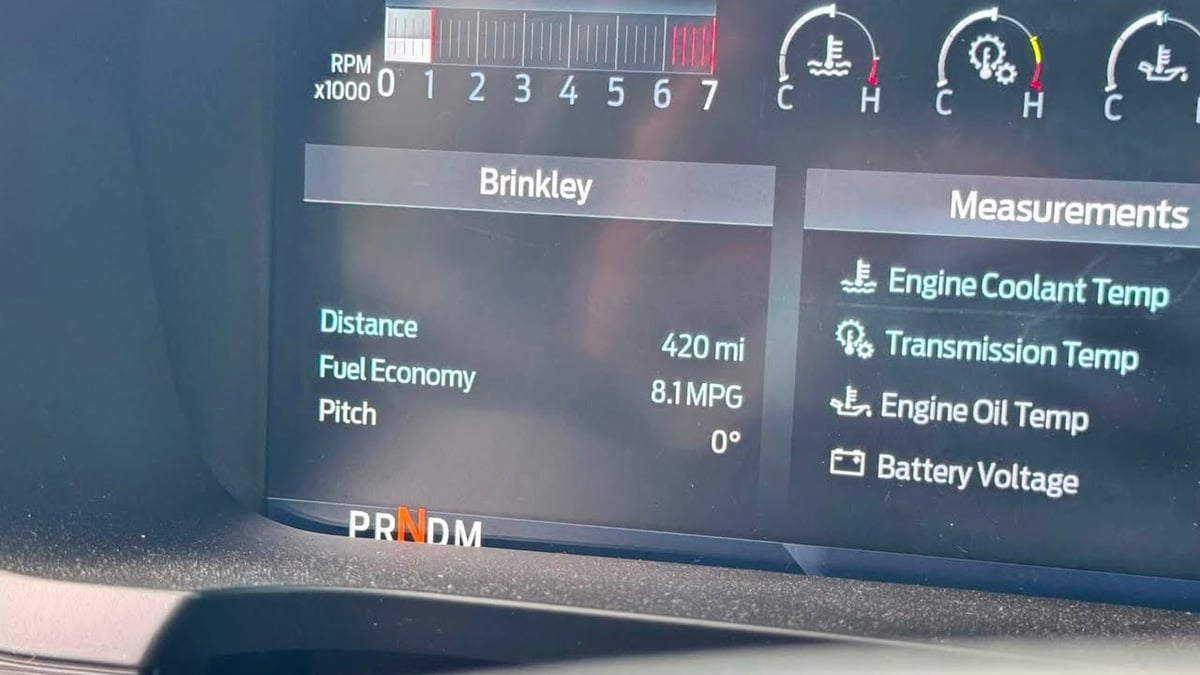
"Some people said it tows terribly, some said an F-150 isn’t enough truck, and others said they had no issues at all. Our setup: 2025 Ford F-150 PowerBoost, Falken Wildpeak tires, RAS suspension, and an Equal-i-zer 4-point weight distribution hitch. The trip out was perfect, and I could barely tell the camper was behind me. On the trip home in rain and wind, you could feel the trailer moving around more, but not once did I feel out of control. Fuel mileage wasn’t great—around 8.2 MPG—but for us, this setup works.”
His report cuts straight through internet hyperbole. He ran 400 miles through calm conditions, darkness, and 100 miles of blinding rain and wind. He kept the setup safe, calm, and completely predictable.
The Aerodynamic Wall Hits Hard
The 8.2 MPG figure sounds brutal at first glance. However, physics explains why this happens to every gas half-ton pulling a high-profile camper.
According to official towing data published by the U.S. Department of Energy, aerodynamic drag increases exponentially above 50 mph, making front surface area far more punitive to fuel economy than gross vehicle weight. When you pull a 10-foot-tall, flat-backed camper down the highway at 70 mph, you are dragging a literal brick through the air.
As noted in a recent investigative report, "Ford F-150 Towing Nightmare: Why Pulling A 6,500-Lb Camper Slams High-Mileage Ecoboosts Into Sudden Limp Mode," pulling a heavy travel trailer places continuous heavy boost demand on twin-turbocharged engines, drastically increasing fuel consumption to manage internal combustion temperatures.
The PowerBoost’s 3.5-liter EcoBoost engine is forced to stay under constant boost, completely bypassing its electric hybrid battery assist while cruising at highway speeds.
The Hidden Threat Is Not Weight, It Is Payload
Most half-ton truck owners glance at the advertised 13,500-pound maximum towing capacity on the glossy showroom brochure and assume they are safe. That figure is marketing fluff. The true limiting factor on any light-duty truck is always the payload rating stamped on the yellow tire-and-loading door sticker.
According to a detailed trailering analysis published by SAE International under J2807 towing standards, tongue weight directly subtracts from a vehicle's available payload capacity, leaving very little margin for passengers, aftermarket gear, and cargo.
An 8,000-pound travel trailer routinely exerts between 800 and 1,000 pounds of downward tongue weight onto the hitch ball.
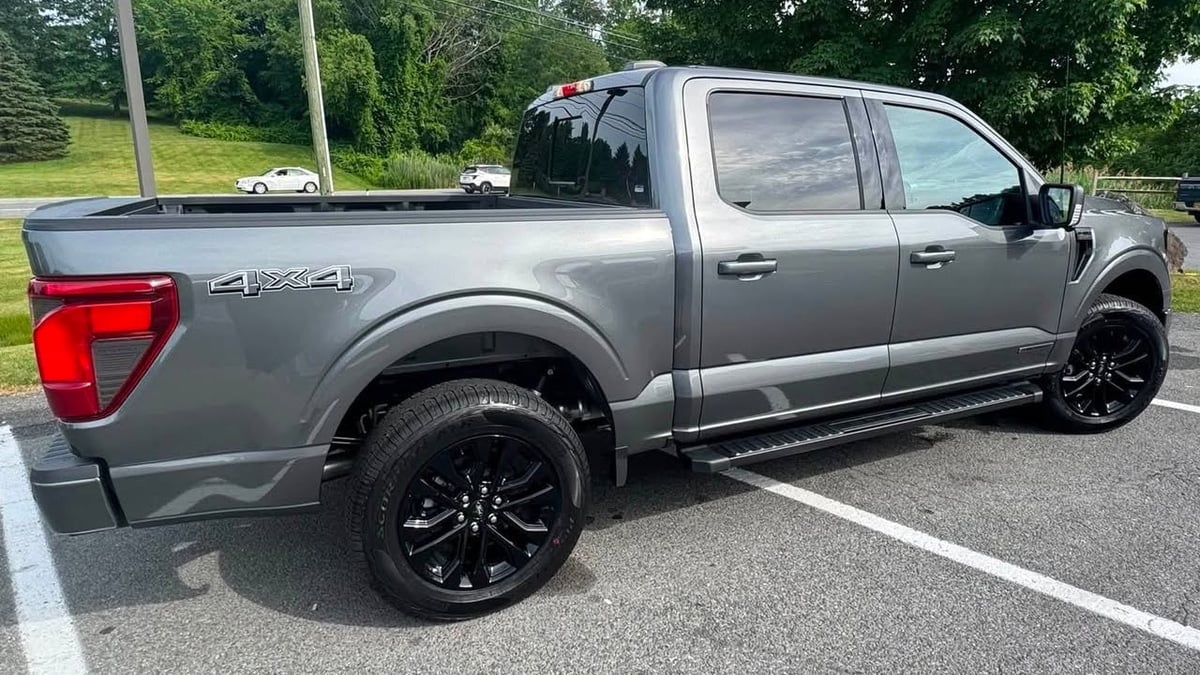
Tutunjian noted that his setup sat within just 75 pounds of his truck’s maximum allowable payload. That is razor-thin. If he had loaded two heavy coolers into the truck bed or brought along two additional adult passengers, he would have blown past his Gross Vehicle Weight Rating (GVWR) and legally overloaded his half-ton.
I explored this exact structural vulnerability in my article 2026 Ford F-150 Mechanical Failure Strands Owner 6,300 Miles In While Towing Airstream, where pushing a half-ton to its operational limits over long distances exposed critical thermal and mechanical stress points under load.
Aftermarket Upgrades Save The Day
Why did this owner succeed where so many others experience terrifying trailer sway and white-knuckle bouncing? The answer lies in his tactical mechanical modifications.
Stock half-ton rear coil and leaf springs are engineered for smooth empty-bed ride comfort, not heavy tongue loads. By adding a Roadmaster Active Suspension (RAS) setup along with an Equal-i-zer 4-point weight distribution hitch, he eliminated the dreaded rear-end sag.
The RAS system acts as an active mechanical tensioner, stabilizing the rear leaf springs under load without ruining the unhitched ride quality. Meanwhile, the 4-point hitch redistributed several hundred pounds of hitch weight back onto the F-150’s front steer axle, preserving steering control and braking grip through wet weather.
Colorado Mountain Altitude Amplifies The Test
Out here in the High Country of Colorado, elevation changes the game entirely. Climbing I-70 up to the Eisenhower Tunnel at 11,000 feet cuts atmospheric air density by over 30 percent.
Naturally aspirated V8 engines lose roughly 3 percent of their horsepower for every 1,000 feet of elevation gain. The PowerBoost’s twin-turbochargers compensate by forcing air into the combustion chambers, keeping power delivery smooth up steep grades.
However, pulling an 8,000-pound camper up a 7 percent grade at high altitude will send engine coolant and transmission fluid temperatures soaring. In thin air, that 8.2 MPG average on flat ground can quickly drop into the 5-to-6 MPG range during hard mountain climbs.
Do You Actually Need An F-250?
The next logical question every truck buyer asks is simple: At what point should you abandon the half-ton F-150 and buy a heavy-duty F-250 Super Duty?
The answer comes down to your annual usage frequency. If you tow an 8,000-pound camper 5 or 6 times a year for weekend trips within 300 miles, a properly modified F-150 PowerBoost with a weight distribution hitch and upgraded suspension is completely fine.
However, if you plan to travel cross-country full-time, tow weekly, or tackle high-altitude mountain passes every weekend, step up to the F-250. The Super Duty's heavier curb weight, massive brakes, stiffer frame, and larger cooling capacity will provide a far more stress-free towing experience over long distances.
The Final Verdict
Tutunjian's 400-mile trip proves that real-world preparation beats internet opinion every single time. With proper hitch setup, active suspension upgrades, and careful payload accounting, the 2025 Ford F-150 PowerBoost is a highly capable towing machine.
Tell Us What You Think! Would you trust a half-ton Ford F-150 PowerBoost to tow an 8,000-pound camper near its payload limit, or would you play it safe and step up to a heavy-duty F-250 Super Duty?
Please leave your comments and share your towing experiences in the red "Add new comment" link below!
There’s More… Also check out my Torque News Home Page for more of my informative Ford F-150 news articles.
About The Author
Denis Flierl is a 14-year Senior Reporter at Torque News and a member of the Rocky Mountain Automotive Press (RMAP) with 30+ years of industry experience. Explore his full investigative reporting archives and technical guides at DenisFlierl.com.
Based in Parker, Colorado, Denis leverages the Rockies' high-altitude terrain as a rigorous testing ground to provide "boots-on-the-ground" analysis for readers across the Rocky Mountain region, California EV corridors, the Northeast, Texas truck markets, and Midwest agricultural zones.
A former professional test driver and consultant for Ford, GM, Ram, Toyota, and Tesla, he delivers data-backed insights on reliability and market shifts. Denis cuts through the noise to provide national audiences with the real-world reporting today’s landscape demands.
Connect with Denis: Find him on LinkedIn, X @DenisFlierl, @WorldsCoolestRides, Facebook, and Instagram.
Photo credit: Denis Flierl via Richard Tutunjian
Set Torque News as Preferred Source on Google
Follow us today...