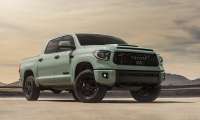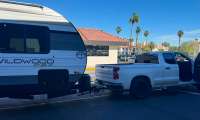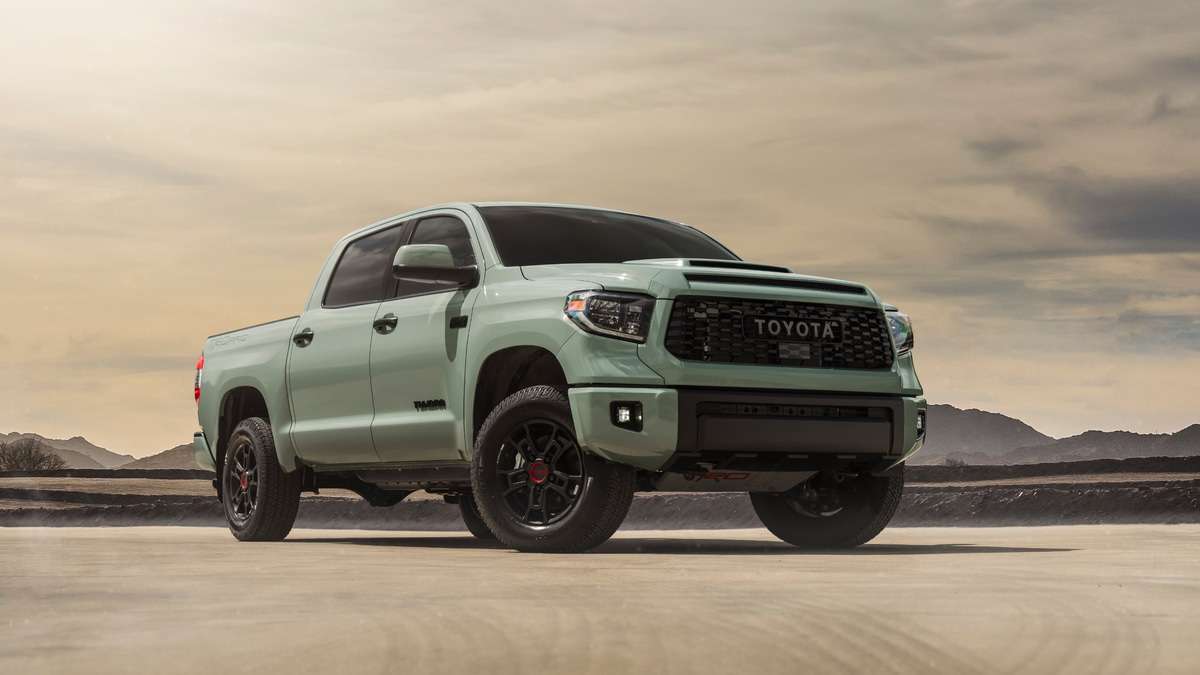

A modified 2021 Toyota Tundra TRD Pro rolled across a CAT Scale at 7,160 pounds with its driver in the seat and a fresh full tank of fuel.
The GVWR printed on its door-jamb certification label is reportedly 7,200 pounds.
That leaves 40 pounds before the Tundra reaches its gross vehicle weight rating.
A large bag of dog food could erase that margin. Another adult passenger would put the truck over. So would most trailer tongue weights.
This is how a capable truck can retain a respectable factory tow rating while having almost no usable payload left in its current configuration.
Jerry Bean Jr. posted the scale results in the Towing with Tundras group:
“2021 TRD Pro. Just ran through the Cat scales. With me in the truck, I weighed in at 7160. Steer was 3580, and drive was the same.”
Jr’s list of installed equipment helps explain the number.
He reported a Leer canopy, rear sway bar, air bags with an onboard compressor, AMP retractable steps, Boost tow mirrors, under-seat storage, a DECKED drawer system filled with hand tools, Coachbuilder three-inch shackles, a Westcott front lift, 34-inch tires, 1.25-inch wheel spacers and a 10-inch floating radio.
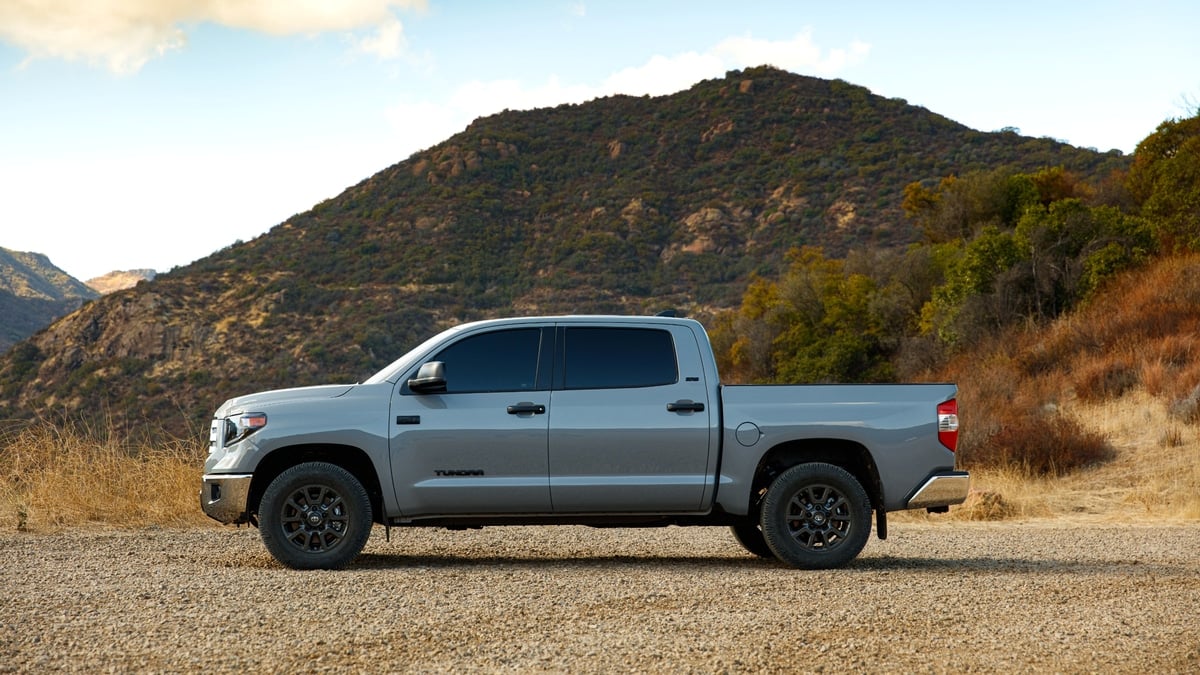
He also acknowledged that he was probably forgetting several smaller additions.
None of those accessories has to be unusually heavy for the combined total to become substantial. A truck built into a mobile workshop consumes payload one upgrade at a time.
The Scale Leaves 40 Pounds, Rather Than 30
One reply told Jr he had 30 pounds of capacity remaining. That response repeated the scale weight as 7,170 pounds.
Jr’s original number was 7,160 pounds.
The arithmetic is straightforward:
7,200-pound GVWR minus 7,160-pound scale weight equals 40 pounds.
This 40-pound figure is more useful than an online curb-weight estimate because the scale captured the truck in its present form. The canopy, drawers, tools, suspension equipment, larger tires, driver, and fuel were all represented.
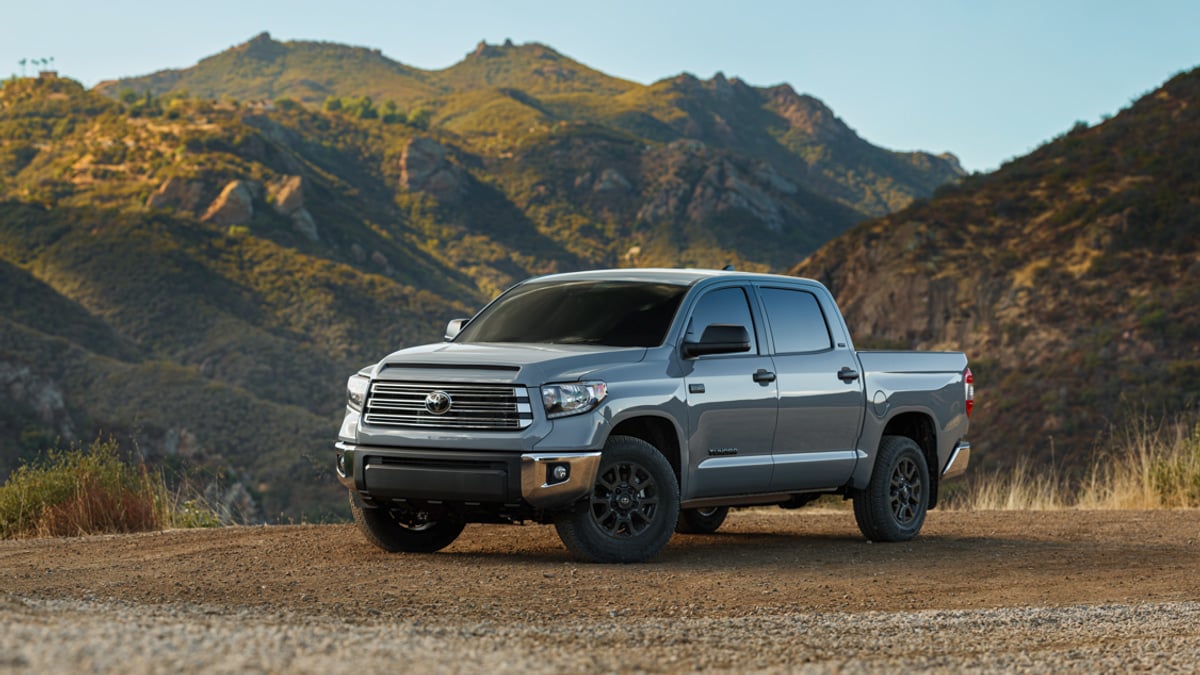
Toyota’s 2021 specifications listed maximum TRD Pro payloads of 1,630 pounds for the Double Cab and 1,560 pounds for the CrewMax. The same brochure listed maximum tow ratings of 9,900 and 9,200 pounds, respectively. Those are model-level maximums for comparison, not a promise that every individual truck retains those capacities after options and accessories are installed.
Jr’s door labels provide a much more specific answer.
The Yellow Label May Reduce His Capacity to 1,098 Pounds
Jr said the primary payload label showed 1,235 pounds. He also reported a yellow factory label stating that capacity had been reduced by 137 pounds.
Assuming it is the federally defined load-carrying-capacity modification label, the two figures should be read together:
1,235 pounds minus 137 pounds equals 1,098 pounds.
Federal guidance specifies a yellow “Load Carrying Capacity Reduced” label when sufficient equipment is added between final vehicle certification and the first retail sale. The label states how much the original occupant-and-cargo capacity has been reduced.
That yellow label generally accounts for qualifying accessories installed before the truck’s first retail delivery. It does not automatically account for the owner-installed equipment added later.
Jr’s reported numbers also pass a useful arithmetic cross-check.
A 7,200-pound GVWR minus an adjusted 1,098-pound capacity implies an as-delivered unloaded weight of approximately 6,102 pounds.
The current 7,160-pound scale reading is 1,058 pounds above that inferred baseline.
Subtract that 1,058 pounds from the adjusted 1,098-pound capacity, and the same 40-pound margin remains.
In other words, the driver, later accessories and carried equipment have consumed approximately 96 percent of the truck’s inferred adjusted capacity.
Photographs of both labels would be needed to confirm the interpretation before treating 1,098 pounds as definitive. The reported figures are internally consistent.
A Full Tank Is Already Part of the Baseline
One commenter asked whether Jr needed to subtract the full tank of fuel from the payload figure.
He does not need to subtract it a second time.
Federal definitions of unloaded vehicle weight include the maximum capacity of operating fluids, including full fuel tanks. Occupants and cargo are excluded from that baseline.
That means the full tank was expected when Toyota established the truck’s unloaded weight and occupant-and-cargo capacity.
The driver still counts.
Jr’s scale ticket already included him, which is exactly what makes this weigh-in useful. His remaining capacity after that scale session is the 40-pound difference between the measured truck weight and GVWR.
Fuel burned during a trip will gradually reduce the truck’s weight. Building a towing plan around an empty tank would provide a misleading sense of capacity, especially when the truck will repeatedly be refueled during travel.
Air Bags Can Level the Truck While GVWR Stays at 7,200 Pounds
Jr said he has been using air bags to compensate for the truck’s rear suspension setup.
Air springs can restore ride height, reduce squat, and improve the way a loaded truck feels. They can be worthwhile equipment when used within the truck’s established limits.
They do not increase GVWR.
Air Lift, which sells load-leveling air-spring systems, explicitly states that adding an air suspension system does not change the manufacturer’s gross vehicle weight rating. The company distinguishes the amount an air spring can level from the amount of weight the truck is certified to carry.
A level truck can still be overweight.
That distinction becomes particularly important with a lifted or modified suspension. Ride height tells the driver what the suspension is doing visually. A scale ticket tells the driver what the axles and chassis are carrying.
The 3,580-Pound Axle Split Still Needs Two More Labels
Jerry reported 3,580 pounds on the steer axle and the same 3,580 pounds on the drive axle.
That perfectly even split is interesting, but it does not establish that either axle has unused capacity.
The next comparison must be against the front and rear gross axle weight ratings printed on the certification label. A truck can remain under its total GVWR while exceeding one axle rating. The rear axle is especially important once a trailer is coupled because the hitch load is concentrated near the back of the truck.
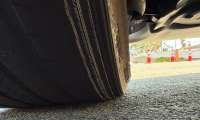
The 34-inch replacement tires need attention as well. Their load index, cold inflation requirements, and actual capacity must support the measured axle loads. Larger dimensions alone do not establish greater load capacity.
The lift, rear shackles, and wheel spacers also leave the truck farther from its factory configuration. Those parts do not automatically create an unsafe vehicle, but they make real measurements more valuable than brochure assumptions.
A Trailer Would Require Another Complete Weigh-In
Jerry’s 40-pound margin describes the truck during that specific scale visit.
It does not include a passenger who stayed home, future bed cargo or the downward load of a connected trailer.
A weight-distribution hitch can move a portion of the hitch load between the truck’s front axle, rear axle and the trailer axles. It cannot raise any of the manufacturer’s ratings. The suspension modifications may also require the hitch height and weight-distribution adjustment to be checked again.
The next scale visit should include the truck and trailer fully prepared for travel. That means the usual passengers, pets, food, water, propane, batteries, hitch equipment, tools and personal cargo.
CAT Scale instructs conventional towing combinations to place the steer axle on platform one, the drive axle on platform two, and the trailer axles on platform three. That produces the axle-level information needed for a meaningful comparison. (CAT Scale)
The truck’s steer and drive readings should be compared with their respective GAWR figures. The truck axle subtotal should remain within GVWR. The entire combination should remain within GCWR, and the receiver, tongue, and tire ratings still apply.
A second or third pass under a consistent loading condition can help show what the weight-distribution system is doing.
The Accessory List Explains the Result
The 7,160-pound scale weight is high, and Jerry’s extensive equipment list explains how the truck reached it.
This single case does not show that every 2021 Tundra TRD Pro has only 40 pounds available. It shows how quickly a specific half-ton truck can consume its capacity after years of practical upgrades.
Jerry now has three realistic paths.
He can remove permanent weight, particularly equipment he rarely uses. He can relocate selected cargo to the trailer while respecting the trailer’s GVWR, cargo capacity and tongue balance. He can also move to a truck with a higher door-label payload if the canopy, tools and towing equipment all need to remain.
The useful part of Jerry’s story is that he went to the scale.
The ticket replaced assumptions with a number. That number says the Tundra was essentially at its GVWR before a meaningful trailer tongue load entered the equation.
Jerry’s scale ticket makes the tradeoff impossible to ignore. His Tundra has been built into a useful, well-equipped truck, but almost every pound of its rated capacity is already occupied before a trailer reaches the hitch.
Has a CAT Scale ticket ever forced you to rethink a Tundra that felt ready to tow? Tell us in the comments what the truck weighed and what that number made you change.
About The Author
Noah Washington is an automotive journalist based in Atlanta, Georgia, covering sports cars, luxury vehicles, and performance culture. His reporting focuses on explaining the engineering, design philosophy, and real-world ownership experience behind modern vehicles.
Noah has been immersed in the automotive world since his early teens, attending industry events and following the enthusiast communities that shape how cars are built and driven today. His work blends industry insight with enthusiastic storytelling, helping readers understand not just what a car is, but why it matters.
Noah is also a member of the Southeast Automotive Media Association (SAMA), a professional organization for automotive journalists and industry media in the Southeast.
His coverage regularly explores sports cars, luxury vehicles, and performance-driven segments of the automotive industry, including the evolving culture surrounding Formula Drift and enthusiast builds.
Read more of Noah's work on his author profile page.
You can also follow Noah here:
Set Torque News as Preferred Source on Google
Follow us today...