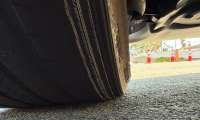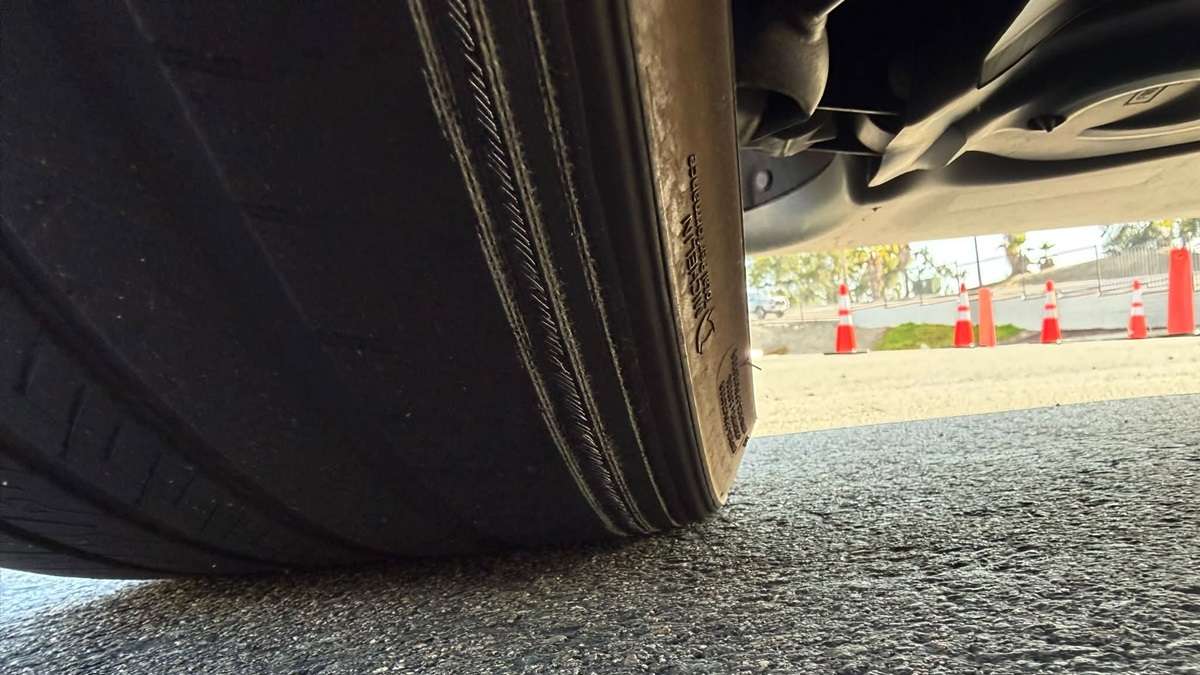

Owners of the Tesla Model Y Performance continue to grapple with a tire problem that catches many of them off guard. The rear tires are wearing down to the cords on the inside edge somewhere between 15,000 and 20,000 miles, while the rest of the tire still shows plenty of tread remaining. This is not a case of a worn-out tire. It is a strip of destroyed rubber along the inner shoulder sitting right next to two-thirds of a tread that would otherwise pass inspection without a second look.
That pattern is the telltale sign of a design issue. When a tire wears evenly across the face, you have simply used it up. When only the inside edge is gone, the cause is alignment geometry, specifically rear camber and rear toe. The Model Y Performance carries a healthy dose of negative rear camber from the factory, which tips the top of the rear wheels inward and concentrates the vehicle’s considerable load on the inner edge of each tire.
On most vehicles, this is an issue that can be remedied with an alignment change. However, as crazy as this sounds, Tesla does not make that camber adjustable from the factory, so the setting owners receive is the setting they keep unless they modify their vehicle. Add in the rear toe specification, the weight of the battery pack, and the instant torque that lets this crossover launch like a sports car, and the inner edges of each rear tire pay the price. Hard launches speed up the wear, and the Performance is designed by Tesla to sit lower than other Model Y trims, which sharpens the effect.
Torque News communicated with Model Y Performance owner Brian S., who told us that he paid about $500 each for two new rear tires after only 19,000 miles of ownership. It’s his tire you see in our top-of-page image. Clearly, the tire has worn improperly. Brian was seeking help on a popular Tesla Model Y club, and we had a quick chat. The membership was not at all surprised by this situation.
Another Tesla Model Y owner named Jordyn also sought help, but in a different Tesla group. His story is very similar, except that he has seen the problem twice. He posted:
This is the second time our 2023 Model Y Performance has worn through tires in 30,000 total miles. They are down to the cores on the inside edges and starting to leak. The rest of the tire looks great, though.
Why Proper Tire Rotation Is Useless On A Tesla Model Y
This situation is very frustrating for owners who assume that they can stretch tire life the usual way by rotating the tires and thereby spreading the rapid wear. Sadly, Tesla’s Performance trim precludes this solution. The Model Y Performance rides on a staggered setup, with different-size tires front and rear. Because the front and rear tires are different sizes, you cannot rotate them front to back.
That leaves side-to-side as the only path, and side-to-side comes with its own pair of catches. A tire can move from one side of the car to the other only if it is not directional. A directional tire is built to spin one way, and swapping it to the opposite side of the same axle would force it to rotate backward. Fit directional tires to a staggered car, and you have removed the last rotation option entirely. No rotation is possible at all.
The common factory all-season for this car, the outstanding Michelin Pilot Sport All Season 4. This high-quality tire is asymmetric but not directional, so a left-to-right swap is allowed. The second catch is that it does not fix the problem. A side-to-side swap keeps the outboard face of each tire on the outboard side, which means the inner edge stays the inner edge. The exact part of the tire that is wearing out never moves out of the rapid wear area. Rotation side to side does nothing for an inner-shoulder problem driven by camber.
How To Manage the Dreaded Model Y P Rear Tire Camber Problem
A careful alignment that pulls the rear toe to the friendly end of the specification buys back a smidge of tread life. Owners report that Tesla's own alignments are inconsistent, so a good independent shop is often the better bet. If you can find one.
The only thing that has proven to help is altering Tesla’s design. This means buying and installing aftermarket adjustable rear camber arms. Owners who have installed them describe going from tires shredded at 20,000 miles to sets that last 40,000 or more. Gentler launches help too, though few Performance buyers bought the car to drive it gently.
Altering the suspension sounds easy, but is it? Step back for a moment and ask yourself if you really want to outsource the engineering of the suspension on a vehicle with around 500 lb-ft of torque. Will this cause snap oversteer when applying power in a corner? What about in rain or snow or on ice? How would you know if it’s safe to alter the factory suspension setting on one of the highest-performance vehicles sold? If you do modify the vehicle and it results in a crash, would your insurance even pay? Why should the insurance company pay if you intentionally modified the car? The liability issue gets a bit ominous when you consider not just the cost of the accident but potential injuries.
The Cost and Hassle Of Annual Tire Purchases
Speaking of cost, these are not cheap tires. A quality pair of 21-inch performance tires runs up to $1,000 dollars or more at many retailers. Plus, when only the rears are cooked, owners face repeated pairings with uneven treadwear, rather than a clean set of four after a reasonable period of time on the car. A car that eats rear tires every 15,000 to 20,000 miles turns tire replacement into a recurring line item that many buyers never budgeted for. It’s also a hassle. The EPA uses 15,000 miles as the annual average miles in its energy calculations. Do you want to buy new tires every year? If your state has an annual safety inspection, as our home state of Massachusetts does, you will not pass inspection with tires that have any single tread block worn below 1.6 mm.
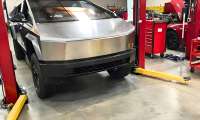
Food For Thought: Is This Just a Model Y Problem? Tesla Cybertruck Wears One Tire to the Cords in Just 17K Miles
High Performance Cars Often Come With Compromises
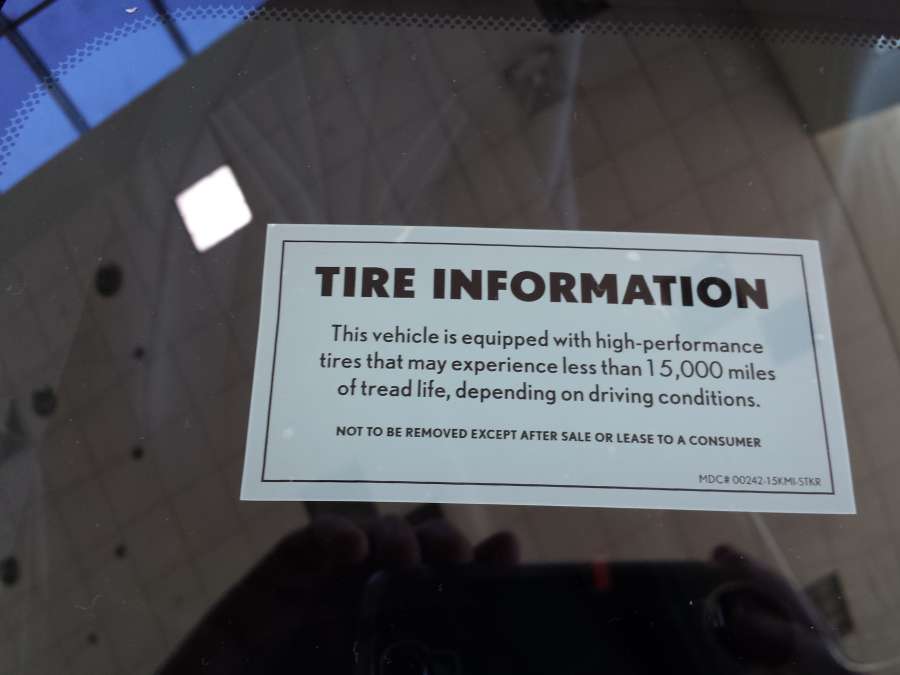
None of this makes the Model Y Performance a bad car. It launches hard, corners flat, and delivers the kind of straight-line thrill that buyers of cars with the word "Performance" in the name expect. Manufacturers of high-performance vehicles have been warning drivers for decades that the tires won’t last as long as the ones on their daily beater. Our image above shows a new Lexus in a showroom with a warning sticker that gives owners a heads-up that they need to know what they are getting into. That sticker image was taken by me before Tesla ever sold a Model Y. We are also aware that tire shops are warning customers about this issue to try to ward off warranty claims. If you want to play, you gotta pay.
The Model Y Performance just carries an ownership quirk that owners should understand before the first set of rears surprises them. Budget for it, plan for a grand in annual maintenance costs, and enjoy the vehicle. It’s one of the best on the market.
Tell us in the comments if buying two or more tires every year would give you pause if buying a new car.
About the Author:
John Goreham is a 14-year veteran of Torque News. An accomplished writer and a long-time expert in vehicle testing, Goreham also serves as the Vice President of the New England Motor Press Association and has a growing social media presence. He’s also a 10-year staff writer and community moderator for Car Talk. Goreham holds a B.S. in Mechanical Engineering and an undergraduate Certificate in Marketing. In addition to vehicle and tire content, he offers deep dives into market trends and opinion pieces. You can follow John Goreham on X and TikTok, and connect with him on LinkedIn.
Top of page image used with permission. Second image by John Goreham
Set Torque News as Preferred Source on Google
Follow us today...