
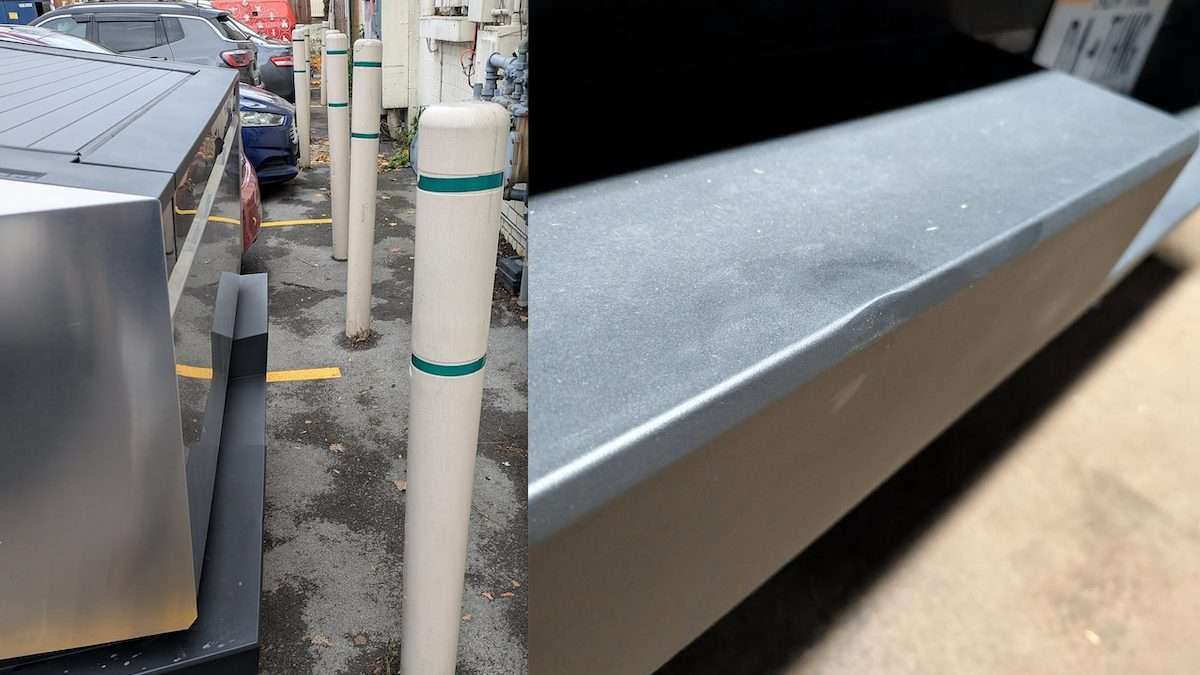

Despite the dent in his new Cybertruck, this CT owner's loyalty to Tesla and FSD remains surprisingly unscathed. What would you do?
The Tesla Cybertruck represents a polarizing paradigm shift in automotive design, pairing ultra-hard stainless steel with cutting-edge electric performance. While its exoskeleton promises unparalleled durability, the underlying technology, particularly its advanced driver-assistance features, continues to be the ultimate proving ground for Tesla's vision. One owner's recent experience provides a stark reminder of the financial and technological risks inherent in this high-stakes game.
A Cybertruck owner recently took to social media to detail a costly encounter with the latest version of Tesla's Full Self-Driving (FSD) software. His report highlights the critical and ongoing challenges associated with entrusting complex driving maneuvers to a supervised artificial intelligence system.
Here is Fernando Diaz's report, posted to the Cybertruck Owners Only Facebook group:
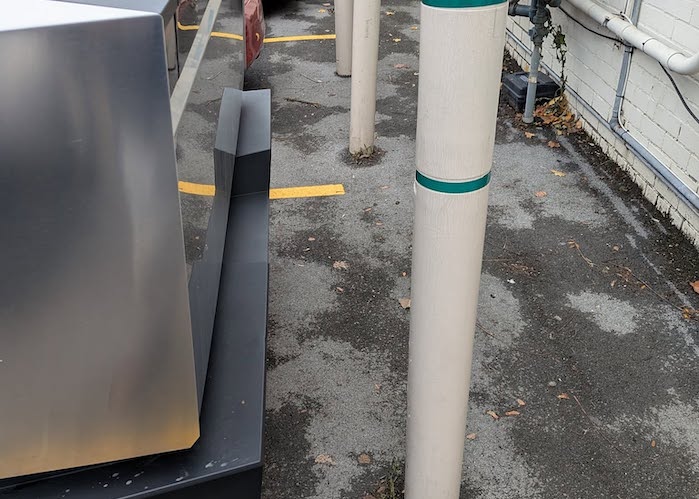
"Well, this is my first try at FSD v14 in my Cybertruck. It was good until my CT backed up into a pole, denting my bumper. Yes, I know it's supervised software. I'm not criticizing Tesla, Elon Musk, or the Cybertruck. I still love my CT."
FSD v14 is a Work In Progress
This candid quote from Fernando Diaz perfectly encapsulates the central paradox facing every Tesla owner who engages with the Full Self-Driving system, especially the new, highly touted V14 release. While he acknowledges the "supervised" nature of the software—meaning the driver is ultimately responsible and must remain vigilant—the incident itself illustrates the fine line between advanced assistance and outright complacency. The fact that the vehicle, while performing a low-speed maneuver like backing up, failed to detect a static object like a pole points to a significant blind spot within the V14 neural net, a problem potentially magnified by the Cybertruck's unique body architecture and reliance on a vision-only system.
Furthermore, Mr. Diaz's immediate dismissal of blame toward Tesla or the Cybertruck, declaring "I still love my CT," speaks volumes about the enthusiasm of the early adopter community. This loyalty, however, does not erase the financial reality of the situation. Fernando is not alone; a quick look at the Facebook thread reveals other users echoing similar concerns regarding the erratic behavior of FSD v14.
Owners are reporting increased instances of "brake stabbing," unnecessary lane-change maneuvers, and difficulty with slow, complex urban tasks, precisely the kind of scenarios where a static pole becomes an unexpected hazard. The collision rate for vehicles using FSD (Supervised) may be low, but the emotional and financial cost of each incident is very real, especially for a vehicle with notoriously expensive repair procedures.
The Cybertruck was fundamentally designed to disrupt the automotive landscape, driven by four core objectives:
- Toughness and Durability: To utilize an ultra-hard 30X cold-rolled stainless steel exoskeleton that provides immense structural rigidity and is marketed as being virtually dent-proof and corrosion-resistant.
- Manufacturing Revolution: To simplify the manufacturing process by eliminating complex stamping and traditional paint shops, relying instead on simple bends of thick steel sheets.
- Unconventional Performance: To deliver sports-car-level acceleration (0-60 mph in under 3 seconds in top trim) combined with class-leading towing capacity, challenging the notion that EVs must compromise utility for speed.
- Futuristic Aesthetic: To realize Elon Musk's vision of what a "future" truck should look like, abandoning conventional pickup styling in favor of a radical, polarizing wedge shape inspired by science fiction.
Detailing the Owner's Story and the Cost of AI Missteps
Fernando Diaz's story of the pole collision is a clear demonstration that, despite the Cybertruck's armored shell, its plastic bumpers and underlying components remain vulnerable, particularly when the driver-assistance system makes a costly error. The low-speed nature of a backing-up accident often means the stainless steel exoskeleton is fine, but the damage is transferred to the less-protected fascia, which is notoriously expensive to replace due to the truck's unique unibody integration.
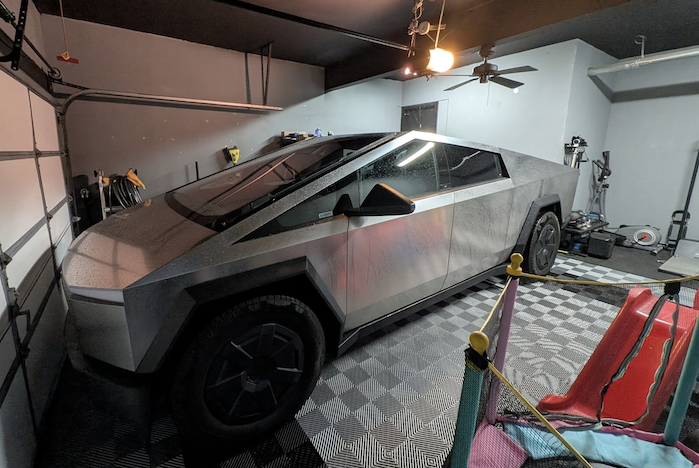
This incident aligns with broader reports of instability in the FSD v14 suite during low-speed, detailed maneuvers. While the system may handle long-distance highway driving effectively, it often struggles with the ambiguity of parking lots, driveways, and tight spaces. Another member, "MrJakk," on a related forum, noted his issues with FSD's anticipatory capability, stating that its "forward thinking isn't the best right now," forcing drivers to intervene manually.
This sentiment is key: when a driver becomes momentarily complacent because the AI seems "good," the system's inherent lack of foresight in complex geometry can lead to swift, costly consequences, as Fernando experienced when his Cybertruck backed into an immovable pole.
Comparing the Cybertruck to a Toyota Prius?
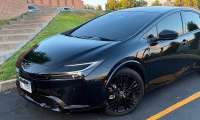
To truly understand the weight of Fernando's experience, it helps to compare the Cybertruck's predicament to a historical disruptor: the Toyota Prius. When the Prius first hit the U.S. market, it was criticized for its unusual shape and unconventional technology (the hybrid powertrain). However, the Prius's innovation cycle was fundamentally different from that of the Cybertruck.
Toyota innovated in mechanical and chemical efficiency, refining a known technology (the gasoline engine) with a new one (a battery and electric motor), ensuring that the core driving experience remained consistently reliable and predictable. The Prius represents an innovation based on mechanical maturity.
The Cybertruck, by contrast, is attempting simultaneous, radical innovation across three fronts: material science (the exoskeleton), form factor (the design), and artificial intelligence (FSD). The challenges facing Fernando and other Cybertruck owners are thus exponentially greater.
A scratch on a Prius bumper means a cheap body shop repair; a dent on a Cybertruck, especially one caused by an AI error, can trigger a nightmare of proprietary panel repair and diagnostic costs, sometimes quoted in the thousands of dollars, even for minor damage. While a Prius might have had an early hybrid battery issue, it never posed the risk of an unprompted, software-driven crash into a fixed object.
The most critical difference lies in the nature of the owner relationship. Prius owners bought into proven reliability and efficiency. Cybertruck owners are buying into a beta test, not just for a new truck, but for the fundamental driving experience itself. Fernando's immediate declaration, "I still love my CT," is the language of a committed early adopter who understands he is paying the "early-adopter tax," a tax that includes significant monetary expenses, inconvenience, and the emotional toll of dealing with a still-buggy AI. This loyalty fuels Tesla's development, but it also means owners are acting as the primary (and costly) QA team for an unproven technology.
In The End
Ultimately, the story of Fernando Diaz and his dented bumper serves as a crucial public service announcement. It relates directly to the thousands of other Cybertruck owners who are currently testing the limits of FSD v14. The pole collision underscores the necessary vigilance required, confirming that FSD is not yet a fully autonomous system, but a sophisticated, occasionally error-prone, advanced cruise control. Until the software matures, Cybertruck owners must realize that the cost of an AI misstep is measured not just in pride but in hard, expensive repair bills.
Tell Us What You Think
Does an incident like this, where supervised FSD causes minor damage, make you less likely to trust or use the software, or is this just an expected part of being an early adopter of breakthrough autonomous technology? Let us know in the red Add New Comment link below.
I'm Denis Flierl, a Senior Torque News Reporter since 2012, bringing over 30 years of automotive expertise to every story. My career began with a consulting role with every major car brand, followed by years as a freelance journalist, test-driving new vehicles, which equipped me with a wealth of insider knowledge. I specialize in delivering the latest auto news, sharing compelling owner stories, and providing expert, up-to-date analysis to keep you fully informed.
Follow me on X @DenisFlierl, @WorldsCoolestRides, Facebook, Instagram and LinkedIn
Photo credit: Denis Flierl via Fernando Diaz
Set Torque News as Preferred Source on Google
Follow us today...


Comments
The first question that must…
Permalink
The first question that must be addressed, of course, is why on earth did this bloke rely on FSD, right?