
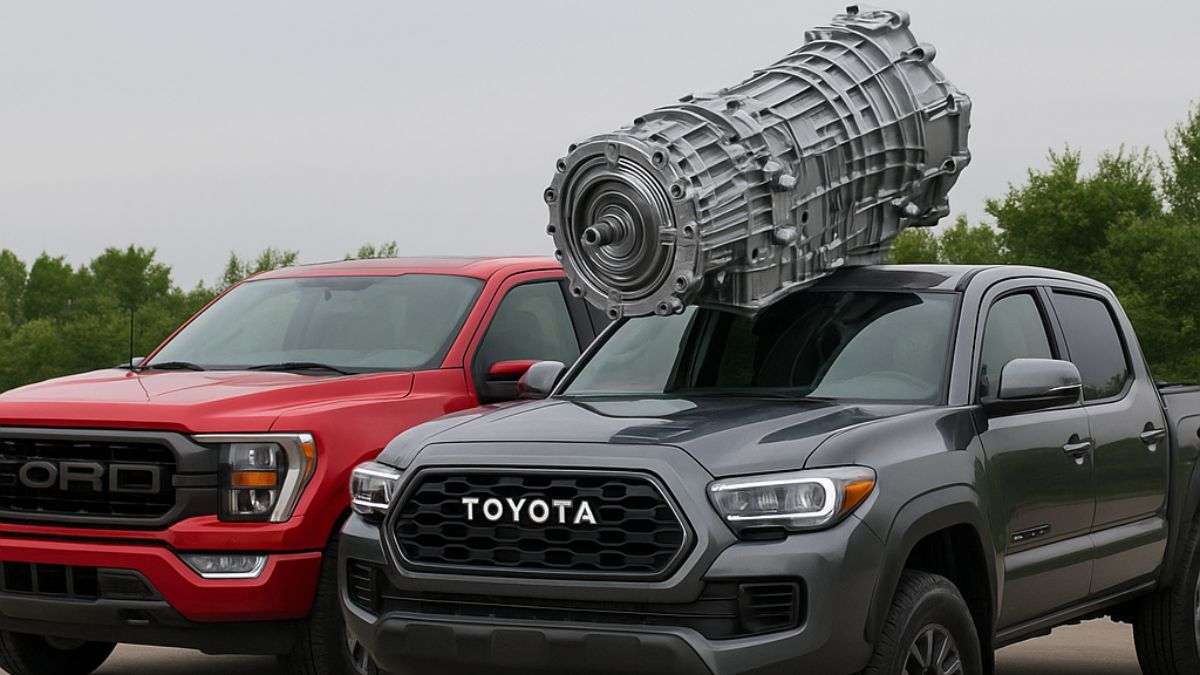

You don’t go from a 2500HD Duramax with an Allison transmission to a midsize Tacoma without raising eyebrows. In truck circles, that's like trading in a Harley-Davidson Road Glide for a Honda Rebel. People will assume you’ve given up something sacred. Raw power. Diesel torque. Big-boy energy. But that’s not what Neil Perry did. He didn’t downgrade, he recalibrated. And what’s more unexpected is that he doesn’t miss the size, the grunt, or the diesel hum in the way many would expect. Instead, he discovered something else. A quieter kind of satisfaction that doesn’t get enough airtime in truck conversations.
“I went from a 2002 2500HD Duramax-Allison Crewcab to a 2014 Ford F-150 Supercrew 5.0 to a 2021 Toyota Tundra 1794 to a 2023 Tacoma OR 6’ bed with Premium, Advanced Tech, and LED packages. Money wasn’t a factor in my downsizing of trucks. Lifestyle changed. We’re emptynesters now, so I sold my boat b/c it’s too difficult to solo load and unload. Cleaned out my garage so both my wife’s suv and my Tacoma could easily fit in our garage. I miss the raw power of my old turbo-diesels and gas v8s but my Tacoma fits my lifestyle better. It’s easier to park and drive in the congested suburbs I call home. No regrets.”
No regrets. That’s the part that stuck with me. In a culture that worships torque numbers and payload stats, what happens when your needs shift and your garage becomes more important than your towing capacity? Neil didn’t give up his truck for a car. He downsized, yes, but with purpose. And this story gets even more compelling when you realize this wasn’t about saving gas or making payments. It was about right-sizing to real life.
Neil was answering a question posed by Tad Willy in the 2016-2023 Toyota Tacoma Owners Group, who asked, “How many of y’all left a F-150 to get a Tacoma and are much happier now?” Now that’s a spicy question in truck forums, and as expected, the replies covered the full emotional spectrum. Some shared regret, others relief, and a few felt like they’d just escaped a marketing trap.
Vincent Miller chimed in, backing Neil with this: “Same. I’ve had big trucks. Chevy and Rams. Miss my power, but downsized due to an empty nest as well and got a 2020 Tacoma with 48,000 miles on it last year. Perfect for just me.”
That phrase - “perfect for just me” - feels like something many truck buyers don’t give themselves permission to say. We’re often sold on more, bigger, better. More power, more features, more prestige. But what if “just right” is better than “just in case”? You don’t need 10,000 pounds of towing if your weekends no longer involve a boat or trailer. Yet many still cling to that capability as a badge of preparedness.
In a closely related story, one Tacoma owner shared how he unexpectedly traded his Tacoma for a 2012 Ford F-150 Lariat after years of assuming bigger meant better. You can read how that transition played out in this eye-opening experience.
But what if your truck just works, even if it’s not perfect?
Tim Johnson had a practical take after switching from a 2015 F-150 with just 32,000 miles to a 2022 Tacoma SR5. “I loved everything about the F150 better except the continual problems with misfire, cats, integrated wheel ends, brakes etc. If the Tacoma continues being reliable I will be happy to continue driving it.”
This gets to the heart of something we don’t talk about enough. Reliability is a superpower, especially when you no longer have the time or interest to wrench on your truck every other month. Some trade raw speed for peace of mind. And they sleep better because of it.
But not everyone saw things through the same lens. Cody Bollinger didn’t hold back: “I have both and honestly my 2014 F-150 is better in every possible way.” And Derek Hazelton offered a unique twist. He moved from a 2008 Tahoe to a 2017 Tacoma. It was fun at first, he said, but cramped and slow. Eventually, he switched to a Bronco, citing resale value as the best part of the Tacoma.
That’s worth exploring. The Tacoma’s resale value is borderline untouchable, and if you’re curious why people stay loyal to this truck, that’s one of the key reasons. As new truck prices hit dizzying heights, vehicles like the Tacoma have become rolling assets. Want proof? One Tacoma owner shared that they traded their Ford Bronco Sasquatch for a Tacoma TRD Off-Road for better towing, truck bed utility, and a longer-term fit as covered here.
But let’s pause and ask a more human question. What if the pursuit of “better” is getting in the way of “enough”?
In our obsession with power and prestige, we forget to ask how our trucks actually fit our lives. Neil did. He gave up turbo diesel torque because his life no longer required it. He traded driveway dominance for easier garage parking. That’s not giving up. That’s growing up. And in a world where everyone is trying to show off, there’s something unexpectedly respectable about that.
Think about the broader trend here. People are ditching full-size trucks not just because of price or fuel economy. They’re realizing that oversized vehicles are a mismatch for urban living, tight parking spaces, and a post-toy-hauling life. Trucks are supposed to work for us. Not the other way around.
You can even see it in product trends. Just look at the rise of garage-friendly modular storage systems. These aren’t luxury purchases. They’re problem-solvers for people like Neil, who want their vehicles and lives to fit together cleanly. And they hint at a shift in values. Convenience is becoming just as important as capability.
Meanwhile, the industry keeps trying to sell us more truck than most people need. Have you looked inside a new F-150 Platinum lately? This 2024 Ford F-150 Platinum costs over $85,000 and still comes with plastic trim and no V8. Somewhere along the way, the lines between luxury and usefulness got blurred. A Tacoma may not give you massaging seats, but it gives you a truck you can trust to start, work, and sell high later.
And if you think full-size truck ownership is all upside, consider this: Some Ford F-150 owners have been battling serious issues like misfires, fuel inefficiency, and dealer misdiagnoses. That’s not a knock on Ford, it’s a reminder that bigger often brings more complexity. And more complexity means more things to go wrong.
The moral here? Know yourself. Know your needs. And don’t buy a truck for the version of yourself that existed 10 years ago. Buy for the life you’re living now. Being honest about that doesn’t make you soft. It makes you smart. It makes you adaptable. And in today’s world, that’s a virtue worth celebrating.
Downsizing From a Full-Size Truck: What You Actually Lose vs What You Unexpectedly Gain
Many truck owners feel hesitation when moving from a full-size powerhouse like the F-150 or Tundra into a midsize truck such as the Toyota Tacoma. The immediate concern is often loss of towing capacity, reduced interior space, and less “on-road presence.” If you’ve owned a 2500HD or an F-150 with a V8, the Tacoma's 3.5L V6 or 4-cylinder may initially feel underwhelming in terms of acceleration or torque. Payload drops too, and there’s no denying that towing a camper or boat may be more challenging.
But the unexpected gains are what keep Tacoma owners loyal. Parking in crowded shopping center lots becomes less of a stress test. Tight neighborhood turns and narrow driveways no longer feel like obstacle courses. Fuel efficiency is better, insurance costs often go down, and it’s far easier to maintain over time. For many empty nesters or solo commuters, the full-size truck begins to feel like carrying a suitcase to go get the mail. You start questioning the logic of “more is better.”
Before making the switch, carefully assess your real-world use case. If you're no longer towing regularly, or if your large truck sits unused for days on end, you may be holding on for pride more than practicality. Downsizing can feel like giving something up, but for many, it’s more like giving something back - time, peace of mind, and a better fit for the lifestyle they live today, not the one they lived a decade ago.
Why Toyota Tacoma Resale Value Is Among the Best in the Truck Market
The Tacoma consistently ranks among the top trucks for resale value, often retaining over 60 percent of its original price even after five years. That kind of depreciation resistance is not just unusual, it’s rare. And it’s one of the biggest reasons why owners like Derek Hazelton, despite outgrowing the space, still call the resale value the best part of owning a Tacoma. In fact, this resale strength has been confirmed year after year by independent sources like Kelley Blue Book and iSeeCars.
This means you can buy a Tacoma, drive it for a few years, and still recoup a sizable chunk of your investment. That’s not typically the case with larger trucks, especially those that depreciate rapidly or are riddled with costly maintenance issues. If your 2015 F-150 has a misfiring engine or a faulty catalytic converter like Tim Johnson's did, selling it privately or trading it in becomes more of a negotiation, and less of a win.
If you're on the fence about buying a Tacoma or holding onto one, remember that resale is a safety net. Whether you want to trade it in later for something larger, like some owners who move from Tacoma to Tundra, or pivot into a completely different category like an SUV or electric truck, the Tacoma gives you flexibility. To see how resale impacts long-term ownership, check out this story about a Bronco owner who traded into a Tacoma TRD Off-Road for better towing and bed usability.
Garage Fitment and Suburban Practicality: A Tacoma Advantage That’s Hard to Quantify
One of the most underrated advantages of midsize trucks is how easily they fit into modern garages. Neil Perry brought this up in his post, and it’s a detail that often gets overlooked until it becomes a daily frustration. Full-size pickups are getting larger every year, both in length and height. Many newer homes built in the last decade weren’t designed with 22-foot trucks in mind. And that’s not even accounting for lift kits or extended cabs.
A Tacoma, especially with a 6-foot bed and double cab, fits much more comfortably in standard two-car garages. This means you're not forced to park diagonally or sacrifice indoor space just to store your truck. It also makes loading gear, groceries, or tools far easier, especially if you’re trying to avoid squeezing around fenders every morning. The practicality doesn’t stop in the garage. In tight suburban neighborhoods where streets are narrower and parallel parking is real, Tacoma drivers spend less time adjusting and more time arriving.
This concept has gained importance as trucks get taller, wider, and bulkier. Ford’s recent 2025 redesign of the F-150 Lobo street truck, covered in this full look at the F-150's new direction, illustrates how size and design continue to grow. While it might look aggressive, it also pushes the limits of what fits in normal spaces. The Tacoma, by contrast, slots in without the drama. That’s something every buyer should measure, not just in inches, but in daily convenience.
So what do you think?
Have you downsized from a bigger truck to something smaller, like a Tacoma? What did you gain or give up in that trade?
What factors matter more to you now when choosing a truck - power, reliability, resale, or how it fits your lifestyle?
Tell us your story in the comments below.
Armen Hareyan is the founder and Editor-in-Chief of Torque News. He founded TorqueNews.com in 2010, which since then has been publishing expert news and analysis about the automotive industry. He can be reached at Torque News Twitter, Facebook, Linkedin, and Youtube. He has more than a decade of expertise in the automotive industry with a special interest in Tesla and electric vehicles.
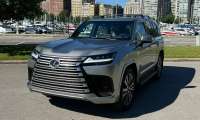
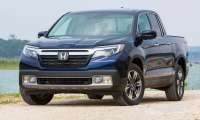
Image sources: Armen Hareyan collage and Jeffrey Dischinat's Toyota Tacoma, who also participated in the open group's discussion about downsizing from a big truck to a smaller truck.
Set Torque News as Preferred Source on Google
Follow us today...



Comments
Many years ago I went from a…
Permalink
Many years ago I went from a 03 Ram Cummins 2500 to a Dodge Caravan minivan. Didn't need a big hauler anymore. After 2 minivans back to a 3/4 ton 2015 Savanah van for towing a RV. Now I'm in a 2019 GMC Yukon XL for towing the RV. In a few years I'll be back into something smaller after the RV is gone. People always change what their driving requirements dictate. Not a big deal. Go with the flow. Maybe a hybrid Prius next?? Lol!
This is nothing new to me. I…
Permalink
This is nothing new to me. I've said it for years. Dummies buying a lot more truck than they'll ever use is the reason people who really need a truck can't afford one. A bunch of yuppie puppies who do nothing but go grocery shopping in their big ass to trucks.
I bought a 2022 TRD off road…
Permalink
In reply to This is nothing new to me. I… by Antonio (not verified)
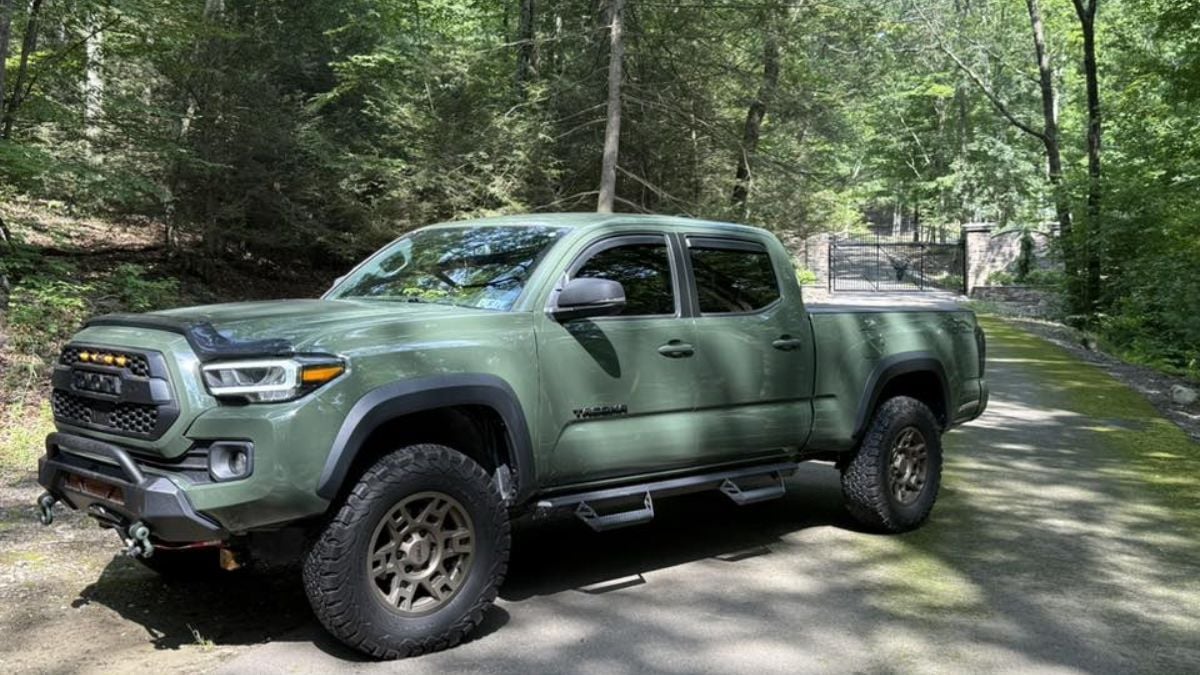
I bought a 2022 TRD off road Army green 6.2 bed Double cab .love it. I still own a 2000 2500 Suburban 4x4 . Both have their own purposes. Being a master auto technician with 44 years of experience. I made 3 upgrades to the Tacoma .1st MBRP 3 " Cat back performance dual exhaust system. Next I installed a Axiom speedform Throttle controller. Mainly to get rid of that Tip in hesitation. Next protect the light gray cloth interior. Lucky man club had the imitation Leather seat covers that had panels of a very good match of the Army green, stitching same color.5 seats and all the head rest. The truck is rated at 22 mpg. With the controller set at mode 1 level 6 . My mileage at 70 mph is 30 mpg. Let's see that from a F150 or Duramax. The exhaust and tuner. Gave me more power good sound and better mileage.
I have bounced between full…
Permalink
In reply to This is nothing new to me. I… by Antonio (not verified)
I have bounced between full sized RAM trucks and Tacomas several times over the last 25 years, each time I went in the opposite direction was not because of quality issues, it was because of right sizing.
I do want to point something out about the Tacoma. The resale value myth is that the Tacoma guide it's value... This is mostly true but not totally. I have never owned a Tacoma TRD branded model, I have always used my Tacoma for utility, not for turning heads with TRD decals. I have found that a base or SR5 Tacoma won't get you a stellar trade in. My Tacomas have all been SR5 double cab V6 4x4s and I have been told by dealers that "nobody wants an SR5". Whether or not that is true, they used it to low ball the trade. My last Tacoma, a 2018 SR5, I sold myself and it took me a while. The perspective buyers all want a TRD pro or Off-road. I did end up selling it to a couple who came from North Carolina to California to buy it but it took me 3 months and in the end the price went down $4600 to what I felt was an okay price and about inline with a Ranger of the same vintage. The RAM dealer offer for a trade was another $3000 under what I sold it for so, resale value? Not so much. One thing is true, if you want a used Tacoma, they are hard to find!
I again needed more towing capacity and I have had little to no trouble with my past RAM trucks (sounds like I should definitely stay away from F-150s!) and now with the current generation of Tacoma being priced right up with full sized trucks with no room to negotiate despite dealer lots being full of new Tacomas I'm wary of buying a new one right now.
My new Hurricane powered RAM gets about the same mileage that the iforceMax Tacoma does, can tow 5,500 more pounds, has twice the interior space, is much more comfortable and with all the incentives in the full size market costs about the same with a lot more options and tech.
The Tacoma use to be a great value with bulletproof a quality, the new model is an abysmal value with questionable quality. Is it slightly smaller?! Yes, is that enough of a selling point? No
I own a 20006 Toyota tundra…
Permalink
I own a 20006 Toyota tundra limited and it has a 4.7 engine with a timing belt and cast a lot to fix when being on ssi . I tried a small pickup a long time a go and I can't fit in one. Being 6ft 4in. Tall is like sitting in a small box. If the Toyota Tacoma had seats put in for tall people and not midgets I would get one
I have an 2012 F150…
Permalink
I have an 2012 F150 Supercrew 6' bed, V8. It's obviously paid off. Used for moving RV for awhile. It has been very well cared for. With 120K miles the biggest expenses have been AC compressor, fuel pump, brakes. Tuneup. Runs like new with 22 mpg on highway. (Less w/ headwind) 15 -18 mpg in city. Still dealer resales for 11 to 15k. Paid 29k new. Can't beat that with a stick. Love the high view, great ride. Does better in cosumer report than 2011 or 2013. Most repairs i can do myself now and is better than making truck payments for years.
Came from 2015 Toyota Camry…
Permalink
Came from 2015 Toyota Camry that I handed down to our 16 year old Son, purchasing 2024 GMC Canyon. I'm in the Twilight of my Profession and wanted to make my 1/2 Hour to 1 Hour Commute more fun. Canyon's a sharp looking, taller, peppy truck with booming Android Auto, Adaptive Cruise, Blind Spot Monitoring, 360 Camera and s-load of features way cheaper than any Toyota Tacoma. Sure resale value's not comparable but for me, as this Article emphasizing Personal Choices, with Retirement plus another kid to put through College, I'm not looking to trade-in my daily commuter that I love to Drive! Test drove F150, Silverado and Titan and appreciate and at the same time don't appreciate their size! My younger Days drove various Cars, Minivans and SUV's from VW Jetta to Chevy Tahoe and feel for me, at this point of my Life, my Canyon is a Perfect Fit!
Every afternoon I trade my…
Permalink
Every afternoon I trade my 500hp, 1600 lb-ft torque turbodiesel truck for a 170hp 3,200 lb carbon fiber EV hatchback.
Nothing beats the right sized tool for any job.
The truck is perfect for hauling 40 tons of cargo.
The i3 is perfect for quietly hauling my fat ass home each night.
I traded my 2020 F150 with…
Permalink
I traded my 2020 F150 with the 2.7l twin turbocharged engine for a 2025 Tacoma. I like both vehicles and have no complaints with the F150, especially the power and acceleration of the twin turbocharged engine, as well as the large bed capacity.
However, my wife had a retinal detachment, and she had trouble parking the F150. It also didnt have blind spot monitoring, which she depended on and was used to in our Jeep Grand Cherokee.
So, when I traded, I made sure the Tacoma had blind spot monitoring. I managed to find a new extended cab with the features I wanted for just over $38,000, which was a pleasant surprise. I'm going to upgrade the steel rims to aftermarket alloy rims, and I'm going to see if i can upgrade the detuned 228 hp turbocharged 4 cylinder to 278 hp without voiding the warranty or costing an arm and a leg.
In summary, both are good vehicles - just a matter of what works best for you.
Went from a 2004 F250 diesel…
Permalink
Went from a 2004 F250 diesel which i had owned 11 years and 200k miles to a 2022 Ford Ranger. It's roomy and comfortable, and easy to park. I'm retired, and it's the "right size" for me. Strong enough to tow 7500lbs which would handle most boats I'd wish to own, and it averages 24 mpg in the Summer. It works perfect for me at this stage in life.
My son's say I should have bought an F 150. My reply, you don't need a sledge hammer to drive home a tack.
Went from a 2004 F250 diesel…
Permalink
Went from a 2004 F250 diesel which i had owned 11 years and 200k miles to a 2022 Ford Ranger. It's roomy and comfortable, and easy to park. I'm retired, and it's the "right size" for me. Strong enough to tow 7500lbs which would handle most boats I'd wish to own, and it averages 24 mpg in the Summer. It works perfect for me at this stage in life.
My son's say I should have bought an F 150. My reply, you don't need a sledge hammer to drive home a tack.
I’ve switched from a Chevy…
Permalink
I’ve switched from a Chevy 2500 Duramax to a 2025 Toyota Tundra. Not quite the downsize of the Tacoma. I agree with everything about the Tacoma. I drove one for work for a while loved the easiness of getting around a city but I still tow my side by side about 400 miles and a Tacoma would struggle with that. So I stepped down to the Tundra. I really like the Tundra and don’t miss the diesel at all. The ride is so much better on the Tundra. I also agree with over selling the power, 90% use them for grocery getters. That’s ok. The crazy interiors are over kill also. Way too many electronic things to go out. Most people don’t keep their vehicles as long as I do. I keep mine on average 14 years.