

When it gets cold outside, many of us notice that our EVs start to act differently. Not only do we see lots of social media comments about loss of range, more observant EV owners have noticed that the amount of electricity needed to charge their vehicles increases when the outside temperature drops. For any of you wondering if this is true, we decided to look at the science. Before we do that, here’s an interesting comment by Devin Trainor on the Ford F-150 Lightning Owners Group Facebook page that got us thinking about this topic:
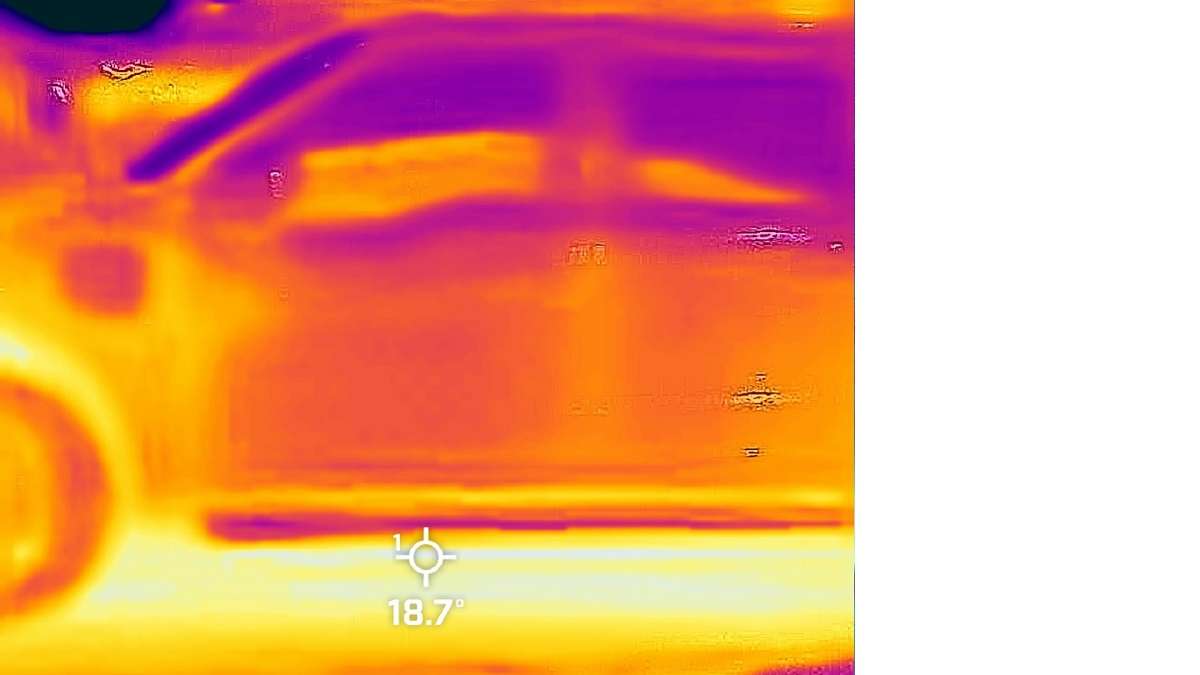
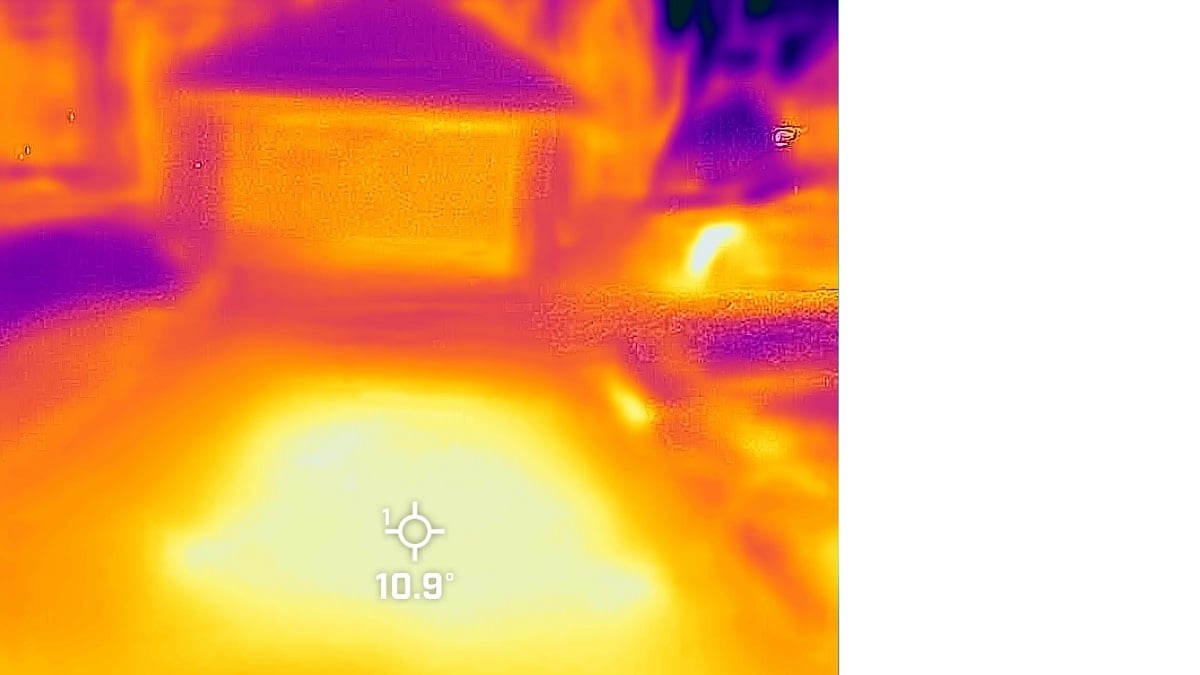
“Keeping a hunk of metal warm in the driveway all winter costs kWh. I took some thermal camera shots while charging the other night. It was 2.7F outside in Maine when I took these. I finished charging from 80-90% then moved the truck to check driveway temp.
Keeping garaged if possible is a benefit. I drive a 2024 Ford F-150 Lightning Flash ER.”
Austin Sissel responded with his observations:
“While plugged in below freezing temps, it uses quite a bit of energy per evening to heat and condition the battery to be ready for the longest range possible. I quit plugging in every night to avoid that cost, as a charge will usually last me around a week in the winter to get below 40-50%. My Ford F-150 Lightning does amazingly well with a frozen battery and if it warms up during the day that lost range will come back as the battery heats up.”
Eric VanOast added an anecdotal comment:
“This makes sense because I have noticed my truck melts the snow on my driveway.”
A Scientific Study of Battery Charging Temperatures
A recent study by Germana Trentadue shows very stark effects of outside temperature while charging an electric vehicle. It explores how temperature affects the real efficiency of DC fast charging for EVs. The researchers studied the charging chain from the electricity coming out of the wall to the power that actually reaches the EV battery. They compared mild weather at about 77 °F with deep cold at about 5 °F and minus 13 °F, as well as heat at about 104 °F. The results show that cold weather can dramatically reduce charging efficiency while heat affects it far less. Although the tests were performed with fast chargers, the results relate to the residential Level 2 chargers that most EV owners use at home
The team used a climate chamber that could precisely control conditions from minus 13 °F to 104 °F. They tested seven commercial 50 kilowatt fast chargers along with two electric vehicles. Measurements included AC voltage and current at the wall along with DC voltage and current at the vehicle inlet. They calculated an energy return ratio, which shows how many kilowatt hours the charger actually pulls from the wall to supply one kilowatt hour to the battery.
The chargers came from several manufacturers and were designed to operate outdoors across a temperature range that matched the conditions in the chamber. The test vehicles included a model with a 24-kilowatt hour battery and a model with a 33-kilowatt hour battery. Both used lithium-ion cells and both followed standard battery management strategies to protect the pack during fast charging.
In mild weather at about 77 °F, the chargers performed close to their rated values. Measured power conversion efficiency was around 90%, which means that only about 10% of the energy from the wall was lost during the charging session. The pattern of charging power also matched expectations, with high power early in the session and reduced power as the battery neared 80%. These baseline values helped the researchers compare how far performance shifted once temperatures moved away from normal conditions.
The next topic examines what happens in heat. At about 104 °F, the chargers continued to perform well. Efficiency stayed close to the mild weather value. In some cases it even rose slightly because lithium-ion cells have lower internal resistance at warmer temperatures. Heat does accelerate battery wear in general, yet from a short-term efficiency standpoint the effect was relatively small in this test.
Charging in Cold Temperatures
The most important topic addresses performance in cold weather. At about 5 °F and especially at about minus 13 °F, the chargers and vehicles showed steep drops in delivered power and large losses in efficiency. One charger dropped to about 39% efficiency at the coldest point, compared to up to 93% in the mild case. Some chargers also went into out of order states when exposed to deep cold. Cold temperatures increase internal resistance in lithium-ion cells, which makes it harder for the battery to accept charge. The battery management system also acts to protect the pack by reducing charge current, which lowers delivered power.
The study concluded by looking at what this means for real world EV charging. Many regions experience significant temperature swings, so chargers need to operate reliably in a wide range of conditions. Cold weather reduces charging power, increases energy losses, and can increase downtime. The researchers recommend that vehicle owners plan for longer charging sessions and higher energy use in cold regions, and place vehicles in a warm environment like a garage, if possible, to avoid cold outside temperatures.
Bottom Line
This study shows that fast charging in mild weather is efficient and predictable, while fast charging in deep cold requires far more energy and leads to slower charging. Hot weather affects performance less in the short term. Temperature turns out to be a major factor in how many kilowatt hours an EV truly uses for charging and how consistent and reliable fast charging feels to drivers.
The Ford F-150
The Ford F-150 Lightning arrived in 2022 as the electric version of America’s best-selling pickup and it quickly showed why many drivers consider it one of the most practical EVs on the road. The truck delivers strong performance with quick acceleration, confident towing, and a smooth driving experience that feels familiar to anyone who has driven a gas F-150. The Lightning stands out because it blends serious capability with the quiet, low maintenance simplicity of an electric powertrain. The large front trunk adds extra storage that truck owners find surprisingly useful, and the vehicle offers roomy comfort for families who want a truck that works for daily life as well as weekend projects. The F-150 Lightning also features Pro Power Onboard with full vehicle to home capability, which lets the truck supply electricity to a house during an outage.
What Do You Think?
How much extra electricity have you noticed your EV using during winter charging, and how did you discover it?
What temperature changes in your region affect your EV the most, and how do you adjust your charging habits when it gets very cold?
Chris Johnston is the author of SAE’s comprehensive book on electric vehicles, "The Arrival of The Electric Car." His coverage on Torque News focuses on electric vehicles. Chris has decades of product management experience in telematics, mobile computing, and wireless communications. Chris has a B.S. in electrical engineering from Purdue University and an MBA. He lives in Seattle. When not working, Chris enjoys restoring classic wooden boats, open water swimming, cycling and flying (as a private pilot). You can connect with Chris on LinkedIn and follow his work on X at ChrisJohnstonEV.
Photo credit: Devin Trainor (with permission)
Set Torque News as Preferred Source on Google
Follow us today...



Comments
No duh, thought that was…
Permalink
No duh, thought that was common knowledge. Guess not. Lol
Way to keep it classy, Bob. 👍
Permalink
In reply to No duh, thought that was… by Bob (not verified)
Way to keep it classy, Bob. 👍
Yes it is true thar EVs…
Permalink
Yes it is true thar EVs typically run heaters for the battery when it is cold for charging efficiency. If you are DC fast charging, you will be running the heater for much less time to keep battery temps where they ought to be, so there is less wasted.power when fast charging, however, DC fast charging is very expensive compared to charging at home overnight. So you need to look at the cost delta to see which works better for you. My car being in a garage stays well enough above freezing to not make too much difference but it is noticeable.
Why was the inclusion of…
Permalink
Why the omission of cost differential and total kwh measure data from this article? The title indicated "proven" by thermal imaging and "cost kilowatts and money".
The measuring of kwh was indicated as being calculated, as was the energy return ratio. Yet, no actual data given for reference. All the reader got was a few ambigiuos percentages.
Yes! This is whatni was…
Permalink
In reply to Why was the inclusion of… by Vaun (not verified)
Yes! This is whatni was thinking aswell.
It's almost 2026 and this…
Permalink
It's almost 2026 and this article is written like this isn't obvious information. Everyone knows, or should know by now, that you can't charge lithium ion batteries when they are below freezing. You have to warn them to above freezing first. That's not anything to do with EVs in particular. Obviously it's going to take a good amount of energy to heat that battery. So don't waste all that energy heating it if you only are putting a few % in.
Who buys something as expensive as an F150 EV and didn't do the 2 minutes of googling to know that?
I find it odd that they only…
Permalink
I find it odd that they only went to 104F for the heat.
I live in East Valley of the Greater Phoenix Area.
Currently my winter temps are highs of 78-81F with lows of 48-51F; which from this article would be the mild temperatures.
The summer is where I lose chatging efficiency. Summer Average is above 110F and it doesn't appear that article talked about Heat loop from charging an EV in a garage.
-The hot ambient in the garage gets how enough for EVSE to hit thermal protection and lower amps or outright turn off.
^Some equipment only rated upto 104F ambient, some upto 113F and some 122F and some commercial get rated for 140F ambient.
A common occurrence here in Greater Phoenix Valley area is that charging in a hot garage creates a heat loop where the vehicle tries to cool down by puming out hot air into garage but then intaking the same hot air, with inadequate ventilation for fresh ambient air exchange. (Residents are recommended to open Garage door or charge outside)
Funny part some of the Tesla (branded)Solar inverters are only rated to 113F ambient. (Have a neighbor whom's solar kept turning off during the summer days and would not aqeuatelty charge his power Wall (rated to 122F ambient).
My Solar installation was from SolarCity...now Tesla, but has 3 ABB Aurora Solar inverters which state up to 140F ambient, but even then those models have reports of deregulating above 104F)
I think I'd rather follow…
Permalink
I think I'd rather follow Tessa's recommendation to leave my EV plugged in even when it's not charging during cold weather to ensure my battery lasts as long as possible cuz then it can pull from the wall to keep it warm versus putting strain on the battery.
Thanks for your comment Arod…
Permalink
In reply to I think I'd rather follow… by Arod (not verified)
Thanks for your comment Arod. The challenge is for a lot of recent, younger EV owners who live in apartments and can’t charge at home (or easily leave their EV plugged in all of the time). I’ve been looking into ways to help them have a good EV ownership experience, and hopefully this article will add some insight.
Some misleading stuff in…
Permalink
Some misleading stuff in here. like saying the range comes back when the temperature warms up. Maybe on the meter that guesses range, but range used in low temp is lost range. Also.. no real data here.. use an emporia vue and measure what the car thinks it cost to charge vs what the panel used on the charge circuit and figure out how many kwh it used to condition the battery.
I have owned my F-150…
Permalink
I have owned my F-150 Lightning for over a year and a half, and I am extremely disappointed with this vehicle. Compared to other EVs on the market, its efficiency and overall performance are unacceptable. The energy drain is ridiculous, especially in cold climates like Canada and parts of the U.S., where the range drops dramatically and makes the truck unreliable for real-world use.
This vehicle wastes time, energy, and money. While it may perform slightly better in warmer regions, it clearly was not designed or tested properly for cold weather conditions. Many other EVs handle these conditions far better, which makes this failure even more frustrating.
It is also important to note that my truck is equipped with two batteries, yet the performance is still unacceptable. Frankly, this vehicle feels more like a toy than a real truck or a serious means of transportation.
I am confident that thousands of owners share this disappointment. After just one year, the resale value collapses to nearly half of the purchase price, making it a terrible investment. I strongly hope the manufacturer provides a real and fair solution for buyers, because in its current state, this vehicle does not deliver what was promised.
Thanks for your comment…
Permalink
In reply to I have owned my F-150… by Sirwan khafaf (not verified)
Thanks for your comment Sirwan. Yes, rather than designing the F-150 Lightning from the ground up to be an EV (like the Mustang Mach E), it looks like Ford took a shortcut and simply put an electric drivetrain in the existing F-150 chassis. This probably attributes to its poor range. Because they are sometimes used for towing, trucks need to have exceptional range, like in excess of 400 miles (Chevy Silverado EV). It’s too bad, because I really liked the F-150 and it’s really sad to see Ford discontinue it.
We were on our third set of…
Permalink
We were on our third set of solar panels (replacing about every about every fifteen years) when we added the electric car and battery systems. It surprised us how much our usage jumped in the winter, but I do have to say that it wasn't as bad as our neighbor when he bought a just a car without doing panels. I can't imagine paying over $100 a month for electric. Even amortizing the cost of the panels, I'm below $50 average and both me and my wife are late in our IT careers, so we have a lot of gadgets plugged in these days. We did spec the last set of panels while we had all 5 kids at home as teenagers though. The credits we get back from the local elec co from the solar generating pays almost the whole electric bill most months.
I wonder what the green…
Permalink
I wonder what the green movement will say when the negative effect of heating the earth when charging battery is measured!😅
Who's paying you to write…
Permalink
Who's paying you to write this? Pre-conditioning or even a small garage heater don't cost much, or just start normally & get less range. All motors work less efficiently in extreme weather & it's been that way forever.
That is an interesting…
Permalink
In reply to Who's paying you to write… by Reade Mitchell (not verified)
That is an interesting question. I am an EV advocate. The article is simply meant to share some insights regarding charging in cold weather and, if possible, improve the EV ownership experience.
It's important to know that…
Permalink
It's important to know that lithium-ion batteries cannot charge efficiently at low temperatures, with performance issues starting around 32f. This is why vehicles like Teslas utilize battery conditioning: for optimal charging and maximum current delivery, the battery pack needs to be heated to near body temperatures, ideally between 80f and 100f for fast charging. When temperatures drop below freezing, the car must spend significant energy to warm the battery to a safe charging level (perhaps 40f or 50^f), which is a costly energy calculation. The colder it is, the slower the charger will be because it must spend more time on heating before it can charge the pack. This limitation is rooted in the physics of lithium; attempting to charge a cold battery risks permanent damage, as the chemical makeup of the cell can cause harmful lithium plating. While Lithium Iron Phosphate (LFP) batteries offer a better low-temperature threshold—charging can occur down to roughly -14f they still follow the same principle: you won't get full, maximum charging performance
For anyone not familiar with…
Permalink
For anyone not familiar with thermal camera images, it takes the hottest point as a setpoint for bright orange. So here, 10f is bright orange. If I keep my house cooler, my footsteps will show up as red. These images can make it look like it's too hot to touch.
Why would you not charge in…
Permalink
Why would you not charge in the garage. Heat the house as a bonus?
Is this real? You really…
Permalink
Is this real? You really wrote an article about an ev being less efficient in the winter? Have you been living in a hole? It's a battery...
One could say, cold weather…
Permalink
One could say, cold weather affects all vehicles cost to operate. The diesels will have their block heaters plugged in all night, 1 to 1.5kwh. Gas vehicles will start up at least 15 minutes early to warm up and de ice, while scrapping windows, wasting fuel dollars, plus exhaust. Tap the app and EV Blazer is warm and de iced, for pennies, no scrapping. No real world information, like how many input kwh to charge the Lightning a fixed amount, lets say %50. With all this temp. controlled enviroment there could be better information. Charge the Lightning %50, (%30 to %80) at 75F, record input kwh required. Next Charge the Lightning %50 (%30 to %80) at -20F, record input kwh required. You would now have the real information on extra cost of cold weather charging... Does charger efficiency matter? Only if doing a 8 hour road trip at -20F, and are worried about 10 or 20 extra minutes charging. Only thing that matters is how many kwh charged for. A Fastcharger at -20 is great, crank the heat to Max, visit restroom, grab a coffee, check email, read another EV article, and you are done, on your way toasty warm.
First and foremost, if you…
Permalink
First and foremost, if you’re charging an EV from 80-90% for basically NO REASON… because you already stated you can last a week on a full charge EVEN IN WINTER then you don’t know what you’re doing.
Over-charging ANY BATTERY and under-using it is perhaps the worst thing you can do.
Store batteries at 50%
Batteries left unused at 100% or <20% will degrade that battery.
Know what you’re doing.
Put your vehicle in the garage FFS
Why is it outside in the winter?
Do you enjoy scraping ice??!
Oh wow. Yet another reason…
Permalink
Oh wow. Yet another reason not to buy an EV (like I needed another). LOL
BTW, parking an EV inside a flammable structure is NOT recommended. So... run the risk of a fire - OR- pay more to charge outside during the winter.
When I plug in my gas pickup…
Permalink
When I plug in my gas pickup I used more electricity to heat the water. So I think yes you are using more electricity in the winter on you electric car or truck. So I think it is a horse a piece. Between the two with the electric truck you are charging and heating at the same time. But with a gas pickup you're just heat. And in the winter time if you notice when you drive a gas pickup or
you use more gas also.
Im surprised that this isn't…
Permalink
Im surprised that this isn't a known thing and common sense all batteries loose performance in extreme cold and heat
What do you expect from a…
Permalink
What do you expect from a product designed for quick sales in California? EVs are a death trap around here, where temps go down to -20 regularly. They are for liberals who've bought into the Great Carbon Con to roll out in the spring and put away in the fall. Not a primary vehicle except temperate coastal states.
Interesting article but I…
Permalink
Interesting article but I feel like more information on what the actual cost would be for the energy to heat the battery on cold nights. I'm sure there are lots of variables that affect this. But on average from what I read about the Lightning and as an owner of one in a cold climate, the extra cost is what I would consider minimal. $1 to $3 extra per session, if it's very cold and if it's parked outside on that cold night is what I'm reading. But it depends on electric rates. For me in Colorado where my night rate is about $0.10 per kWh, even an extra draw of 13 kWh overnight would be $1.30 for the session, if it is very cold (below freezing). More specific data and calculations would be useful aside from just saying "makes my driveway warm" which even an ICE vehicle can do.
So, charging produces wasted…
Permalink
So, charging produces wasted energy in the form of heat, and heating with electricity uses electrical energy? Whatever will science reveal next?
Cool pix, never thought of…
Permalink
Cool pix, never thought of looking at it that way, really innovative
Consumer Reports recently…
Permalink
Consumer Reports recently stated that EV's significantly start losing range when temperature drops below 40F. My electric bill is high enough. No thanks!