
As the autumn temperature starts dropping, we are seeing more comments about how electric vehicles perform in cold weather. The bad news is that it is a real issue. The good news is that there is a lot that you can do to manage EV range in cold weather, and we summarize a lot of suggestions below.
This has been a popular topic on social media. A common question, such as the one posted by Early_City191 on Reddit, is from new or prospective EV owners who live in cold climates:
“I'm doing some thinking about my next daily driver being an EV, but I understand range suffers in the cold. I've done a bit of poking around at what that means precisely, though most of what I've found is talking about winters with temperatures somewhere between 0-32F. I live in northern MN, and each winter we generally have a week or so with temps that can hit -40, so I'm curious - does anyone here have experience with performance at those temperatures? The EV would be stored/charged in a heated garage, and daily use is generally 30-50 miles, with occasional days requiring 100-200 miles for conferences/meetings.”
Defiant_Raccoon10 who lives in Norway responded:
“There's a reason why the world's highest EV adoption rates are in Norway. We see some low temperatures here as well.
In fact, I prefer an electric car on the very cold days because the car can defrost in a matter of minutes. There is no need to wait for the engine to warm up, and because I use the mobile app I can schedule the car to be nice and warm by the time I leave for work.
If your commute is 75 miles or less and your car has a rated range of greater than 300 miles, then you'll be fine even in the harshest of days.
You get the most range out of the car when you pre-condition (warm up) the car a good time before leaving in the morning. On very cold days it may take some time for the battery to reach its optimal temperature. Do this while plugged into the wall charger. If you have a charger available at work you should also consider pre-conditioning before leaving from the office.”
Sinister_Crayon gave some advice about charging:
“I would plug it in every night. Set your charge limit to something reasonable like 70-80% and just don't worry about it. When you pre-heat your car you're going to use electricity from the plug when it's connected, otherwise you'll be using up some of your battery. On really cold mornings it can take some juice to heat the car, and while it might not be "make or break" it can be a drop of a couple of percent from the night before in really deep cold.”
EVs in Winter
Electric vehicles handle winter well. New owners often hear rumors that EVs can’t perform in the cold, which is not accurate. Winter does change a few things, so expectations and simple habits matter.
Cold Weather and Range Loss
Let’s start with the little discussed fact that cold weather reduces gas-powered cars’ miles per gallon. In city driving at 20 degrees Fahrenheit, a conventional gasoline car’s mpg is roughly 15% lower than at 77 degrees F. On very short trips of about three to four miles, the drop can approach about 24%. Across models, the Department of Energy advises expecting about 10% to 20% lower mpg in city use and roughly 15 % to 33% percent lower mpg on short trips.
Whyt is this? Cold weather hurts mpg because engines and fluids are colder, warmup takes longer, air is denser, tire pressure falls, and winter gasoline can have slightly less energy per gallon. It’s not as noticeable because gas-powered cars typically don’t have computers that precisely monitor and project range.
Lower temperatures also reduces electric vehicles’ available range. Below about 40 degrees F, you may see a reduction of roughly 20% to 30% percent. The cause is battery chemistry. Lithium-ion packs work best when internal temperatures stay between about 50 and 110 degrees, with an optimal zone near 70 to 80 degrees.
Battery Thermal Management and Plugging In
Modern EVs warm or cool their batteries automatically. Keep the car connected to a charger so the system can draw power from the grid rather than the pack. A Level 2 EVSE is recommended because a standard 110-volt outlet may not be able to supply enough power for effective warming. However, if you don’t have a Level 2 charger at home, use a 110-volt outlet.
Preconditioning Before Departure
Use your EV’s key fob or mobile app to precondition. The car will heat the cabin through HVAC and bring the battery closer to its sweet spot. Preconditioning before unplugging the charger preserves your state of charge because energy comes from the wall charger and not your battery.
Rolling Resistance and Tire Choice
Snow, ice, and slush increase rolling resistance, which lowers efficiency for both EVs and gas-powered cars. Many EVs ship with eco tires that help in warm months. Winter tires add grip and safety in slippery conditions, although their deeper tread and softer compounds increase rolling resistance and reduce range.
Efficient Cabin Heating Practices
Blasting the heater drains energy quickly. Set the cabin near 70 to 75 degrees and lean on heated seats and a heated steering wheel if available. These features use far less electricity than warming all the cabin air, especially if you are driving alone.
Heat Pumps Versus Resistive Heating
Newer EVs often include heat pumps, which move heat more efficiently than resistive elements. Models without a heat pump, such as the Chevrolet Bolt, can use more energy for heating, while still delivering confident winter driving.
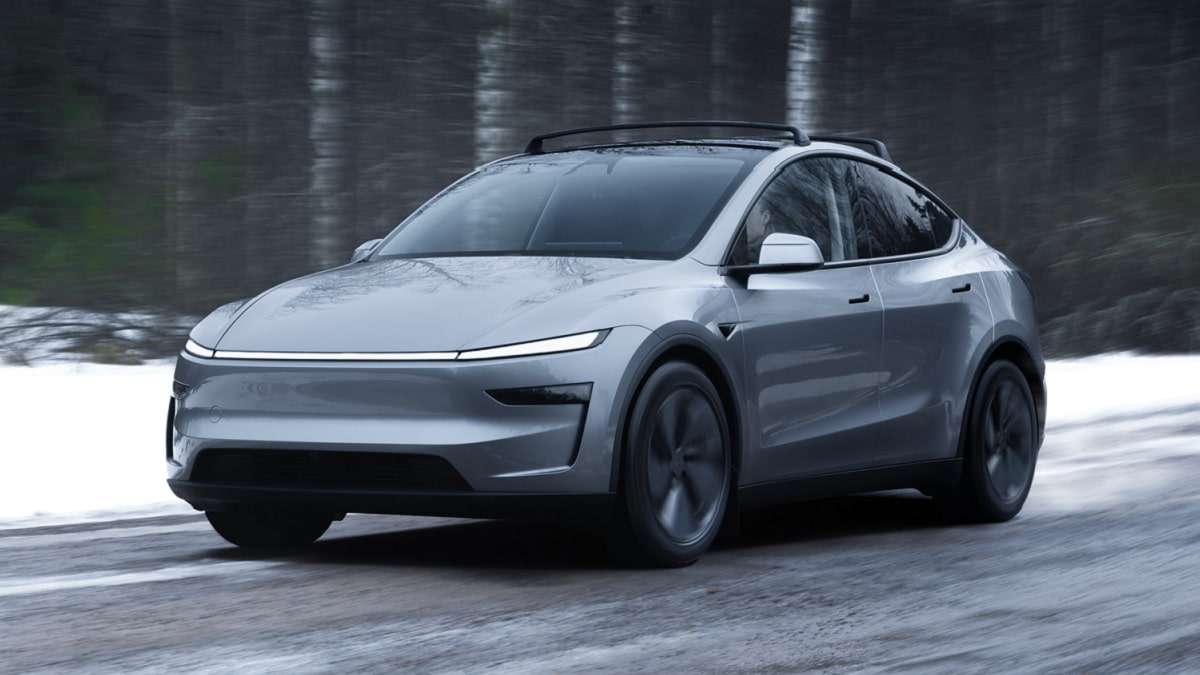
The Tesla Model Y was the first Tesla to use a heat pump for cabin HVAC, launching with the system in March 2020 alongside its “Octovalve” thermal architecture. The Octovalve routes the water glycol coolant wherever heat needs to go. It can switch among several internal positions to connect the battery, drive units, power electronics, cabin heat exchanger, radiator, and chiller in different ways. The design consolidates parts, lowers leak points, and improves efficiency compared with separate valves and hoses. Tesla has continued refining this manifold system on newer Model Y builds.
Heat pumps reduce the energy needed to warm the cabin in cold weather, which helps preserve driving range. Department of Energy testing shows HVAC power draw can be about 38% lower at 20 degrees F compared with resistive heat. Independent field data suggests heat pumps can deliver roughly an 8% to 10% percent winter range boost, depending on conditions. Alternatives in other EVs include resistive heaters with ceramic elements which require much more electricity.
Bottom Line
Winter driving in an EV is straightforward once you learn the best practices for your model. Expect some range loss, keep the car connected to a Level 2 charger, precondition before you leave, choose appropriate tires, and heat yourself more than the whole cabin. These habits preserve range, improve comfort, and keep trips uneventful in cold weather.
What Do You Think?
Have you seen much range reduction below 20 degrees, and which model do you drive?
What preconditioning routine works best for you, and how long do you warm the car before departure?
Chris Johnston is the author of SAE’s comprehensive book on electric vehicles, "The Arrival of The Electric Car." His coverage on Torque News focuses on electric vehicles. Chris has decades of product management experience in telematics, mobile computing, and wireless communications. Chris has a B.S. in electrical engineering from Purdue University and an MBA. He lives in Seattle. When not working, Chris enjoys restoring classic wooden boats, open water swimming, cycling and flying (as a private pilot). You can connect with Chris on LinkedIn and follow his work on X at ChrisJohnstonEV.
Set Torque News as Preferred Source on Google
Follow us today...