
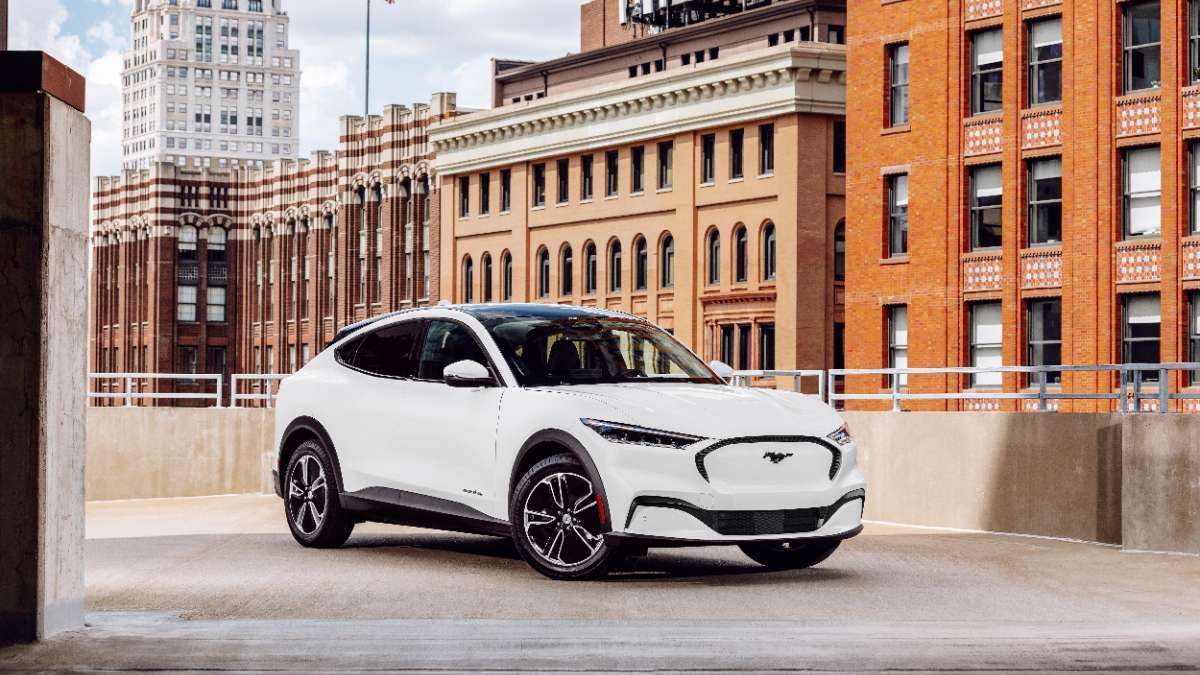

By the time you’ve stopped for your second $0.50/kWh top-off at a rest stop flanked by Chick-fil-A and a broken Electrify America terminal, something clicks in your mind, maybe this EV road trip thing isn't as futuristic as the brochure implied. But it can be, if you plan like Eisenhower on D-Day and trust a Tesla Supercharger map more than your car’s native nav. This isn’t a crisis of propulsion or battery tech; it’s a crisis of infrastructure, planning, and basic economic arithmetic.
“I just completed my first real road trip. I have a 23 rwd extended range premium. Purchased a used one about 3 months ago. We drove from Raleigh to Asheville (NC) this weekend. Here are some thoughts;
Range: impressed with the overall range. We could have made it to Asheville (249 miles all freeway) nonstop but would have arrived with a very low state of charge. Started with 100%SOC
Driving: comfortable ride and great handling. One-pedal driving in the mountains is a true joy.
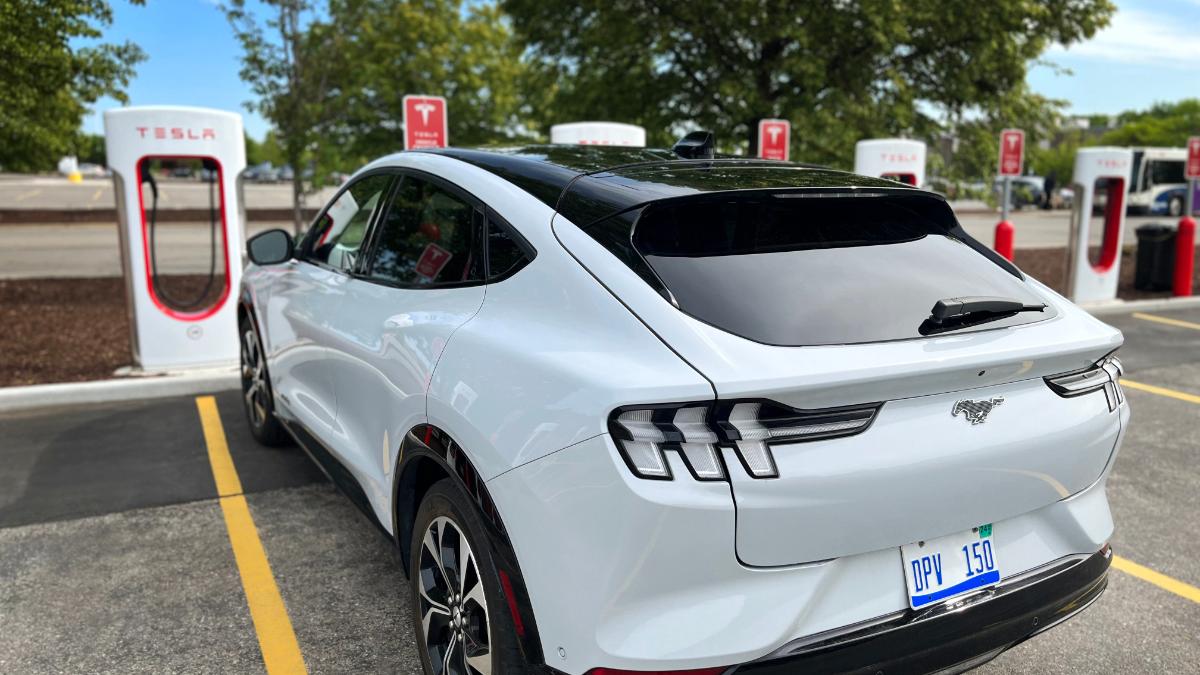
Charging: I’m not sure I could have made this trip without Tesla superchargers. We tried two different chargers found through the Ford Pass app, but neither worked. (At least one was functional for another driver but wouldn't activate through the Ford pass) Thankfully the superchargers worked perfectly. Built-in navigation does not show Tesla chargers
Charging cost: DC fast charging is more expensive than gas. $.50 / KWH @ 3.7 miles/KWH =$.14 / mile $3.00/gallon @ 30 mpg =&.10/mile. The alternate vehicle is a Ford Maverick. Not all of the trip is fast charging but the cost per Mile is higher than gas for fast charging
CarPlay: Apple Maps has amazing integration with the Mach E. Better than Google Maps, and maybe a better range estimate than the built-in navigation. However, the car play connection is inconsistent and can be frustrating.
Blue Cruise: convenient. Performed well with easy transition to manual takeover when necessary. Not worth the price. Feels like it should just be included with the hardware or the navigation subscription.
Efficiency: averaged 3.7 for the whole trip. Trip 1 shows the whole trip. Trip 2 is the return only.
Advertising
Taking all of this into consideration my next trip to the mountains will most likely be in the Maverick. Charging on the highway was slow, inconvenient, and expensive.
Feel free to ask questions/comment.”
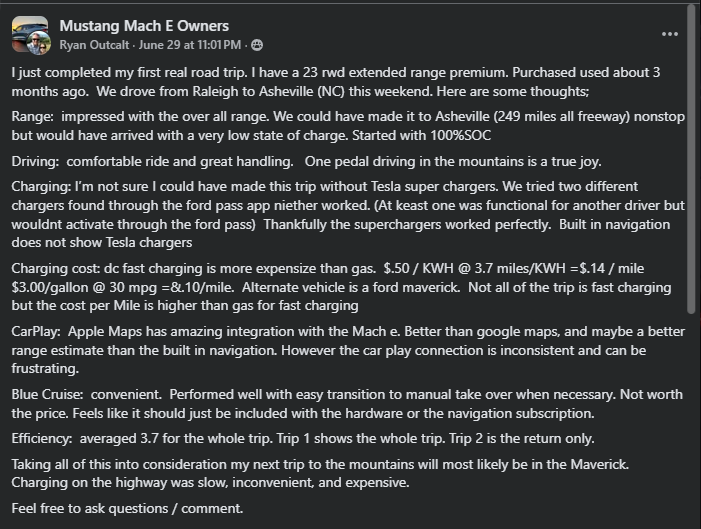
Ryan Outcalt’s candid field report from the driver’s seat of his 2023 Mustang Mach-E RWD Extended Range is the kind of data that never makes it into glossy dealership brochures. It’s a story told in real-world metrics, cents per mile, failed charging attempts, and the sheer satisfaction of one-pedal mountain descent. It also confirms what seasoned road-trippers are beginning to accept: electric road travel isn’t broken, but it’s not seamless either. The Mach-E got him there, sure. But the mental bandwidth needed to avoid stranded anxiety could be better spent admiring the Blue Ridge Parkway.
Charging Time For Ford Mustang Mach-E
- Expect around 11 hours for a full charge from empty, adding roughly 25 mi (≈40 km) of range per hour
- At 150 kW stations, the battery typically charges from 20 % to 80 % in 30 minutes; even 50 kW chargers can achieve that range in about an hour
- An extended‑range Mach‑E often hits 20–80 % in ≈30 minutes on a 150 kW charger, depending on battery temperature and state
- Users report ~7 hours from 15–100 % on a 7.4 kW AC charger, though this may vary; level and battery health influence results
To be fair, this isn’t an indictment of the Mustang Mach-E. If anything, Outcalt praises its dynamics: smooth ride, sharp handling, and the addictive novelty of regenerative braking in downhill twisties. No, the real battle lies outside the cabin, between charging stations that sometimes ghost you like a bad Tinder date and apps that don’t communicate with your car. “Any trip with more than two charging stops causes me to take a gasser,” one Mach-E owner commented after opting for a 2025 CR-V Hybrid over his GT on a 2,200-mile family vacation. Not because he wanted to. Because he had to.
Here’s where the numbers start to matter. Outcalt’s Mach-E averaged 3.7 mi/kWh on the highway. At $0.50 per kWh via DC fast charging, that’s 14 cents per mile.
His Ford Maverick, hardly a paragon of frugality, manages the same trip at about 10 cents per mile on $3/gallon gas. Over the span of a 1,000-mile road trip, that’s a $40 difference. Not a dealbreaker, but when road travel is already a series of small economic and time trade-offs, it's enough to shift decisions. “I own a Mach-E,” another driver noted,
“But I only Level 2 charge at home for $0.02 per kWh… unless I factor in depreciation, quirks, and the fact it might be worth zip at 150,000 miles.”
Where The Mach-E Shines
That 2-cent Level 2 home charge is where the Mach-E shines. Charging overnight on the cheap flips the math in favor of electrons over petroleum. That’s half a penny per mile, a rounding error so tiny it’s almost comedic. For the local commuter or suburban runabout, there’s no contest. Superchargers may change the game. With Tesla’s network opening up and Ford drivers now able to tap into its reliability via adapters and integration, the calculus is evolving. One owner documented a 4,410-mile cross-country journey with 31 Supercharger sessions, proclaiming near-zero issues and fast, consistent service. “We swore off all non-Tesla fast charging stations,” they wrote. Instant start times, high charging rates, plentiful stalls. For EVs to truly win the road trip war, this is the standard. And it’s finally within reach for non-Tesla drivers.
Ford Mustang Mach-E Recalls
- Ford has recalled ~197,432 Mach‑E SUVs (model years 2021–2025) because a low 12‑volt battery may prevent rear door latches from unlocking, risking entrapment, especially concerning children in hot conditions. Remedy: a software update due by late September 2025
- Sales of new Mach‑E units are paused while the fix is implemented; about 317,000 models worldwide are affected
- Some 2021–2022 Mach‑E units with extended‑range or GT battery packs are being recalled due to overheating high‑voltage contactors, potentially causing a loss of drive power. Dealers will replace or update these systems
- Other past recalls include windshield wiper motor failures, improperly secured axles, panoramic roof detachment risk, unintended acceleration/deceleration, and seat-belt faults, all addressed by dealers free of charge
Of course, trip efficiency depends as much on behavior as it does on kilowatt-hours. A Las Vegas-based Mach-E owner admitted averaging 85–90 mph on clear roads and acknowledged that smarter charge planning via the A Better Route Planner app could’ve cut their stop time in half. No matter the powertrain, the right foot still writes checks the battery or fuel tank, and has to cash. Add in the reality that charging from 80% to 100% can take an extra two hours, and it becomes clear: road trip strategy with an EV is half logistics, half discipline.
The verdict is pragmatic, not passionate. The Mach-E is a brilliant piece of engineering wrapped in a badge with real heritage. But when dollars and minutes matter, and charging infrastructure still has too many potholes, the Maverick wins the long-haul decision. Local driving? The Mach-E makes more sense. It’s cheaper, quieter, and more sophisticated in daily use. But for the open road, the numbers, and the current state of infrastructure, don’t lie. As EV networks expand and charging gets cheaper and faster, this equation will flip. Until then, road trippers like Ryan Outcalt are making the smart call: drive electric in the city, and gas it when the road calls your name.
Image Sources: Ford Media Center
Noah Washington is an automotive journalist based in Atlanta, Georgia. He enjoys covering the latest news in the automotive industry and conducting reviews on the latest cars. He has been in the automotive industry since 15 years old and has been featured in prominent automotive news sites. You can reach him on X and LinkedIn for tips and to follow his automotive coverage.
Set Torque News as Preferred Source on Google
Follow us today...




Comments
Articles like these act like…
Permalink
Articles like these act like hybrids don't exist. My wife's 2013 Prius III costs less than .06 a mile at a price of $3.05/gal.
It's 12 years old and is still more economical than most EVs.
Even if Toyota makes a plug-in EV that gets a battery only range of 150+ miles, I wouldn't consider buying it if it made any less that 52mpg on gas only.