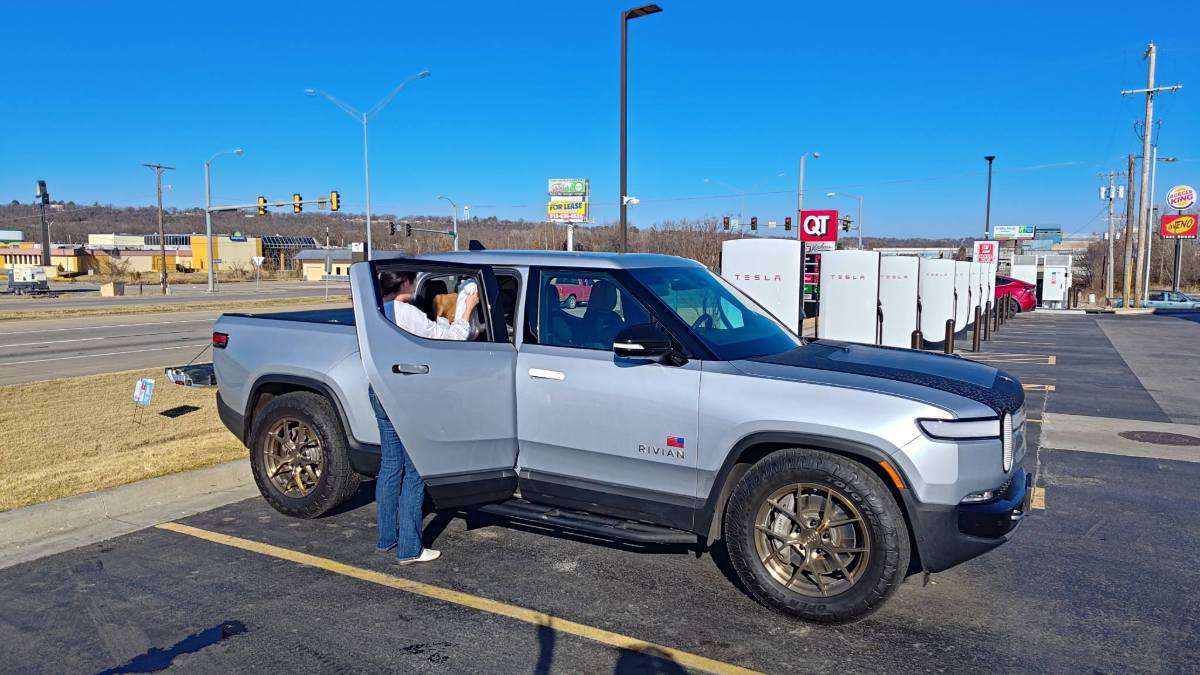

There is something quietly radical about pointing a large electric pickup east and not stopping until the road itself gives up. From California to Key West in ten days, more than 3,600 miles and upwards of thirty charging sessions.
The owner’s tone is telling. This is not a breathless victory lap, nor a defensive rebuttal to skeptics. It is matter-of-fact, almost casual. Charging, the supposed Achilles’ heel of electric road trips, was “not any real problem.”
There were hiccups, certainly. Electrify America sessions that refused to start, Tesla Superchargers that inexplicably capped output at 138 kW, a few minor quirks from GM EVgo and Mercedes Alpitronic units. None of it derailed the trip. And when the Rivian Adventure Network appeared, it did what it has quietly been doing since launch: it simply worked.
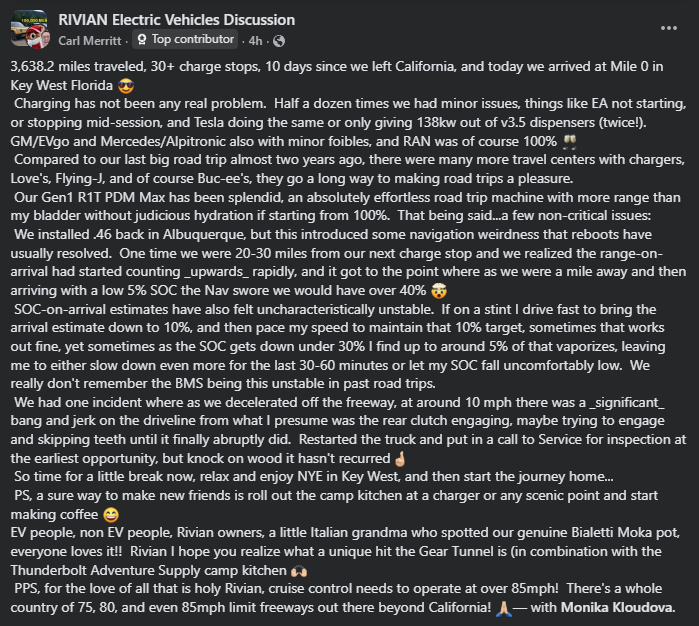
“3,638.2 miles traveled, 30+ charge stops, 10 days since we left California, and today we arrived at Mile 0 in Key West, Florida.
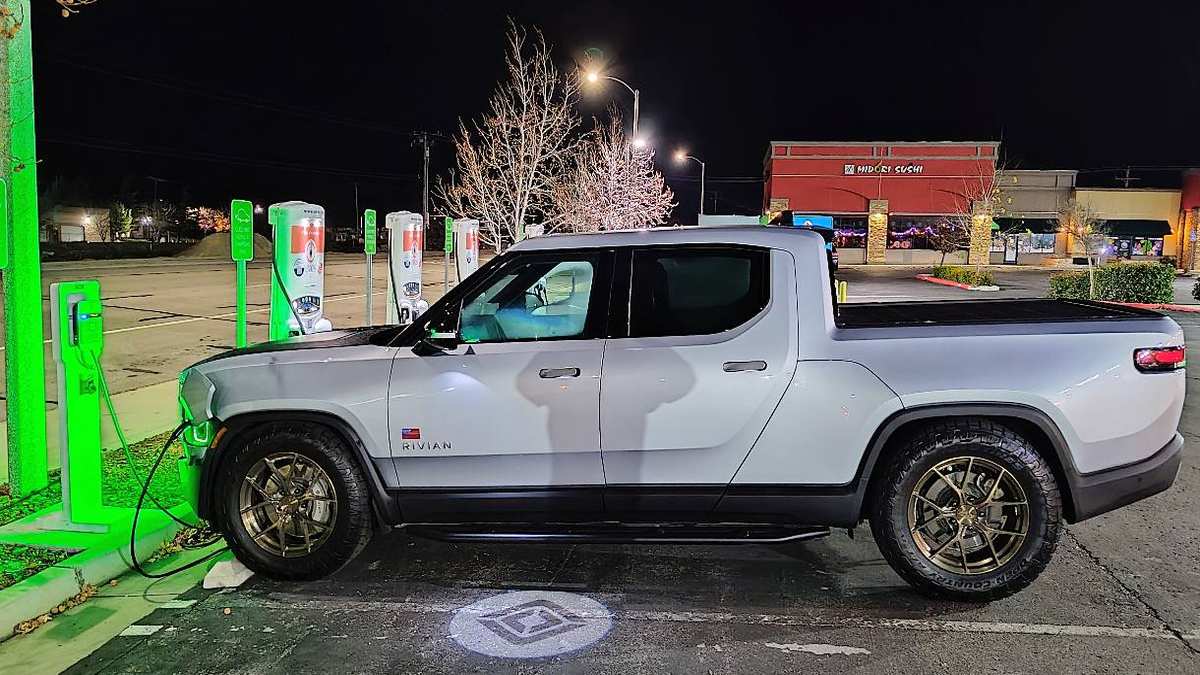
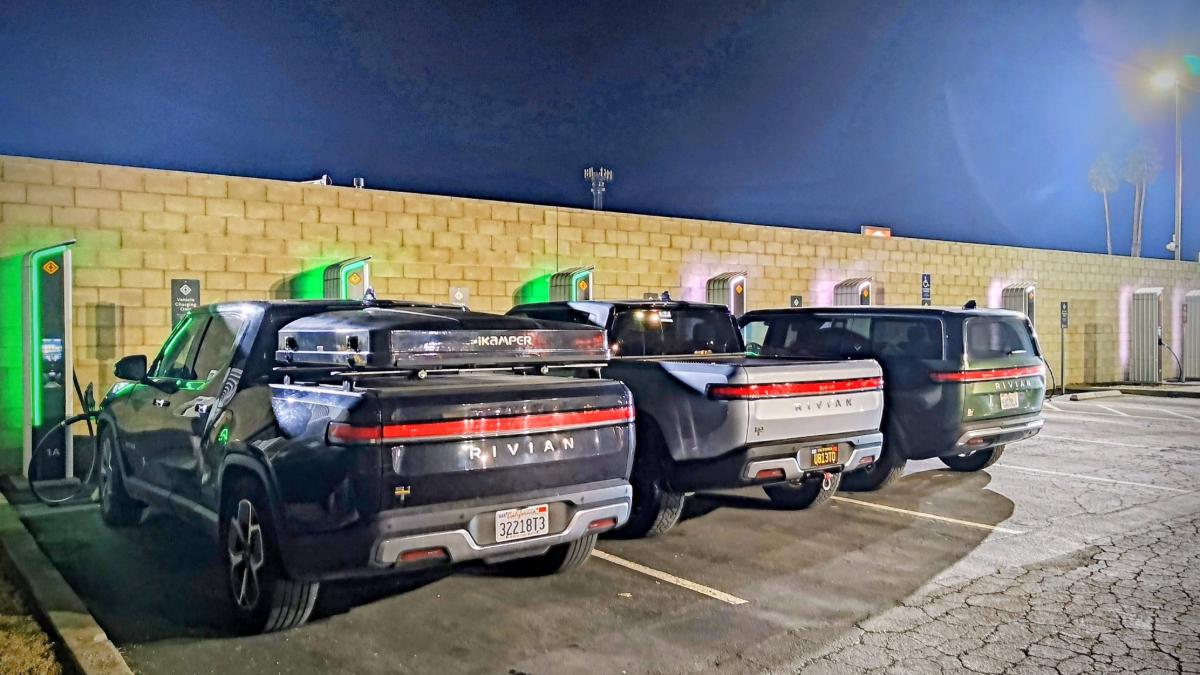
Charging has not been a real problem. Half a dozen times we had minor issues, things like EA not starting, or stopping mid-session, and Tesla doing the same or only giving 138kw out of v3.5 dispensers (twice!). GM/EVgo and Mercedes/Alpitronic also with minor foibles, and RAN was of course 100% 🥂
Compared to our last big road trip almost two years ago, there were many more travel centers with chargers, Love's, Flying-J, and of course Buc-ee's; they go a long way to making road trips a pleasure.
Our Gen1 R1T PDM Max has been splendid, an absolutely effortless road trip machine with more range than my bladder without judicious hydration if starting from 100%. That being said...a few non-critical issues:
We installed .46 back in Albuquerque, but this introduced some navigation weirdness that reboots have usually resolved. One time, we were 20-30 miles from our next charge stop, and we realized the range-on-arrival had started counting upwards rapidly, and it got to the point where, as we were a mile away and then arriving with a low 5% SOC, the Nav swore we would have over 40%.
SOC-on-arrival estimates have also felt uncharacteristically unstable. If on a stint I drive fast to bring the arrival estimate down to 10%, and then pace my speed to maintain that 10% target, sometimes that works out fine, yet sometimes as the SOC gets down under 30% I find up to around 5% of that vaporizes, leaving me to either slow down even more for the last 30-60 minutes or let my SOC fall uncomfortably low. We really don't remember the BMS being this unstable in past road trips.
Advertising
We had one incident where, as we decelerated off the freeway, at around 10 mph, there was a significant bang and jerk on the driveline from what I presume was the rear clutch engaging, maybe trying to engage and skipping teeth until it finally abruptly did. Restarted the truck and put in a call to Service for inspection at the earliest opportunity, but knock on wood i, it hasn't recurred.
So time for a little break now, relax and enjoy NYE in Key West, and then start the journey home...
PS, a sure way to make new friends is roll out the camp kitchen at a charger or any scenic point and start making coffee.
EV people, non-EV people, Rivian owners, a little Italian grandma who spotted our genuine Bialetti Moka pot, everyone loves it!! Rivian, I hope you realize what a unique hit the Gear Tunnel is (in combination with the Thunderbolt Adventure Supply camp kitchen.
PPS, for the love of all that is holy Rivian, cruise control needs to operate at over 85mph! There's a whole country of 75, 80, and even 85mph limit freeways out there beyond California!”
The comparison to a similar trip two years ago is perhaps the most important data point. The map has filled in. Love’s, Flying J, Buc-ee’s, and other travel centers have embraced fast charging in a way that fundamentally changes the experience. These are not lonely pedestals bolted to the edge of a parking lot. They are places built for people who need restrooms, food, light, and a sense of momentum. That shift matters more than peak charging speeds ever will.
Rivian R1T: Innovative Storage and Utility Design
- The R1T’s midsize proportions make it more maneuverable than full-size pickups while still supporting meaningful payload and off-road functionality.
- Electric torque delivery enables smooth, controlled low-speed movement, especially useful in off-road or towing situations.
- The gear tunnel and powered frunk expand storage options in ways uncommon for pickups, changing how tools and outdoor equipment can be organized.
- Suspension tuning balances comfort with load capability, offering a composed ride on pavement while maintaining articulation on uneven terrain.
The vehicle itself comes across as the unsung hero of the story. A first-generation R1T with the Max pack and dual-motor performance configuration proves to be exactly what an electric road-trip truck should be: quiet, stable, and effortlessly competent. The owner’s comment that the truck has “more range than my bladder” is not throwaway humor. It is a reminder that the human factor still sets the cadence of long drives, and that modern EV range has quietly crossed a psychological threshold.
That said, this is not blind evangelism. Software, as always, shows both its power and its fragility. A recent update introduced navigation oddities serious enough to make a seasoned R1T driver raise an eyebrow. Range-on-arrival estimates are climbing instead of falling, SOC projections that vaporize five percent near the end of a stint, and a general sense that the battery management system is less settled than it once was. These are not failures, but they are reminders that software maturity is now as important as mechanical durability.
The lone mechanical scare stands out precisely because it is so rare. A pronounced bang and jerk from the driveline during low-speed deceleration suggests a momentary disagreement between clutches and control logic. It did not recur, and the truck carried on without protest, but it earned a call to service. In a trip this long, one unexplained clunk feels almost inevitable. The fact that it was the only one speaks volumes.
What elevates this story beyond a simple travelogue is the way it captures Rivian’s peculiar charm. The Gear Tunnel. The aftermarket camp kitchen. The ritual of making coffee at charging stops. These details matter. They turn downtime into community, and infrastructure into a social space. When EV ownership creates conversations with strangers, including an Italian grandmother bonding over a proper moka pot, something has gone very right.
There is, of course, one final plea aimed squarely at the engineers: raise the cruise control limit. A truck capable of crossing the continent should not flinch at 85-mph speed limits simply because California does. That request is less about speed than it is about acknowledging the country as it actually exists.
Taken as a whole, this journey is not proof that electric road trips are perfect. It is proof that they are normal. Imperfect, occasionally quirky, but fundamentally viable and increasingly pleasant. The infrastructure is catching up. The vehicles are settling into their roles. And somewhere between California and Mile Zero, the electric road trip quietly stopped being a novelty and started being just another way to go see the country.
Image Sources: Rivian Media Center
Noah Washington is an automotive journalist based in Atlanta, Georgia. He enjoys covering the latest news in the automotive industry and conducting reviews on the latest cars. He has been in the automotive industry since 15 years old and has been featured in prominent automotive news sites. You can reach him on X and LinkedIn for tips and to follow his automotive coverage.
Set Torque News as Preferred Source on Google
Follow us today...