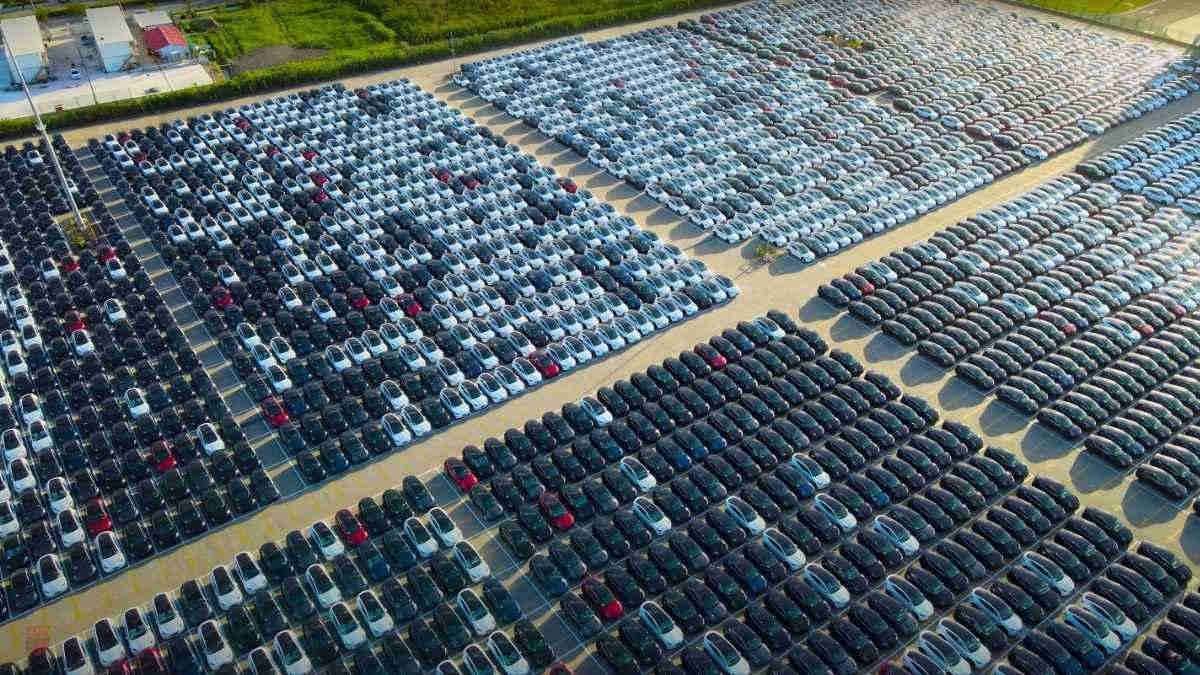

Elon Musk says he’s becoming more confident that Tesla will be able to transform its fleet of vehicles into a distributed AI training cluster.
Musk envisions that by using inference computers installed in all Tesla vehicles, the EV maker can avoid the massive costs associated with building large data centers.
Tesla currently equips its vehicles with powerful AI computers, and the next-generation AI 5 chip will have 1 kilowatt of compute power.
This alone isn't sufficient for AI training; the chip's primary purpose is to help the vehicle drive by making inferences based on a pre-trained AI model.
However, Musk imagines leveraging the millions of Tesla vehicles and their computing power to train AI.
Musk made these comments in response to Tesla investor Nic Cruz Patane.
Nic started the discussion by referencing Elon Musk’s earlier statement from the recently held Q3 Tesla earnings call.
Nic writes...
“Elon Musk proposed a remarkable idea during the Q3 Earnings Call that not many people are discussing.
His words: ‘Actually, one of the things I thought, if we've got all these cars that maybe are bored, while they're not in use, we could actually have a giant distributed inference fleet and say, if they're not actively driving, let's just have a giant distributed inference fleet.
At some point, if you've got tens of millions of cars in the fleet, or maybe 100 million cars, and each has, I don't know, a kilowatt of high-performance inference capability, that's 100 gigawatts of inference power distributed with power and cooling included. That seems like a pretty valuable asset.”
Nic continues to write, further elaborating Elon Musk’s point...
“Basically, each car has about 1 kilowatt of high-performance AI inference ability, meaning Tesla wouldn’t need to build massive data centers—the fleet itself becomes the data center.
Tesla could convert their entire fleet into a vast distributed inference network, spread worldwide, powered by the car’s batteries and AI systems.
Mind blown.”
As a Tesla investor, Nic seems excited about the potential of turning Tesla’s fleet into a giant distributed data center.
In response, Elon Musk agrees with this sentiment, writing…
“I am increasingly confident that this idea could work.”
Musk has hinted at this possibility before; however, over time, he appears to be more confident rather than discouraged by the challenges.
Pros and Challenges
The benefits of this idea are clear, especially with Tesla’s next-gen AI 5 computer.
Tesla is designing this inference computer in-house, with manufacturing handled by Samsung and TSMC in the US.
The primary purpose of this chip is to run Tesla's full self-driving software, which will eventually enable complete vehicle autonomy.
However, in addition to fitting these powerful computers into cars, Tesla plans to use the same chips in its data centers.
Tesla plans to deploy thousands of AI 5 computers in the company’s data centers for AI training. The trained models are then uploaded to vehicles equipped with a single AI 5 computer, which makes the final driving decisions.
Going back to Musk’s latest idea of building a distributed AI data center, since Tesla already plans to use AI 5 chips in data centers, they could potentially deploy these chips across millions of vehicles for training.
This approach could greatly reduce data center expenses, potentially saving hundreds of billions of dollars compared to constructing a 100 GW data center.
It could also generate a new income stream for Tesla owners, who might lend their vehicle’s inference computers for training and earn money from Tesla or other companies.
While this is a great idea, it has limitations, such as data usage and privacy concerns.
Limitations
Training Tesla’s full self-driving AI requires billions of miles of real-world driving video.
Transferring terabytes of data over the internet can push vehicle owners beyond their data plan limits.
Even unlimited data plans have limits on sending and receiving terabytes of data daily.
Privacy is another concern; There have already been reports of Tesla engineers sharing videos of Tesla owners in compromising situations captured by FSD cameras.
Sending individual driving footage to millions of people worldwide could amplify these privacy concerns.
However, please let me know what you think in the comments. Share your ideas by clicking the red “Add new comment” button below. Also, be sure to visit our site, torquenews.com/Tesla, regularly for the latest updates.
For more information, check out: Cybertruck's Stainless Steel Surface Is Hot and "I Keep a Bottle of Water With Ice To Cool Down The Stainless Steel Before Opening The Door"
Tinsae Aregay has been following Tesla and the evolution of the EV space daily for several years. He covers everything about Tesla, from the cars to Elon Musk, the energy business, and autonomy. Follow Tinsae on Twitter at @TinsaeAregay for daily Tesla news.
Set Torque News as Preferred Source on Google
Follow us today...