
In my previous investigative report today, I pulled back the curtain on the maintenance bombshell facing 2022–2027 Toyota Tundra owners: the mandatory 40,000-mile spark plug replacement. For those accustomed to the legendary 5.7L V8’s "bulletproof" 120,000-mile service life, this shift to a high-pressure, twin-turbocharged V6 (the V35A-FTS) represents a fundamental change in the cost of ownership.
As a third-generation Colorado native who has spent decades testing vehicles on the punishing grades of the Eisenhower Pass, I’ve seen how high-altitude driving compounds these mechanical stresses. If you are a Tundra owner in Parker, Castle Rock, or anywhere across the rugged Western terrain, simply knowing the interval isn't enough. You need an execution strategy.
Step 1: The Warranty Audit - Identifying Your Specific Compliance Window
The first mistake owners make is assuming every 2025 Tundra follows the exact same "flavor" of maintenance. While the 40,000-mile spark plug rule is the standard for the i-FORCE 3.4L Twin-Turbo V6, your specific driving habits can actually accelerate this timeline under Toyota’s "Special Operating Conditions."
Define Your Use Case: If you use your Tundra for "severe service," which includes towing, using a roof rack, or driving on salt-covered roads, your inspection intervals should be tighter. I have reported extensively on why high-altitude environments act as a natural "stress test" for turbos in The 2026 Toyota Tundra's Twin-Turbo i-FORCE V6 is Driving Owners to Extreme Measures. The thinner air requires the turbos to spin faster, increasing heat soak near the cylinder heads.
The Solution: Do not wait for the dashboard alert. I recommend a "Visual Health Check" at 30,000 miles. Ask your technician to pull a single plug. If you see significant electrode erosion, your high-altitude or heavy-towing lifestyle is demanding an early change. Documenting this proactive approach is your best defense against future warranty disputes.

Step 2: Negotiating the $500 Bill - The "Parts vs. Labor" Strategy
In my initial analysis of the $500 spark plug cost, I broke down how labor drives the price. However, you aren't powerless at the service desk.
Demand OEM Specificity: One of the fastest ways to trigger a "secondary engine damage" claim denial is using the wrong heat-range plug. As I’ve noted in previous reports, the i-FORCE systems are calibrated for specific Iridium components.
The Solution: When you receive a quote, ask for the specific part numbers. To save money safely, check for "service specials" on your dealer’s website. Often, bundling the spark plugs with a transmission fluid check or differential service can shave 15-20% off the total labor. I’ve seen some dealers inflate these quotes significantly, as detailed in my report, "Dealer Service Estimates That Shatter Owner Trust."
Step 3: The "Boots-on-the-Ground" DIY Assessment
Many owners are asking if they can tackle this job in their own garage to avoid the "Dealer Tax."
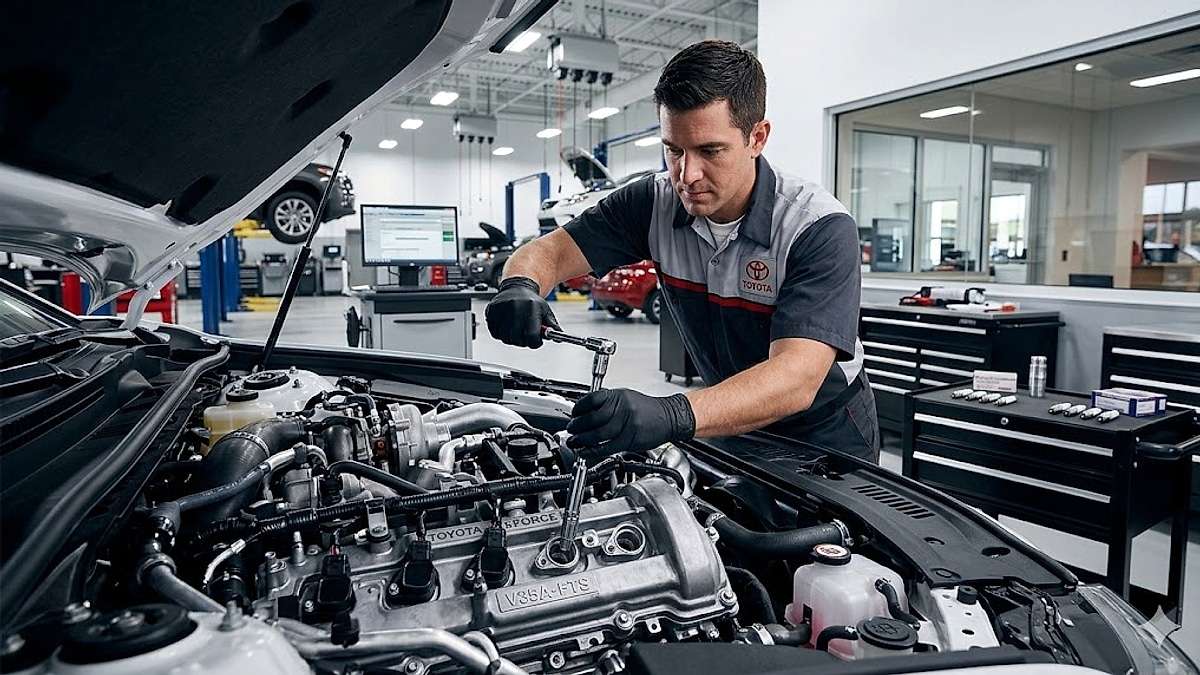
Action Item: The Tool & Talent Inventory. Before you crack a bolt on your 2025 Tundra, understand that you are dealing with a labyrinth of turbo piping. My previous analysis, "Why the i-FORCE V6 Requires More Maintenance Than the V8," highlights the cramped nature of this modern engine bay.
The Solution: Only attempt this if you have a torque wrench and thin-wall spark plug sockets. Over-torquing a plug in an aluminum head is a $5,000 mistake. If you’re not comfortable working around the intercooler, pay the professional. The cost of professional service is an insurance policy for your $70,000 truck.
Regional Impact: Why the Rockies Change the Math
For my readers in the Rocky Mountain region, the 40,000-mile interval is a survival metric. We face extreme temperature swings that cause ignition coils to expand and contract more violently than they do in more temperate zones.
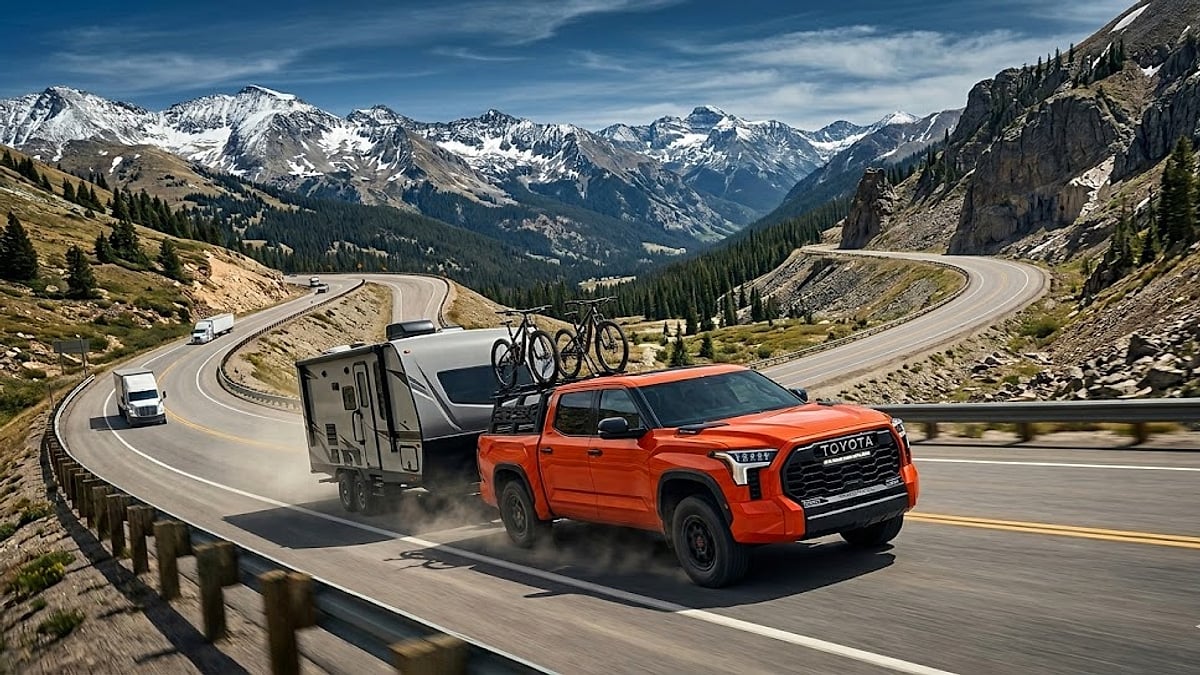
I’ve highlighted in previous reports how Denver-area dealers are seeing more frequent "misfire under load" codes on trucks that skip this 40k service. If you’re pulling a camper up Vail Pass, your spark plugs are under more stress in 20 minutes than a flat-land truck sees in a month.
The "Thin-Air" Factor
As a Colorado native who has logged thousands of miles on the I-70 mountain corridor, I can confirm that the information gain for Tundra owners in high-altitude regions is found in the turbocharger's duty cycle. At 10,000 feet, the air is roughly 30% less dense than at sea level. To compensate and maintain the i-FORCE engine's 389 horsepower, the twin turbochargers must spin significantly faster and work harder to compress enough oxygen into the cylinders.
This creates a localized "furnace" effect. The higher turbine speeds generate increased intake air temperatures, which in turn raises the combustion chamber heat. In this high-stress environment, the spark plug electrodes don't just wear they undergo thermal erosion at an accelerated rate. While a Tundra cruising at sea level in Florida might "survive" a slightly stretched interval, a truck in Parker or Castle Rock is essentially operating under a constant state of "Severe Service."
By adhering to the 40,000-mile interval, you aren't just following a manual; you are compensating for the laws of physics that govern thin-air combustion. Neglecting this in the Rockies is a gamble with your ignition coils and your powertrain warranty.
Summary Action Plan for 2025 Tundra Owners:
- 30,000 Miles: Request a visual inspection of the plugs if you live in high-altitude regions.
- 35,000 Miles: Begin shopping for service quotes; use independent specialists to negotiate dealer pricing.
- 40,000 Miles: Replace plugs with OEM units only.
- Verification: Keep your paper receipts. As I reported in "Tundra Engine Failure Warning Signs," proof of maintenance is your most valuable asset when making a warranty claim.
It’s Your Turn: Are you planning to DIY your Tundra’s spark plugs, or will you be heading to the dealer? Leave a comment below and share your "Turbo Tax" survival story.
About The Author
Denis Flierl is a 14-year Senior Reporter at Torque News and a member of the Rocky Mountain Automotive Press (RMAP) with 30+ years of industry experience. Explore his full investigative reporting archives and technical guides at DenisFlierl.com. Based in Parker, Colorado, Denis leverages the Rockies' high-altitude terrain as a rigorous testing ground to provide "boots-on-the-ground" analysis for readers across the Rocky Mountain region, California EV corridors, the Northeast, Texas truck markets, and Midwest agricultural zones. A former professional test driver and consultant for Ford, GM, Ram, Toyota, and Tesla, he delivers data-backed insights on reliability and market shifts. Denis cuts through the noise to provide national audiences with the real-world reporting today’s landscape demands. Connect with Denis: Find him on LinkedIn, X @DenisFlierl, @WorldsCoolestRides, Facebook, and Instagram.
Photo credit: Denis Flierl
Set Torque News as Preferred Source on Google
Follow us today...