
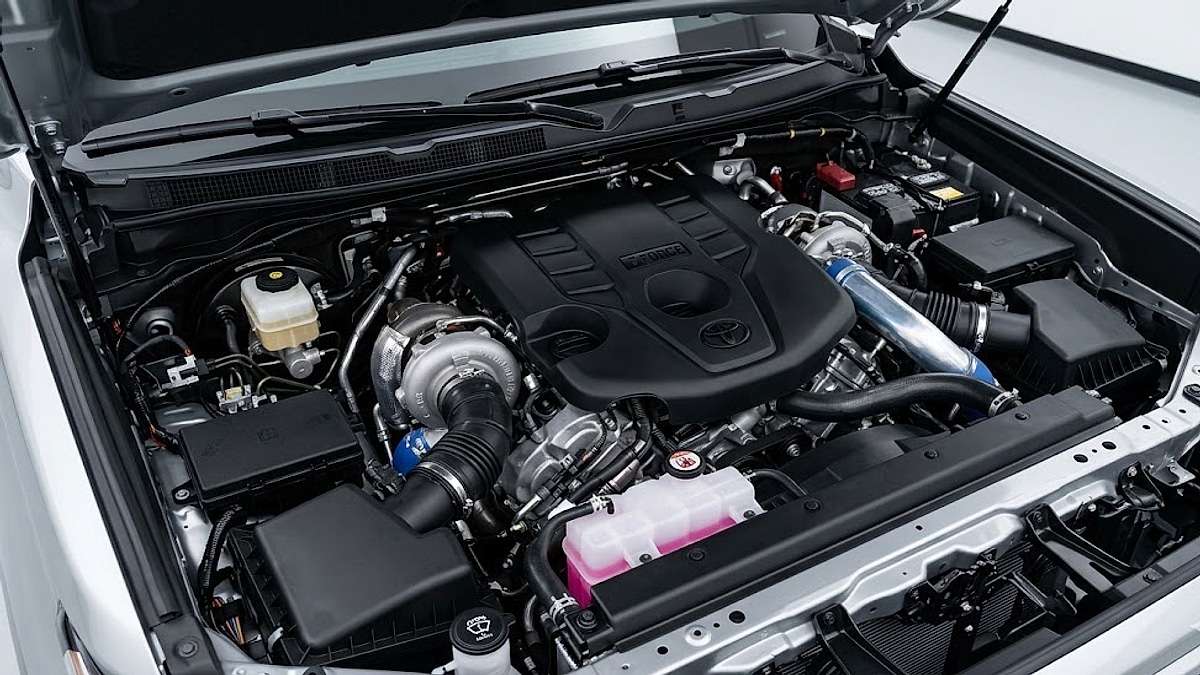

The $500 question many 2025 Toyota Tundra owners are currently asking has a surprising, and somewhat expensive, answer that I have verified through the latest technical service data. If you own the new i-FORCE 3.4L Twin-Turbo V6 engine, that 40,000-mile spark plug interval isn't a "dealer upsell" or a suggestion; it is a mandatory requirement that directly impacts your powertrain warranty. Unlike the bulletproof 5.7L V8 of the past that could sail past 100,000 miles on a single set of plugs, the high-pressure environment of the modern twin-turbocharged Tundra has terminated the era of "set it and forget it" maintenance. Over my 30 years in the automotive industry, I can tell you that ignoring this specific interval is the fastest way to invite a warranty claim denial should an ignition coil failure or cylinder misfire cause secondary engine damage.
We are seeing a massive wave of confusion across owner forums because the jump from a 120,000-mile interval to just 40,000 miles feels like a step backward in technology. However, this is the "Turbo Tax" in action. The V35A-FTS engine utilizes extremely high boost pressures and heat loads, which erode spark plug electrodes at an accelerated rate compared to naturally aspirated engines. According to official Toyota service guidelines, if your Tundra is equipped with the twin-turbo V6, you must replace the plugs every 48 months or 40,000 miles. Failing to do so doesn't just hurt your gas mileage; it creates a legal loophole that allows Toyota to arguably claim "owner neglect" to avoid paying for expensive catalytic converter or internal engine repairs.
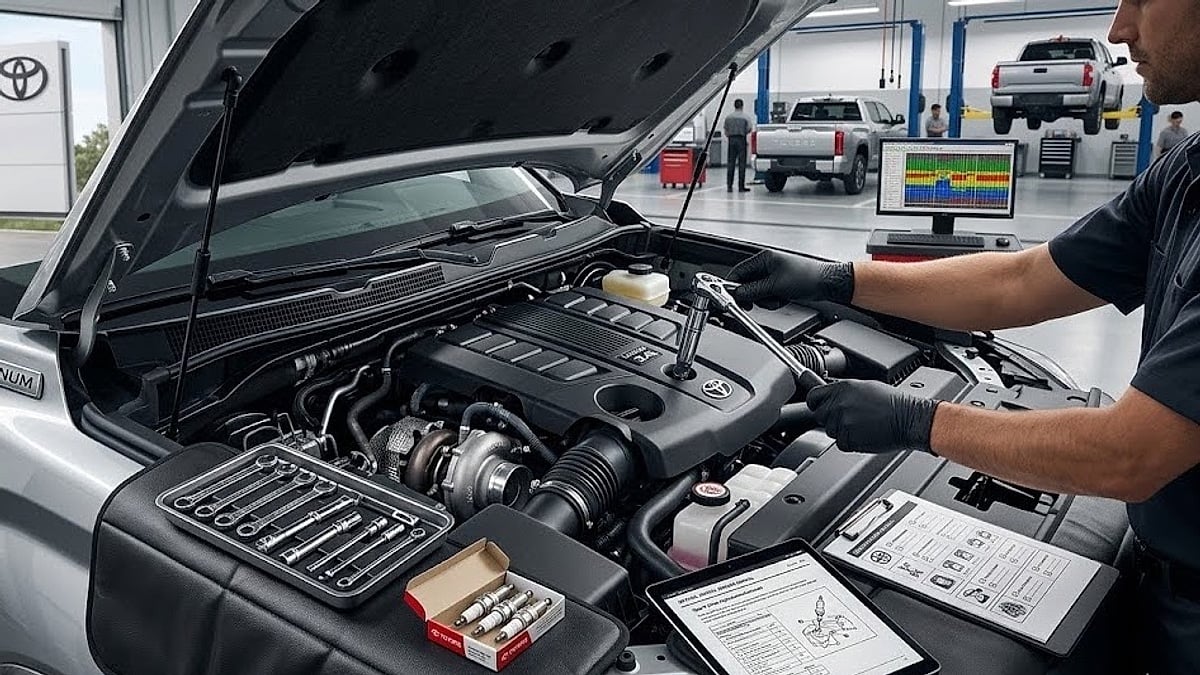
The Owner Experience That Triggered The Investigation
The spark for this investigation came from a real-world scenario shared by Mark Odom from Florida on the 2023-2027 Toyota Tundra Owners Facebook page. Mark's situation is one I am hearing more frequently as these trucks hit the three-year mark. He noted: “My wife took our 2025 Toyota Tundra Platinum in for an oil change, and the Toyota service advisor told her that the spark plug change was due at 40,000 miles and would cost $500. Said if we didn’t do it, our extended warranty would be void. Is this a fact or BS?”
This specific interaction highlights the tension between dealership sales tactics and actual manufacturer requirements. While the advisor’s claim that it "voids" the entire warranty is a legal oversimplification, the core requirement is very much a fact. I have scrutinized the official maintenance schedules, and for the 2022-2027 Tundra generation, the interval has indeed been slashed.
Why the 3.4L Twin-Turbo Changed the Rules of Maintenance
To understand why this is happening, we have to look at the engineering shift. The older Tundra V8 was a "low stress" engine. The new 3.4L V6 is a "high stress" engine. In a turbocharged system, the spark has to jump the gap under significantly higher cylinder pressure. This requires more voltage from the ignition coils, creating more heat at the plug tip. If the plug gap widens even slightly due to wear, the coil has to work twice as hard to fire, leading to premature coil failure.
According to reports from verified experts at Edmark Toyota, "at 45,000 miles, you may need new tires, brakes, or spark plugs, especially if you regularly drive in harsh conditions." This substantiates that the 40k to 45k window is the "danger zone" where Toyota technicians are instructed to look for wear.

I previously reported on the mechanical vulnerabilities of these new powertrains in my analysis of Tundra engine longevity, noting that the transition to smaller, turbocharged engines necessitates a much more proactive maintenance schedule than many long-time Toyota loyalists are used to. You can find that earlier investigative piece here.
Another external authority, Yokem Toyota, confirms this shift by listing spark plug service as a critical item that "intervals may vary" but often falls much earlier than the 100k-mile mark seen in older trucks. Their detailed service schedule highlights that "Every 30,000 miles... service or replace spark plugs as needed," which you can verify here.
Scrutinizing the $500 Dealer Price Tag
Many owners are rightfully shocked by the $500 estimate. In my experience, spark plug jobs range from $150 to nearly $1,000, depending on complexity. On the 2025 Tundra, the price is driven by two factors: parts and labor. The OEM Denso or NGK plugs required for the twin-turbo setup are high-heat, iridium-tipped components that carry a premium price.
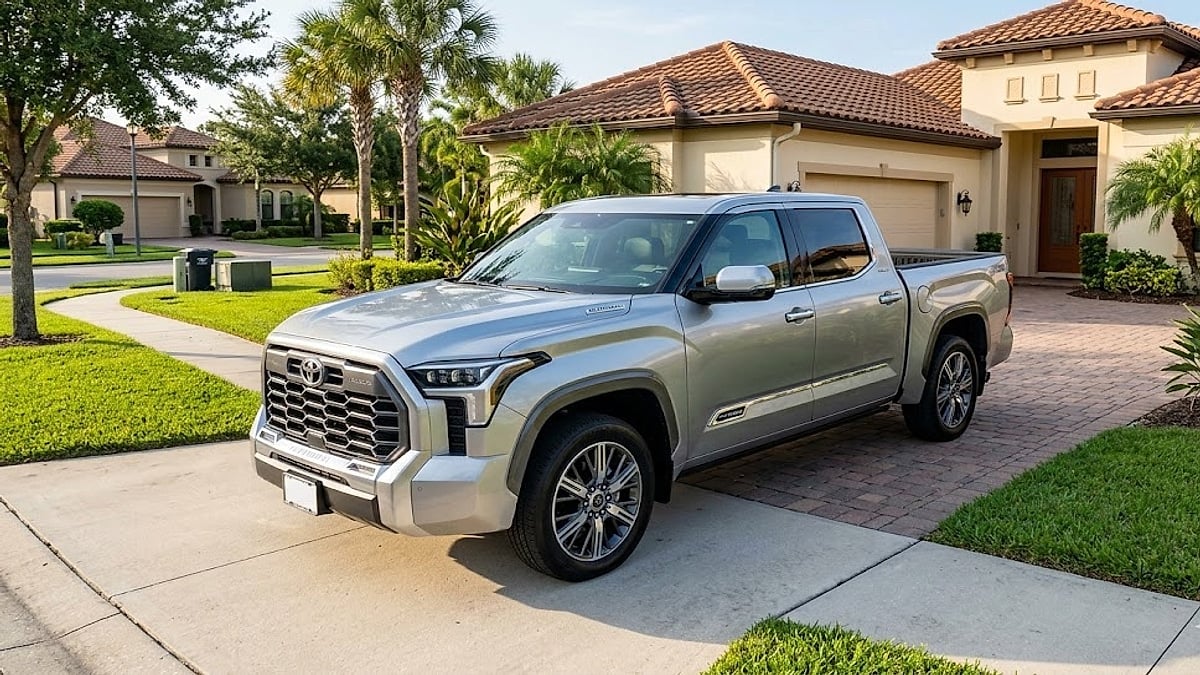
The labor is the real killer. Unlike the old V8, where the plugs were sitting right on top, the new V6 layout is cramped. Technicians often have to remove parts of the air intake system, intercooler piping, and various sensors just to reach the back cylinders. We are talking about a two- to three-hour job for a professional, and with shop labor rates hovering around $180 to $220 per hour in many regions, the $500 total starts to make sense.
I have emphasized in previous reports that while the sticker shock is real, the cost of a "blown" engine due to a cracked plug insulator or a melted electrode is significantly higher. You can see my full cost-benefit analysis on Toyota turbo maintenance here.
Tech Observations from Owner Communities
The sentiment on the ground is "messy," as owners grapple with these new costs. In a recent technical discussion on r/ToyotaTundra, one owner lamented the complexity, noting: "Toyota also calls for spark plugs at like 40k miles or something crazy but no way I'm I going to do that... It's like 2.5h labor because of all the bullshit on top of the engine." You can read the full thread here:
My analysis of this sentiment is that owners are still applying "V8 logic" to a "V6 Turbo" reality. From my experience, skipping this service "because of all the b.s. on top of the engine" is exactly how you end up with a truck on a flatbed. Another owner on Reddit highlighted the risk of waiting, stating: "I finally changed the spark plugs... at 105k miles... and not surprisingly the truck seems smoother, especially when idling." While that owner got lucky with an older model, doing the same with a 2025 Turbo would likely trigger multiple misfire codes long before the 100k mark. You can see that discussion here.
The Summary
- Interval Reality: The 2022-2027 Toyota Tundra 3.4L V6 requires spark plug replacement every 40,000 miles, a radical departure from the 120,000-mile interval of the previous 5.7L V8.
- Warranty Implications: While the Magnuson-Moss Act prevents a total warranty voiding, Toyota can legally deny engine-related claims if the owner fails to follow the required maintenance schedule.
- Cost Drivers: The $500 average cost reflects high-end Iridium parts and a complex labor process that involves removing turbocharger plumbing.
- Technical Necessity: Higher cylinder pressures in turbocharged engines erode electrodes more quickly, making this service essential to prevent ignition coil failure and maintain fuel efficiency.
Key Takeaways for Tundra Owners
- Verify your specific VIN maintenance schedule through the Toyota Owners portal to confirm the 40,000-mile requirement.
- Document every service with a line-item receipt, especially if using an independent shop, to safeguard your warranty.
- Avoid using "cheap" aftermarket plugs; the i-FORCE and i-FORCE MAX systems are calibrated specifically for OEM heat ranges.
- Budget for this $500 expense every three to four years to ensure the long-term reliability of the twin-turbo system.
Can You Do This Yourself?
The very next logical thought for a DIY-inclined owner is: "Can I just save the $350 in labor and do it myself?" The answer is yes, but with a major caveat. You will need a variety of swivel sockets, extensions, and a high degree of patience to navigate the intercooler piping. If you cross-thread a plug in these aluminum heads or drop debris into the turbo intake while the lines are open, you are looking at a multi-thousand-dollar repair. If you are not comfortable working around sensitive turbocharger components, this is one job where paying the "dealer tax" might actually be the cheaper option in the long run.
Investigative Conclusion
We have moved into a new era of Toyota truck ownership where the "reliability" we love is now tied to a much more rigorous and expensive maintenance schedule. The 40,000-mile spark plug requirement is a fundamental part of keeping these high-strung twin-turbo engines healthy. While that $500 bill is a bitter pill to swallow, it is significantly cheaper than a $15,000 engine replacement that isn't covered because you missed a scheduled service. I recommend that every 2025 Tundra owner treat this interval as "non-negotiable" to protect both their truck and their bank account.
It’s Your Turn: Have you been quoted for a 40k-mile service yet? Did your dealer try to tell you it was a "mandatory" warranty item? Leave a comment in the red Add new comment link below and let us know your experience!
Next Up: In my next technical analysis, I delve into the 2026 Toyota Tundra's performance on the grueling Eisenhower Pass and explain why high-altitude driving creates a "thermal furnace" that necessitates rigorous maintenance. Join me as I break down the specific "Action Plan" for managing the mandatory 40,000-mile service interval and keeping your twin-turbocharged investment running at peak efficiency in the high country. Check out the full report here.
About The Author
Denis Flierl is a 14-year Senior Reporter at Torque News and a member of the Rocky Mountain Automotive Press (RMAP) with 30+ years of industry experience. Explore his full investigative reporting archives and technical guides at DenisFlierl.com. Based in Parker, Colorado, Denis leverages the Rockies' high-altitude terrain as a rigorous testing ground to provide "boots-on-the-ground" analysis for readers across the Rocky Mountain region, California EV corridors, the Northeast, Texas truck markets, and Midwest agricultural zones. A former professional test driver and consultant for Ford, GM, Ram, Toyota, and Tesla, he delivers data-backed insights on reliability and market shifts. Denis cuts through the noise to provide national audiences with the real-world reporting today’s landscape demands. Connect with Denis: Find him on LinkedIn, X @DenisFlierl, @WorldsCoolestRides, Facebook, and Instagram.
Photo credit: Denis Flierl
Set Torque News as Preferred Source on Google
Follow us today...







Comments
My Honda CRV has a direct…
Permalink
My Honda CRV has a direct injection turbo charged engine. Manufacturer service interval for plugs is 100 thousand miles, same for injectors. If Honda can do it Toyota can as well.
Im at 90,000 miles and…
Permalink
In reply to My Honda CRV has a direct… by R Lanier (not verified)
Im at 90,000 miles and dealer never even mentioned it I remember because I used to do it for my Mazda. 2023 Toyota tundra sr5