


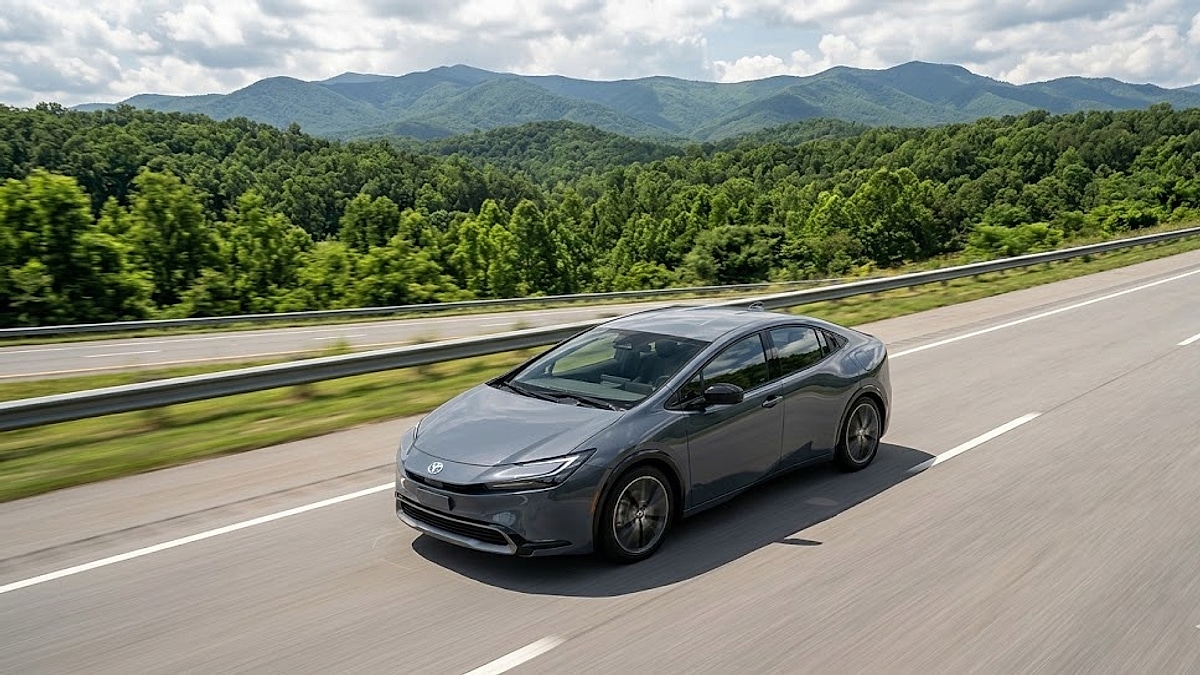
In our recent technical deep dive into "Why the 2025 Toyota Prius Prime 13.6 kWh Battery Defies 20% Cold Weather Range Loss," we examined the engineering that enables this PHEV to maintain its efficiency. However, understanding the "root cause" of battery warmth is only half the battle for the modern consumer. As we enter the high-demand cycle of May 2026, with national gas prices averaging $4.85 and California seeing $7.00 at the pump, the conversation must shift from technical specifications to financial advocacy. For owners like Geoffrey Bloom in North Carolina, the 2025 Prius Prime has transformed from a "sporty fun car" into a sophisticated financial instrument, a "gas hedge" that effectively freezes transportation costs in an era of extreme inflation.
The $3,200 Annual Savings Framework
To understand how a North Carolina owner can realize $3,200 in annual savings, we have to move beyond the sticker price and look at the "Total Cost of Ownership" (TCO) through the lens of 2026. Geoffrey Bloom’s experience of getting 40+ miles of EV-only driving by simply plugging into a standard garage outlet is the catalyst for this "Information Gain" analysis. Most internal combustion engine (ICE) vehicles in the same "sporty" class as the 220-hp Prime achieve roughly 25-28 MPG in mixed suburban driving. At $5.00 per gallon, a driver covering 15,000 miles a year is spending $2,600 to $3,000 on fuel alone.
By contrast, the 2025 Prime owner who stays within the 44-mile EV range for 90% of their trips spends roughly $450 on electricity (based on average residential rates) and nearly $0 on gasoline. When you factor in the reduced maintenance schedule of the planetary gear transmission and the regenerative braking system, which I’ve analyzed as a primary reason why The New Toyota Prius Prime Is Now The Most Fuel-Efficient Car In America, the $3,200 savings becomes a documented reality rather than a manufacturer's estimate.

The Consumer Action Plan for 2026
As a senior reporter with 30 years of experience, I am seeing a "substance gap" in how people buy hybrids. Many shoppers are still treating the Prime like a traditional hybrid, forgetting the "Plug-In" advantage. According to Consumer Reports' consumer data, the Prius Prime consistently ranks as a top choice for those looking to bridge the gap between gasoline and full electric, citing its reliability and long-term value. To maximize your "gas hedge," you must treat the car like a technical asset.
I’ve previously covered the logistical shift in how these cars are built, noting that Toyota's New Prius Prime Hybrid Battery Is Now Made In The USA, which has stabilized parts availability. If you want to replicate Geoffrey’s savings, your next step is auditing your home charging environment.
Step 1: Auditing Your "Home Turf" Infrastructure
Geoffrey mentions using a "standard 220v plug socket in my garage." For my readers here in Parker, Colorado, and across the mountain west, this is a critical distinction. While the Prime can charge on a standard 120v wall outlet (Level 1), upgrading to a 220v (Level 2) circuit is the only way to ensure the battery heater can run effectively during a sub-zero Colorado night without dipping into your stored range.
Research from organizations such as the Alternative Fuels Data Center (AFDC) suggests that home charging is the strongest predictor of PHEV satisfaction. By charging at home, you avoid the predatory pricing of public "Tier 3" chargers, which in some regions can actually cost more per mile than gasoline.
Step 2: The "Geographic Density" Driving Strategy
Your savings are dictated by your "EV-to-HV" ratio. In North Carolina, the relatively flat terrain allows for maximum regenerative capture. However, if you are driving through the Eisenhower Tunnel or tackling the steep grades of the Rocky Mountains, you need to proactively use the "Hybrid Mode" (HV). From my 30 years of testing, I recommend using HV mode for the uphill climb and switching to pure EV mode for the descent. This allows the motor-generators to "force-feed" the 13.6 kWh battery with kinetic energy that would otherwise be lost to brake heat.
Step 3: Navigating the 2026 Incentive Landscape
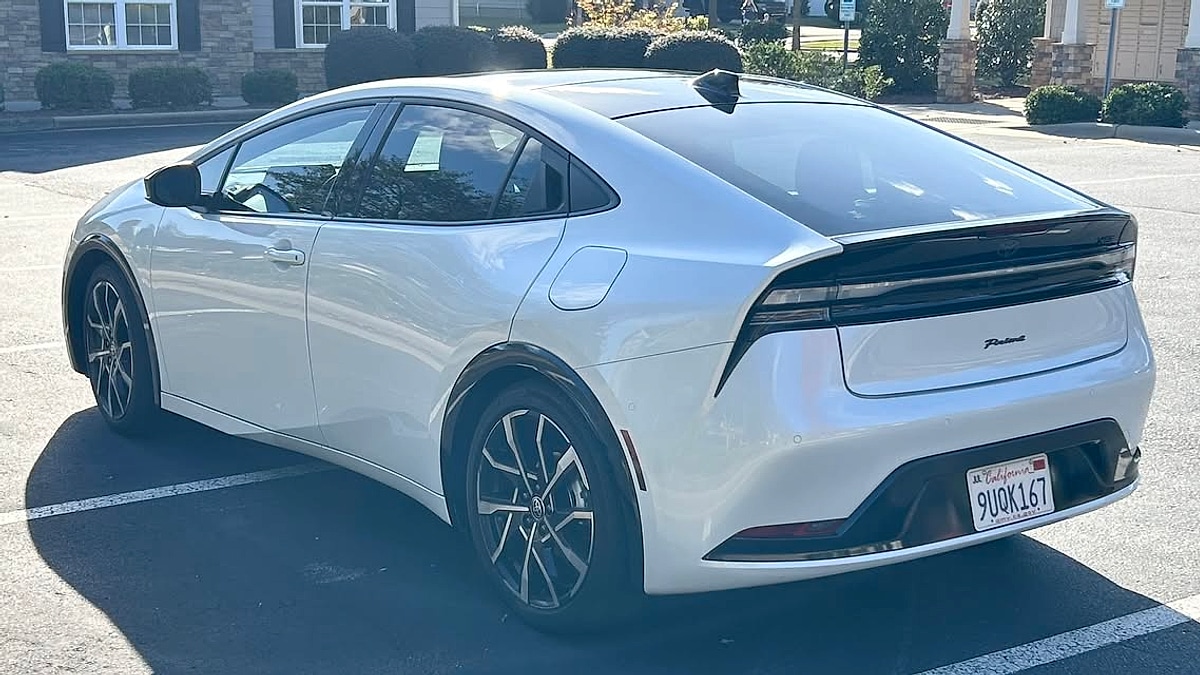
Geoffrey noted he received a $4,000 Federal credit against a price that was already $500 below MSRP. This is the consumer win of the year. As of May 2026, many of these incentives are undergoing "Eligibility Phase-Outs." I must urge you to verify your specific tax liability before assuming the credit applies. The 2025 Prius Prime remains a value king only if you secure the rebate upfront, as it effectively offsets the hybrid premium price difference over a standard Corolla or Camry.
Why Colorado Owners See a Different "Win"
While North Carolina owners are focused on the gas hedge against $5 fuel, Colorado owners are using the Prime as a "reliability hedge." In high-altitude environments, ICE engines lose roughly 3% of their power for every 1,000 feet of elevation. The Prime’s 220 hp system is "altitude-independent" because the electric motors provide instantaneous torque regardless of oxygen density. This means you aren't just saving $3,200; you are gaining a performance advantage that a standard gas car cannot match without a turbocharger.
Turning Data into Dollars
The information gain for May 15, 2026, is this: The Prius Prime is currently the only vehicle in the US market that offers a 40+ mile EV range, 50+ MPG fuel economy, and 200+ horsepower for under $40,000. It is a "triple threat" because it solves a specific user problem: the rising cost of living.
Summary for the Strategic Owner
The 2025 Prius Prime is no longer just a "green" choice; it is a defensive financial strategy. By utilizing Level 2 home charging, optimizing drive modes for geographic terrain, and securing expiring Federal tax credits, owners are insulating themselves from a volatile energy market. This report identifies the $3,200 annual savings threshold as the new benchmark for PHEV ownership in the post-April 2026 economy.
Key Takeaways for Immediate Action
- Install a dedicated 220V Level 2 circuit in your garage to allow for battery preconditioning and faster turnaround times between errands.
- Audit your daily commute to ensure 90% of your miles are electric, the "sweet spot" for achieving the $3,200 annual savings.
- Secure your vehicle purchase before the next June 2026 incentive review to lock in the $4,000 tax rebate while it remains available for the 13.6 kWh pack.
Is the 2025 Prime Better Than a Used Tesla?
The very next logical question you might have is: "If I'm trying to save $3,200, wouldn't a used Model 3 be even cheaper?" The answer lies in the "infrastructure gap." A used Tesla requires a commitment to a charging-only lifestyle. The Prius Prime provides the "gas hedge" without the "range anxiety." If a storm knocks out the grid in North Carolina or a blizzard closes the charging stations in Colorado, the Prime’s 50 MPG gas engine ensures you aren't stranded. It is the "ultimate utility" vehicle for a transition economy.
The New Era of Practical Advocacy
We are moving away from a world where car reviews are just about 0-60 times, cargo room, and features. In May 2026, a car review is a financial audit. The 2025 Toyota Prius Prime represents the pinnacle of this shift, offering both mechanical and financial benefits that protect your bank account from pump volatility. By following this action plan, you aren't just driving a hybrid; you are managing a high-performance energy asset.
How About You? Are you ready to make the switch to a "gas hedge" vehicle, or are you waiting for full EVs to drop in price? Leave a comment in the red Add new comment link below and let’s discuss your 2026 savings strategy!
What’s Next?
If you missed the mechanical side of this story, be sure to read our technical anchor: Why the 2025 Toyota Prius Prime 13.6 kWh Battery Defies 20% Cold Weather Range Loss. This explains the "Root Cause" engineering that enables the financial savings described in this article.
About The Author
Denis Flierl is a 14-year Senior Reporter at Torque News and a member of the Rocky Mountain Automotive Press (RMAP) with 30+ years of industry experience. Explore his full investigative reporting archives and technical guides at DenisFlierl.com. Based in Parker, Colorado, Denis leverages the Rockies' high-altitude terrain as a rigorous testing ground to provide "boots-on-the-ground" analysis for readers across the Rocky Mountain region, California EV corridors, the Northeast, Texas truck markets, and Midwest agricultural zones. A former professional test driver and consultant for Ford, GM, Ram, Toyota, and Tesla, he delivers data-backed insights on reliability and market shifts. Denis cuts through the noise to provide national audiences with the real-world reporting today’s landscape demands. Connect with Denis: Find him on LinkedIn, X @DenisFlierl, @WorldsCoolestRides, Facebook, and Instagram.
Photo credit: Denis Flierl via Geoffrey Bloom
Set Torque News as Preferred Source on Google
Follow us today...







Comments
What a cute little car. No…
Permalink
What a cute little car. No thanks, I’ll keep driving my 290-hp Acura TLX or my wife’s 365-hp Genesis G70. Love that horsepower!
Oh, and by the way, if there’s a power outage or a snowstorm, we just stay home. It’s wonderful being retired.