
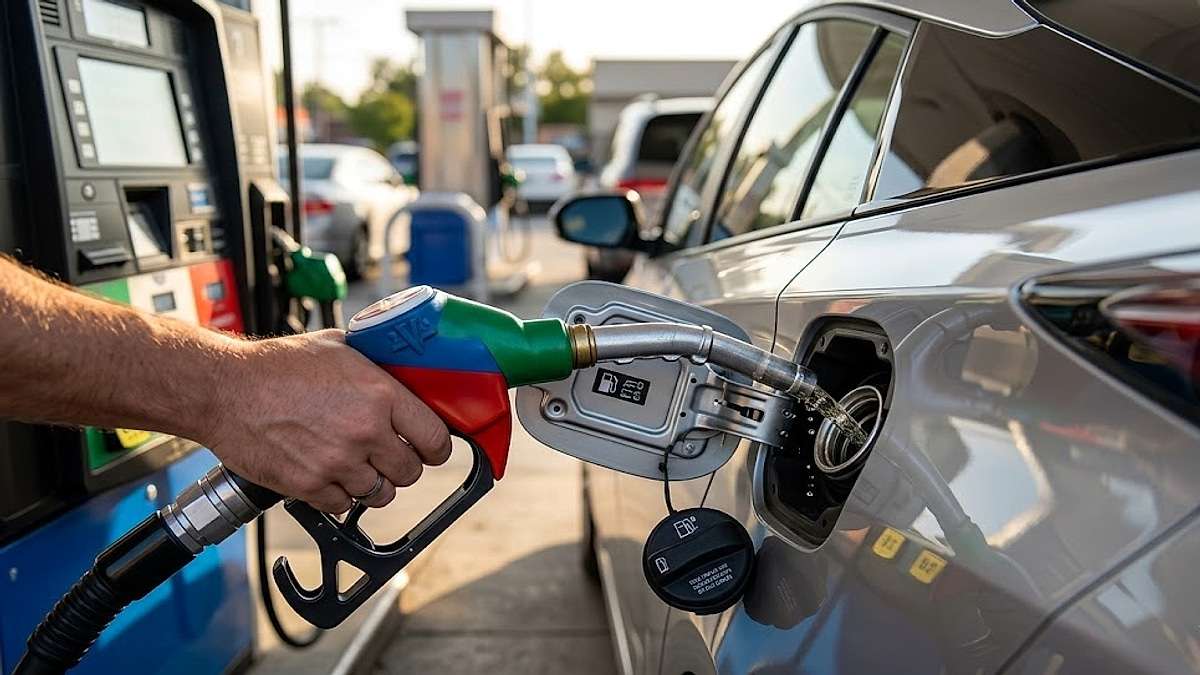

This investigative report examines a significant deviation from the manufacturer's guidelines for the 2025 Toyota Prius. While Toyota officially mandates 87-octane regular fuel, real-world field data from high-mileage testing suggest that 91-octane premium gasoline may provide a measurable efficiency boost under specific thermal and load conditions. We analyze owner data, technical combustion dynamics, and community feedback to determine if the additional fuel cost provides a genuine return on investment for 5th Gen Prius drivers.
After decades in the automotive industry, I have learned that the owner's manual is a vital baseline, but it is not always the final word on peak performance. The most shocking discovery of the 2026 spring season comes from a 2025 Toyota Prius owner who ignored the 87-octane recommendation and achieved a staggering 61.1 MPG average over an 80-mile trip using 91-octane premium fuel.
My investigation reveals that while the Toyota hybrid system is engineered for economy, the high compression ratio of the 5th-generation 2.0L engine might actually be "timing limited" on lower-octane fuel during specific high-load or high-temperature events. By switching to a higher octane, the engine management system can advance ignition timing further without risking detonation, effectively squeezing more work out of every drop of fuel. We are seeing a pattern in which the modern Atkinson-cycle engine responds to premium fuel in ways that traditional economy cars simply do not.
As reported by Jason Black from Louisiana on the Toyota Prius 5th Gen Club Owner’s Facebook page: “I got this report from my trip and was shocked. I’ve been using premium gas. The report says Trip Distance: 79.2 miles, Trip Time: 01:29 hours, EV Driving Ratio: 33%, Trip Average: 61.1 MPG.”

The Science of Combustion Against Manufacturer Constraints
Toyota engineers the Prius to be accessible, and requiring 87 octane is a major selling point for budget-conscious buyers. However, looking at the technical specifications of the M20A-FXS engine, we see a very high compression ratio. When I look at reports from experts like those at Car and Driver, who have long studied real-world fuel impacts, they note that modern turbocharged and high-compression engines often pull timing on regular gas to prevent knock. Specifically, a report on engine efficiency highlights that higher octane ratings provide a greater margin of safety against pre-ignition, allowing the computer to optimize combustion.
I have spent decades testing cars in the thin air of the Rocky Mountains, and I can tell you that the engine computer is constantly fighting a battle between efficiency and safety. In my own previous reporting on Toyota Prius fuel economy mysteries, I explored how environmental factors play a larger role than most people realize. I noted that even a small change in fuel quality can trigger the knock sensors to retard timing, which immediately drops your MPG.
Another authority in the field, Consumer Reports, suggests that while most cars do not need premium, the benefit is most noticeable in engines designed with high thermal efficiency. Their lead testers have observed that some vehicles show a slight but repeatable improvement in fuel economy when under load. One specific report mentions that premium fuel allows the engine to run closer to its ideal spark advance curve under heavy throttle.
Field Observations from Owner Communities
The digital community is where the real-world testing happens every single day. I monitor these forums closely because the collective data of thousands of drivers often reveals trends before the manufacturers acknowledge them. In a recent technical discussion on r/prius, one owner shared a similar sentiment about fuel grades. They stated, "I noticed that on 87 octane, the engine feels a bit more buzzy during highway merging, but with 91, the transitions between EV and ICE are much smoother," which suggests the engine management system does not have to compensate as aggressively for lower fuel stability. You can see the full thread here on Reddit.
From my 30 years of experience, this aligns perfectly with how Toyota's hybrid control units manage the power split. If the internal combustion engine is struggling with minor knock, the system will rely more heavily on the electric motor to bridge the torque gap, which can, ironically, deplete the battery faster and lead to lower overall efficiency in the long run. Another driver added a fascinating data point, mentioning, "My MPG went up by about 3-4 on my daily commute after two tanks of 93 octane, though the cost didn't quite break even," found in this Reddit discussion.
The user feels this way because the Prius engine is optimized for a very narrow operating window. When you give the engine better fuel, you effectively widen that window, allowing the hybrid system to stay in its "sweet spot" for longer.

Deconstructing the 61.1 MPG Louisiana Run
Let us look closer at the numbers Jason Black reported. A 33% EV driving ratio is excellent for a non-Prime (standard) Prius. However, achieving 61.1 MPG over nearly 80 miles is well above the EPA highway rating. Louisiana is flat, which helps, but the humidity and heat often increase engine stress. In these conditions, 91 octane acts as a thermal stabilizer. I suspect that the higher octane prevented the ECU from enriching the fuel mixture to cool the cylinders, a common tactic engines use when they sense heat soak or lower quality fuel.
We also have to consider the long-term health of the 2.0L Dynamic Force engine. These engines use both direct and port injection. Higher octane fuels often come with a more robust additive package. While Toyota says 87 is fine, I have seen many instances where a steady diet of premium keeps intake valves cleaner over 100,000 miles. This is not just about the MPG today; it is about the efficiency you maintain five years from now.
Key Takeaways
- Surpass official EPA estimates by leveraging high-octane fuel stability in 5th Gen Prius models.
- Advance ignition timing through the ECU to maximize the 2.0L engine's 14.0:1 compression ratio benefits.
- Analyze trip data, such as the 61.1 MPG result, to see whether fuel costs offset the efficiency gain.
- Evaluate your specific driving environment since premium fuel benefits vary by climate and elevation.
Is Premium Gas Actually Cost-Effective?
The very next logical question every Prius driver will ask is: "Does the increase in MPG actually pay for the extra cost of 91 octane?" I ran the math. If 87 octane costs $3.50 and you get 52 MPG, your cost per mile is roughly 6.7 cents. If 91 octane costs $4.10 and you get 61 MPG, your cost per mile is 6.7 cents. In this specific scenario, the efficiency gain perfectly offsets the price hike. You are essentially getting a smoother, cleaner-burning engine for free. However, if your gain is only 2 or 3 MPG, the math fails. My recommendation is to run three full tanks of 91 octane and track your specific results, as your driving style and local terrain will be the ultimate deciding factors.
Navigating the Future of Hybrid Efficiency
The 2025 Toyota Prius is a marvel of engineering that proves we have not yet reached the ceiling of internal combustion efficiency. While the factory recommendation remains the safe bet for most, owner-reported data from Jason Black shows that there is hidden potential waiting to be unlocked by those willing to experiment with higher-grade fuels. My three decades in this industry have taught me to trust the data, but also to verify it against the lived experiences of the people behind the wheel. We are moving into an era where "standard" advice is being challenged by high-tech sensors and smarter engine management.
What Would You Do? Have you tried running premium fuel in your 5th-generation Prius, and did you see a jump in your MPG, or was it a waste of money? Tell us what you think and leave a comment using the red "Add new comment" link below.
About The Author
Denis Flierl is a 14-year Senior Reporter at Torque News and a member of the Rocky Mountain Automotive Press (RMAP) with 30+ years of industry experience. Based in Parker, Colorado, Denis leverages the Rockies' high-altitude terrain as a rigorous testing ground to provide "boots-on-the-ground" analysis for readers across the Rocky Mountain region, California EV corridors, the Northeast, Texas truck markets, and Midwest agricultural zones. A former professional test driver and consultant for Ford, GM, Ram, Toyota, and Tesla, he delivers data-backed insights on reliability and market shifts. Denis cuts through the noise to provide national audiences with the real-world reporting today’s landscape demands. Connect with Denis: Find him on LinkedIn, X @DenisFlierl, @WorldsCoolestRides, Facebook, and Instagram.
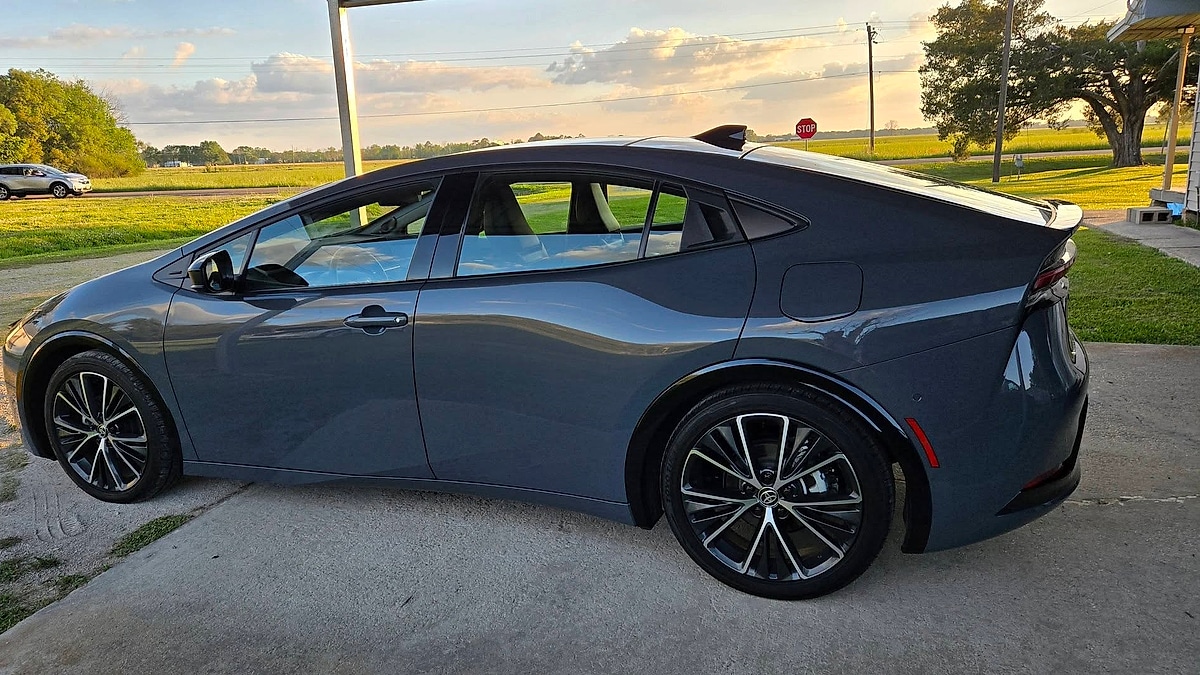
Photo credit: Denis Flierl via Jason Black
Set Torque News as Preferred Source on Google
Follow us today...







Comments
Prius? No. Decades ago I had…
Permalink
Prius? No. Decades ago I had a 1984 Toyota Camry. 4 cylinder, manual transmission. 87 Octane: 25 MPG. 92 Octane: 33 MPG. The cost per gallon was 30 cents higher for premium but the cost per mile was less. A full tank (10 gallons) of premium would last one week. To travel the same distance on regular would cost $4 more!
The main reason for the…
Permalink
The main reason for the improved fuel economy is energy density. Ethanol added to fuel at lower octane ratings diluted the energy density of the fuel. So more fuel is required for the same power output. This is simple physics.
True I run 90 octane non…
Permalink
In reply to The main reason for the… by Bobby (not verified)
True I run 90 octane non ethanol in my VW JETTA and get over 50 MPG on the highway.
Ethanol has a much higher…
Permalink
In reply to The main reason for the… by Bobby (not verified)
Ethanol has a much higher octane than gasoline.
Don't say that cos now you…
Permalink
In reply to The main reason for the… by Bobby (not verified)
Don't say that cos now you are making people laughing around you 🤣🤣🤣🤣🤣🤣
Ethanol by itself IS USED TO BE ADDED TO THE FIEL WITH HIGHER OCTANE COS IT IS IMPROVED DETONATION STABILITY!!!
There are so many factors…
Permalink
There are so many factors that influence fuel economy more than octane rating. First of all, you cannot get an accurate fuel economy by driving a mere 80 miles. In a lab environment you could get decent results, but not possible with real world driving. Some of the obvious factors in real world driving would be temperature, humidity, wind speed (resistance), tires (all season vs snow tires), rolling resistance of said tires (not all tires are created equal), tire pressures, etc.. Fuel blend (summer vs winter) also has a large influence, although in this case we can assume it's not a factor because it takes place in Louisiana. Vehicle speed also has a large influence on mpg. Based on the numbers given (79 miles in 89 minutes), that puts the average speed at 52 mph. Now imagine what that fuel economy drops to if driven at 65-75 mph. Fuel economy drops greatly as speeds get above 50 mph. Even more so with a hybrid (vs a non hybrid) as the gas engine is needed to provide the extra power required to maintain higher speeds. A Prius is able to achieve great fuel economy by cycling the gas engine on/off as needed. At highway speeds that advantage goes away.
Perhaps the biggest factor in real world results comes down to the loose nut behind the wheel. Yes, I'm taking about the driver.
Here's a perfect example. I also drive a 2025 Prius. For 3 months I had to share my car with my wife while waiting for her replacement car to be built following a nasty accident that totaled her vehicle. My fuel economy dropped by 18 mpg in those 3 months. Nothing changed in that time other than her now using my car. The driver is the biggest factor in fuel economy, period!!
In my somewhat expert opinion, (15 years as a Toyota Master Diagnostic Technician), the top 3 real world factors in fuel economy are: #1- the driver. As shown in my example above. #2 (if applicable)- fuel blend. Fuel economy in cold weather states can drop 10-20% during the winter. If your vehicle normally gets 20 mpg, you'll only lose 2-4 mpg. However if you drive a vehicle that normally gets 50 mpg, you're losing 5-10 mpg. #3 - tires. Tire inflation and type (all season or snow).
I apologize for the long winded comment, but I'm sick of seeing B.S. information being spread by people who lack the knowledge or expertise on a particular subject. It seems to be more common these days to see an article being written by a "journalist" based on what they've read in online forums. Unfortunately, I've read several by this particular person and I find very little accurate information being written. Mostly misleading crap being spewed out under the guise of "30 years of industry experience".
I hope I've provided some useful information.
There was no mention of the…
Permalink
There was no mention of the ethanol content. In my region, premium often does not include any BTU-robbing ethanol. This alone boosts my mileage by 14 to 16%.
I regularly run non ethanol…
Permalink
I regularly run non ethanol 90 in my VW Jetta 1.4 turbo and get 41 mpg around town and 52 mpg highway and this car is not a hybrid
Neat find, but it with…
Permalink
Neat find, but it with premium hitting $6 and beyond, the math goes out the window again.
I only use my 3rd gen for…
Permalink
I only use my 3rd gen for commuting and log every tank in Google sheets, the instrument cluster MPG is not accurate. I tested both 87 and 91 octane and saw no difference in timing or MPG.
Air density between 32 F and…
Permalink
Air density between 32 F and 90 F varies 10%. This is likely the largest driver of seasonal mpg changes. That and a loose nut behind the wheel :)
I drive my company given…
Permalink
I drive my company given prius 2025. It gives me 599 miles per tank, the max i hav put is less than 9 gallons, I am thinking it might be 10gl tank, that's, 59 miles per gallon, mine is mostly Highway.
The reason you use lower…
Permalink
In reply to I drive my company given… by RJ (not verified)
The reason you use lower octane fuel in a hybrid is because it ignites easier between gas and hybrid modes. The higher the octane the slower and smoother it burns which is great in some engines.
The reason you use 87 octane…
Permalink
In reply to I drive my company given… by RJ (not verified)
The reason you use 87 octane fuel in a hybrid is because it ignites easier between gas and hybrid modes. Higher octane fuel burns slower and smoother which is great for high performance engines with high cylinder pressures.
Yes, I can feel the car run…
Permalink
Yes, I can feel the car run better and better gas mileage