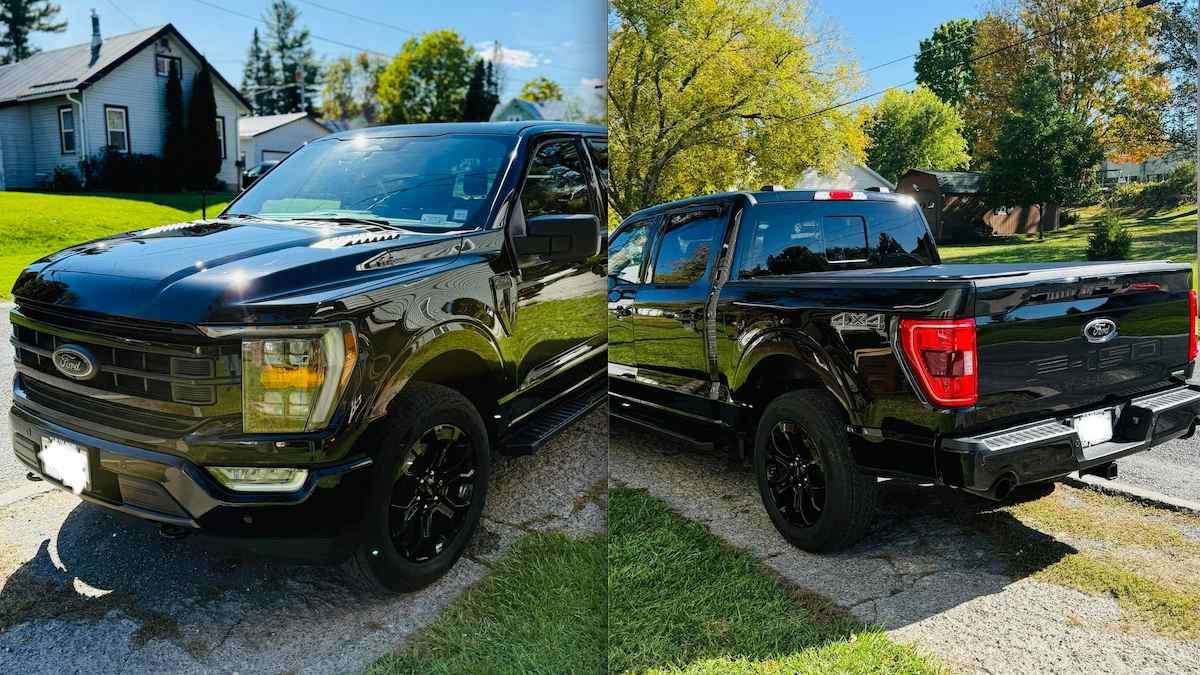

From a Ford F-250 to an F-150 is culture shock for this truck owner. Many F-150 owners can relate.
You might think trading a Ford F-250 for a new 2025 F-150 is a simple downsize, but for owners like Barry Horne, it's a shocking drop to the pavement that has him planning a lift to feel like he's driving a truck again.
Barry Horne on the Ford F-150 Owners Facebook page says,
"I went from a 2017 Ford F-250 Crew Cab with 35's to this 2025 F-150. It feels low. I almost feel like I'm in a car. I figured it was because of what I'm used to for the past eight years. Now, it's over a month later, and it still feels too low to me. I want to level/lift it like 2-3" maybe. I'd prefer to use 33" tires. Does anyone have a truck exactly like this lifted? I don't want to do it and then not like it."
In this report, I will tackle the Super Duty hangover and what F-150 owners can do to get that commanding view and large truck feel back.
We've all been there. You make a big transition, in Barry's case, stepping out of a Ford F-250 and sliding into the cab of a brand-new 2025 F-150. Logically, you know the F-150 is still a capable pickup truck. But your brain and body are screaming one thing: "It feels low. I almost feel like I'm in a car."
What Barry and many owners are experiencing is 100% real. It's not just in his head. It's a physiological reaction to dropping eight years of Super Duty life.
However, it isn't just about ride height; it's about the entire cab-to-ground relationship.
The F-250's frame sits higher on its axle perches, its dash is often higher, and its hood is more commanding. The F-150, being Ford's premier light-duty commuter and workhorse, prioritizes easy ingress/egress and a slightly lower center of gravity for better daily driving and towing stability.
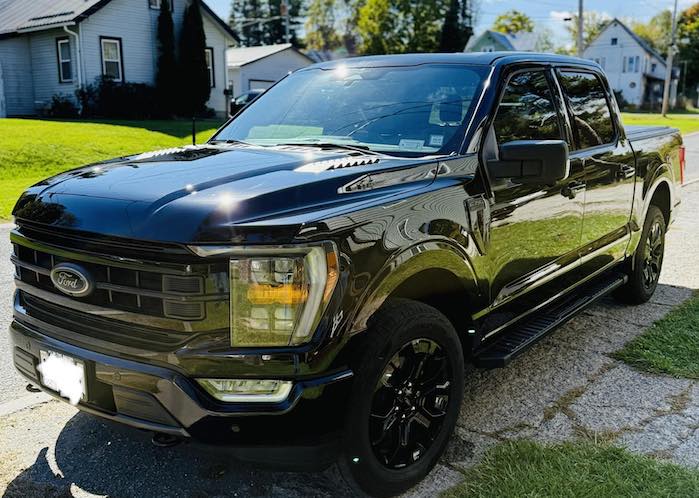
Can Barry get that commanding presence back?
It's possible to reclaim the "truck feel" without the F-250's fuel bill. So, Barry is considering a 2-3-inch level/lift with 33-inch tires, which is a good formula. I'll break down the process, parts, and the practical takeaways.
The F-150 Level/Lift Options
When you move to level or lift a F-150, you have two primary methods to achieve that 2-3 inch goal.
Option 1: Leveling Kits (2-inch to 2.5-inch)
For those targeting 2 to 2.5 inches—which is recommended for the best balance—you are looking at a leveling kit. These are designed specifically to correct the factory "rake" (where the rear sits slightly higher than the front for towing stability).
The key insight here is the CV joint angle. The F-150's front axles are designed to operate within a specific arc. Pushing the lift beyond 2.5 inches with a simple spacer kit can put stress on these critical components, leading to premature wear. For anyone researching the 2025 Ford F-150 leveling kit installation guide, the complexity level is moderate, but paying attention to the upper control arm (UCA) and CV angles is paramount for longevity.
Option 2: Full Lift Kits (3-inch and Up)
If you must hit the 3-inch mark—or go higher—you should pivot to a full lift kit. A proper 3-inch lift kit usually involves replacing the coilover assembly entirely (like a Bilstein or Fox shock package) or dropping the lower control arms to keep the geometry in check.
While a budget spacer can achieve 3 inches, the far superior (and more expensive) solution for maintaining ride quality and articulation is the complete coilover replacement. This ensures that when you choose the best 3-inch lift kit for the new Ford F-150, you're getting a fully engineered system that retains the factory ride quality Barry is used to, rather than a stiff, jarring ride that compromises handling.
The Perfect Tire Pairing: 33s
Barry's instinct to stick with 33-inch tires is ideal. This decision shows a genuine understanding of the practical limitations and benefits of a leveled F-150.
The difference in ride height feel between the F-150 and F-250 is dramatically affected by tire choice. While an F-250 often rolls out with 34- or 35-inch equivalents, the F-150's wheel wells are much tighter.
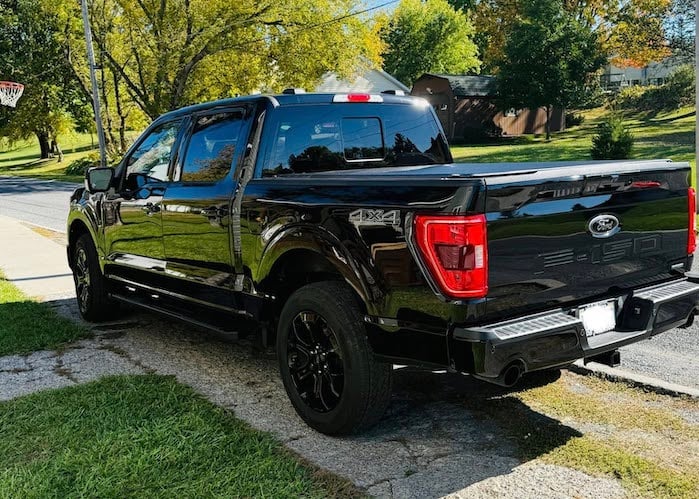
Why 33s are the Sweet Spot:
- Rubbing Mitigation: When asking, Will 33-inch tires rub on a leveled F-150, the answer is almost always no if you stick with a stock or near-stock offset wheel and a lift between 2 and 2.5 inches. Going up to 35s dramatically increases the risk of rubbing on the crash bars or fender liner at full steering lock, often requiring additional trimming.
- Performance Maintenance: Larger tires add rotational mass. This impacts acceleration, braking, and fuel economy. The 33-inch size is the perfect compromise, providing a visual boost and improving the Ford F-150 stance correction after the F-250 switch without causing the engine or transmission to feel sluggish.
- Recommendation: Once you install the new tires, you absolutely must address the speedometer. This falls under the final long-form keyphrase: recalibrating speedometer after F-150 tire upgrade. The factory calibration will be off, showing you driving slower than you actually are. You'll need a calibration device (such as a programmer or a visit to the dealership) to ensure accuracy, which is essential for safety and fuel-efficiency tracking.
The Formula
Based on Barry's goal of 2–3 inches and 33-inch tires, here is what the experts recommend: a formula designed for optimal daily driver performance and minimal component strain.
- Lift Height - 2.5 inches (Front) - Corrects the factory rake, minimizes CV joint strain.
- Lift Type - Premium Coilover Shock or Strut Spacer Kit -Use a spacer for budget; use a full coilover for the best performance and ride quality, especially if choosing the right leveling kit for F-150 off-road use.
- Tires - 33 x 12.50 R18 or R20 - Perfect visual fill, minimal rubbing, lower rotational mass than 35s.
- Wheels (Offset) - +18mm to +25mm (for 9-inch wide wheels) - Keeps the tire tucked under the fender, preventing excessive splash and reducing the chance of rubbing the outer fender edge.
The move from the F-250 is dramatic, but a 2.5-inch leveling kit with a solid set of 33s transforms the F-150 into a beautifully aggressive, highly usable truck. This combination strikes the ideal visual balance, eliminating that "car-like" sensation while retaining all the comfort and efficiency that made you choose the F-150 in the first place.
What the Community is Saying
Barry's post struck a nerve, generating dozens of responses from owners who've made the same Super Duty to F-150 leap. Here are a few reactions from the community:
- Mark T. (Michigan): "Dude, I know the feeling. I did the exact swap. I went with the 2.5" spacer lift on the front and kept the stock block in the back. Put 33-inch Falkens on, and it was perfect. Got my sightline back, and it still fits in the garage. Zero issues after 30k miles."
- Sarah J. (Texas): "Don't go 3-inch with a spacer! I did that and tore up a CV boot within 6 months. Had to downgrade to a 2-inch spacer to save my axles. Now I'm saving up for a full 3-inch coilover kit, which is the right way to lift it for performance."
- Javier R. (California): "The 33s look great on a leveled truck, but you need to budget for the calibration. It's an extra $150–$300, depending on the shop, but it's non-negotiable for safety. Also, it's much easier to find options for choosing the right leveling kit for F-150 off-road use if you stick to the 2.5-inch height."
More F-150 Related Coverage
For more details on Ford F-150 modifications and new models, check out my related stories:
- "I Haven't Even Had My $40K 2025 Ford F-150 Ten Days, and I Already Have a Serious Issue, a Defect That Has Me Shaking My Head"
- "My Ford F-150 Has Lost So Much Value, $20K In Negative Equity Since Ford Decided to Tank the Brand Due to Reliability and Cutting Corners."
Conclusion:
What Barry is searching for is totally attainable. He wants that commanding height and presence back without sacrificing the F-150's practical nature.
Questions For You: Your Take on the Truck Stance
For those of you who've leveled or lifted your Ford F-150s, especially coming from a Super Duty or similar big truck, what are your thoughts?
Did a 2-3" level/lift on your F-150 give you back that commanding "big truck" feel, or did you find the lower profile of the F-150 takes some getting used to?
Weigh in with your setup (level/lift size and tire size) and let us know in the comments below if you regret the change or if it's the perfect sweet spot.
I'm Denis Flierl, a Senior Torque News Reporter since 2012, bringing over 30 years of automotive expertise to every story. My career began with a consulting role for every major car brand, followed by years as a freelance journalist test-driving new vehicles—equipping me with a wealth of insider knowledge. I specialize in delivering the latest auto news, sharing compelling owner stories, and providing expert, up-to-date analysis to keep you fully informed.
Follow me on X @DenisFlierl, @WorldsCoolestRides, Facebook, and Instagram
Photo credit: Denis Flierl via Barry Horne
Set Torque News as Preferred Source on Google
Follow us today...