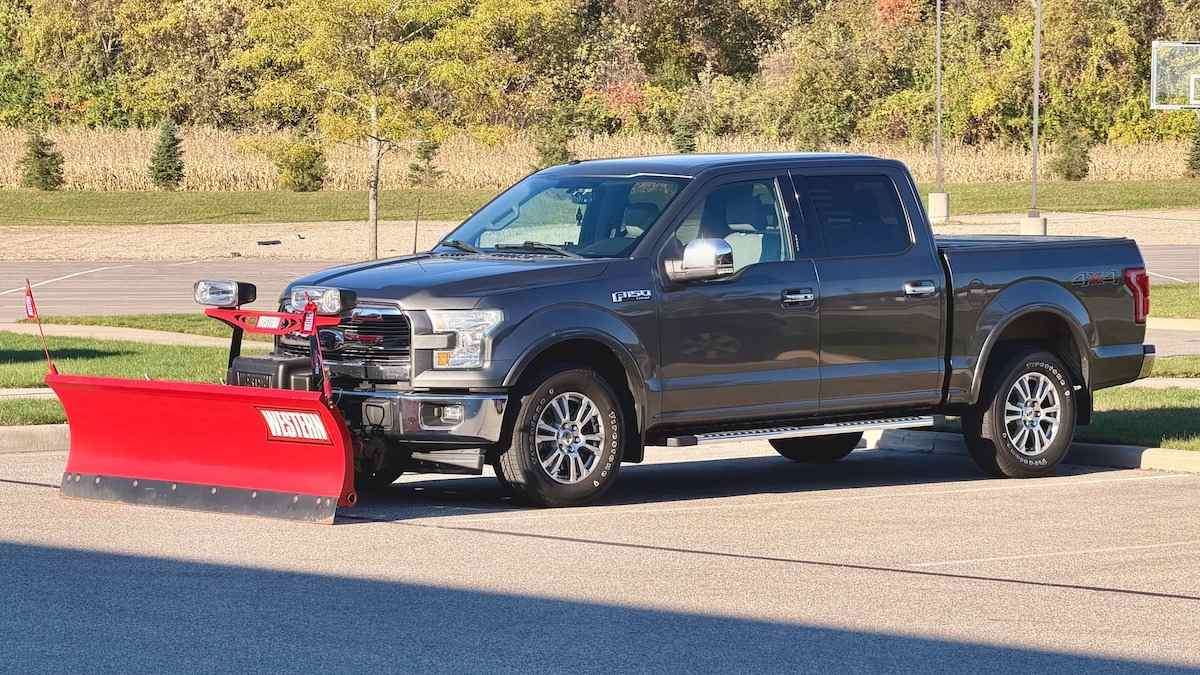

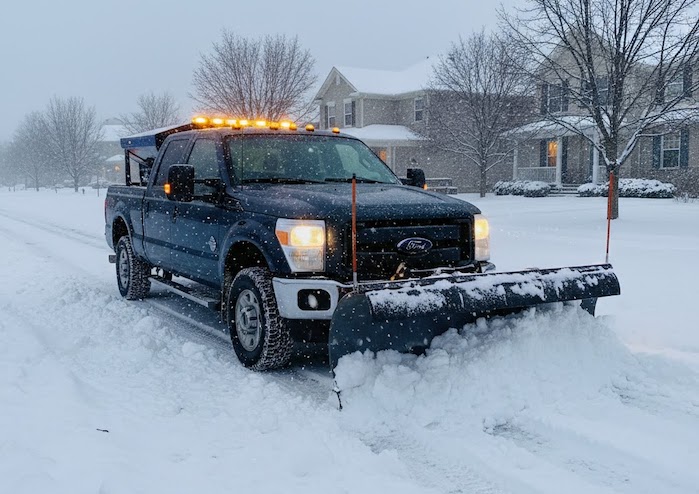
James Klein installed a plow on his 1/2 ton F-150 pickup for driveway use, defying the F-250/F-350 crowd's advice. Is an F-150 up to the task in Michigan? See the setup and join the debate:
James Klein on the Ford F-150 5.0 Owners Facebook page says,
"I finished up my 1/2 ton Ford F-150 plow install last night. I know I'm getting grief from F-250 and F-350 guys for running a plow on my 1/2-ton, but this is strictly for my own driveway, so it won't be heavy use. I do say it looks pretty good. All ready for the snow up here in Michigan."
The Half-Ton Plow Debate: Should You Put a Blade on Your Ford F-150 5.0L?
I saw James's post, and he's far from alone. I've heard the same friendly grief from the F-250 and F-350 guys my entire career. They love to talk about heavy-duty superiority, but the truth is, not everyone needs a commercial rig for a residential driveway. The F-150 is a capable plowing machine, and with the proper knowledge, you can absolutely use it to keep your own driveway clear.
However, before you drop that blade for the first time, we need to talk payload, suspension, and the difference between "looks good" and "won't crack your frame." My goal here is to deliver meaningful content that provides you with a complete solution and practical takeaways, helping you protect your truck while handling your driveway.
The Truth About Weight and Axles
The most critical factor when installing a half-ton snow plow on a daily driver truck isn't the engine—your 5.0L V8 has the power—it's where that weight sits. A snowplow is a massive cantilevered weight hung out in front of your front axle. It's the single most punishing accessory you can add to a light-duty vehicle.
How to Calculate Payload Capacity
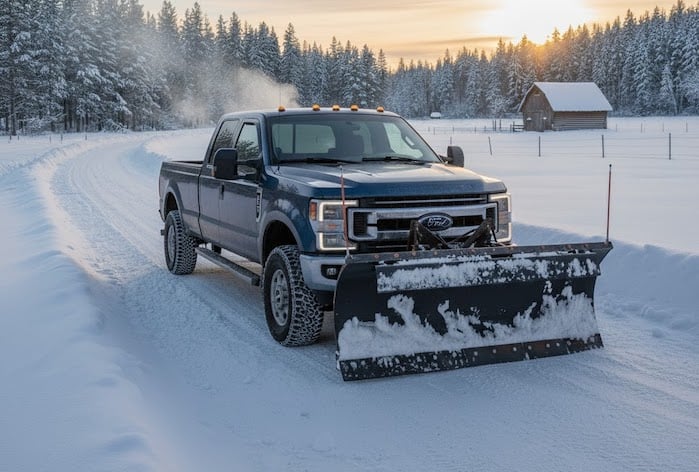
Every time I discuss plowing, I stress the importance of understanding your vehicle's specific limits. This is how pros operate. James needs to know how to calculate payload capacity before adding a snow plow. Find your truck's door jamb sticker, and check the Gross Vehicle Weight Rating (GVWR) and, more importantly, the Front Gross Axle Weight Rating (FGAWR).
Ford's official documentation for 4x4 F-150 models requires you to subtract the weight of the plow assembly (blade, frame, hydraulics, mounting hardware) PLUS the weight of you and any passenger, PLUS the necessary ballast (we'll cover that next) from the FGAWR. If you exceed that FGAWR, you are damaging your front suspension and potentially creating a serious handling issue.
For a standard 5.0L F-150, the maximum snow plow weight for Ford F-150 5.0L models, including the hardware, typically falls in the 800 to 1,200-pound range, and only the lighter-weight, poly-blade residential plows fall into the lower end of that spectrum. Choose a lightweight straight blade (often 450-700 lbs total assembly weight) and avoid V-plows or heavy steel commercial models.
Adding the Right Amount of Ballast
To counteract the massive forward shift in weight, you must add ballast (dead weight) to the rear of your truck, directly over or slightly behind the rear axle. A good rule of thumb is a 2:1 or 3:1 weight-to-rear ratio for every pound the plow assembly weighs. This helps maintain proper weight distribution, preventing the rear wheels from lifting and preserving traction and steering integrity.
How to Stop the Sag
Even if you choose a legal plow weight, the first time you drop that blade, you will notice significant front-end sag. This is where the F-250 guys have a point: their trucks have factory heavy-duty springs.
Since we are talking about real-world, actionable solutions, you need to look at the best suspension upgrades for F-150 snow plowing. Forget just leveling kits; those don't add capacity. You need a load-leveling solution.
I recommend looking into Suspension Enhancement Systems (SES), such as those offered by Timbren. These are progressive, rubber helper springs that replace your factory bump stops. They are zero-maintenance, work great in cold weather, and only engage when the weight is applied (i.e., when the plow is on). They eliminate the dreaded front-end squat and reduce sway without ruining your daily-driver ride quality once the plow is off.
Check out my previous F-250 report: I Just Bought a 2025 Ford F-250, I Waited for the Less Expensive Tesla Cybertruck, and When It Came Out, I Still Couldn't Afford It.
Is the F-150 Snow Plow Prep Package Necessary?
In short, the answer to whether the F-150 snow plow prep package is necessary for light-duty use is best determined by examining the electrical system. The SPPP requires the 5.0L engine and 4x4 and includes essential enhancements:
- Software: The SPPP comes with a "Plow Mode" button. When activated, the software temporarily shuts down non-essential electronics (like heated seats, radio, and power outlets) to dedicate maximum power to the plow's hydraulics and the beefed-up charging system.
- Hardware: It often includes a heavy-duty alternator (190A or higher), specialized wiring provisions, and factory-installed heavy-duty front springs.
If you don't have this package, your standard alternator and wiring harness may struggle to keep up with the high draw of the plow's hydraulic pump, leading to battery drain or premature alternator failure. If you installed an aftermarket plow without these factory provisions, you must ensure your installer upgrades the charging system.
Long-Term Wear and Tear
My final piece of expert advice addresses the long-term effects of plowing with a Ford F-150. Pushing snow is brutally hard on a truck. It's not the distance traveled, but the constant low-speed, high-load cycling between Drive and Reverse that kills components.
- Transmission: Low speeds prevent proper airflow over the transmission cooler, leading to overheating. Always use your truck's lower gears (like 4-Lo or even "M" mode to lock out high gears), and let the transmission cool down after long sessions.
- Frame & U-Joints: The constant pushing, stopping, and turning with a heavy weight stress the front suspension, putting massive loads on your U-joints, tie rods, and frame bushings. Be gentle. Always come to a complete stop before shifting from forward to reverse.
- Rust and Corrosion: The splash from the plow concentrates brine and salt in hard-to-reach frame crevices. After every major plow session, wash the underside of the truck, paying special attention to the frame rails and plow-mount areas.
If you stick to residential driveways and manage your weight, you significantly mitigate these risks, but maintenance will become paramount.
What the Community is Saying
I monitor forums and social channels closely to see what real truck owners are experiencing. The F-150 plowing conversation is always passionate:
- The Pro-F-150 Camp: "I've been using a light-duty aluminum plow on my 2018 5.0L for three years, just for my 500-foot gravel driveway. I added Timbrens and 500 lbs of sandbags in the back. No problems yet!" (Source: F-150 Forum User)
- The Sceptics: "Don't kid yourself. The weight limit is only part of the story. The constant low-speed turning puts massive strain on the steering rack and pump. Plowing is a Super Duty job." (Source: Reddit Mechanic Advice)
- The Plow Expert: "The biggest mistake I see is people running too wide a blade. For residential, focus on maneuverability. You don't need an eight-foot blade."
This brings me to my final takeaway: when you're choosing the correct snow plow blade width for a residential driveway, prioritize one that is only slightly wider than your truck's track width (the width of the tires). A 6.5-foot or 7-foot lightweight straight blade is far safer and more maneuverable than an 8-foot behemoth.
More F-150 Stories:
Conclusion & Question For Ford Truck Owners
James's plow install looks sharp, but now the work begins. In snowy Michigan, his F-150 will get a real workout this winter.
My question for Ford truck owners:
Beyond the F-250 vs. F-150 debate, what is the single most essential non-mechanical accessory (like lights, wipers, or chains) that makes your personal snow plowing job manageable? Click the red Add New Comment link below and let us know.
I'm Denis Flierl, a Senior Torque News Reporter since 2012, bringing over 30 years of automotive expertise to every story. My career began with a consulting role for every major car brand, followed by years as a freelance journalist test-driving new vehicles—equipping me with a wealth of insider knowledge. I specialize in delivering the latest auto news, sharing compelling owner stories, and providing expert, up-to-date analysis to keep you fully informed.
Follow me on X @DenisFlierl, @WorldsCoolestRides, Facebook, and Instagram
Photo credit: Denis Flierl via James Klein
Set Torque News as Preferred Source on Google
Follow us today...