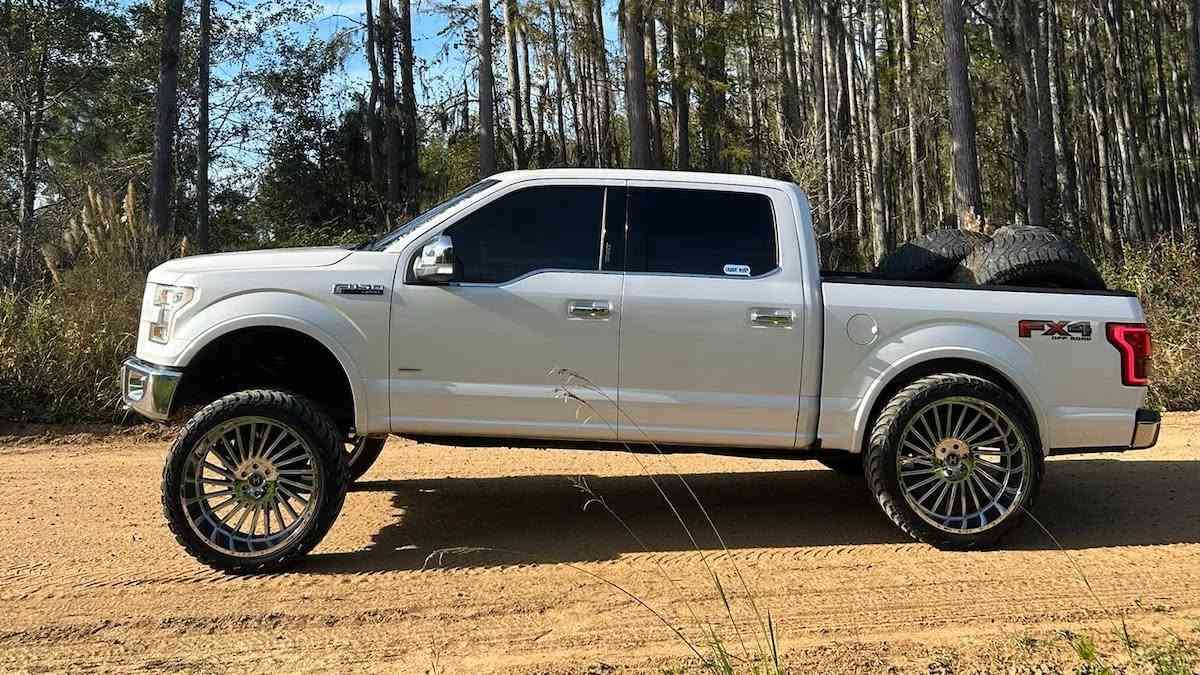

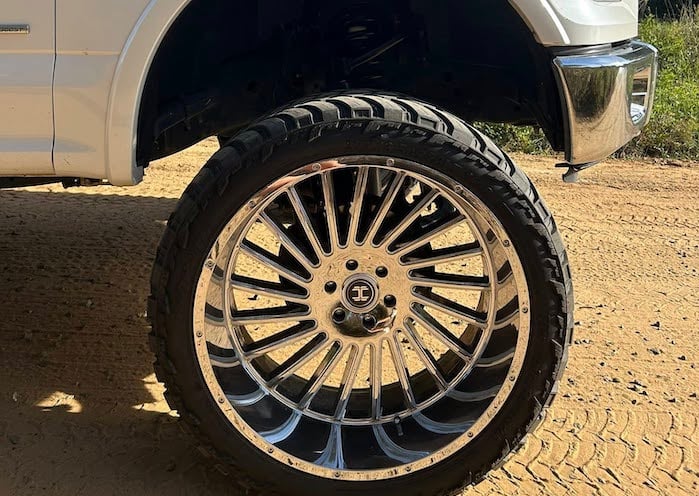
Check out the controversial Carolina Squat mod on this Ford F-150 that's sparking outrage on the F-150 owners page! Get ready for a debate. Love it or hate it?
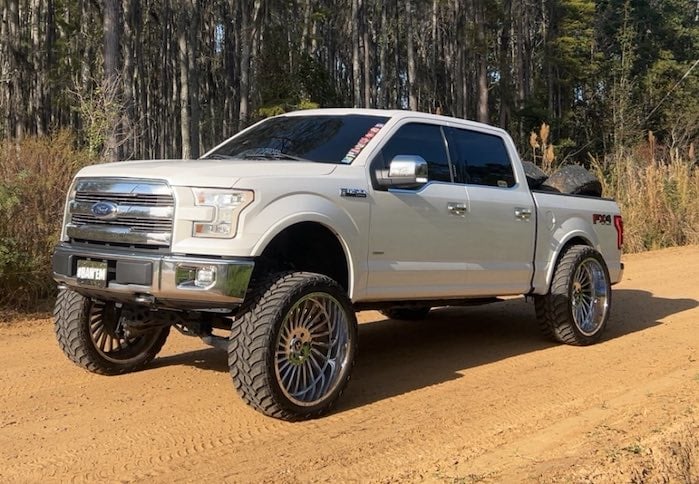
Bailey Musselwhite on the Ford F-150 Owners Facebook page says, "I figured I would come and upset some of you with my Ford F-150 with a Carolina Squat!"
The F-150 Carolina Squat Controversy: Why It's a Safety Time Bomb
I saw Bailey Musselwhite's post, and this one sparked a firestorm of comments.
The comments under that post are a microcosm of the entire debate surrounding this modification. While truck culture thrives on individuality and pushing aesthetic boundaries, this particular trend crosses a critical line, pitting personal style directly against public safety and, increasingly, state law.
I've been covering Ford, Ram, and GM trucks for decades, and I've seen every type of lift, drop, and custom job imaginable. But the Carolina Squat—which involves significantly raising the front end of a truck while keeping the rear end stock or lowered—isn't just a quirky look; it's a foundational safety compromise. My advice, distilled from conversations with automotive engineers and insurance experts, is this: it's not worth the risk.
The Safety Time Bomb
The modification, often accomplished by installing simple leveling kits backward or by combining extreme front lifts with rear drops, fundamentally alters the vehicle's intended geometry. This isn't just about ride height; it's about physics and engineering. Ford engineers spend millions to ensure the F-150 operates safely in all conditions, especially in emergencies. The Carolina Squat undoes much of that work.
Let's focus on the most dangerous technical consequence: braking. Under normal, level conditions, a pickup truck's weight distribution shifts forward when the driver hits the brakes. This is controlled and expected. When a truck is squatted, the starting weight distribution is already biased toward the rear.
When braking, the dramatic shift further unloads the rear tires, reducing their traction and effectiveness. This is a critical factor when analyzing the long-term safety risks of the Carolina Squat suspension lift. In a panic stop, a squatted truck will take significantly longer to stop and is far more prone to unstable diving and fishtailing.
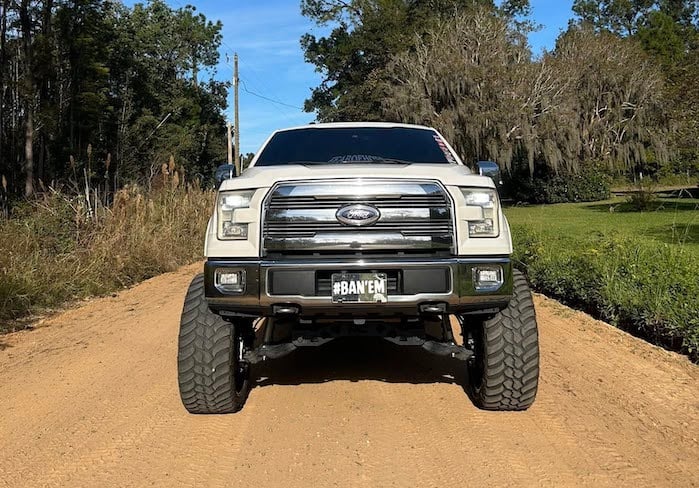
Another major liability, and one that is driving the legal backlash, is the lighting. The effect of the Carolina Squat on Ford F-150 headlight aim cannot be overstated. By tilting the vehicle back, the headlights—designed to shine a specific distance and at a specific height down the road—are now directed upward into oncoming traffic. This is a severe blinding hazard and a primary reason why law enforcement is cracking down.
The Legal Tightrope Walk
The aesthetic trend may have started in the Carolinas, but the legal reality is catching up fast, and owners nationwide need to pay attention. The question of whether the Carolina Squat modification is legal in Texas—or any other state—is becoming easier to answer: No, or at least soon to be no.
The core of the legal issue rests on two points: bumper height and lighting standards. States are rapidly legislating against the squat by enforcing differential height limits (the difference between the front and rear bumper height). In states like North Carolina and Virginia, the modification is now explicitly illegal, with harsh penalties.
My analysis of comparing state laws on truck suspension modifications reveals a clear national pattern: regulatory bodies are focusing on functional safety. While every state allows some degree of lift, they are closing loopholes that permit squatting a vehicle. Even if a state doesn't explicitly ban the "Carolina Squat," the resulting upward headlight angle or violation of bumper height variance is enough for a costly ticket and a required correction.
It's important to understand why truck owners modify suspension for aesthetic reasons.
For many, it's about standing out, conforming to a local subculture, or celebrating a custom look. That desire is understandable in the broad context of truck ownership. But when that aesthetic choice jeopardizes the safety of every other driver on the road, the law steps in.
What the Community is Saying
The debate online is explosive. While Bailey Musselwhite's post brought the controversy to the Ford F-150 Owners group, the sentiment across forums and platforms like TikTok is polarized.
- Pro-Squat Voices: Focus on individuality and perceived freedom. "It's my truck, I'll do what I want. They’re just mad they can't afford it," and "It looks aggressive, that's the whole point."
- Anti-Squat Voices: These are more numerous and increasingly vehement. "You blind everyone at night; it's irresponsible," and "It's just a ticket waiting to happen. The cops are waiting for you."
The growing legal crackdowns are giving the anti-squat side significant leverage in the argument.
My Related Ford F-150 Stories
Solutions & Recommendations
If you currently own a squatted truck or are considering buying one, here is advice and a guide to legal and safe truck modification:
- Stop Immediately: If you drive a squatted truck, reverse the modification now. Your liability in the event of an accident involving poor braking or blinding other drivers is enormous.
- Focus on Proper Leveling: The correct, safe, and legal modification is a leveling kit designed to raise the front end just enough to match the rear, compensating for the factory rake. This retains optimal braking and headlight aim.
- Cost of Correction: The good news is that reversing the modification, especially on a Ford F-150, is generally straightforward. The reversal of a Carolina Squat on a Ford F-150 usually involves removing lift blocks/spacers and, if necessary, reinstalling the correct factory-spec or appropriately sized front leveling kit. Expect costs for parts and labor to range from $300 to $800, which is significantly cheaper than the costs of a serious accident or repeated legal fines.
Conclusion
The Carolina Squat is a fad that is quickly becoming a financial and legal headache for truck owners nationwide. As a community, we need to prioritize functional excellence and public safety over temporary aesthetic trends.
This is a hot-button topic, but my job is to deliver meaningful content and practical takeaways. This specific modification compromises everything that makes the F-150 a capable and reliable truck.
Questions For F-150 Owners:
Considering Bailey Musselwhite's post about his Ford F-150 with a Carolina Squat, what's your take on this controversial modification? What's your honest, initial reaction when you see a heavily modified F-150, like one with a Carolina Squat, and do you feel it helps or hurts the overall F-150 community's image? Let me know in the comments below.
I'm Denis Flierl, a Senior Torque News Reporter since 2012, bringing over 30 years of automotive expertise to every story. My career began with a consulting role for every major car brand, followed by years as a freelance journalist test-driving new vehicles—equipping me with a wealth of insider knowledge. I specialize in delivering the latest auto news, sharing compelling owner stories, and providing expert, up-to-date analysis to keep you fully informed.
Follow me on X @DenisFlierl, @WorldsCoolestRides, Facebook, and Instagram
Photo credit: Denis Flierl via Bailey Musselwhite
Set Torque News as Preferred Source on Google
Follow us today...