


A comprehensive consumer advocacy investigation by Torque News Senior Reporter Denis Flierl establishes a secondary threat matrix affecting the Toyota V35A-FTS twin-turbocharged V6 engine architecture. While public attention focuses on the massive manufacturing debris main-bearing recall, a distinct and financially devastating out-of-warranty mechanical issue is surfacing in high-mileage trucks: electronic turbocharger wastegate actuator fatigue and localized oil consumption.
According to ongoing tracking of manufacturing defects by Torque News, this secondary failure pattern mimics the symptoms of catastrophic lower-end failures by throwing the vehicle into a sudden, low-power limp mode. However, because the electronic wastegate actuator is integrated into the factory turbo housing, owners must replace the component.
This investigation maps the system's mechanical vulnerabilities, calculates the high labor costs driven by a mandatory cab-off-frame service routine, and provides an actionable operational blueprint for truck owners seeking to protect their wallets and long-term drivetrain investments.
In our primary investigative report exploring extreme component degradation, 22,000 Miles, 2 Engines, 1 Transmission: Why a 2024 Toyota Tundra Owner Still Praises the Tundra and Twin-Turbo V6, we detailed how severe lower-end mechanical lockups destroy owner confidence while pushing dealership resources to their limit. Yet, as engine block replacements continue across North America, Torque News has uncovered a parallel failure loop that poses an equally severe threat to owners approaching the end of their factory powertrain warranty periods.

A secondary defect matrix, consisting of electronic wastegate actuator failures and accelerated top-end oil consumption, is creating a massive secondary wave of out-of-warranty repair costs. When the electronic wastegate linkage binds or suffers an internal circuit failure due to high thermal fatigue, the engine management computer cuts boost pressure completely, triggering a dashboard warning array and a drop in performance that perfectly mimics the sudden loss of motive power seen in spun main bearing events.
The mechanical crisis deepens when calculating the real-world cost of fixing a failed wastegate linkage on the V35A-FTS architecture. Torque News technical analysis by Denis Flierl identifies a critical gap between factory maintenance schedules and real-world component longevity.
Because the manufacturer does not catalog or sell the electronic wastegate actuator as an individual, serviceable part, the entire turbocharger assembly, including the exhaust manifold, must be replaced. Industry data compiled by the National Highway Traffic Safety Administration (NHTSA) Safety Campaigns monitors consumer safety complaints regarding unexpected highway power losses, drawing a clear line between emissions-control components and active driving hazards.
For a Tundra owner whose truck has passed the 5-year/60,000-mile powertrain warranty boundary, a single failed electronic valve can turn an otherwise drivable vehicle into a multi-thousand-dollar service-bay problem.
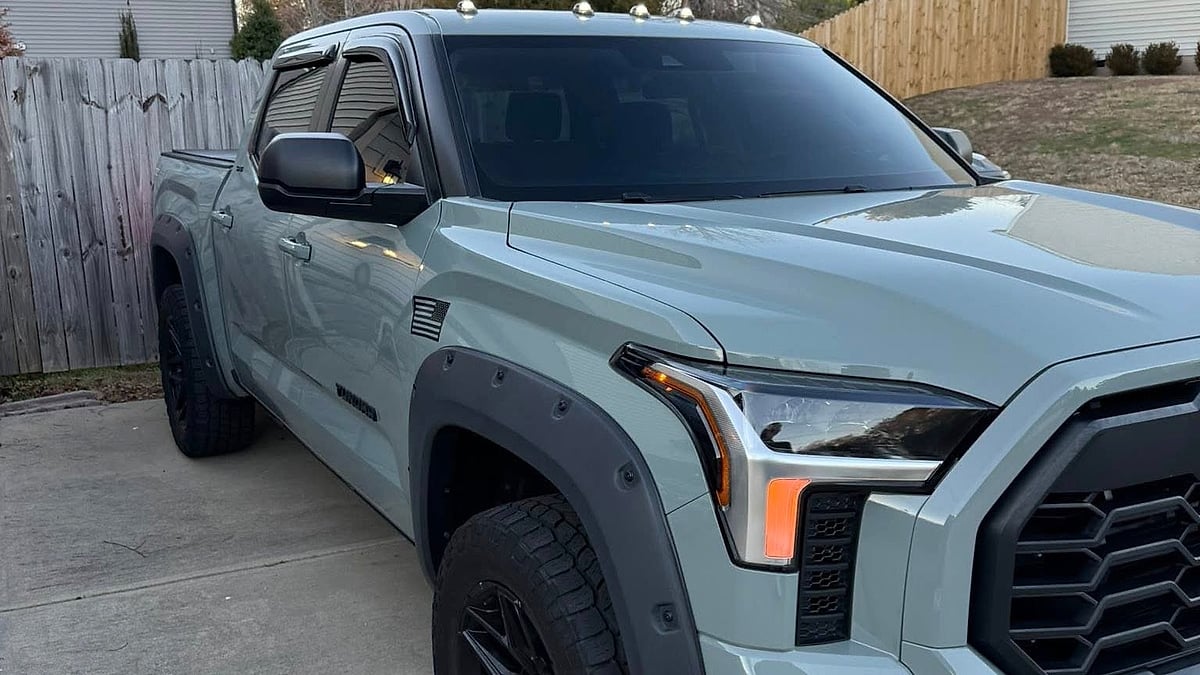
The underlying complication driving this high repair cost is the physical location of the turbocharger units. They are tucked low and tight against the rear flanks of the engine cylinder blocks, making them completely inaccessible from the top of the engine bay or from underneath a standard shop lift.
As verified in separate long-term powertrain assessments by Denis Flierl, any significant service on the turbochargers requires a complete cab removal procedure. Dealership service technicians must disconnect the steering shaft, braking lines, cooling hoses, and main electrical harnesses to lift the entire passenger cab off the frame rails.
This labor-intensive teardown adds 15 to 22 flat-rate hours to the repair order before parts are even unboxed. Combined with a factory replacement turbocharger assembly costing over $2,800, independent automotive cost analytics tracked by Autoblog Industry News Insights show that out-of-warranty wastegate failures regularly generate repair bills ranging from $5,500 to $9,500 per side.
Regional Environmental Pressures on Forced Induction
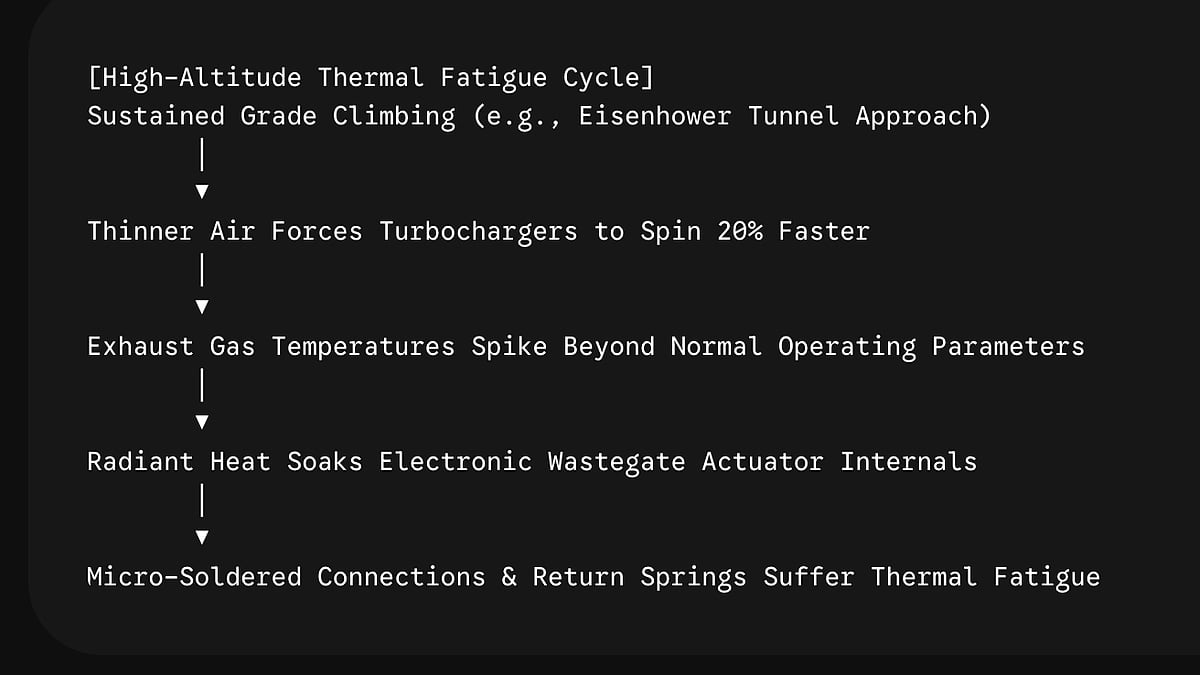
Evaluating this secondary failure matrix requires checking how specific regional driving environments accelerate mechanical wear. In high-altitude zones like the mountain passes of Colorado, the physical work demanded from a downsized, twin-turbocharged platform scales up dramatically compared to flat sea-level operation.
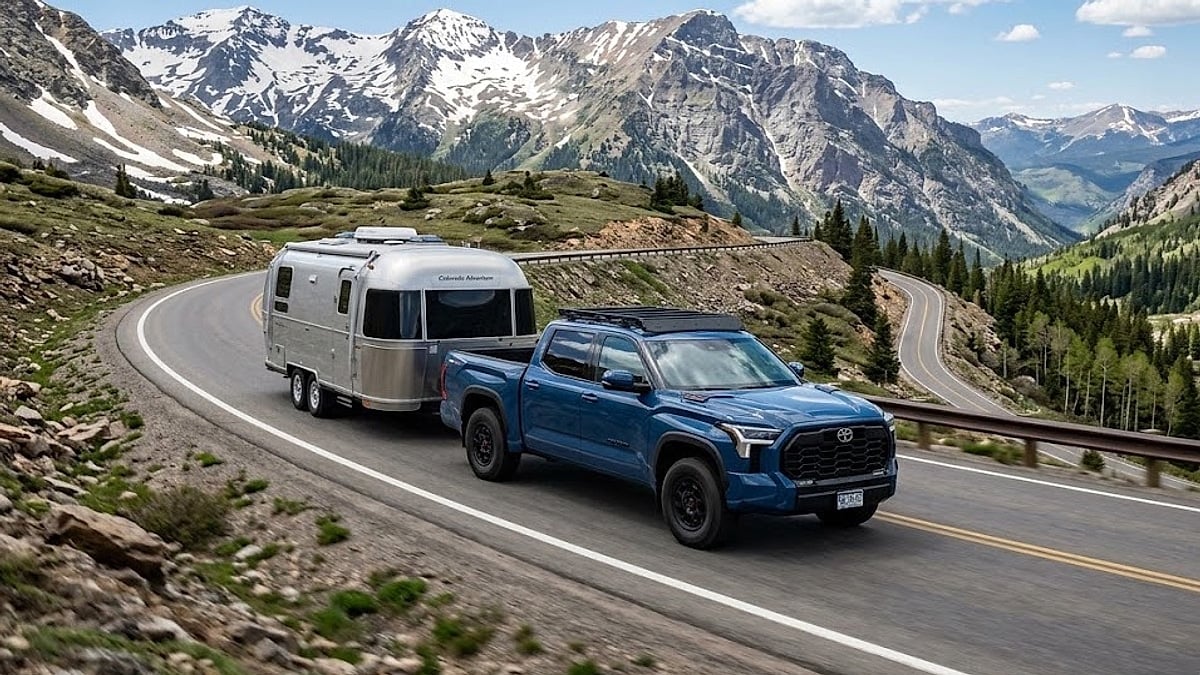
When pulling a trailer over the continuous steep grades of I-70 or ascending Vail Pass, the thinner ambient air requires the turbochargers to spin up to 20 percent faster to deliver the target intake manifold pressures demanded by the engine management system. This high operational speed results in extremely high exhaust gas temperatures, transforming the turbocharger housings into radiant heat sinks right inside the engine bay.
In our ongoing coverage of Toyota reliability, Torque News Senior Reporter Denis Flierl has uncovered an unresolved dispute regarding the relationship between this intense thermal cycling and accelerated engine oil consumption. Under prolonged mountain towing, the extreme heat generated by the turbo housing alters the viscosity of thin factory-recommended 0W-20 motor oils.
As the oil breaks down, it bypasses the internal turbocharger journal-bearing seals and enters the combustion chamber directly through the intake tract. Over a standard 10,000-mile factory oil change interval, a Tundra regularly operated under these mountain conditions can consume multiple quarts of oil without ever dripping a drop onto a garage floor. This unmonitored drop in oil volume starves both the turbo oil feed lines and the lower main crankshaft bearings, uniting them into a single mechanical loop.
Field Observations from Owner Communities
The value of community-sourced diagnostics comes from capturing early failure warnings long before a manufacturer issues an official service bulletin. Looking closely at real-world technical discussions shows how owners are managing these out-of-warranty challenges.
In an active technical analysis thread on r/tundra, an owner documented the immediate aftermath of a wastegate component failure on a cross-country trip, emphasizing how quickly a minor part issue can disrupt a drive. They explained that the turbo alone costs thousands of dollars and requires the entire cab to come off the frame, adding that they don't see them lasting past 70,000 miles because, in other luxury platforms using the same core V6 engine, these electronic wastegates consistently fail around 100,000 miles even without the added burden of heavy truck towing or hauling. You can read the full community perspective on this repair challenge within the Reddit Tundra Wastegate Actuator Teardown.
Another long-distance hauler highlighted the sudden onset of this condition while driving under heavy load, noting the vulnerability of the electronic controls to thermal stress. They noted that lifting an entire cab off the truck frame is an incredibly time-consuming and expensive process at a dealership, making independent shop repairs nearly impossible because of the specialized electronic calibration tools required to set the new wastegate actuation travel after installation. This perspective can be found within the comprehensive Reddit Truck Reliability Thread.
This user sentiment is entirely justified, given the massive shifts in packaging complexity observed on half-ton trucks. When electronic actuator arms are integrated into the high-heat zones of exhaust manifolds, sub-microscopic component failures become inevitable over extended mileage cycles.
The frustration within owner communities doesn't stem from the truck's driving performance, but from a design philosophy that forces a complete cab-off teardown to replace a small electronic valve assembly.
Key Takeaways
- Shorten engine oil change intervals down to a strict 5,000-mile window to prevent thermal degradation from reducing oil viscosity and preserving the integrity of internal turbocharger bearing assemblies.
- Monitor oil dipstick levels monthly during heavy towing seasons or mountain driving to actively catch hidden top-end oil consumption before the overall system volume drops to dangerous levels.
- Establish a dedicated warranty reserve fund if you plan to keep an early-release V35A-FTS vehicle past its 60,000-mile factory powertrain limit, planning for potential cab-off turbo repairs.
- Demand a digital documentation log from your servicing dealer confirming that a thorough oil cooler flush was completed if your vehicle has undergone a full recall block replacement.
Resolving the Next Question: Can Owners Avoid the Cab-Off Teardown?
The next logical question for truck owners is whether independent repair shops can complete an electronic wastegate actuator replacement without lifting the entire cab off the frame rail. While some independent technicians have attempted to access the passenger-side turbocharger by removing the front inner fender liners and dropping the front differential housing, this workaround is extremely difficult and doesn't save significant labor time.
The driver-side turbocharger remains completely blocked by the steering shaft, steering gear, and front-drive axle assemblies. Furthermore, replacing the physical component is only half the battle; the new electronic actuator requires a precise digital calibration step using specialized diagnostic software to align the actuator motor with the engine computer’s boost tables. Without this precise software alignment, the engine will remain locked in its safety limp-home mode even with brand-new hardware installed. For these reasons, the cab-removal method remains the only reliable way to ensure a proper repair.
Customer Blueprint and Practical Next Steps
Navigating the long-term ownership costs of a modern twin-turbocharged vehicle requires a proactive maintenance and repair strategy. Owners must shift away from passive maintenance schedules and actively monitor their engine health through regular oil analysis, keeping detailed records of every service visit to protect themselves if out-of-warranty issues arise.
How about you? Have you run into a turbocharger wastegate issue or high oil consumption on your twin-turbo V6 truck, and did your powertrain warranty cover the bill? Tell us what you think and share your experience by leaving a comment using the red "Add new comment" link below.
This consumer guide concludes our two-part topical investigative series on Toyota's full-size truck powertrain engineering. To review the initial phase of our data-gathering track, return to our first report, 22,000 Miles, 2 Engines, 1 Transmission: Why a 2024 Toyota Tundra Owner Still Praises the Tundra and Twin-Turbo V6, where we analyze the internal bearing failures that laid the groundwork for this deep-dive coverage.
About The Author
Denis Flierl is a 14-year Senior Reporter at Torque News and a member of the Rocky Mountain Automotive Press (RMAP) with 30+ years of industry experience. Explore his full investigative reporting archives and technical guides at DenisFlierl.com. Based in Parker, Colorado, Denis leverages the Rockies' high-altitude terrain as a rigorous testing ground to provide "boots-on-the-ground" analysis for readers across the Rocky Mountain region, California EV corridors, the Northeast, Texas truck markets, and Midwest agricultural zones. A former professional test driver and consultant for Ford, GM, Ram, Toyota, and Tesla, he delivers data-backed insights on reliability and market shifts. Denis cuts through the noise to provide national audiences with the real-world reporting today’s landscape demands. Connect with Denis: Find him on LinkedIn, X @DenisFlierl, @WorldsCoolestRides, Facebook, and Instagram.
Photo credit: Denis Flierl via Ray Scott
Set Torque News as Preferred Source on Google
Follow us today...






Comments
This is EcoBoost all over…
Permalink
This is EcoBoost all over again, For trucks especially we need to stick with naturally aspirated, v6s and v8s, it's a bad idea trying to get so much horsepower and torque out of a production engine, especially in a truck where truck owners are notoriously known for being abusive, that's why I bought a Nissan frontier no turbos no electric power steering, no BS. Just a truck.
I just had the wastegate…
Permalink
I just had the wastegate replaced under warranty on my 2023 Toyota Tundra Hybrid with 19,000 miles. I was very satisfied with the service at my dealership. However, I was very surprised of the failure at such a low mileage. The truck is used for very light duty and I have the oil changed every 5000 miles.