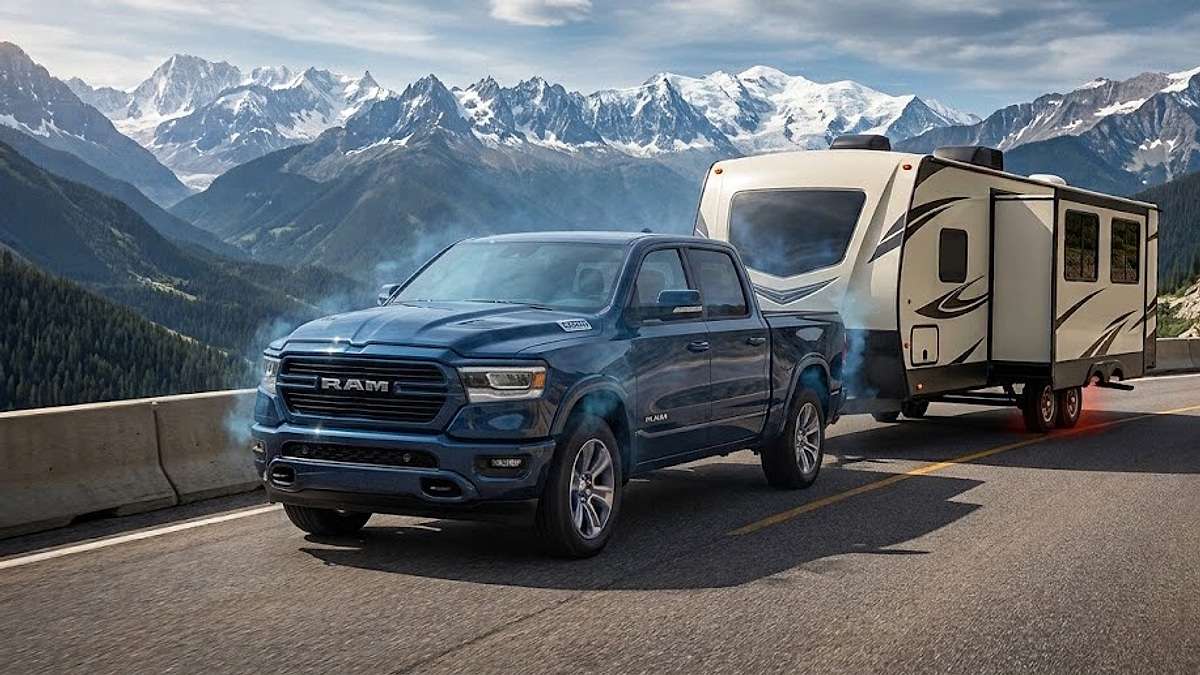

The brand-new twin-turbo Hurricane engine just faced its toughest real-world towing test in the high-altitude heat of the American West.
What started as a routine summer camping trip over a steep mountain grade quickly devolved into a multi-system mechanical nightmare.
Here is the deep technical dive into why Mopar's newest half-ton truck overheated under load and cut off its own trailer brakes mid-climb.
The Technical Mismatch: High-output twin-turbochargers generate intense manifold radiation, while defective trailer control modules overheat and fail under continuous braking cycles.
My Experience Behind The Wheel And Inside The Service Bay
Having spent decades as an automotive journalist, test driver, and industry technical consultant, I have seen every major drivetrain shift in Detroit's history.
Transitioning from naturally aspirated V8 engines like the legendary 5.7-liter Hemi to high-boost, small-displacement force-inducted engines always creates unexpected failure points in real-world towing environments.
Laboratory dyno testing and controlled factory proving ground runs simply cannot replicate the brutal, sustained thermal soaking that occurs when a private owner pulls 7,500 pounds up an unyielding 6 percent mountain grade in ambient temperatures exceeding 95 degrees.
During my years analyzing vehicle manufacturing defects, dealership warranty logs, and technical service bulletins, I have learned that the true test of any truck is not its rated horsepower on paper, but its ability to manage extreme heat and electrical loads under maximum continuous duty cycles.
When 420 Horsepower Meets Steep Elevation
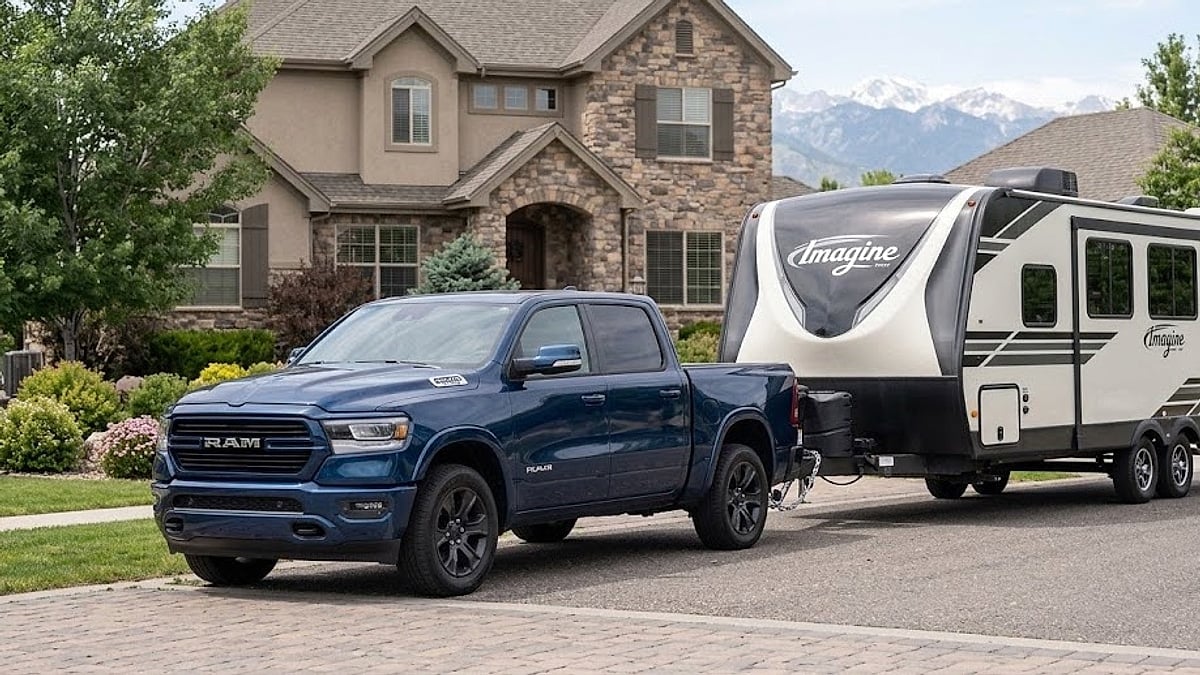
A 2026 Ram 1500 Big Horn owner here in Parker, Colorado, told me recently that he loaded up a 7,500-pound travel trailer for a 1,000-mile mountain trek across the Continental Divide.
With 420 horsepower and 469 lb-ft of torque on tap from the standard-output 3.0-liter Hurricane inline-six, pulling power was never the issue.
The twin-scroll turbochargers spooled up effortlessly at low RPMs, pulling the heavy dual-axle camper up the grade with impressive low-end torque that felt vastly superior to the outgoing V8.
However, halfway up a sustained six percent grade in blistering afternoon heat, the truck's digital gauge cluster suddenly lit up like a Christmas tree.
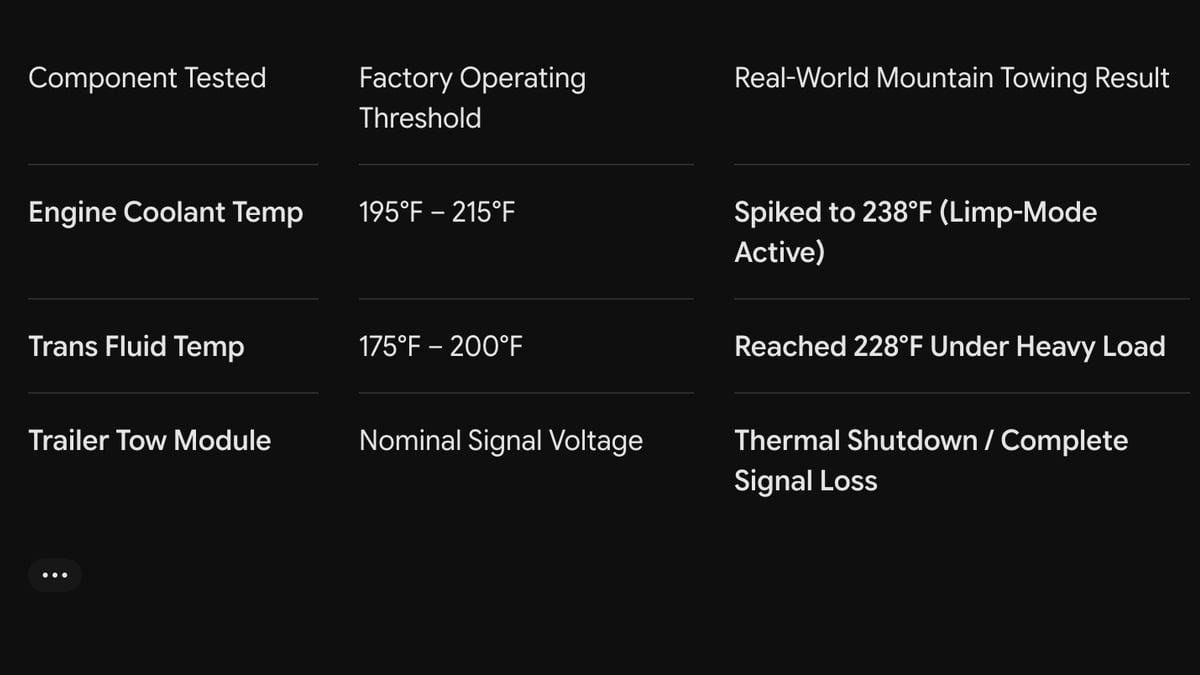
Coolant temperatures spiked past 235 degrees Fahrenheit, triggering an immediate limp-mode power reduction to protect the aluminum engine block and cylinder heads from catastrophic warpage.
The driver watched helplessly as boost pressure was forcefully bled off through the wastegates, reducing the truck's highway speed from 60 MPH down to less than 25 MPH on the shoulder.
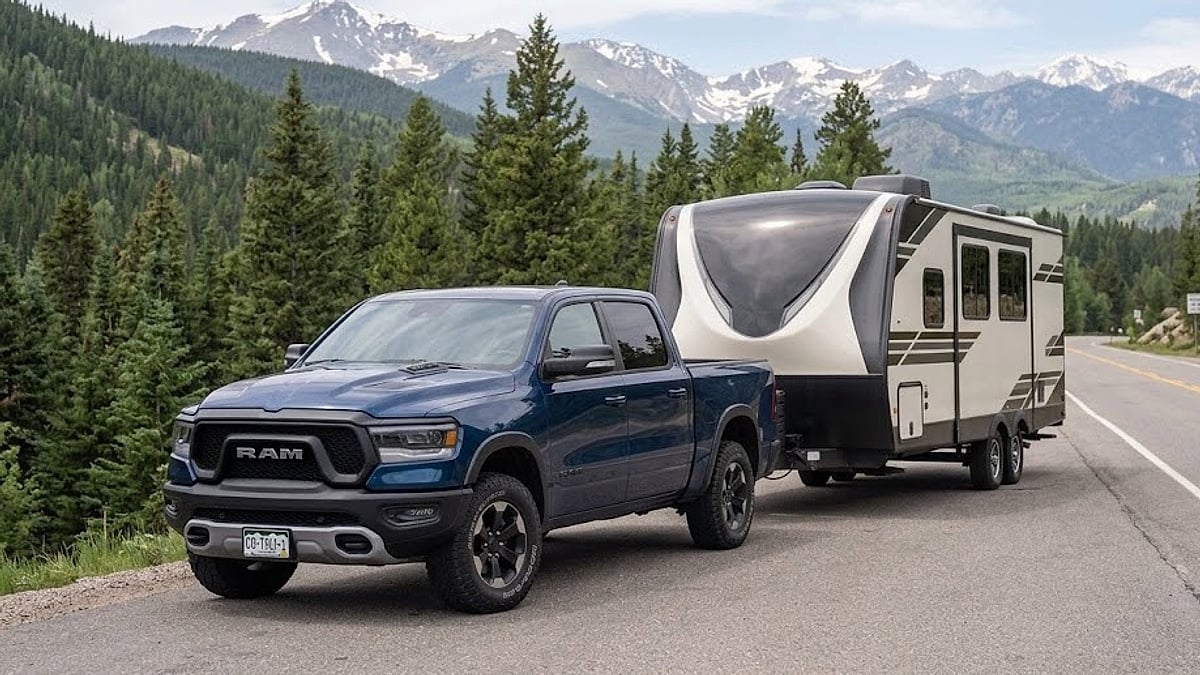
The Deep Technical Cause Behind The Thermal Spike
In my decades of analyzing automotive thermal management systems, twin-turbo direct-injection engines present unique cooling challenges compared to traditional naturally aspirated iron-block V8s.
Under high sustained boost pressures, the twin turbochargers generate extreme radiant heat right alongside the cylinder head, intake manifold, and exhaust catalytic converters.
The engine control unit relies on precise thermal mapping to balance water pump speed, active grille shutter position, and electric cooling fan engagement.
When the thermostat calibration fails to open wide early enough, coolant flow cannot keep pace with the massive thermal dissipation required under heavy continuous throttle.
This creates localized hot spots in the rear cylinder bores and exhaust ports, causing the engine control module to pull ignition timing and slash turbo boost to keep the motor from melting down.
Furthermore, water-to-air intercoolers, while exceptionally efficient at keeping intake charge temperatures cool for short bursts of acceleration, transfer immense amounts of heat directly into the primary radiator cooling stack during extended climbs.
Why The Trailer Brakes Disappeared Mid-Descent
As if an overheating engine wasn't dangerous enough on a steep incline, the driver experienced a secondary, far more terrifying safety failure on the downhill descent.
After pulling over to let the cooling system stabilize, the driver began descending the mountain pass, relying on engine braking and the trailer brake controller to keep the load under control.
Suddenly, the integrated electric trailer brake controller completely lost communication with the travel trailer, displaying an emergency wiring error across the center dashboard screen.
Without electric trailer brakes assisting the vehicle, the truck's standard service brakes were forced to absorb the full momentum of 13,000 pounds of combined vehicle weight.
Within two miles of continuous braking, friction fade set in, filling the cab with the acrid smell of burning brake pads as the driver struggled to bring the rig to a complete stop at the bottom runaway truck ramp.
This double failure traces directly back to complex electrical demands and thermal vulnerabilities inside Stellantis's latest vehicle architectures.
As I recently unmasked in my report on why Ram 1500 Hurricane engine electrical demands cause instrument cluster blackouts, huge high-amperage current spikes from electronic wastegates drop localized circuit voltage below the 10.5-volt data-streaming threshold.
When that voltage drops under heavy engine load, secondary control modules, including the trailer tow module mounted near the frame rails, go completely dark.
Furthermore, as I highlighted in my investigative report on Ram 1500 instrument cluster rights under recall 25V826, having tracked these mechanical shifts for decades, the modern digital architecture has evolved far beyond a simple display; it is a foundational operating component that, upon failure, can compromise key safety warnings and towing systems.
Diagnostic Insights From The Dealer Service Drive
When the vehicle was towed to the nearest authorized Stellantis service center, technicians connected the factory diagnostic tools to pull stored diagnostic trouble codes.
The primary codes revealed a multi-system communication crash across the high-speed Controller Area Network (CAN) bus, alongside pending thermal shutdown codes in both the engine control module and trailer module.
Master technicians who have worked on these platform transitions confirm off-the-record that the electronic control units mounted in close proximity to the frame and exhaust heat shielding are experiencing thermal saturation during heavy towing.
When high ambient air, radiant exhaust pipe heat, and high-current electrical draw coincide, the solid-state relays within the trailer brake module overheat and initiate an internal thermal circuit-breaker shutoff.
This is a classic engineering oversight where component placement and thermal shielding were optimized for laboratory testing conditions rather than extreme mountain environments.
What Ram Owners Must Do Immediately
If you plan on towing heavy travel trailers, horse trailers, or commercial equipment with a 2025 or 2026 Ram 1500 Hurricane, do not wait for a dangerous breakdown in the backcountry.
- First, schedule an appointment with your dealership to verify that your vehicle's engine control module and transmission control module have the latest software flash calibrations for active cooling stack management.
- Second, have the dealer perform a diagnostic heat-stress test on the integrated trailer brake control module to confirm it is running the latest firmware update that prevents low-voltage signal dropouts.
- Third, ensure your trailer is equipped with an auxiliary emergency breakaway system with a fully charged independent battery, providing an additional layer of mechanical safety should the truck's internal controller disconnect.
- Finally, regularly monitor your digital gauge cluster's auxiliary temperature screens while towing, and proactively downshift or pull over to idle the engine if coolant or oil temperatures cross the 225-degree threshold before the truck is forced into emergency limp mode.
Taking these proactive technical steps ensures your half-ton truck retains its incredible pulling power without risking severe mechanical engine damage or losing vital stopping capability when you need it most.
Don’t Stop Here… Also check out my Torque News Home Page for more of my informative Ram 1500 news articles.
About The Author
Denis Flierl is a 14-year Senior Reporter at Torque News and a member of the Rocky Mountain Automotive Press (RMAP) with 30+ years of industry experience. Explore his full investigative reporting archives and technical guides at DenisFlierl.com.
Based in Parker, Colorado, Denis leverages the Rockies' high-altitude terrain as a rigorous testing ground to provide "boots-on-the-ground" analysis for readers across the Rocky Mountain region, California EV corridors, the Northeast, Texas truck markets, and Midwest agricultural zones.
A former professional test driver and consultant for Ford, GM, Ram, Toyota, and Tesla, he delivers data-backed insights on reliability and market shifts. Denis cuts through the noise to provide national audiences with the real-world reporting today’s landscape demands.
Connect with Denis: Find him on LinkedIn, X @DenisFlierl, @WorldsCoolestRides, Facebook, and Instagram.
Photo credit: Denis Flierl
Set Torque News as Preferred Source on Google
Follow us today...