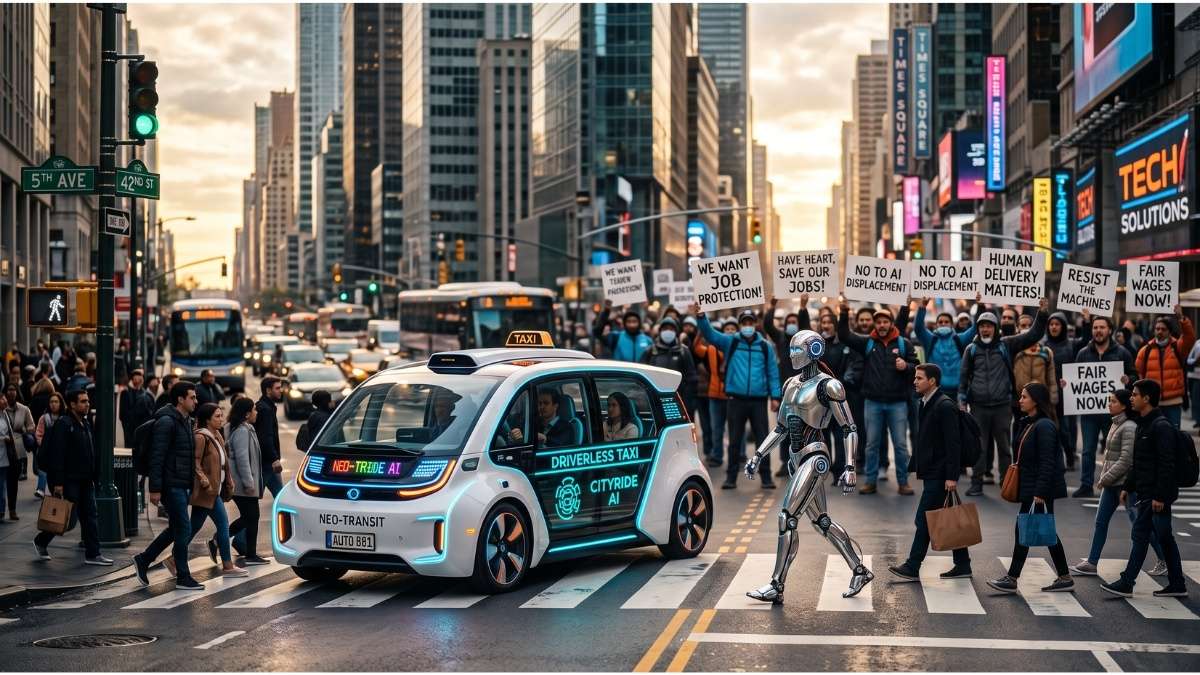

The autonomous vehicle market has officially transitioned from a speculative science fair project into a highly scalable commercial reality. For the better part of the last decade, the fundamental question plaguing both Silicon Valley engineers and Detroit automotive executives was whether the industry could actually build a self-driving car that would not routinely cause accidents. As we move deeper into this decade, the empirical data has spoken, and the primary engineering hurdles are rapidly fading into the rearview mirror. Fleet operators and private autonomous systems are actively proving they can operate with significantly fewer critical incidents per million miles than their human counterparts.
However, as the technical risk subsides, a far more dangerous threat emerges. The looming political battle over transportation jobs is poised to make the preceding engineering challenges look like a cakewalk. Failing to anticipate this socio-economic blowback is a classic strategic error, one that tech companies make time and time again. The tech industry habitually assumes that superior technology automatically wins the market, completely ignoring the human and regulatory elements that ultimately govern public deployment. In the transportation sector, this blind spot could severely delay the adoption of life-saving automation.
The Nature of the Political Economy Problem
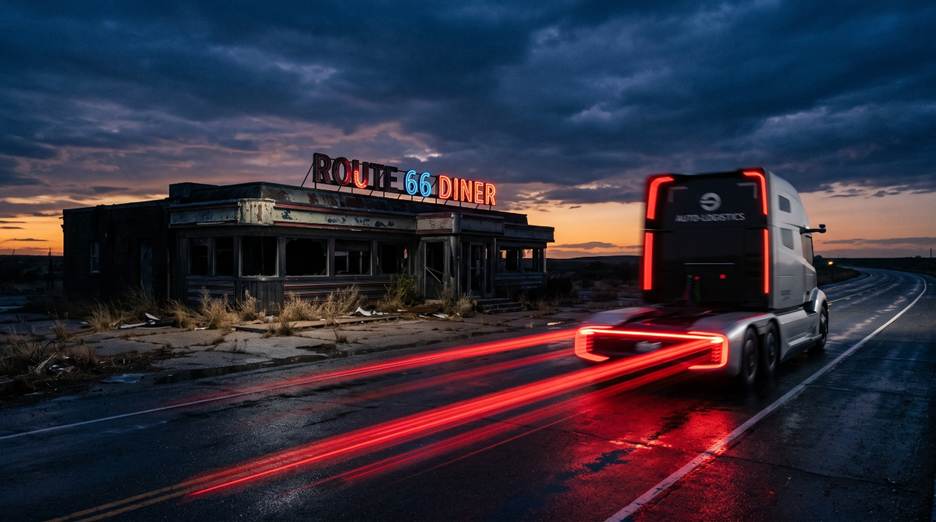
To understand the sheer scale of the upcoming political war, we must look at the foundation of the modern working-class economy. Driving is not merely a utilitarian mechanism for moving goods and people from point A to point B; it is a massive economic anchor for the middle class. According to the Bureau of Labor Statistics (BLS), millions of Americans are employed as heavy truck drivers, delivery operators, and taxi drivers. When you factor in the secondary and tertiary economies that rely entirely on the presence of human drivers—such as highway diners, regional motels, and rural truck stops—the economic footprint of human-driven transportation is staggering.
The problem arises because the core value proposition of autonomous vehicles is inherently tied to labor elimination. The dramatic cost reductions promised by autonomous freight and robotaxi fleets come directly from removing the human operator's salary, benefits, healthcare costs, and legally mandated rest periods. We are effectively watching an unstoppable technological force hurtling toward an immovable political object.
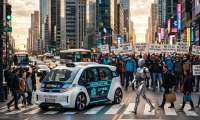
As scaling operators aggressively expand their footprints—detailed extensively in recent industry analyses such as the comprehensive breakdown found at https://www.vaasblock.com/news/tesla-waymo-robotaxi-autonomous-vehicles-2026/—the reality of this displacement is becoming impossible for politicians to ignore. Labor unions are incredibly powerful lobbying entities with deep political connections. For instance, the International Brotherhood of Teamsters is already aggressively lobbying state legislatures to pass bills like California's Assembly Bill 2286, which would mandate a trained human operator behind the wheel of self-driving trucks weighing more than 10,000 pounds. When millions of voters face imminent obsolescence, they will demand regulatory protection. Politicians, whose primary objective is self-preservation and reelection, will inevitably respond by proposing artificial legislative barriers designed to slow down autonomous deployment, regardless of how many lives the technology might actually save.
The Path Automakers Must Take to Overcome Regulatory Hurdles
Automakers and technology firms cannot simply brute-force their way through Washington, D.C., or regional regulatory bodies like the California Public Utilities Commission. History is littered with the corpses of innovative companies that tried to fight the government and lost. To overcome this massive regulatory and political hurdle, the autonomous vehicle industry must execute a sophisticated, multi-pronged strategy that addresses both safety and economic transition in equal measure.
First, they must lean heavily into the irrefutable safety data. Agencies like the National Highway Traffic Safety Administration (NHTSA) track traffic fatalities, which regularly exceed 40,000 deaths annually in the United States alone. The vast majority of these tragic incidents are caused by human error, fatigue, distraction, or intoxication. The industry must frame autonomous driving not merely as a cost-saving measure for logistics corporations, but as a moral public health imperative. By weaponizing this safety data, they can make it politically toxic for lawmakers to ban autonomous vehicles, effectively positioning anti-AV legislation as inherently pro-fatality.
Second, the industry must proactively fund the economic transition. Lobbying for technological adoption without addressing the displaced workers is political suicide. Automakers and fleet operators need to champion transition programs. This could include proposing specialized corporate taxes on autonomous miles driven, where the revenue is directly funneled into universal basic income (UBI) pilot programs—an idea increasingly championed by Silicon Valley tech leaders as a necessary buffer against AI job displacement. Furthermore, these funds could support early retirement buyouts for older drivers and high-tech retraining initiatives for younger ones. By coming to the table with a funded solution for displaced labor, automakers can fracture the unified political opposition.
Finally, phased rollouts must be handled with strategic diplomacy. Instead of dropping massive autonomous fleets into a city overnight and displacing local taxi unions instantly, operators need to partner with municipalities to fill specific transit gaps. Deploying AVs for late-night transportation where drivers are scarce, or creating localized micro-transit solutions in underserved neighborhoods, builds public goodwill and normalizes the technology before slowly expanding into broader, more contentious commercial territory.
The Timeline to Human Driver Obsolescence
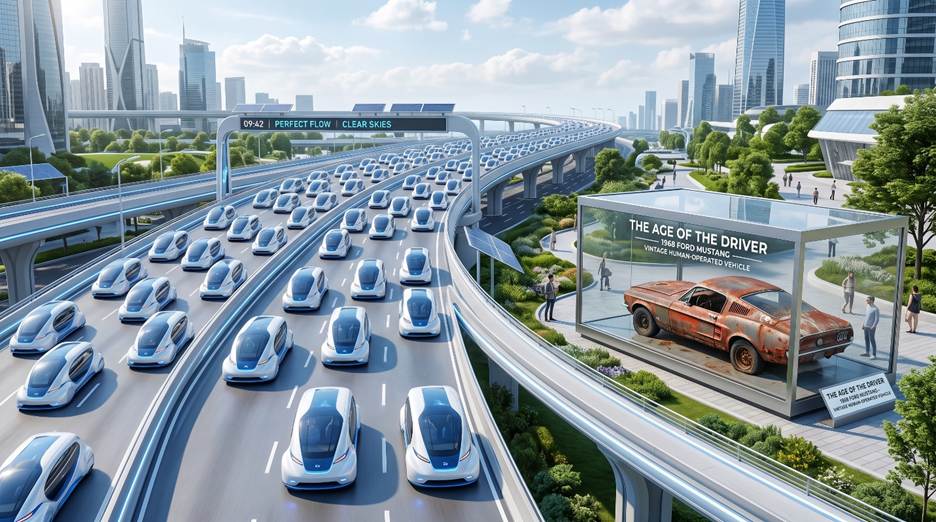
Once these political and regulatory logjams are successfully navigated, the clock starts ticking on human driving as a profession and, ultimately, as a common consumer activity. The transition will not be an overnight flip of a switch, but rather a cascading series of economic tipping points.
In the immediate term—the next three to five years—we will see geofenced dominance. Robotaxis and dedicated autonomous freight corridors will become standard in major sunbelt cities and specific interstate highways where weather conditions are optimal and regulatory environments are friendly. During this phase, human drivers will still co-exist seamlessly, often handling the more complex "last-mile" deliveries or navigating severe weather.
The next phase, landing roughly 10 to 15 years from today, will mark the broad commercial tipping point. At this stage, the hardware and computing costs of AVs will have plummeted, while their geographic capabilities will have expanded to cover 95% of public roads. The economic disparity between running a human-driven fleet and an autonomous fleet will become so vast that any logistics company continuing to employ humans will be priced out of the market entirely. This is when commercial driving as a mass-market profession essentially collapses.
The final phase of human driver obsolescence will occur between 20 and 30 years from now. This is when the paradigm flips completely for the everyday consumer. As autonomous systems achieve near-perfect safety records, actuaries at major insurance companies will evaluate the risk pool and exponentially raise the premiums for human drivers. Eventually, it will become economically unviable for the average citizen to manually pilot a two-ton kinetic missile on public infrastructure. State and federal agencies will likely mandate that human driving on public roads is simply too dangerous, relegating human-driven cars to private tracks, rural off-road environments, and recreational facilities.
The Symbiotic Advancement of Vehicles and General Robotics
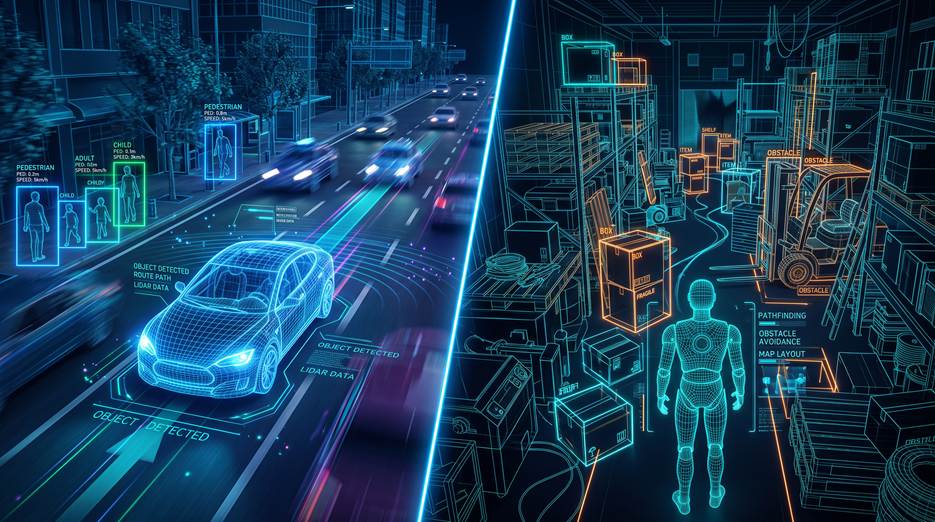
To truly grasp the future of this space, we must look beyond the vehicle itself. The timeline for autonomous driving is inextricably linked to the timeline for autonomous humanoid robots. Both segments are fundamentally trying to solve the exact same foundational engineering problem: navigating complex, dynamic, real-world environments using artificial intelligence.
A self-driving car is, for all intents and purposes, just a specialized robot that you sit inside. The underlying architecture—computer vision, neural networks, sensor fusion, and spatial AI—is nearly identical across both platforms. We can see this convergence happening in real-time within companies like Tesla, where the AI and Robotics division explicitly uses the same neural networks to train both their Full Self-Driving (FSD) automotive software and their bipedal Optimus humanoid robots. As cars log billions of real-world driving miles, they are training generalized neural nets that understand physics, object permanence, and human behavior. This massive dataset is already being cross-pollinated into the development of robotics.
Conversely, advancements in general-purpose robotics are accelerating vehicle autonomy. Companies like Figure AI are building humanoid robots designed to navigate tight, unpredictable pedestrian spaces like sidewalks, warehouses, and grocery stores, forcing their systems to develop highly advanced edge-case logic. This logic is then fed back into the broader AI ecosystem, allowing cars to better predict the erratic movements of pedestrians, cyclists, and urban obstacles. The two technologies are operating in a profound feedback loop, each accelerating the other's path to commercial viability.
The Final Solution Smart Cars or Smart Robots
This symbiotic relationship inevitably leads to a fascinating long-term economic and architectural question: What is the final solution for personal and commercial labor? Will we continue to build highly specialized, expensive autonomous technology into every single car, or will the final solution be a general-purpose autonomous robot that simply climbs into the driver's seat of a cheap, mechanically optimized "dumb" vehicle?
Currently, the industry is heavily invested in building smart cars. Modern autonomous vehicles are laden with tens of thousands of dollars worth of LiDAR sensors, specialized radar, 360-degree high-definition cameras, and liquid-cooled supercomputers. This capital-intensive model makes sense for continuous, heavy-duty fleet operations where the vehicle is in motion 24 hours a day, maximizing its return on investment. However, for personal ownership and flexible, small-scale commercial labor, this model is incredibly inefficient.
If a technology company successfully scales a highly capable, $20,000 humanoid robot, the economic calculus completely shifts. Why would a consumer or a small business owner pay a massive $30,000 premium for a self-driving truck or passenger car that sits idle in a driveway or parking lot 90% of the day? Instead, they could purchase a standard, stripped-down $15,000 vehicle - devoid of expensive compute hardware - and simply have their multi-purpose humanoid robot drive it.
The utility of this model is undeniable. When the robot reaches the destination, it doesn't just park the vehicle; it gets out, unloads the heavy cargo, carries the groceries up three flights of stairs, or performs manual labor at the commercial job site. The expensive hardware required for autonomy - the "brain" and the "eyes" - remains active and useful with the user or the business, rather than being trapped inside a depreciating steel chassis parked idle on the street.
Ultimately, the market will likely bifurcate based on utilization rates. High-volume, point-to-point transit services and massive long-haul freight operations will rely on purpose-built, highly integrated smart vehicles that do not even feature traditional steering wheels or pedals. But for the vast middle market of small businesses, tradespeople, local delivery services, and personal home use, the general-purpose humanoid robot driving a heavily cost-optimized, bare-bones vehicle will emerge as the undisputed economic winner.
Wrapping Up
The shift toward automated transportation is an unstoppable force of technological physics, driven by life-saving safety imperatives and the raw, unyielding gravity of economic efficiency. However, the path to a driverless future is heavily littered with political landmines. Fleet operators and automakers who arrogantly assume that a superior AI algorithm is enough to override the localized economic displacement of millions of workers will find themselves sidelined by aggressive regulatory capture and powerful labor union lobbying.
To win this space, technology companies must wage a sophisticated, highly nuanced political campaign. They must offer concrete, funded economic transitions for displaced labor while simultaneously and ruthlessly highlighting the severe human cost of delaying lifesaving automation. As the hardware and software barriers inevitably fall, the convergence of autonomous vehicles and generalized humanoid robots will fundamentally restructure our relationship with labor, mobility, and the very concept of the vehicle itself. The companies that understand this holistic, socio-political puzzle—rather than just the raw code - are the ones that will dictate the economic landscape of the 21st century.
Disclosure: Images rendered by Artlist.io
Rob Enderle is a technology analyst at Torque News who covers automotive technology and battery developments. You can learn more about Rob on Wikipedia and follow his articles on TechNewsWord, TGDaily, and TechSpective.
Set Torque News as Preferred Source on Google
Follow us today...