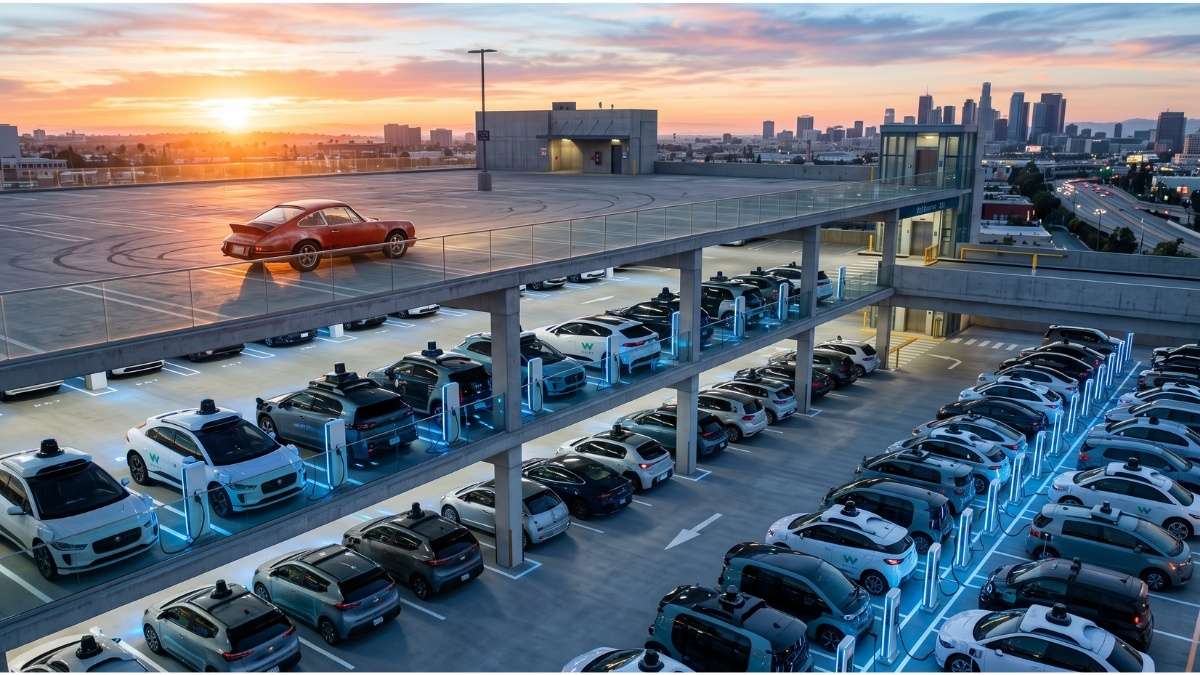

By the time the tech history books are written for this decade, 2026 will be remembered as the year the autonomous vehicle market decisively separated the serious engineers from the speculative marketers. For years, the industry has been driven by wild promises, aggressively optimistic timelines, and a reality distortion field generated largely by Tesla’s CEO, Elon Musk. But as we survey the landscape in the middle of 2026, the scoreboard is ruthlessly objective. Execution is the only currency the market truly respects, and right now, Waymo is generating immense wealth and real-world data while Tesla is facing a massive execution deficit.
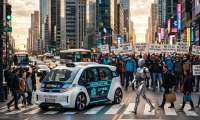
Waymo is currently delivering half a million paid, fully autonomous rides a week across a growing roster of major metropolitan areas, recently surpassing 10 active U.S. markets. They have effectively moved from a speculative research and development experiment into a legitimate, revenue-generating logistical utility that citizens rely on for daily commuting. In cities like Phoenix and San Francisco, catching a Waymo is now as mundane as hailing an Uber. The company's goal of reaching one million rides per week by the end of the year seems entirely plausible given their current operational trajectory.
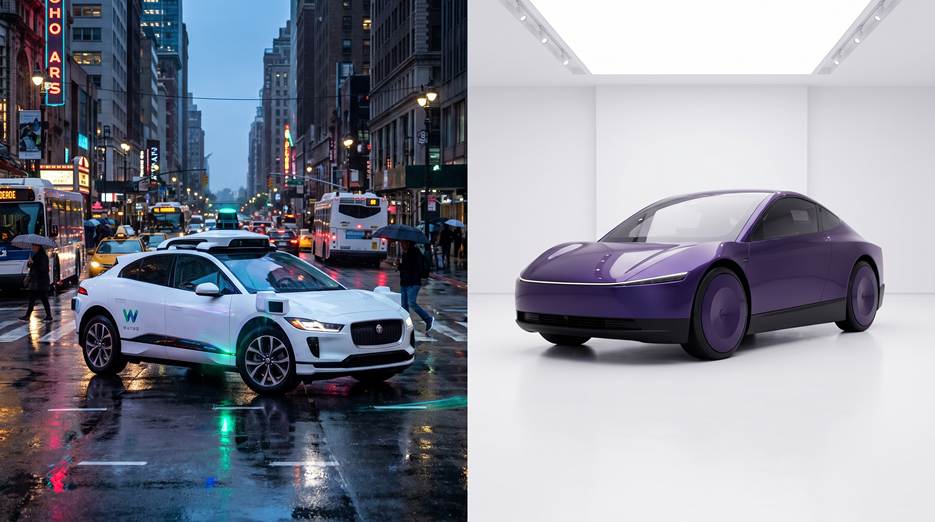
Conversely, Tesla’s highly publicized robotaxi network—which Musk insisted would blanket the country by 2025—remains severely constrained. Outside of a few highly controlled, nascent test markets in Texas where early enthusiasts documented initial unsupervised Tesla robotaxi test rides, Tesla's autonomous network is trapped in the theoretical realm, limited by fundamental hardware choices and intense regulatory skepticism.
If you want to understand the future of transportation, you have to look past the corporate keynote presentations and examine the underlying technology, the corporate strategy, and the harsh realities of physics and the law.
The Current State of Autonomous Technology Navigating Level 4 and Level 5
To understand the rapidly widening gap between Waymo and Tesla, we must first look at the current state of autonomous driving technology. The Society of Automotive Engineers (SAE) defines autonomy on a strict scale from Level 0 to Level 5. The entire robotaxi industry currently lives and dies by Level 4 capabilities.
Level 4 autonomy means the vehicle can operate entirely without human intervention, but only within a strictly defined geofenced area or specific environmental conditions—what engineers call an Operational Design Domain. This is precisely where Waymo thrives. They map a city down to the millimeter, deploy vehicles loaded with redundant sensor suites, and limit commercial operations to those extensively vetted areas. It is expensive, time-consuming, and notoriously difficult to scale quickly, but it actually works safely today. This methodical, proven approach is why Alphabet's Waymo was able to secure a staggering $16 billion investment round earlier this year, pushing its valuation to $126 billion.
Level 5 autonomy, on the other hand, is the holy grail. It implies the car can drive anywhere, anytime, in any weather, exactly as a competent human would, without any geographical boundaries. This is what Tesla has been implicitly selling with its "Full Self-Driving" (FSD) moniker. However, the hard truth in 2026 is that generalized Level 5 remains a pipe dream. The artificial intelligence required for true, unmapped Level 5 autonomy requires a leap in artificial general intelligence (AGI) and edge-compute processing that simply does not exist yet. By aiming for a generalized Level 5 solution out of the gate, Tesla effectively attempted to boil the ocean, while Waymo methodically boiled a pot of water.
Why Tesla is Falling So Far Behind Waymo
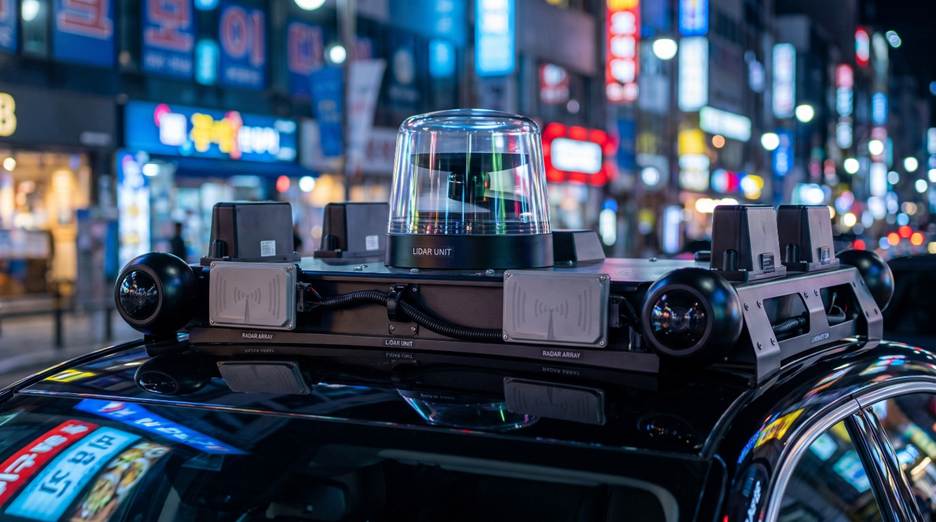
The divergence between these two companies ultimately comes down to philosophy and hardware architecture. Tesla made a fundamental, highly controversial decision years ago to rely entirely on a "vision-only" approach. Musk argued that since humans drive using only two eyes and a brain, cars should be able to navigate using only optical cameras and a neural net. Tesla subsequently stripped radar and ultrasonic sensors from its consumer vehicles to cut costs and streamline manufacturing.
Waymo took the diametrically opposite approach. They treat the autonomous vehicle as a robotic system that inherently requires redundant, multi-modal sensory input. A Waymo vehicle utilizes high-resolution cameras, but it relies just as heavily on LiDAR (Light Detection and Ranging) and radar. LiDAR provides an exact, mathematically perfect 3D point cloud of the environment, irrespective of lighting conditions, shadows, or optical illusions.
Tesla’s vision-only system is incredibly impressive as a Level 2 driver-assist feature, but it constantly runs into edge cases. Glare, heavy rain, or unusual optical anomalies can confuse the neural net, requiring sudden human intervention. In a true robotaxi network, you cannot have a system that is 99% accurate; that 1% failure rate equates to thousands of fatal accidents at scale. As meticulously detailed in a recent strategic industry breakdown by Vaasblock on the 2026 autonomous landscape, Tesla's hardware deficit has severely hobbled their ability to achieve the crucial regulatory approvals necessary to deploy a fully driverless fleet. Waymo’s expensive, bulky, but hyper-reliable sensor suite gave regulators the verifiable confidence to let them remove the safety driver.
The regulatory reckoning for Tesla's hardware choices is already underway. Just this month, the NHTSA targeted an internal Tesla document ominously titled "Radar Saves Us" as part of an escalating federal probe into Full Self-Driving crashes during low-visibility conditions like thick fog and blinding sun glare. This investigation, covering over 3 million vehicles, strikes at the very heart of the vision-only strategy. It strongly suggests that even Tesla's own internal engineering teams recognized the critical safety gaps created by removing radar, yet management pushed forward with the cost-cutting measure regardless. When regulators start subpoenaing internal engineering pushback, the narrative of inevitable success starts to fracture.
Furthermore, Tesla’s business model acts as a massive liability for a robotaxi network. Tesla sells cars to consumers. If a privately owned Tesla crashes on FSD, the legal liability gets murky, and the company has historically blamed the driver for not paying attention. Waymo owns its fleet. When a Waymo drives, Waymo assumes 100% of the liability. This forced Waymo to prioritize unassailable safety over rapid deployment. Tesla prioritized software margins and vehicle sales, treating their consumer base as beta testers. You cannot beta-test a commercial robotaxi network on public roads without regulators shutting you down, which is exactly why Tesla's timeline has stalled.
The Rest of the Pack Chasing the Leaders
While Waymo and Tesla dominate the mainstream headlines, they are not the only players in the space. The robotaxi market is a capital-intensive blood sport, and the competitive landscape in 2026 features a few heavily funded survivors trying to carve out their own niches.
Amazon’s Zoox is perhaps the most fascinating competitor. Unlike Waymo, which retrofits traditional vehicles, or Tesla, which relies on consumer sedans, Zoox built a bespoke, bi-directional carriage designed specifically for urban ride-hailing. The vehicle has no steering wheel and seats passengers face-to-face. Zoox has been quietly and methodically expanding its footprint in cities like Las Vegas. However, the path has not been without friction; Zoox was recently forced to issue a software recall after its robotaxis struggled to detect heavy smoke at an active fire scene. Despite these growing pains, because Amazon has virtually unlimited capital and a vested interest in autonomous logistics, Zoox remains a highly credible threat to Waymo’s dominance.
General Motors’ Cruise is currently attempting a complicated resurrection. After a disastrous pedestrian-dragging incident in late 2023 that resulted in the suspension of their permits in California, the company struggled mightily. By early 2025, Cruise was completely merged back into GM, pivoting away from immediate robotaxi deployment to focus on consumer driver-assistance technology. Now, GM is attempting another push to revive the driverless robotaxi dream with fresh leadership, but regaining public trust and regulatory favor is proving to be a much steeper hill to climb than solving the core engineering challenges.
Globally, Baidu’s Apollo Go is the elephant in the room that Western markets often ignore. Operating primarily in China, Apollo Go surpassed an astonishing 20 million cumulative rides earlier this year, operating across 26 different cities. This massive footprint is subsidized heavily by local governments and unencumbered by the same level of regulatory friction or litigious pushback seen in the United States. While geopolitical tensions and data privacy concerns make it highly unlikely that Baidu will ever deploy its vehicles on American or European soil, their rapid scaling provides a powerful proof-of-concept. It demonstrates that subsidized, state-backed robotaxi networks can achieve massive operational scale and collect invaluable edge-case data significantly faster than private enterprise alone.
Forecasting the Obsolescence of the Human Driver
The most frequent question I get from industry insiders, investors, and consumers alike is: When do human drivers actually become obsolete?
If you listened to the peak hype cycle of 2018, or Elon Musk in 2024, you would firmly believe it is happening next month. But looking pragmatically at the market realities of 2026, the obsolescence of the human driver will not be a singular event; rather, it will be a rolling geographic and economic shift.
In major urban centers—places like San Francisco, Phoenix, Los Angeles, and Austin—we are already seeing the beginning of the end. By 2030, navigating a dense downtown core manually will likely be viewed as an economic luxury or a profound liability. Insurance actuaries will realize that a Level 4 geofenced robotaxi crashes exponentially less frequently than a distracted, tired human. Consequently, urban insurance premiums for human drivers will skyrocket. Municipalities, eager to reduce traffic fatalities to zero and clear up congestion, will begin designating "autonomous-only" zones in city centers where human-driven vehicles are heavily tolled or outright banned.
However, the rural and suburban transition will take much, much longer. Because reliable Level 4 technology still requires intense, high-definition mapping and predictable infrastructure, deploying robotaxis on poorly marked rural highways, unpaved dirt roads, or in areas with extreme winter weather remains economically unviable. For these sprawling regions, human drivers will remain essential well into the 2040s.
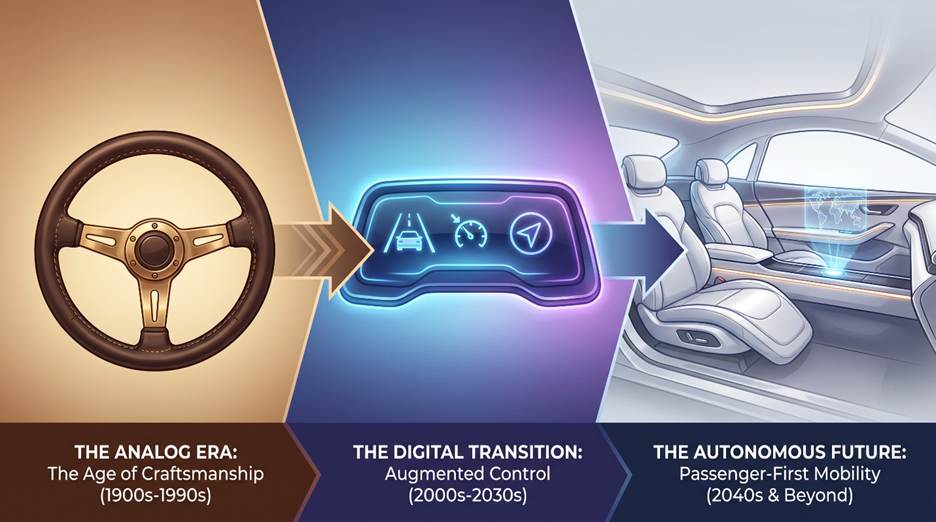
True Level 5 autonomy - the kind of artificial intelligence that makes a steering wheel entirely useless absolutely everywhere on Earth - is likely 15 to 20 years away. It requires an AI capable of real-time deductive reasoning when faced with entirely unprecedented scenarios (for example, a flooded road combined with a manually directed traffic detour by a construction worker using non-standard hand signals). Until silicon can perfectly mimic human intuition in bizarre edge cases, the human driver will maintain a shrinking, but vital, monopoly on navigating unmapped chaos.
Wrapping Up
The narrative of 2026 is crystal clear: the era of the autonomous prototype is over, and the era of autonomous logistics has definitively begun. Waymo’s tremendous success in delivering hundreds of thousands of paid rides every single week proves that the technology works, provided you respect its limitations, heavily invest in redundant hardware, and build collaborative, transparent relationships with regulators.
Tesla’s failure to deliver on its grand 2025 robotaxi promises serves as a masterclass in the dangers of prioritizing marketing over execution. You cannot push a software-update to fix a fundamental missing hardware problem, and you cannot charm regulators with promises when the raw data demands verifiable proof. While Tesla struggles to pivot its consumer car business into a fleet-management operation under the watchful eye of the NHTSA, Waymo, Zoox, and Baidu are already fighting for legitimate market share out in the real world. In the tech industry, visionary thinking is strictly necessary, but execution is what ultimately pays the bills. And right now, Waymo is the only company consistently collecting the fare.
Disclosure: Images rendered by Artlist.io
Rob Enderle is a technology analyst at Torque News who covers automotive technology and battery developments. You can learn more about Rob on Wikipedia and follow his articles on TechNewsWord, TGDaily, and TechSpective.
Set Torque News as Preferred Source on Google
Follow us today...