
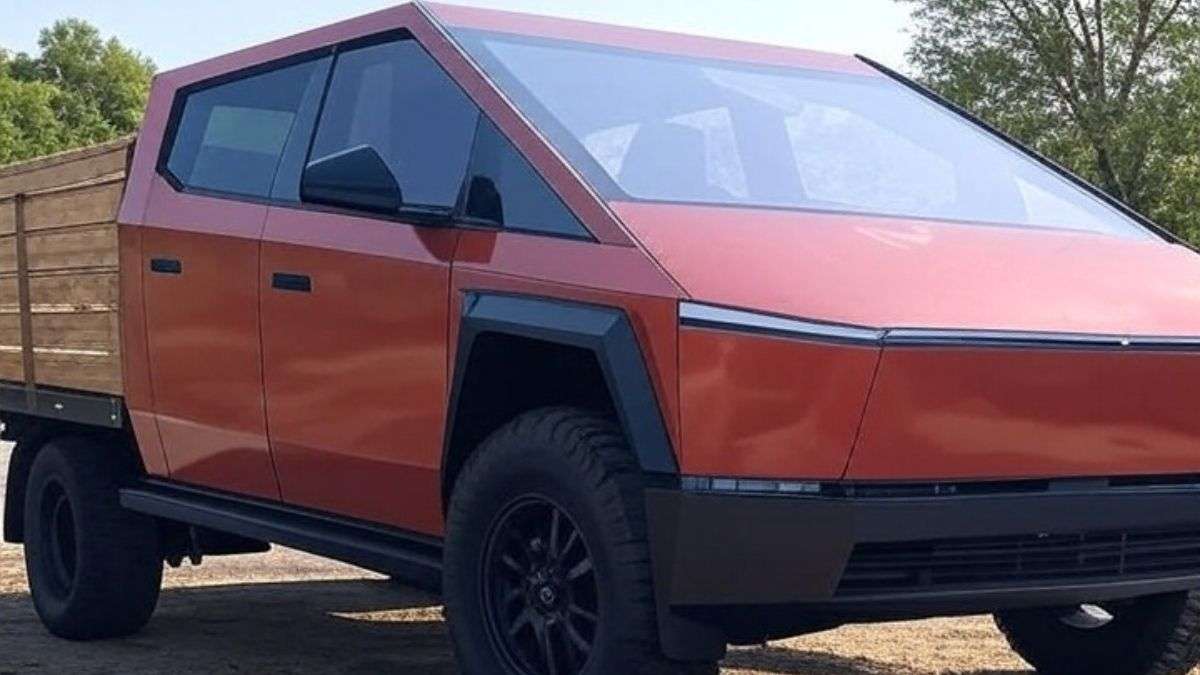

The Cybertruck looks like it was dropped here by a passing spaceship that ran out of time to smooth the edges. That’s not a criticism, it’s just the reality. Whether you see that as a design revolution or a mistake that skipped quality checks is the part where the real debate begins. But under all the shouting and clapping, there's a surprisingly quiet truth that few Cybertruck discussions ever pause to consider. And today, one Tesla forum user cut through the noise with a comment that, frankly, explains more about the Cybertruck’s struggles than a hundred review videos ever could.
“Objectively, the problem with Cybertrucks is that most pickup drivers have highly conservative tastes (I’m not talking about politics, I’m talking about design-wise), and want a pickup that looks just like all of the other pickups on the road. Rivian realized that, and gave them just what they want. Cybertruck was designed for people who aren’t really pickup truck people (the ones that own sleek Teslas), and tries to talk them into buying one, which is much more difficult, especially at the too-high price point,” wrote Jason F., Tesla Owners Online forum.
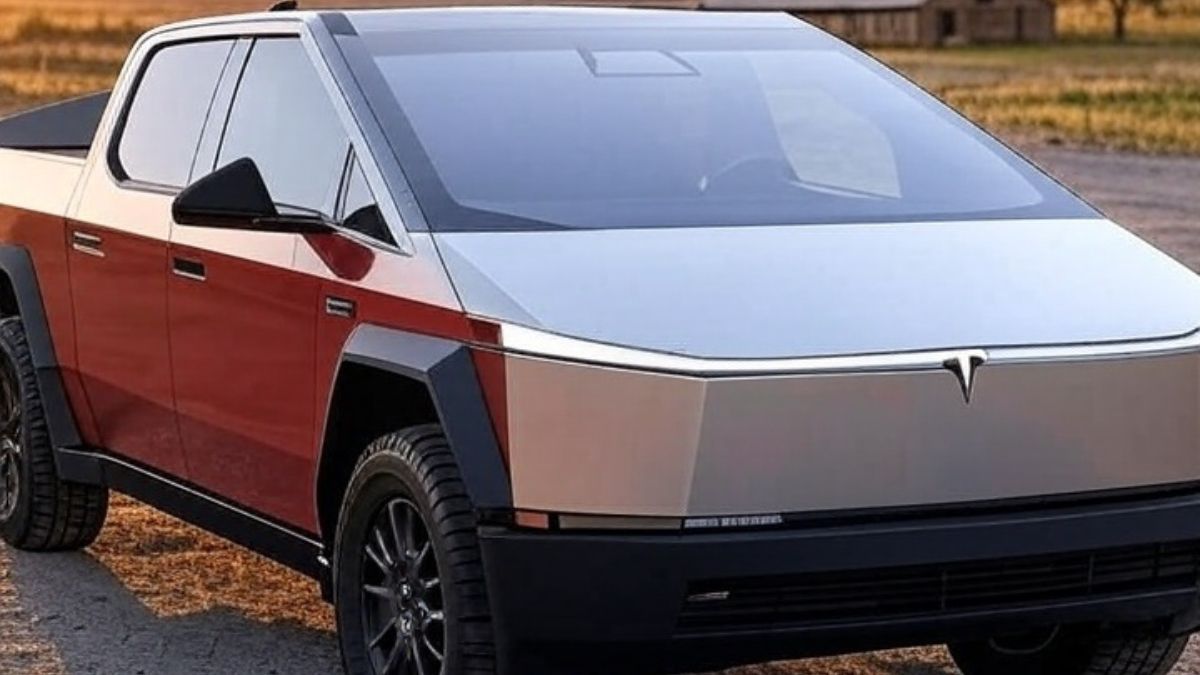
Jason dropped this under a post by another forum member, JetFalcon, who casually asked if Cybertrucks are still “cool.” Now that they’re multiplying on the roads and not just in YouTube thumbnails, JetFalcon noticed something interesting. “Today I saw two Tesla Cybertrucks side by side at a left turn light,” he wrote. “I think Cybertrucks are becoming the new common cool / unique car and it's not the same as seeing a Ferrari.”
That’s the turning point. The Cybertruck is no longer an object of mystery. It’s becoming a known quantity. But not necessarily a desirable one to traditional pickup owners, and maybe not even to Tesla’s original luxury sedan crowd either. Which is why Jason’s post resonates so strongly. It cuts to something a lot of people have tiptoed around: pickup buyers don’t want to be part of an experiment.
Rivian, on the other hand, played it safe by going bold in the right places. The R1T may look futuristic, but it still checks off the mental boxes that traditional truck buyers want. Hood, bed, crew cab, grille. You can park it next to a Tacoma and not feel like you’re pulling focus in a Transformers movie. And that's no accident. Rivian understood that the future doesn't have to scream. Sometimes it can quietly adapt. That’s likely one reason Rivian may soon become the electric truck people actually buy instead of just admire from afar.
Another user in the same thread added a layer of nuance to this design debate. “I think the Cybertruck is cool because I love the stainless steel that doesn't rust or get door dings,” they wrote. “And I love the squirkle steering wheel and steer-by-wire and 4-wheel steering. I just don't need something that big and inefficient for myself and use utility trailers to haul stuff with my Model Y when I need to move stuff. It also costs quite a bit more than a Model Y.”
That part stings a little. Because the Cybertruck, for all its talk about ruggedness and durability, now finds itself in an odd place: too futuristic for the old-school truck crowd, too bulky and inefficient for EV-first Tesla fans. And when a vehicle lands in no-man’s land, it's easy to see why its buzz can get muted once the hype wears off.
Yet, there’s another side of this conversation that deserves light. Some Cybertruck owners absolutely love theirs, and not just for the attention. As this long-term ownership story about living with a Cybertruck for 378 days shows, the truck can grow on you in ways you wouldn’t expect. From daily use to comfort, even some skeptical buyers have changed their minds once the stainless steel door handle is in their hand.
Still, there’s a lesson in all this. We often assume innovation will be embraced purely because it’s bold. But people don’t just want innovation. They want familiarity wrapped in usefulness. Think of induction cooktops. Sleek, fast, safe. But how many people stuck with gas ranges simply because it’s what they’ve known for decades? The same happens in automotive. A radical design may win awards, but it doesn’t always win garages.
There’s also an ethical layer to this. When a product like the Cybertruck is marketed on the edge of aspiration and ego, it’s easy to lose sight of who really needs what. Trucks were once tools. Today they’ve become rolling identity statements. But the moment we let that marketing shape our self-worth or sense of belonging, we start chasing products for status rather than practicality. That’s a dangerous cycle. Selfless decision-making begins with asking, “What do I really need?” Not, “What will make me stand out?”
One way this shift is already happening can be seen in how many Tesla owners are re-evaluating their needs. Some are returning their Cybertrucks, while others admit they bought them just to try the hype. Take a look at this honest first impressions piece from a new Cybertruck owner here. The takeaway? Sometimes trying the “most talked about truck in America” leads to realizing it’s not what you actually need.
Others double down, saying the Cybertruck is the best vehicle ever made, defending it with passion against those who have never driven it. This is well illustrated in this compelling defense piece you can read here, where the owner explains how the Cybertruck changed his perception after just a few days of real-world use.
Then there’s a very real pricing question. A fully-specced Cybertruck costs significantly more than a Model Y, and even more than a Rivian R1T in some trims. You can see this play out in another analysis where an owner compares the Cybertruck’s interior to a Model 3, finding it better, but only 35 percent less efficient. The cost-benefit equation just doesn’t work for everyone.
For those wondering if the social buzz around the Cybertruck is still strong, there’s another surprisingly honest account from a previous owner of four Teslas who explains how the noise and controversy helped him get a $20,000 Cybertruck reservation right here.
So what’s the product metaphor here? Think of the Cybertruck like an ultra-modern ergonomic office chair. It looks wild, promises better posture, and costs five times more than the regular office chair you’ve used for years. But here’s the catch. If you’re the kind of person who works in jeans and a hoodie, that hyper-futuristic chair might feel out of place next to your wooden desk. Sometimes we choose the thing that works with us, not the one that asks us to become someone else.
The moral here is this. Be slow to chase extremes. Not because risk is bad, but because unchecked excitement can cloud good judgment. Just because something is unique doesn't mean it's universally useful. Knowing what works for you takes more self-awareness than hype can offer.
1. Why Vehicle Design Familiarity Still Dominates Buyer Decisions
It’s easy to assume innovation sells itself, especially when Silicon Valley thinking bleeds into automotive strategy. But for pickup trucks, form follows trust, not just function. Pickup buyers are notoriously brand-loyal and risk-averse when it comes to exterior design, especially when that design starts to veer away from established visual cues.
A few reasons for this:
- Utility signaling: Traditional pickup design isn’t just aesthetic, it’s symbolic. Square body lines and visible bumpers signal ruggedness and capability.
- Resale value perception: Many buyers consider resale value early, and unconventional styling can make a vehicle harder to move later.
- Fleet familiarity: Contractors, municipalities, and commercial buyers prefer designs that integrate seamlessly with current fleets. Outliers stand out in ways that don’t always make operational sense.
In that light, the Rivian R1T's acceptance can be seen not just as a triumph of electric powertrain, but as a smart compromise in styling — futuristic, yes, but within the visual boundaries of what’s already accepted. Tesla’s Cybertruck, by contrast, skips those visual cues entirely, making it harder for buyers to imagine it in their daily routines.
2. The Rise of Form-Focused EVs That Challenge Traditional Utility
One of the great ironies in the EV space right now is that many electric vehicles marketed for their utility are often bought for their symbolism, not for the practicality they promise. The Cybertruck, in particular, fits this pattern. It’s billed as a workhorse, but many owners admit they use it more like a flagship tech gadget than a towing machine.
Why this matters to the reader:
- EV truck buyers often differ from traditional truck buyers, with different needs and expectations. Many use the vehicle for lifestyle flexibility, not job-site reliability.
- Form-over-function design language often alienates buyers who need consistent utility features like long beds, towing mirrors, or modular upfitting.
- Efficiency trade-offs in larger EVs mean you often sacrifice range and convenience unless you're willing to dramatically change your driving habits.
This is where Tesla’s approach diverges from more cautious EV automakers. Instead of adapting proven truck ergonomics, the Cybertruck is rethinking them entirely. Whether that pays off long-term depends on whether the buyers adapt to the truck, or whether the market shows signs of regret and reversal.
3. EV Pricing Psychology: How High Prices Can Deter the Mission
The electric revolution is supposed to democratize cleaner transportation, but prices for many of the most hyped EVs have drifted far from the mass market. The Cybertruck is a perfect case study. Originally pitched at under $40,000, most real-world trims now come in at double that.
This creates several problems:
- It narrows the buyer pool, especially among working-class or tradespeople who traditionally dominate the truck segment.
- It inflates expectations, making any flaw or shortcoming feel more significant to the consumer.
- It confuses the market’s ethics, especially when a product marketed as an environmental step forward becomes an unaffordable luxury good.
Compare this to how early hybrids like the Prius entered the market. They were practical, efficient, and priced just above comparable gasoline models. They didn’t try to be luxury items. The ethical implication here is worth thinking about - if EV makers drift too far upmarket, are we solving environmental problems or just replacing gas-guzzling status symbols with electric ones?
A Practical Development About The Cybertruck You Might Have Missed
While we’ve been debating style and identity, Tesla quietly made a very unexpected yet practical update, strengthening the Cybertruck’s tow hitch. Earlier in April, Torque News Tesla reporter Tinsae Aregay reported that Tesla recently added a “high‑strength Class IV steel tow bar” to the Cybertruck configurator, explicitly calling it out as steel rather than aluminum. That’s no small detail. Many skeptics pointed to the cast‑aluminum frame as a weakness under heavy towing, and this move shows Tesla acknowledging concerns and responding with substance, not just spin. If you’re tracking whether the Cybertruck is evolving from a bold concept into a seriously usable truck, this steel hitch upgrade is a key signpost.
So now I want to hear from you.
Do you think the Cybertruck’s unconventional design hurts its chances with traditional truck buyers, or is Tesla simply ahead of its time again? Have you ever bought a product based on hype, only to later realize it didn’t fit your lifestyle or needs?
Share your thoughts in the comments below. Let’s talk.
Armen Hareyan is the founder and Editor-in-Chief of Torque News. He founded TorqueNews.com in 2010, which since then has been publishing expert news and analysis about the automotive industry. He can be reached at Torque News Twitter, Facebook, Linkedin, and Youtube. He has more than a decade of expertise in the automotive industry with a special interest in Tesla and electric vehicles.
Image source: Grok.
Set Torque News as Preferred Source on Google
Follow us today...



Comments
I liked the Model Y because…
Permalink
I liked the Model Y because of its ingenious and thoughtful aerodynamic design and a frunk. I hated the screen and missed a rear wiper. And then there's Elon...
Exactly. The Cybertruck is…
Permalink
Exactly. The Cybertruck is definitely not attractive, but it's a pretty cool truck from those people I know who have one.
This isn't about marketing…
Permalink
This isn't about marketing or style. It's practicality. I'm have a 2500 diesel. I use my truck as a daily driver and lots of work. If I was going to replace it, why would I buy the CT? It's more expensive and gains me nothing while sacrificing haul capacity, range, and inability to tow a gooseneck or 5th wheel. And I can reach stuff in the bed of my truck over the side, but certainly not in a CT. And I want buttons not touch screens so I didn't have to take my gloves off constantly. What it comes down to is that it's a novelty answer to a question nobody was asking.
The design not only offends…
Permalink
The design not only offends some aesthetically, but creates functional challenges that make it less practical than a conventionally proportioned truck, e.g., the inability to load the bed from the side and the lack of rearward visibility.
It's ugly. And it's built by…
Permalink
In reply to The design not only offends… by Adam Bernard (not verified)
It's ugly. And it's built by a disgusting egomaniac. I have a Ford f-150 and laugh at the CT every time I see one.
You’re wrong; again. If the…
Permalink
You’re wrong; again.
If the Cybertruck had been delivered with 250 miles of towing and other promised specs, at the promised price; It could look like SpongeBob on wheels and it would still be the best selling truck in the US. It was BS lies from the reveal all the way to the first delivery. I suspect it will be canceled before next quarter as Tesla doesn’t have the will and/or ability to make it work.
Most people do not use their…
Permalink
Most people do not use their trucks to move stuff. Most just like the image, not practicality. I have an SUV with a trailer hitch in case I have to move stuff.