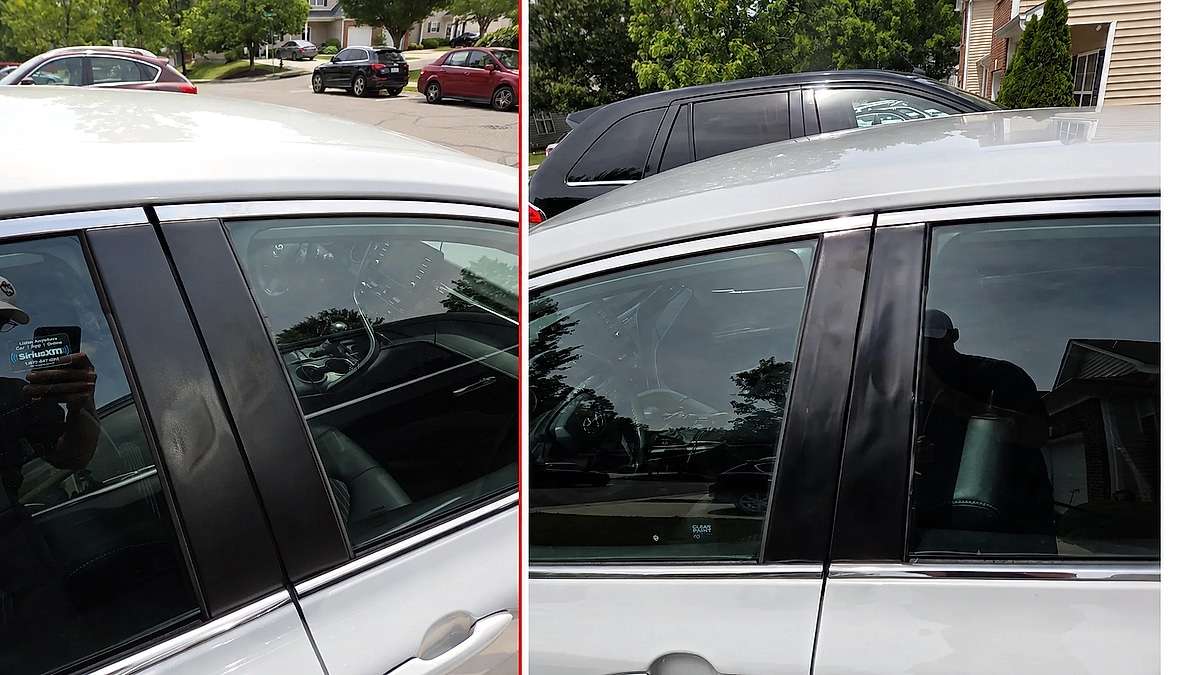

A 2023 Toyota Camry owner says the exterior plastic on a car bought new in July 2023 is scorched, including the B-pillar trim and mirror plastic. Toyota's reported explanation is solar convergence. I checked the owner account, Toyota warranty language, Honda's service note on concentrated sunlight, and building-science advisories on reflected low-e window heat. The finding is uncomfortable for owners: solar convergence is real, but proving whether it explains every melted Camry trim case is the hard part.
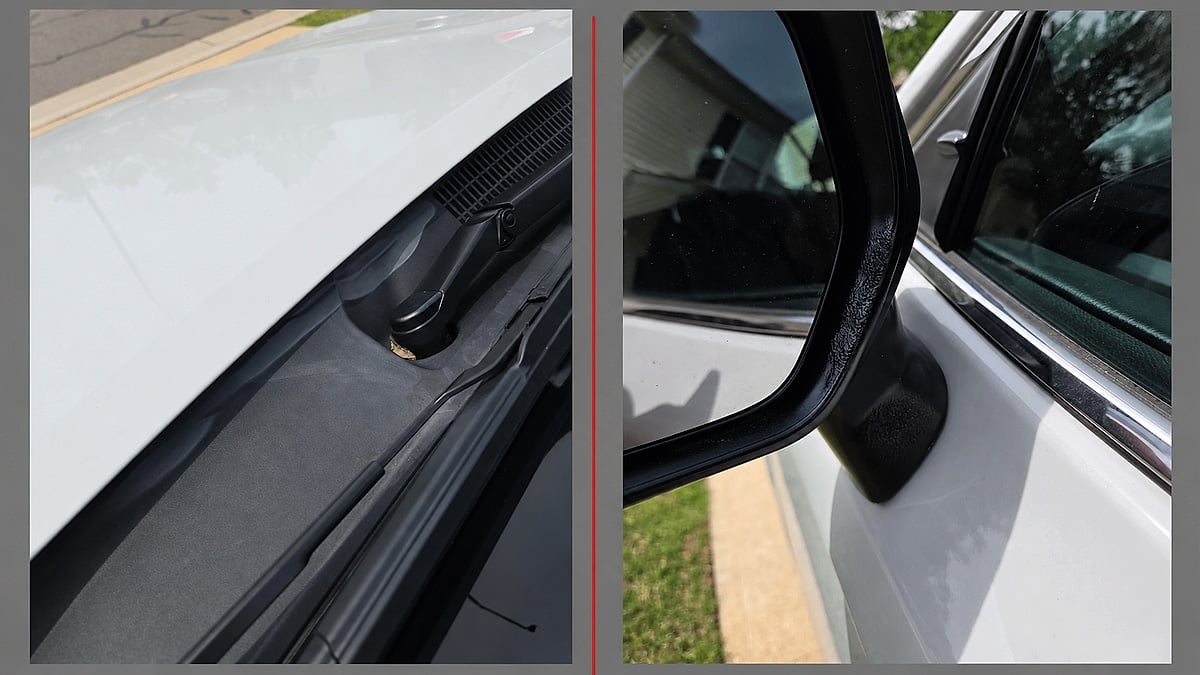
If the damage came from a reflected beam of concentrated sunlight, Toyota has an environmental-damage argument. If the damage appears in multiple places without a plausible reflection path, the owner has a better reason to challenge the diagnosis and push for warranty or goodwill review.
What Torque News Checked
- The 2023 Camry owner's Reddit account, including the dealer visit, Toyota Brand Engagement case, and the technician's reported "solar convergence" explanation.
- Toyota's warranty language for Camry coverage and exclusions, including defects in materials/workmanship and environmental-condition exclusions.
- Honda's official ServiceNews note and a Massachusetts vinyl-siding advisory showing concentrated sunlight can melt automotive plastics and other materials.
The Owner's Complaint Is Specific
The Camry owner wrote that the car was purchased new in July 2023 and is not yet three years old. The damage, according to the post, is not limited to one small mark.
"It's not even 3 years, and the plastic (B-Panel and mirror) is totally scorched," the owner wrote.
The owner says Toyota's Brand Engagement Center opened a case and recommended a dealer visit so a technician could photograph and diagnose the issue. The technician reportedly said the condition is common and that Toyota's stance is usually solar convergence. The owner also said the technician found spots that were not obvious because he "knows where to look."
That last line is the reason this story deserves more than a shrug.
If a technician knows where to look, that suggests a recognizable damage pattern. It does not prove a defect. It does suggest that owners should know what evidence matters before the dealership visit.
The owner put the frustration plainly: "I'm totally understanding with the whole solar convergence excuse if it's in one spot, but it's ALL OVER THE CAR! I mean, MAYBE it's crappy plastic?!"
That is the whole dispute.
Toyota may see environmental heat damage. The owner sees a relatively new Camry with exterior trim that looks older than the car. Both can be partly right, which is exactly why the diagnosis has to be more precise than "sun did it."
Solar Convergence Is Not A Made-Up Excuse
Let's get this out of the way: concentrated sunlight can melt automotive trim.
Honda published a ServiceNews article in 2019 titled "Concentrated Sunlight Can Cause Melted Plastic Body Parts and Trim Pieces." It tells technicians that plastic parts can look like they were hit by a "ray gun" when sunlight reflects off nearby building glass and focuses into an intense beam. Honda says typical damage can appear as rows, strips, warping, or melted smaller trim pieces.
Home-building sources say the same thing from the other direction. A Massachusetts advisory on reflected sunlight says the Vinyl Siding Institute identifies normal vinyl siding softening around 160 to 165 degrees Fahrenheit. The advisory says reflected low-e window sunlight has been measured above 200 degrees Fahrenheit, enough to distort siding, paint, decking, trim, and other plastics.
The question is whether the physics fits this Camry.
That is where the owner's "all over the car" point becomes important. Solar convergence often follows the geometry of the reflected light. The sun's apparent position changes through the day, and a focused reflection can track across a surface. That means damage may appear as a line, streak, band, or repeated path rather than a single round burn.
But it still should have a source.
If the Camry sits in a driveway, the likely suspects are low-e house windows, glass doors, a neighbor's windows, a shiny metal surface, a vehicle mirror, or another reflective surface that catches sunlight at a specific time. If the car works from home and spends long periods parked in the same place, that actually makes a solar-convergence investigation easier, not harder.
The owner does not need a theory. The owner needs a map.
Toyota's Warranty Position Has A Built-In Escape Hatch
Toyota's warranty guide says the basic warranty covers repairs and adjustments needed to correct defects in materials or workmanship for 36 months or 36,000 miles, subject to exclusions.
That sounds promising for a 2023 Camry owner still inside time and mileage limits, until the exclusion list.
Toyota says the warranty does not cover damage or failures resulting directly from environmental conditions, with examples including airborne chemicals, tree sap, road debris, salt, hail, floods, wind storms, lightning, and other environmental conditions.
That is where solar convergence lands if Toyota classifies the damage as reflected sunlight rather than defective material.
This is why the owner cannot walk in with only photos of melted trim and expect an easy warranty approval. The photos prove damage. They do not prove cause.
The dealer also has a problem. If the technician has seen this before, he may recognize the look immediately. But recognition is not documentation. A useful repair order should not simply say "solar convergence." It should identify the affected panels, vehicle side, pattern shape, possible reflection source, paint condition, shaded-area comparison, and whether Toyota was contacted for warranty or goodwill review.
"Outside influence" is not enough.
If Toyota denies coverage, the owner should ask for the denial in writing and the exact reason: environmental reflected sunlight, heat source, impact, chemical exposure, or material/workmanship not found. Those categories matter because they lead to different next steps.
The Material Question Still Deserves To Be Asked
Here is where I would not let Toyota completely off the hook.
Solar convergence can be real, and the plastic can still be more vulnerable than owners expect.
A Camry is one of Toyota's core nameplates, and buyers choose it partly because they expect long-term durability. If exterior B-pillar trim, mirror caps, or windshield-corner trim deform before year three, owners will compare that experience with older cars that sat outside for a decade and only faded. That comparison is not scientific, but it is not meaningless.
Modern vehicles use more plastic exterior trim than older cars. Gloss-black B-pillar appliques, mirror housings, window trim, roof-rail covers, bumper inserts, and aero pieces are now part of the design language. Dark trim absorbs heat. Combine dark plastic with a concentrated reflection, and the part becomes the weak link.
The warranty debate then turns into a frustrating question: should a normal driveway plus modern windows be considered an abnormal environmental event, or should exterior trim be robust enough to survive it?
Automakers generally answer the first way. Owners often answer the second.
It is also why the owner community is split. Some commenters asked whether the Camry parks near big glass buildings or low-e windows. Others said they have seen many Toyotas with the same problem. A PPF installer said he had seen concentrated-light damage on high-end cars from reflective sources, and another commenter mentioned similar damage on a Honda Civic.
That cross-brand pattern cuts both ways. It supports the solar-convergence explanation because it happens beyond Toyota. It also supports the owner's frustration because this is becoming a modern materials problem across brands.
Both points can be true.
That is why the best version of this story is not "Toyota plastic is bad" or "the owner parked wrong." Both are too easy. The better question is whether the damage pattern can be reconstructed. If the marks line up with a reflection path at the same time of day, Toyota's environmental explanation becomes stronger. If the marks appear on surfaces that never face the same reflected beam, or if similar trim fails on cars parked in different environments, the material question gets stronger. Owners should not argue from outrage when geometry can do more work.
The Diagnostic Test Owners Should Run Before The Dealer Visit
If your Camry, RAV4, Highlander, Civic, Subaru, or any other car shows melted B-pillar or mirror trim, do not replace the part first.
Document the parking environment.
Park the car exactly where it usually sits. Take photos of the damaged side and the surrounding buildings, windows, glass doors, parked cars, mirrors, and reflective surfaces. Then watch the car during the suspected sunlight window, often late morning through afternoon. Take photos or video every 15 to 30 minutes.
The evidence you want is a reflected bright band or hot spot crossing the same areas that are damaged.
If you can do so safely, use an inexpensive infrared thermometer to measure temperatures on damaged trim, nearby undamaged trim, painted panels, and shaded trim. Do not treat the number as laboratory proof. Treat it as pattern evidence. If one trim section spikes when a window reflection lands on it, that helps explain the damage. If every area is similarly hot and only certain plastics deform, that helps a different argument.
Also, inspect the damage shape.
Solar convergence often leaves directional, streaked, wrinkled, or localized deformation. Normal UV aging usually looks more like fading, chalking, cracking, or broad brittleness. Chemical damage can have a different texture. Heat-gun or repair-related damage may show a localized service pattern. The owner does not need to be an engineer, but every deformation should not be lumped into the same bucket without photos.
Ask the service advisor to write the concern clearly: "Customer states exterior B-pillar trim and mirror plastic appear melted/scorched before three years of ownership. Customer requests diagnosis, photos, cause determination, warranty/goodwill review, and written explanation if denied."
That language is much stronger than "trim looks bad."
What If Toyota Says No?
If Toyota denies warranty coverage due to solar convergence, the owner still has options.
First, ask whether Toyota will consider a one-time goodwill repair. That depends on the dealer, region, vehicle age, mileage, service history, and Toyota's internal review.
Second, ask for part numbers and cost. If the repair is a few hundred dollars, the practical answer may be replacement plus prevention. If it is expensive or recurring, address the reflection source before replacing the trim again.
Third, if a home or neighboring window is the cause, mitigation may matter more than the car repair. Exterior screens, films designed to diffuse reflection, landscaping, parking position changes, shade structures, or even a different driveway angle can break the reflection path.
Fourth, if no reflection source can be found after careful documentation, push the material-quality question harder. Ask Toyota Brand Engagement for a written review, and ask the dealer whether the part number changed or whether damage appears on surfaces that could not plausibly have been hit by the same reflection.
It is about giving Toyota a better reason to say yes.
The Camry owner is upset because the car is still new enough that melted exterior trim feels like a breach of the Toyota promise. That reaction is reasonable. Toyota's solar-convergence argument is also not automatically nonsense. Reflected sunlight can reach temperatures that damage plastics, and automakers have documented the phenomenon. The owner consequence is that exterior trim complaints now require evidence of cause, not just evidence of damage. Without that proof, the warranty conversation usually tilts toward environmental exclusion.
What To Do
If your Camry has melted B-pillar, mirror, or windshield-corner trim, photograph the damage before replacing anything, then document the parking location through a full sunlight cycle. Look for a reflected band from low-e windows, glass doors, vehicle mirrors, or nearby shiny surfaces. Ask the dealer to identify the cause in writing and ask Toyota Brand Engagement for a case number. If a reflection source is confirmed, fix the source before replacing the trim. If no source can be found, use the photos, timeline, and dealer notes to push for goodwill or warranty review.
If your Toyota, Honda, Subaru, or other vehicle has melted exterior trim, where was it parked, which side was damaged, and did you find a low-e window or reflection source? Share the model year, mileage, affected parts, and whether the dealer covered it.
Comment down below if it’s happened to you.
Images by SpaghettiOptions on Reddit
Used under the relevant US Copyright Law for news-reporting purposes.
About The Author
Noah Washington is an automotive journalist based in Atlanta, Georgia, covering sports cars, luxury vehicles, and performance culture. His reporting focuses on explaining the engineering, design philosophy, and real-world ownership experience behind modern vehicles.
Noah has been immersed in the automotive world since his early teens, attending industry events and following the enthusiast communities that shape how cars are built and driven today. His work blends industry insight with enthusiastic storytelling, helping readers understand not just what a car is, but why it matters.
Noah is also a member of the Southeast Automotive Media Association (SAMA), a professional organization for automotive journalists and industry media in the Southeast.
His coverage regularly explores sports cars, luxury vehicles, and performance-driven segments of the automotive industry, including the evolving culture surrounding Formula Drift and enthusiast builds.
Read more of Noah's work on his author profile page.
You can also follow Noah here:
Set Torque News as Preferred Source on Google
Follow us today...