
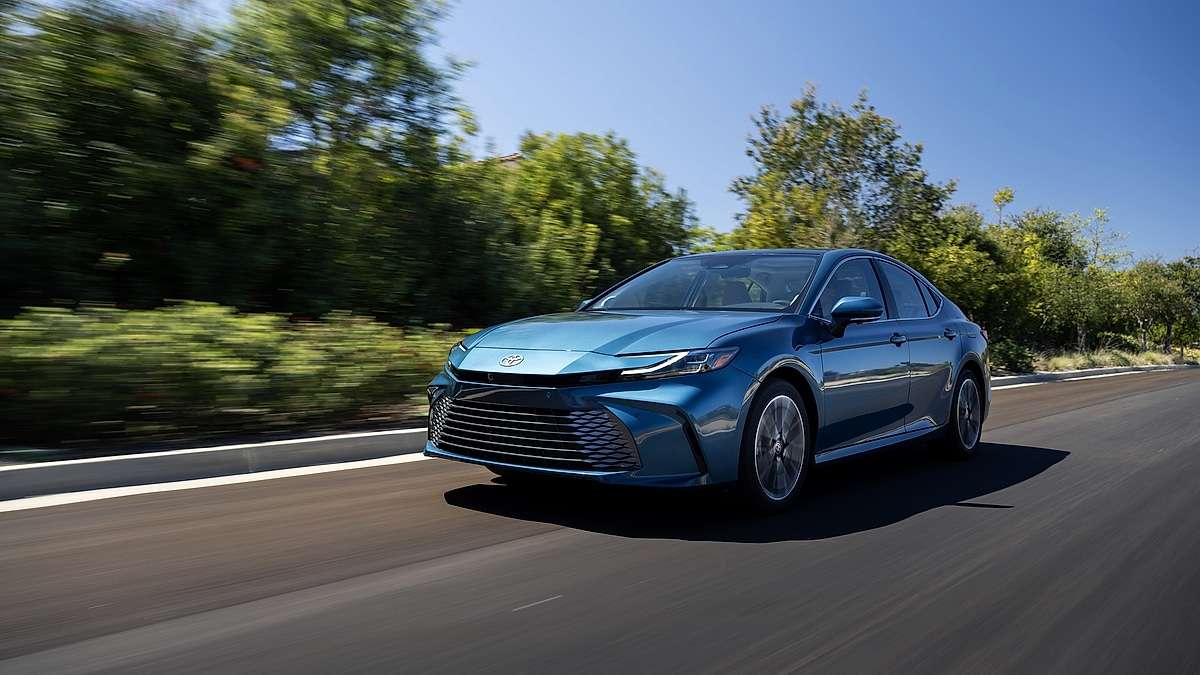

The 2026 Toyota Camry SE is proving why Toyota made the Camry hybrid-only, but the small annoyances are where shoppers should pay attention. A six-month owner review praised the car's 45 MPG real-world fuel economy, physical buttons, roomy cabin, big trunk, and smooth hybrid powertrain. Torque News checked the owner account, Toyota's official 2026 Camry specs, and the comment pattern from other owners. The useful finding is not "Camry good." Everyone already expects that. The useful finding is that Toyota appears to have nailed the big stuff while still leaving buyers with a few daily irritations that can matter more than a spec sheet admits.
The owner, posting on r/Toyota as Advanced_Draft76, said they began financing a new 2026 Toyota Camry SE in November. Their listed out-the-door price was $33,900, with $5,000 down and a $466 monthly payment. The car was described as an SE with all-weather floor liners, Cold Weather Package, Convenience Package, and black badge overlays. The owner originally listed the paint as Wind Chill Pearl, then later corrected it in the comments after another user pointed out it appeared to be Ice Cap.

The owner rated the car 8 out of 10 and said it does exactly what they bought it to do: act as a reliable daily driver. That would be boring if the Camry were still just the old default sedan. It is not. The current Camry is now all hybrid, which means Toyota has made efficiency the baseline instead of the upgrade. And six months in, that decision looks smart.
What Torque News Checked
- Owner experience: A 2026 Camry SE six-month Reddit review covering price, packages, fuel economy, comfort, paint, infotainment, driver assists, remote-start subscription concerns, and daily driving impressions.
- Official Toyota specs: Toyota's 2026 Camry information on the fifth-generation hybrid system, 225 hp FWD / 232 hp AWD output, SE sport-tuned suspension, wireless Apple CarPlay and Android Auto, Toyota Safety Sense 3.0, and connected-services trials/subscriptions.
- Cross-source owner pattern: Comments from other Camry owners mentioning seat comfort, CarPlay/Android Auto connection timing, road noise, fit-and-finish concerns, and the Acura-versus-Camry value decision.
Toyota's Hybrid-Only Bet Looks Better From the Driver's Seat
The owner's strongest praise was for the stuff Toyota had to get right. They said the Camry is no slouch, that Sport mode makes the 225 horsepower noticeable, and that the hybrid system switches between battery and engine power without drawing attention to itself. They also reported about 45 MPG in good weather.
That number matters because it is not fantasy mileage. Toyota's official 2026 Camry SE FWD fuel economy is 47 mpg city, 45 highway, and 46 combined. A real owner seeing about 45 MPG in favorable conditions is exactly the kind of boring-good result that makes the Camry work.
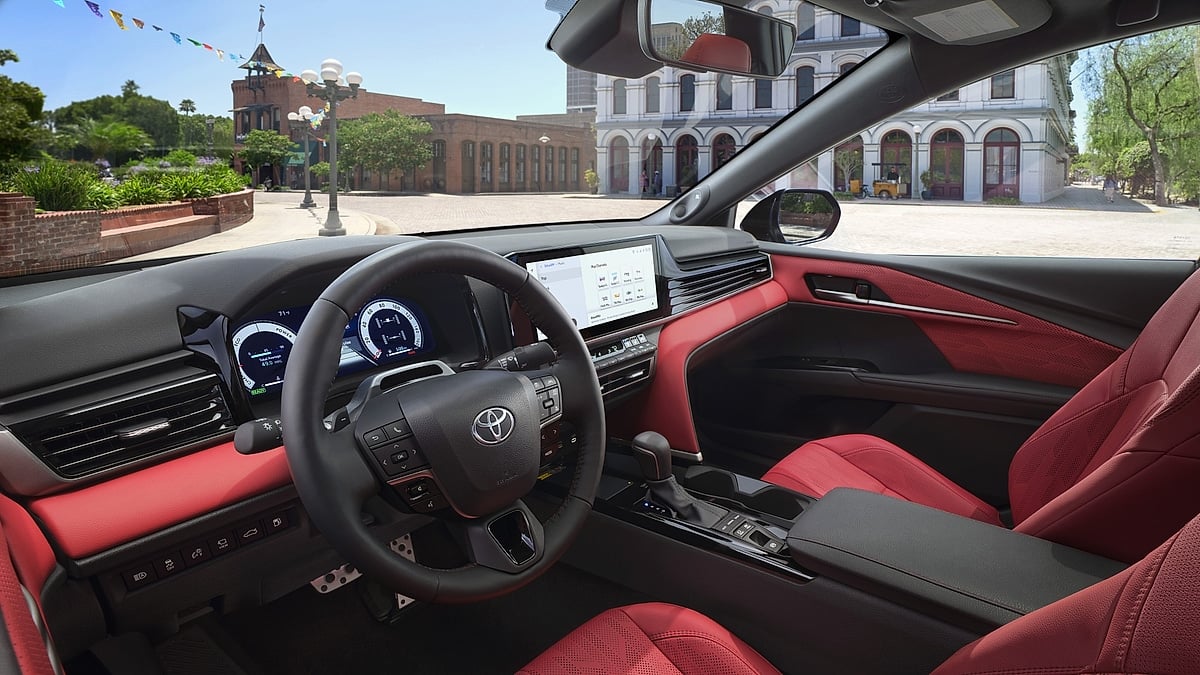
Toyota says the 2026 Camry pairs its fifth-generation hybrid system with a 2.5-liter four-cylinder engine. Front-wheel-drive models make 225 net-combined horsepower, while AWD models make 232 hp thanks to an added rear motor. Toyota also says engineers tuned the system for more natural acceleration by syncing engine speed more closely with the power delivery from the electric side.
That last detail shows up in the owner's post. They are not writing like someone fascinated by hybrid architecture. They are writing like someone who gets in, drives, and does not think about the hybrid system. That is the win. The best daily hybrid is the one you stop analyzing.
The comments add another useful layer. One SE AWD owner who came from an Acura said they were glad they went hybrid because of gas prices. They also noted that the Camry was cheaper to buy and insure than the Acura path they had considered. That is the Camry's real lane: not luxury, not sport sedan fantasy, but a middle-class operating-cost weapon with enough style that you do not feel punished for being sensible.
The SE Trim Is Doing Two Jobs
The SE is the interesting Camry trim because it has to be the practical one and the slightly emotional one.
Toyota gives the SE sportier styling, 18-inch black-finished wheels, SofTex-trimmed seats, a leather-wrapped steering wheel and shift knob, paddle shifters, and a sport-tuned suspension. The owner loved the look, calling the SE trim sleek and aggressive. They liked the Boulder interior because it breaks up the black-cabin monotony that has taken over modern cars. They also praised the screen for being integrated into the dashboard instead of being stuck on like an afterthought.
I agree with that instinct. Dashboard tablets have made a lot of otherwise decent interiors feel unfinished. The Camry's cabin may not be thrilling, but it does not look like someone forgot where to put the screen until the last meeting.
The trade-off is ride feel. The owner said the SE's stiffer suspension means you feel the road a bit. Another owner mentioned more road noise through puddles and slush than in their Acura, and said the car rode smoother on smaller 16-inch winter tires than on 18-inch wheels.
If you want the Camry that looks sharper and feels more responsive, the SE makes sense. If you want the calmest, softest commuter, you should at least drive the LE or XLE before letting the black wheels talk you into the sport trim. Wheels and suspension do not disappear after delivery. You live with them every pothole.
The Complaints Are Small, But They Are Not Silly
The owner did not report any major road problem or reliability issue. That is important. Six months is not a durability verdict, but it is enough time for daily annoyances to show themselves.
The complaints were familiar: average seat comfort on very long drives, paint that seemed to chip somewhat easily, a touchscreen that is not very responsive but not infuriating, and Apple CarPlay that rarely connects automatically for that owner.
Other commenters added texture. One SE AWD owner said the seats were not as comfortable as their Acura's, though they eventually found a setting that made them bearable. Another Camry owner said random CarPlay disconnects were the only problem they had. A different commenter said Android Auto usually connects automatically but may fail if Bluetooth is not already on or if the driver starts the car and drives off immediately, adding that waiting about 15 to 20 seconds can help.
People buy Camrys to avoid drama. They are not expecting a hand-built interior or a German luxury ride. But they do expect the basics to behave. If CarPlay needs a ritual, if the paint needs early touch-up, if the driver's seat only becomes acceptable after experimentation, those are small violations of the Camry promise.
Not fatal. Just annoying.
And because the hybrid powertrain is so good, the annoyance gets louder. When the expensive engineering fades into the background, the cheap-feeling stuff moves to the front.
Physical Buttons Still Matter
One of the most enthusiastic lines in the owner review was about physical buttons. Not horsepower. Not screens. Buttons.
That should tell automakers something.
Toyota has not chased the full touchscreen-everything trend as aggressively as some rivals, and the Camry benefits from that restraint. The owner liked that the screen was not overwhelmingly large and that the digital gauge cluster was not distracting. In an era where plenty of automakers confuse "modern" with "menu-dependent," the Camry's simpler interface is part of the value proposition.
This is also why the subscription complaint lands harder.
The owner likes the Toyota app but hates that remote start becomes a paid feature after the free trial expires. Toyota's connected-services language confirms that Remote Connect lets owners use the app for functions such as remote start, lock/unlock, vehicle location, and status alerts, and Toyota says active trials or paid subscriptions apply. Toyota's own 2026 Camry materials also note connected features with trial periods and subscription requirements after the trial.
This is not unique to Toyota, but Toyota buyers may be the wrong audience for it.
The Camry buyer is often choosing less drama, fewer gimmicks, and lower long-term pain. A subscription for convenience features feels philosophically off-brand, even if the business logic is obvious. If the car is supposed to be the appliance that just works, the app should not make owners feel like the appliance is asking for rent.
Why This Matters
The 2026 Camry SE owner review matters because it shows the new Camry's strengths and weaknesses in the right order. The big stuff is working: fuel economy, hybrid smoothness, space, trunk size, daily drivability, and a styling package that makes the SE feel less anonymous. The weak spots are not catastrophic, but they are the kind of things buyers interact with constantly.
That makes this a better shopping guide than a simple "Camry good" verdict.
If you are considering a 2026 Camry SE, the question is not whether Toyota knows how to build a hybrid sedan. It does. The question is whether the SE's seats, ride firmness, road noise, paint durability, phone connection behavior, and connected-services costs match your tolerance level.
That is the test drive most buyers skip.
Practical Consequences
Before buying a 2026 Camry SE, spend 30 minutes testing the boring stuff. Pair your phone twice. Turn the car off and on again and see whether CarPlay or Android Auto reconnects cleanly. Sit in the driver's seat longer than a showroom minute. Drive rough pavement if possible. Ask which connected features expire and what they cost. Look closely at the hood and front bumper if paint chips will make you crazy.
The Camry SE looks like one of the smartest daily-driver buys in the segment. Just make sure the small annoyances do not become the part you notice every day.
If you own a 2025 or 2026 Camry, what has mattered more after a few months: the hybrid MPG, the seats, the tech connection, road noise, or Toyota's connected-services subscriptions?
Let us know in the comments below.
About The Author
Noah Washington is an automotive journalist based in Atlanta, Georgia, covering sports cars, luxury vehicles, and performance culture. His reporting focuses on explaining the engineering, design philosophy, and real-world ownership experience behind modern vehicles.
Noah has been immersed in the automotive world since his early teens, attending industry events and following the enthusiast communities that shape how cars are built and driven today. His work blends industry insight with enthusiastic storytelling, helping readers understand not just what a car is, but why it matters.
Noah is also a member of the Southeast Automotive Media Association (SAMA), a professional organization for automotive journalists and industry media in the Southeast.
His coverage regularly explores sports cars, luxury vehicles, and performance-driven segments of the automotive industry, including the evolving culture surrounding Formula Drift and enthusiast builds.
Read more of Noah's work on his author profile page.
You can also follow Noah here:
Set Torque News as Preferred Source on Google
Follow us today...





Comments
I have a 2025 XLE Camry. My…
Permalink
I have a 2025 XLE Camry. My biggest complaint is that the remote has very limited range compared to my prior Ford vehicles. New batteries don't help.
This sounds like something…
Permalink
In reply to I have a 2025 XLE Camry. My… by Felix Lumpy (not verified)
This sounds like something they can fix in a software update, hopefully.