
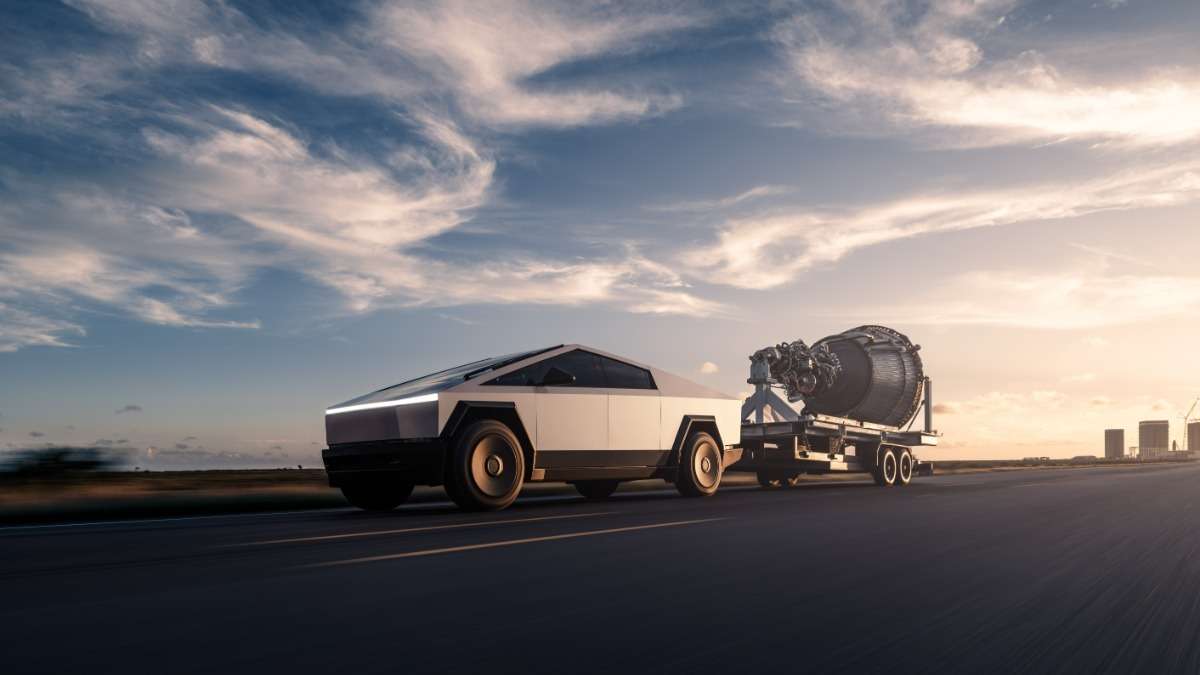

The modern truck sits at a strange intersection between brute-force durability and finely tuned electronics. Metal and microchips, strength and sensitivity.
That balance is on full display in the Tesla Cybertruck, a machine that looks and feels ready for the worst roads on earth while relying on delicate technology to make sense of the world around it. This pairing is not a contradiction. It is the reality of contemporary automotive engineering, where the body can take a hit, but the sensors doing the thinking deserve the same care you would give a camera in a photography studio.
This reality surfaced on the Tesla Cybertruck Forum when user Aerospace2061 shared an issue that perfectly captures how the smallest components can influence the broader driving experience.
“I noticed my CT was making an unknown sizzling sound when I would pull out of the park lately. Similar to when the wiper would spritz, but nothing visible was happening with the wiper. I’m assuming it’s automatically spritzing the front license plate camera since it appeared wet. When I looked at the camera glass in the sunlight and it appears to have a Tesla Cybertruck Front license plate camera glass getting worn from road stuff - any replacement or protection options? IMG_2881 accumulated lots of tiny dings and chips from the impact of small road stuff, and the CT is trying to clean it without success. I also tried using my fingernail to scrape it off, but it feels a little rough. Any ideas or options for replacing or protecting the camera’s glass lens cover?”
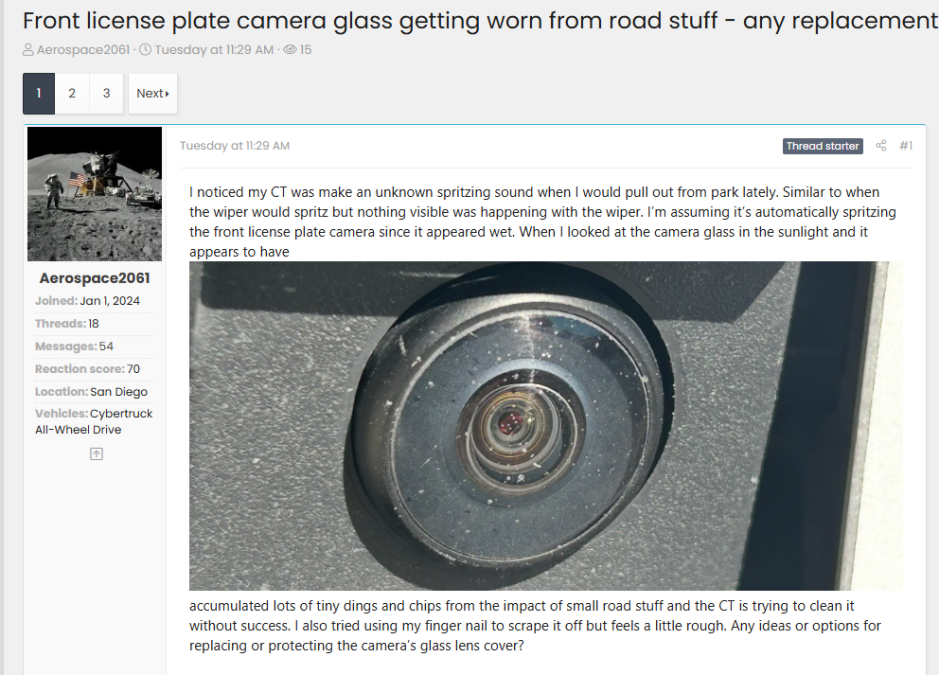
Here is a truck engineered to resist significant physical abuse, interrupted not by structural failure but by the relentless sandblasting of everyday travel.
What makes this incident so telling is how it highlights the new definition of vulnerability in vehicles built for the future. A camera lens the size of a coin now plays an essential role in driver assistance, spatial awareness, and situational imaging. When road debris pits that surface, the automated cleaning system tries to compensate, and the result becomes a spritzing routine performed against damage that no amount of washer fluid can solve. It is a reminder that advanced systems are not fragile in spirit but require a different kind of stewardship from their owners.
Tesla Cybertruck: Design & Performance
- The Cybertruck’s stainless steel exterior gives the vehicle a distinctive presence, and the rigid construction contributes to a solid, almost industrial feel on the road.
- Rear-wheel steering allows the truck to pivot more sharply than its size suggests, making tight turns and everyday maneuvering noticeably easier.
- The interior focuses on simplicity and open space, with a broad windshield and clean surfaces that create a calm and modern environment for both driver and passengers.
- Its electric powertrain delivers effortless acceleration, producing smooth and immediate thrust that feels consistent whether the truck is in city traffic or on the highway.
Forum member netcatz99 offered a straightforward solution that reflects how creative and informed the modern vehicle community has become. He described cutting his own pieces of 3M Pro PPF using a vinyl plotter and applying them to every exposed camera lens. PPF is usually reserved for protecting paint, yet here it becomes a precision shield for optical clarity. The approach respects the technology by acknowledging its sensitivity and meeting it with thoughtful protection rather than frustration.
Another owner, Cybertruck26, approached the issue with technical confidence. He mentioned using a diamond compound and a Dremel tool, originally employed for repairing a smartwatch, to restore clarity to a camera lens. This is a level of care that demonstrates how far automotive ownership has evolved. Instead of relying solely on dealership intervention, owners now blend consumer electronics techniques with vehicle maintenance. It is a natural progression in a world where trucks think, see, and process information continuously.
The Cybertruck’s design invites this kind of engagement. Its hardened exterior withstands impacts that would dent ordinary panels, yet the embedded technology requires attention in the same way aviators tend to sensors on an aircraft. Sensitivity does not undermine durability. It enhances the machine by enabling capabilities no traditional truck could attempt. Each lens and sensor contributes to a broader network designed to keep the driver informed and the vehicle efficient.
What emerges from this small story is a clear understanding of the role technology now plays in rugged vehicles. The Cybertruck is not diminished by asking its owner to protect a camera lens. Instead, it reflects the growing sophistication of trucks that blend muscle with intelligence. Just as carburetors once demanded precise adjustment and early fuel injection introduced new learning curves, modern sensor arrays bring their own expectations. Owners are adapting with the same willingness to learn seen in generations before them.
Aerospace2061’s experience serves as a reminder that the future of automotive strength is not only measured in metal thickness or motor torque. It is also found in the precision of the systems guiding the vehicle and the attention they require. Road debris may have worn the lens, but it also revealed a community eager to protect the technology that makes their trucks feel truly modern. The Cybertruck’s blend of toughness and sensitivity is not a compromise. It is the blueprint for vehicles that must endure both physical punishment and the demands of advanced electronic perception.
Image Sources: Tesla Media Center
Noah Washington is an automotive journalist based in Atlanta, Georgia. He enjoys covering the latest news in the automotive industry and conducting reviews on the latest cars. He has been in the automotive industry since 15 years old and has been featured in prominent automotive news sites. You can reach him on X and LinkedIn for tips and to follow his automotive coverage.
Set Torque News as Preferred Source on Google
Follow us today...


Comments
Engineering oversight on…
Permalink
Engineering oversight on Tesla's part. Realizing the importance of a clear camera lens they design a self-cleaning system, but fail for not anticipating the need for harder chip-resistant glass. Think Gorilla Glass.
Wow. The article doesn’t…
Permalink
In reply to Engineering oversight on… by DGC (not verified)
Wow.
The article doesn’t seem to address the poor quality of the camera lens.
I have many cars ranging from 1 to 40 years old. Many have front cameras and do 10k miles plus per year.
None of these cameras are scratched or pitted enough for me to notice.
But then, I’m not a Tesla fanboi.