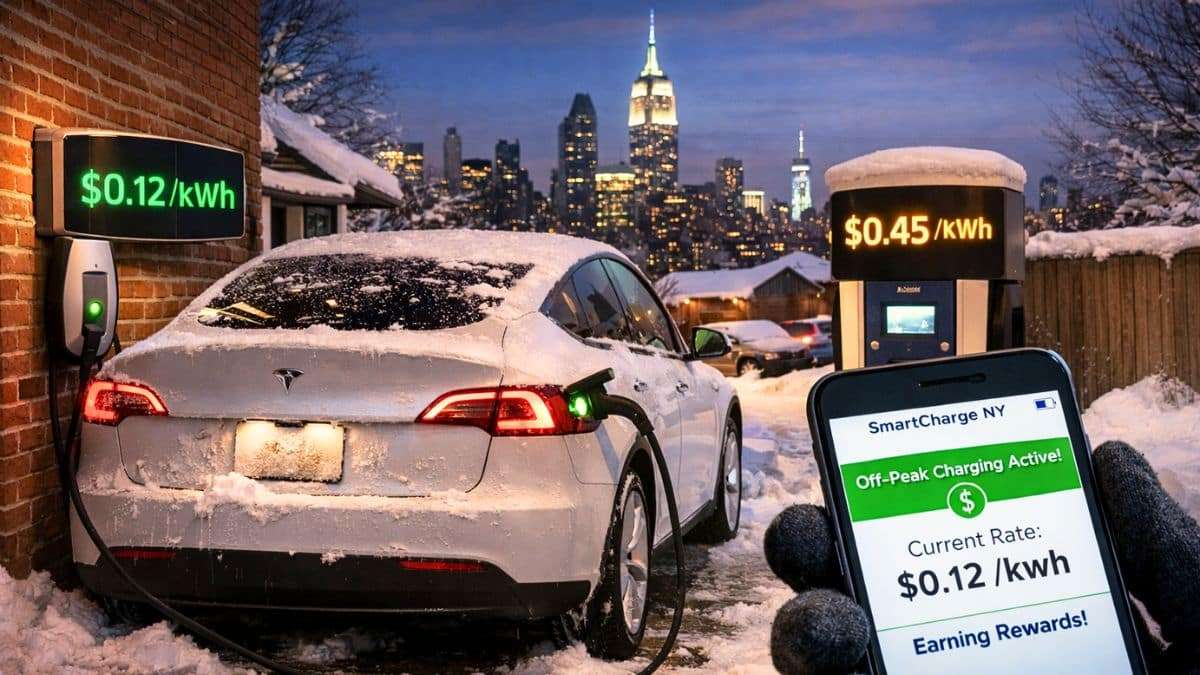

After the recent blizzard rolled through New York City, most of the headlines were about snow totals and flight delays. What did not make headlines was something quieter, but more expensive. Cold weather quietly reducing electric vehicle range and quietly increasing charging costs.
That is where this story begins.
Tim Miller, a Tesla Model Y owner in New York, recently posted a simple message to fellow owners in a Facebook group. He told them that if they have National Grid, they should download the Charge Smart NY app. He said his charging cost dropped to between 12 and 15 cents per kWh. He believes it could cut his charging cost in half. On top of that, he gets a bill credit if he smart charges at home at least 80 percent of the time.
"To my NY friends that have National Grid… If you don’t know about the Charge Smart NY app, I highly recommend downloading if you like saving money. It is looking like it will cut my changing costs in half at the minimum. I started smart charging Tuesday night and it has ranged from 12-15 cents/kwh, plus you get a credit on your bill if you smart charge at home at least 80% of the time," Tim wrote in that post.
Now pause for a second.
Public charging in New York can easily run around 45 cents per kWh for DC fast charging, according to Anfu Energy, a portable EV charging box producer that tracks public charging costs in the state. Some premium charging networks range from 25 to 50 cents per kWh depending on location and network. That means if you rely heavily on public fast charging in winter, you may be paying three times what Tim says he is paying at home.
That is not a small difference. That is real money.
I have covered the automotive industry for Torque News for 15 years. I have driven electric vehicles in hot summers and cold winters. I have watched the industry promote fast charging convenience as the future. But here is the uncomfortable question. Are we overlooking the simple, boring, local utility programs that may save us more money than any shiny charging station ever will?
Let us break this down in a practical way.
Why Winter Makes EV Charging and Cost Worse
Cold weather reduces EV range. That is not controversial. Batteries are less efficient in cold temperatures. Cabin heating uses energy. Preconditioning uses energy. If your Model Y normally gets 280 miles of range in mild weather, you may see a noticeable drop in freezing conditions.
Lower range means more frequent charging. More frequent charging at public stations means more money out of your pocket.
If you are paying 45 cents per kWh at a fast charger and your vehicle needs around 75 kWh for a full charge, you are looking at roughly 33 to 35 dollars for a full session. Do that several times a month and it adds up quickly.
Now compare that to 12 to 15 cents per kWh at home. That same 75 kWh might cost you around 9 to 11 dollars. Over a winter season, that difference could reach hundreds of dollars.
Speaking of real world charging costs, one EV owner recently shared how he was shocked to discover that four days of filling his gas tiny car cost more than charging his much larger EV9 for a whole month, a story that highlights how dramatically energy costs can differ depending on fuel type and charging strategy. That firsthand comparison between gasoline expenses and EV charging bills puts the smart charging conversation into perspective, showing that smart planning can turn a high winter charging bill into a pleasant surprise rather than a shocker.
And for readers wondering what charging costs can look like over the long run, another Tesla owner recently shared a detailed breakdown of a year’s worth of charging expenses for a large EV pickup, showing more than 4000 dollars saved by consciously managing when and where charging took place. That kind of big picture cost analysis reinforces how a smart charging strategy can turn into serious savings, especially when winter range loss pushes up consumption.
So now, the how to question becomes simple.
How can you lower your EV charging cost during winter in New York?
Step 1, Check Your Utility Program
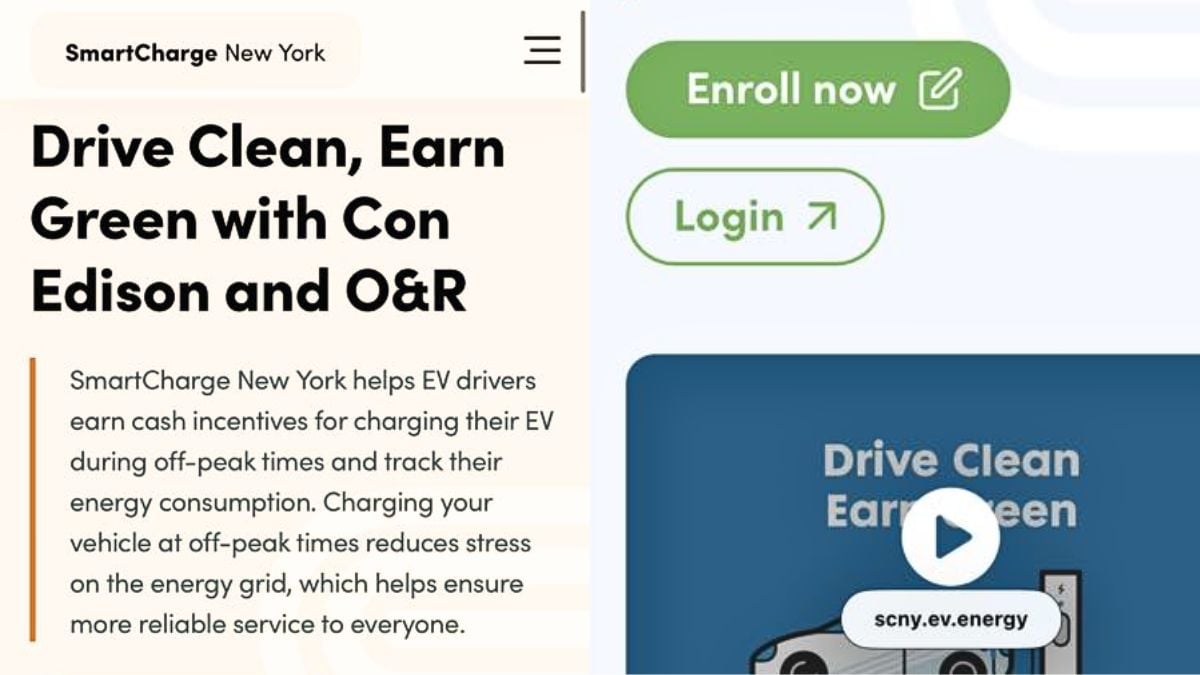
If you are with National Grid, look into Charge Smart NY. If you are with Con Edison, explore SmartCharge New York. Con Edison explains that its program helps EV drivers earn cash incentives for charging during off peak times and track their energy consumption. Charging off peak reduces stress on the energy grid and helps ensure reliable service for everyone.
Other local utilities across New York offer similar programs. Jessica Fitzpatrick from Sparrow Bush mentioned that her local utility also provides EV charging incentives. These programs exist for a reason. Utilities want you to charge when demand is low. They are willing to reward you for it.
This is not charity. It is grid management.
Step 2, Understand Off Peak Charging
Off peak typically means late at night or early morning when electricity demand is lower. When you plug in during these hours, you help balance the grid. You reduce strain during peak evening hours. In return, you may receive lower rates or bill credits.
It sounds simple because it is simple.
But many EV owners never look into it. They assume their standard home rate is the best they can get. Or they rely heavily on public fast chargers because it feels more convenient.
Convenience is not always cost effective.
Step 3, Compare Your Real Numbers
Do not guess. Look at your last electric bill. Look at how many kWh you used for charging. If you have access to your vehicle’s charging history, review it.
Then compare.
If you are paying 40 to 50 cents per kWh at public chargers and you could pay 12 to 15 cents at home with incentives, the math is clear. Even if your home rate without incentives is 20 cents per kWh, that is still significantly lower than public fast charging.
This is where I challenge industry norms.
The EV industry often celebrates fast charging speed and network expansion. That is important. But speed is not the only metric that matters. Cost stability and smart energy use matter just as much, especially in high cost states like New York.
For EV owners who are thinking beyond just cost savings, there is another piece of the at-home charging puzzle that is worth exploring, especially if you manage more than one vehicle. In a recent deeper look at charging solutions, a new smart charger with an OBD-II “universal remote” claims to simplify the chaos of juggling multiple apps for different cars and provide a more seamless garage experience.
The Ethical Angle of Charging Your EV During Peak Hours
There is also an ethical dimension here. When you charge during peak hours, you increase demand on the grid. That can lead to higher wholesale electricity prices and more stress on infrastructure. Utilities then have to invest in upgrades, and those costs are eventually passed on to customers.
By charging off peak, you are not only saving money. You are contributing to grid stability. You are helping reduce the likelihood of brownouts or service disruptions during extreme weather.
That is a subtle but important point. Electric vehicles are often criticized as adding stress to the grid. Smart charging programs show that EV owners can actually become part of the solution.
At the same time, we should question transparency. Not all utility programs are easy to understand. Some require apps that track your charging behavior. That raises data privacy questions. How much data is being collected. How is it used. Consumers should read the terms carefully.
Saving money should not mean giving up control over your data without thinking it through.
The Unexpected Lesson
What strikes me as unexpected is that this solution is not new technology. It is not a new battery chemistry. It is not a faster charger. It is simply aligning your charging time with lower demand.
Yet it feels unlikeable to some drivers because it requires planning. It requires a small habit change. Plug in at night instead of during peak hours. Let the app schedule charging automatically.
We love dramatic solutions. But sometimes the smartest move is quiet and local.
If you are an EV owner in New York, especially after this recent blizzard, this is the moment to evaluate your charging strategy. Do not wait until your winter electricity bill shocks you.
Look into your utility’s EV incentive program. Run the math. Think long term.
Winter range loss is more than just a theory for EV owners, it is real, and another Tesla Model Y Juniper owner recently shared that his range dropped by nearly 50 percent in cold weather, sparking a lively split in opinion among fellow EV drivers. That discussion underscores just how dramatically winter conditions can affect your battery and why charging strategy matters so much when every mile counts.
The Moral
Technology alone does not make us smarter. Awareness does. Taking five minutes to understand how your local energy system works can save you money and reduce strain on your community’s grid. That is a better kind of ownership. Not just driving an advanced vehicle, but using it thoughtfully.
Being a good decision maker in the EV era means thinking beyond convenience. It means considering cost, community impact, and long term sustainability.
Now I want to hear from you.
Have you compared your home smart charging rate to what you pay at public fast chargers in winter?
And if you live in New York or another cold state, how much does cold weather really increase your monthly charging cost, and have you found a smarter solution that others should know about?
Share your experience in the comments below.
About The Author
Armen Hareyan is the founder and Editor-in-Chief of Torque News and an automotive journalist with over 15 years of experience writing car reviews and industry news. Now based in the Charlotte region (Indian Land, SC, he founded Torque News in 2010, which since then has been publishing expert news and analysis about the automotive industry. He can be reached at Torque News on X, Linkedin, and Youtube. Armen holds three Masters Degrees, including an MBA, and has become one of the known voices in the industry, specializing in the landscape of electric vehicles and real-world stories of actual car owners. Armen focuses on providing readers with transparent, data-backed analysis bridging the gap of complex engineering and car buyer practicality. Armen frequently participates in automotive events throughout the United States, national and local car reveals and personally test-drives new vehicles every week.
Set Torque News as Preferred Source on Google
Follow us today...