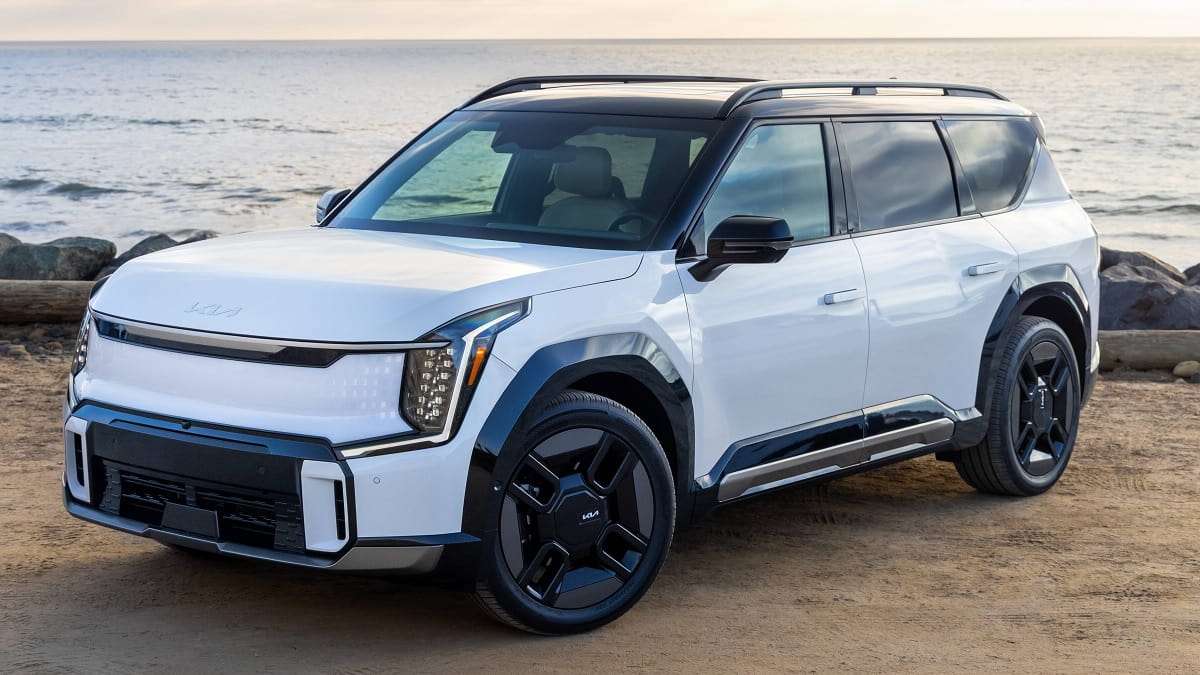

As electric vehicles like the GMC Hummer and Kia EV9 start matching the enormous size of their gas-powered counterparts like the Cadillac Escalade and Ford Expedition MAX, it’s hard to believe that they can be driven at huge cost savings, but they can. We love seeing interesting comparisons on social media like this one posted the r/electricvehicles subreddit. The original post by a Kia EV9 driver states:
“I spent more on gas in four days than a month of charging my EV.”
He goes to discuss the following about how he had to drive a gas-powered loaner vehicle:
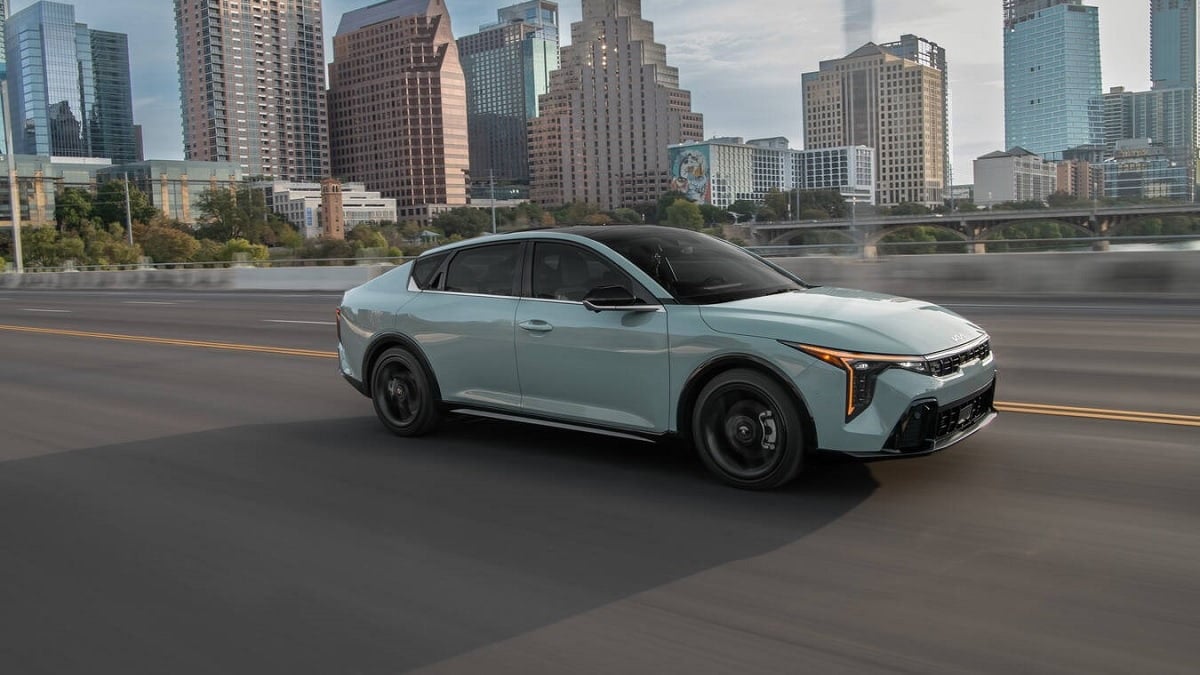
“Just sharing as another dunk on all the EV skeptics out there. I have a Kia EV9, but I had to get some body work done (scratched before purchased, needed it repainted) so I had a dealer loaner for a week. The dealership saddled me with a small Kia K4 as a courtesy vehicle, which, surprisingly is a decent car for someone just bopping around town, but not great for long commutes or shoving the family in.
I drive over 100 miles round trip daily in my commute, and over four days of back and forth to work had to fill up the tank approximately 1.3 times (one full tank and 1/3 of a full tank). I’m in Arizona and gas prices are hovering around the $3 mark. I spent roughly $40 in gas for four days of commuting (in a tiny K4). Now, compare this to my big ass EV9 where I plug in nightly. On average, I see $35 a month extra on my electric bill to home charge! Even before my bigger battery EV9, I had an EV6 for a while and it was roughly the same cost.”
PedalingHertz who drives a 2024 GMC Sierra EV responded with a savings tip:
“I was surprised at how cheap my electricity is for charging, because I didn’t know about special use rates. Many utilities, including mine, offer deals if you let them connect to your smart charger and control time of use. I went from $0.15 per kwh to $0.10. My truck still charges nightly, but it lets the utility decide how to balance the grid and keep it all running steady.
The only way I found out was my smartcharger app prompted me, and it saved me a third of my charging costs.”
Complete-Ground-8357 crunched some numers:
“The price of electricity for this scenario does not need to be dirt cheap to still see some impressive numbers. The U.S national average for electricity cost is $0.18.
Using that number in this situation where it’s a Kia K4 at $3.00/gal and an EV9 at $0.18/kW shows that the EV9 is still cheaper to run for 2000 miles.”
Why do people keep overpaying for gas? It’s probably due to hanging on to old habits and a resistance to embrace change. It’s like keeping an expensive monthly cable TV package rather than switching to flexible, cheaper streaming apps. Once you look at what you actually use, you realize that a few streaming apps can cover your needs for a fraction of the cost. The point is simple, many people keep paying for something out of habit, even after a cheaper, better option shows up.
It’s really absurd that modern transportation still depends on burning gasoline. Gas is inconvenient, dirty, and expensive, while electricity is cleaner and easier to deliver. After all, you can’t have a gas station in your garage, but you can charge your EV every night as easily as charging your phone.
When it comes to maintenance, owning an EV almost feels you are getting away with something. EVs avoid many routine maintenance costs that gas cars require. There are no oil changes, no tune ups, no transmission fluid services, and brakes often last much longer because regenerative braking slows the car while recapturing energy. Some manufacturers still recommend service items, but it is much lighter than what gas vehicles demand.
As regulations and market trends push toward electrification, gas vehicles may depreciate faster over time. The underlying idea is that what people want to buy in five years influences what your vehicle is worth now.
With “V2X”, more and more EVs are able to supply electricity outward, powering tools, camping gear, or even parts of a home with the right setup. This can replace or reduce the need for a separate generator. The equipment can cost real money today, but they are expected to get cheaper and more common. Also, EVs silently deliver external electric power compared to noisy and smelly generators. This is a big factor in some situations like camping.
When comparing charge/fuel costs, we need to avoid looking at extreme examples, like using a very inefficient EV at an expensive fast charger, or comparing it to a very efficient gas car in a low-cost fuel market. Another extreme is people who pay almost nothing because they benefit from special programs or unusual circumstances. The practical middle ground is that charging costs vary based on how you charge, where you live, your utility rate plan, and how efficient your EV is. Home charging, especially with off peak rates, is usually the cheapest and most realistic path, fast charging is typically a small share of charging for most owners, and it can be pricey in some locations. Most drivers spend roughly about twice as much to fuel a gas car compared with charging an EV, though the exact number depends on your situation.
Some regions offer EV perks like free or discounted parking, access to carpool lanes, or occasional free charging. These benefits may fade as EV adoption grows, yet for now they can add extra value in certain places.
Bottom Line
EV savings come from several angles, lower day to day fueling costs, fewer maintenance expenses, possible state incentives, and a few added advantages like bidirectional power and local perks. No single number fits everyone, because charging prices, driving habits, and local policies change the math. The best takeaway is that EV ownership can put money back in your pocket, as long as you run the numbers for your own driving pattern and charging setup.
The Kia EV9
The Kia EV9 is a large three row electric SUV that launched in 2024 and quickly became one of the most family friendly EVs on the market, thanks to its roomy interior, comfortable ride, modern tech, and fast charging capability. It stands out because it delivers true SUV space with available all-wheel drive, strong range for its size, and a design that feels upscale without drifting into luxury brand pricing. The EV9 typically starts in the mid $50,000 range and can climb into the low to mid $70,000s depending on battery size and drivetrain, and it is sold exclusively as a five door three row SUV with seating for up to seven. Comparable electric vehicles include the Tesla Model X, Rivian R1S, Volvo EX90, and Hyundai Ioniq 9, while gas powered alternatives shoppers often cross shop include the Toyota Grand Highlander, Honda Pilot, and Ford Explorer.
What Do You Think?
How much do you actually spend each month on gas or charging, and did the number surprise you when you finally added it up?
If gas prices dropped to two dollars again, would it meaningfully change how you feel about owning or switching to an EV?
Chris Johnston is the author of SAE’s comprehensive book on electric vehicles, "The Arrival of The Electric Car." His coverage on Torque News focuses on electric vehicles. Chris has decades of product management experience in telematics, mobile computing, and wireless communications. Chris has a B.S. in electrical engineering from Purdue University and an MBA. He lives in Seattle. When not working, Chris enjoys restoring classic wooden boats, open water swimming, cycling and flying (as a private pilot). You can connect with Chris on LinkedIn and follow his work on X at ChrisJohnstonEV.
Photo credit: Kia media kit
Set Torque News as Preferred Source on Google
Follow us today...